














Summary:
The Elder Scrolls IV: Oblivion Remastered is now available on Nintendo Switch 2, bringing Bethesda Game Studios’ celebrated fantasy RPG to a Nintendo platform for the first time in the game’s history. Players can once again travel across Cyrodiil, explore ancient ruins, enter dangerous Oblivion gates, develop their chosen skills, and determine exactly what kind of adventurer they want to become. The remastered release keeps the identity of the 2006 classic intact while significantly updating its presentation and introducing gameplay improvements designed for modern players.
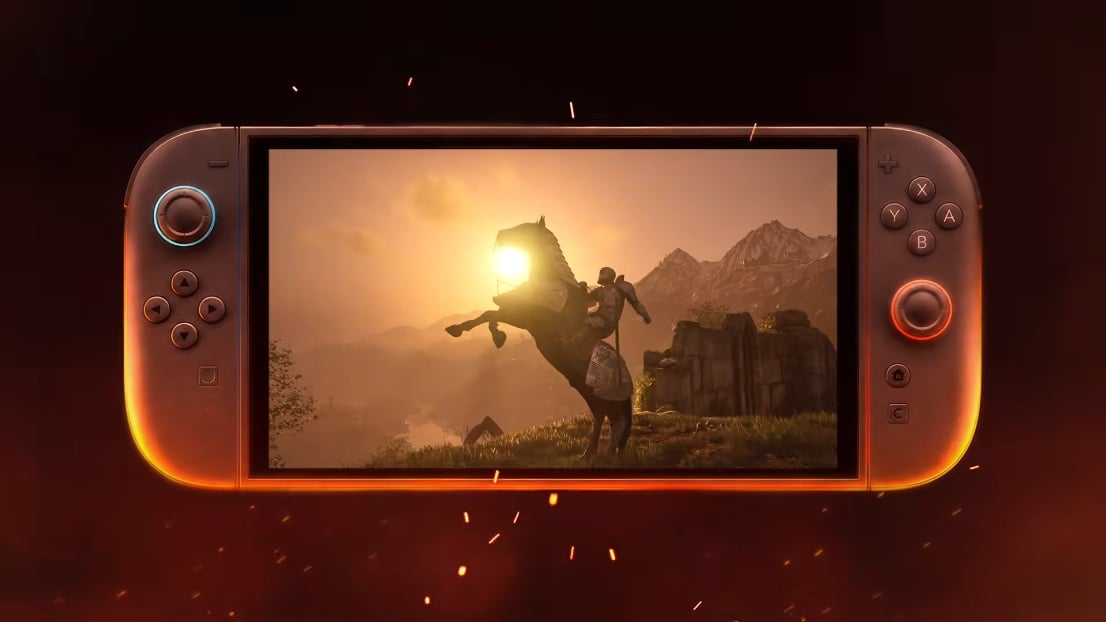
The Nintendo Switch 2 edition also takes advantage of features specific to Nintendo’s hardware. Alongside traditional controls, players can use motion controls, gyro aiming, touchscreen functionality, HD Rumble, and Joy-Con 2 mouse controls. Bethesda has confirmed a target of 900p at 30 FPS in handheld mode and 1080p at 30 FPS while docked, with DLSS anti-aliasing also supported. The package includes the Shivering Isles and Knights of the Nine expansions along with the additional downloadable releases associated with Oblivion. A physical Deluxe Edition is available on a cartridge containing the complete base game, while digital versions can be purchased through the Nintendo eShop. Bethesda has also released a launch trailer celebrating the arrival of one of its best-known adventures on Nintendo Switch 2.
Oblivion Remastered is now available on Nintendo Switch 2
The gates of Oblivion have officially opened on Nintendo Switch 2. The Elder Scrolls IV: Oblivion Remastered launched for the system on August 11, 2026, giving Nintendo players access to the enormous fantasy adventure that helped define Bethesda Game Studios’ approach to open-world role-playing games. It is an especially notable release because Oblivion itself had never previously appeared on Nintendo hardware. Nearly two decades after players first escaped the Imperial Prison and stepped into the countryside surrounding the Imperial City, that familiar moment can now happen on Nintendo’s newest system. The fundamental appeal remains wonderfully simple: walk toward something interesting and see what happens. A cave might hide treasure, a roadside conversation could start an unexpected quest, and an innocent trip into town can easily become several hours of distractions. That freedom remains at the heart of Oblivion Remastered, only now Nintendo Switch 2 owners can carry Cyrodiil with them.
Cyrodiil arrives on a Nintendo system for the first time
Oblivion’s arrival has particular significance for Nintendo players because this is the first Nintendo release of the fourth mainline Elder Scrolls adventure. The Elder Scrolls V: Skyrim established Bethesda’s fantasy series on Nintendo hardware years earlier, but its predecessor remained absent until now. That makes the Switch 2 release more than another version of an existing remaster. For part of the Nintendo audience, it is an opportunity to discover why Cyrodiil still has such a devoted following. The province stretches from dense forests and peaceful lakes to snow-covered mountains, ancient Ayleid ruins, sprawling cities, and the fiery landscapes beyond Oblivion gates. Exploration rarely follows a tidy checklist. You might leave the Imperial City intending to visit Chorrol and somehow end up chasing a rumor through a dungeon on the opposite side of the map. Oblivion has always been particularly good at turning a simple journey into an unpredictable personal story.
Bethesda brings the 2006 RPG into the modern generation
The remaster retains the structure and personality that made the original memorable while rebuilding its presentation for modern hardware. Bethesda and Virtuos used Unreal Engine 5 technology to enhance landscapes, character models, lighting, atmospheric effects, and environmental detail. The difference is immediately apparent when travelling across Cyrodiil. Forests feel denser, distant scenery has greater depth, and familiar settlements benefit from substantially richer materials and lighting. Character presentation has also received attention, including more detailed models and improved lip synchronization. Yet the goal isn’t to disguise Oblivion as an entirely different adventure. Beneath the visual overhaul sits the same unusual, ambitious RPG many players remember, complete with wandering NPCs, unexpected conversations, strange quests, and enough loose objects to make every table look like an invitation to mischief. It still feels unmistakably like Oblivion. It simply wears a far more modern coat of armor while doing so.
Players can shape their own adventure across Cyrodiil
Freedom has always been one of Oblivion’s greatest strengths, and the remastered version preserves that philosophy. You’re not locked into becoming a conventional sword-wielding hero just because Tamriel happens to be facing a catastrophic Daedric invasion. You can build a heavily armored warrior, specialize in destructive magic, become a stealth-focused thief, master archery, experiment with alchemy, or create a character who mixes several disciplines together. Players can also pursue guild questlines and side stories that develop independently from the main conflict. That flexibility gives Cyrodiil a convincing sense of scale because saving the world doesn’t have to consume every waking moment. Perhaps you’d rather investigate the Dark Brotherhood, climb through the ranks of the Mages Guild, or simply wander between towns collecting ingredients. The main objective may be urgent, but Oblivion is perfectly happy to let you spend an afternoon rummaging through ruins while Tamriel politely waits for you to remember that impending apocalypse.
Combat, exploration, and progression receive modern refinements
The visual overhaul is only part of the modernization work. Oblivion Remastered introduces several gameplay and quality-of-life improvements intended to make the experience more comfortable for players accustomed to newer open-world RPGs. Sprinting has been added, combat benefits from recreated animations and sound effects, and hit reactions provide clearer feedback during encounters. Third-person gameplay has also been reworked, making it a more practical option for anyone who prefers seeing their character while exploring. Progression has received attention as well, with a redesigned leveling approach inspired by ideas from both Oblivion and Skyrim. User interface and user experience elements have similarly been refreshed for modern displays and expectations. These changes matter because Oblivion’s world was never the problem. Its sprawling cities, hidden caves, guild storylines, and wonderfully eccentric characters remain memorable. Refining the systems surrounding them removes some of the friction that could make returning to a game originally released in 2006 feel like opening an especially stubborn ancient treasure chest.
Nintendo Switch 2 features create new ways to play
The Nintendo Switch 2 edition isn’t limited to simply placing the existing experience on Nintendo hardware. Bethesda has implemented several control options built around the capabilities of the system. Players can use touchscreen controls, HD Rumble, gyro aiming, Joy-Con 2 mouse functionality, and dedicated motion controls alongside the traditional control scheme. Motion inputs can turn combat into a more physical experience, with horizontal and vertical movements used for standard and power attacks. The other Joy-Con can handle actions such as spellcasting, blocking, stealth, and drawing or sheathing weapons. Bethesda also allows players to swap the motion-control layout, which should be useful for anyone who prefers the opposite configuration. Mouse Mode provides another alternative for navigating and interacting with the game. Not every player will want to wave a Joy-Con while fighting a Daedra, of course, but having several options allows the Switch 2 edition to feel tailored to Nintendo’s hardware rather than merely transferred onto it.
Handheld and docked modes target 30 FPS
Bethesda has outlined what players can expect technically from Oblivion Remastered on Nintendo Switch 2. In handheld mode, the game targets 900p resolution at 30 FPS, while docked play increases the target resolution to 1080p while retaining the 30 FPS target. DLSS anti-aliasing is supported as part of the presentation, and Bethesda says the Switch 2 release incorporates performance optimizations made since the remaster originally launched on other platforms. There isn’t a separate setting that prioritizes performance or visuals, so players shouldn’t expect multiple graphical modes that switch between different frame-rate targets. The emphasis instead appears to be on delivering a consistent configuration suited to both portable and television play. For an enormous RPG filled with cities, interiors, wilderness, characters, and dynamic encounters, portability remains one of the Switch 2 version’s most attractive qualities. Closing an Oblivion gate from the sofa is one thing. Doing it during a train journey has a different sort of charm.
Shivering Isles and Knights of the Nine complete the package
The Nintendo Switch 2 release includes far more than the original campaign. Shivering Isles and Knights of the Nine are both part of the package, giving players access to the major story expansions released for Oblivion. Shivering Isles is particularly memorable because it transports players into the bizarre realm of Sheogorath, the Daedric Prince of Madness. Its landscapes, characters, quests, and atmosphere deliberately contrast with the more traditional fantasy scenery of Cyrodiil, making it feel almost like a separate adventure hidden inside the larger experience. Knights of the Nine follows a different path, focusing on a quest involving sacred relics and a legendary order. Additional downloadable releases are included as well, such as Fighter’s Stronghold, Spell Tomes, Vile Lair, Mehrune’s Razor, The Thieves Den, Wizard’s Tower, The Orrery, and the famously memorable Horse Armor Pack. Anyone arriving fresh therefore gets access to considerably more than Oblivion’s central storyline.
Physical and digital editions offer different purchase options
Nintendo Switch 2 owners can purchase Oblivion Remastered digitally through the Nintendo eShop, with both Standard and Deluxe options available. The physical release works differently. Bethesda offers the Deluxe Edition on a physical cartridge, and importantly, the cartridge contains the complete base game rather than functioning as a Game-Key Card. The physical package also includes the Shivering Isles and Knights of the Nine expansions and the additional downloadable releases associated with the remaster, while Deluxe bonuses add quests tied to unique Akatosh and Mehrunes Dagon armor, weapons, and horse armor sets. Players who already own the digital base game can instead obtain the Deluxe upgrade for its additional rewards. The availability of a proper cartridge is likely to be particularly interesting to physical collectors who prefer having the core software stored directly on the game card. In an era of increasingly complicated physical releases, that detail is pleasantly straightforward.
The Nintendo Switch 2 launch receives a day-one patch
Bethesda accompanied the Nintendo Switch 2 release with Patch 1.0, addressing a long list of issues before or alongside players beginning their journeys through Cyrodiil. The fixes cover crashes, loading problems, gameplay behavior, visual glitches, interface problems, controls, localization, and other smaller issues. Several fixes are specifically relevant to the Switch 2 control schemes, including adjustments involving motion controls, Mouse Mode, touchscreen navigation, controller switching, and menu behavior. Other changes address crashes that could occur during particular quests, while travelling through certain areas, loading saves, interacting with vendors, or entering specific locations. There are also fixes for progression and environmental problems, such as Oblivion gates failing to close properly after activating a Sigil Stone. It’s a sizable launch update, but given the enormous number of interconnected quests, systems, locations, and NPC behaviors inside Oblivion, a lengthy patch list almost feels like part of the furniture. The important point is that Bethesda prepared Switch 2-specific fixes for release day.
The launch trailer celebrates Oblivion’s Nintendo debut
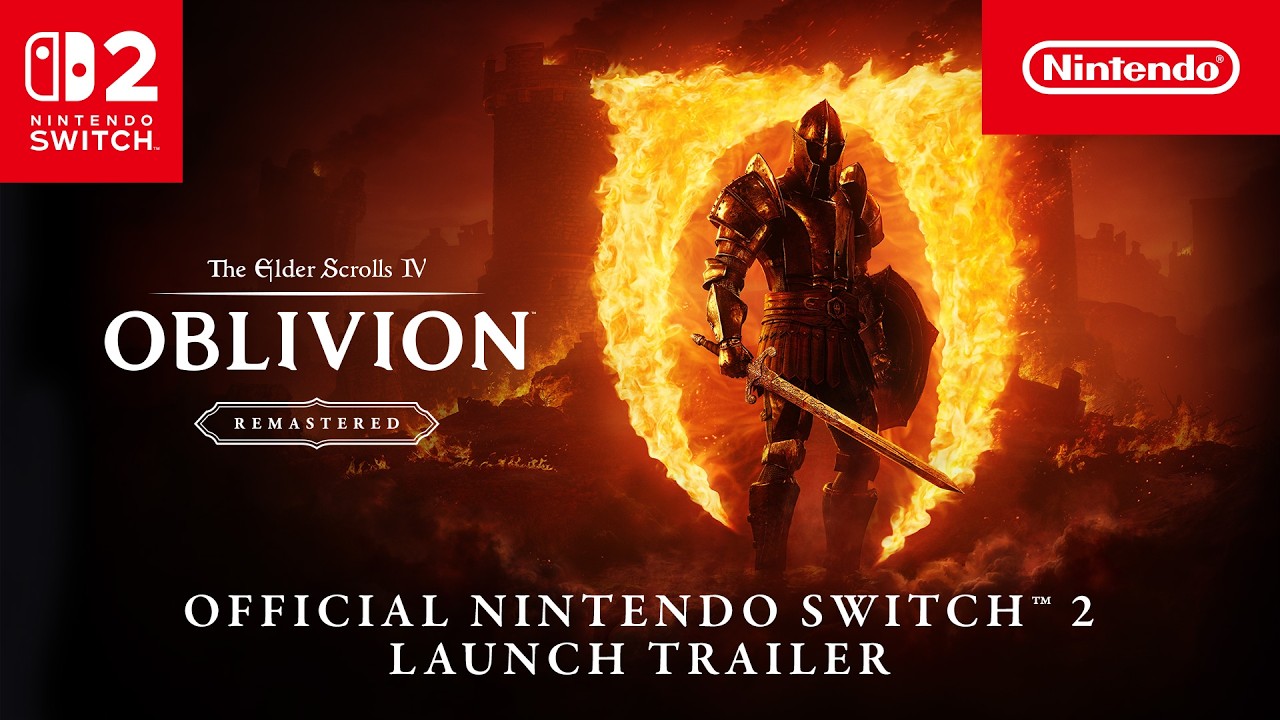
The launch is accompanied by a new trailer marking Oblivion Remastered’s arrival on Nintendo Switch 2. It serves as the final invitation for players who have been waiting to explore Cyrodiil on Nintendo hardware, highlighting the fantasy setting, dangerous enemies, dramatic battles, and freedom that define the experience. For longtime Elder Scrolls fans, the footage taps into a powerful bit of nostalgia. The Imperial City, forests of Cyrodiil, Daedric landscapes, sword fights, and spellcasting are all instantly recognizable pieces of an adventure that originally appeared in 2006. For newcomers, however, the trailer has a different job. It introduces a huge fantasy world where the character you create and the decisions you make determine what kind of journey unfolds. Whether you become Tamriel’s noble champion or spend your evening stealing every unattended wheel of cheese in sight, Oblivion continues to leave plenty of room for players to write their own strange stories.
Conclusion
The Elder Scrolls IV: Oblivion Remastered finally gives Nintendo players the opportunity to experience Cyrodiil on Nintendo hardware, and the Switch 2 version arrives with much more than portability alone. Updated visuals and modernized gameplay are joined by touchscreen support, gyro aiming, Mouse Mode, motion controls, HD Rumble, and system-specific performance optimization. The inclusion of Shivering Isles, Knights of the Nine, and the additional downloadable releases also means newcomers can experience the broader Oblivion package without having to piece together its major adventures separately. Physical collectors have the added option of a Deluxe Edition cartridge containing the complete base game, while digital buyers can choose between Standard and Deluxe editions through the Nintendo eShop. Nearly two decades after Oblivion first opened the gates to Cyrodiil, one of Bethesda Game Studios’ defining RPGs has found another audience. This time, the Imperial City, Daedric realms, and countless roadside distractions can travel wherever a Nintendo Switch 2 goes.
FAQs
- Is The Elder Scrolls IV: Oblivion Remastered available on Nintendo Switch 2?
- Yes. The Elder Scrolls IV: Oblivion Remastered launched for Nintendo Switch 2 on August 11, 2026, and is available digitally as well as through a physical Deluxe Edition.
- What resolution and frame rate does Oblivion Remastered target on Switch 2?
- Bethesda lists handheld mode at 900p and 30 FPS and docked mode at 1080p and 30 FPS. The Nintendo Switch 2 version also supports DLSS anti-aliasing.
- Does Oblivion Remastered include Shivering Isles on Nintendo Switch 2?
- Yes. Shivering Isles and Knights of the Nine are included, along with additional downloadable releases including Fighter’s Stronghold, Spell Tomes, Vile Lair, Mehrune’s Razor, The Thieves Den, Wizard’s Tower, The Orrery, and the Horse Armor Pack.
- Does the physical Switch 2 release contain the game on the cartridge?
- Yes. Bethesda states that the physical Deluxe Edition uses a cartridge containing the complete base game. The Standard Edition is offered digitally rather than as a physical cartridge edition.
- What Nintendo Switch 2 features does Oblivion Remastered support?
- The Nintendo Switch 2 edition supports touchscreen input, HD Rumble, gyro aiming, Joy-Con 2 Mouse Mode, Joy-Con 2 motion controls, DLSS anti-aliasing, and GameChat. Mouse controls and motion controls cannot be enabled simultaneously.
Sources
- The Elder Scrolls IV: Oblivion Remastered Available Now on Nintendo Switch 2, Bethesda Softworks, August 11, 2026
- The Elder Scrolls IV: Oblivion Remastered Nintendo Switch 2 Features, Bethesda Game Studios, August 11, 2026
- The Elder Scrolls IV: Oblivion Remastered Patch 1.0 (Nintendo Switch 2) – August 11, 2026, Bethesda Softworks, August 11, 2026
- The Elder Scrolls IV: Oblivion Remastered Comes to Nintendo Switch 2 on August 11, Bethesda Softworks, June 30, 2026
- Elder Scrolls IV: Oblivion Remastered Launches August, Physical Edition Confirmed, Nintendo Life, June 30, 2026