














Summary:
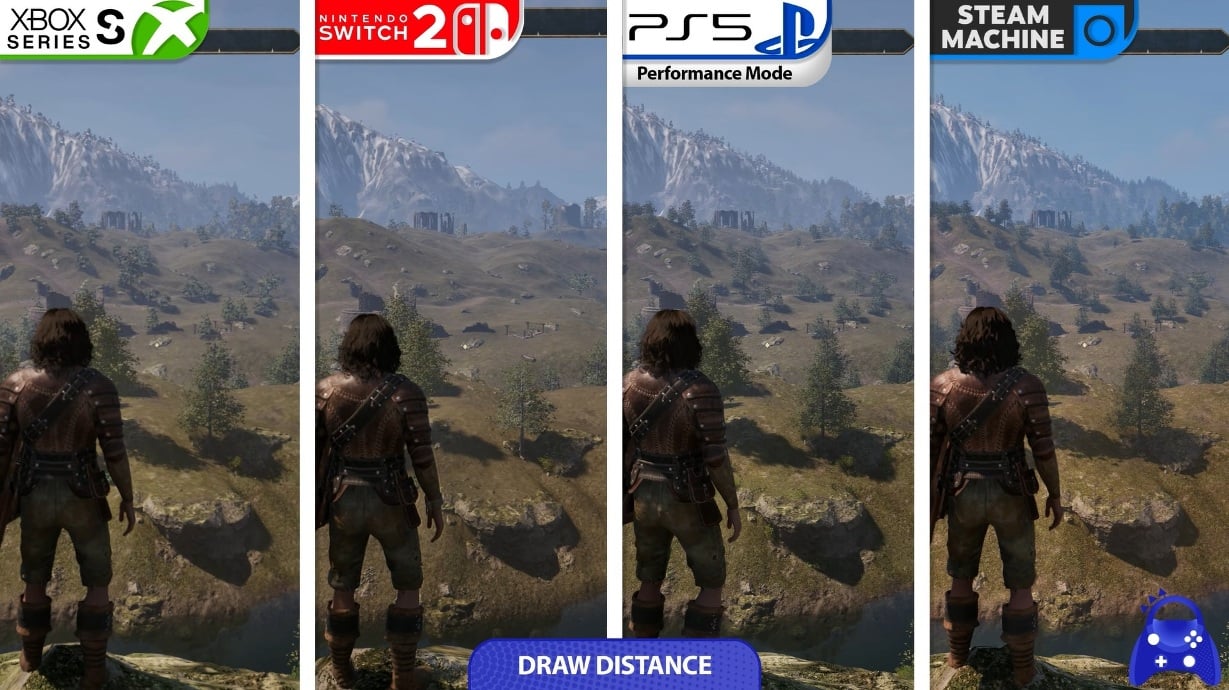
The Elder Scrolls IV: Oblivion Remastered made its Nintendo Switch 2 debut on August 11, and a new graphics comparison offers a closer look at what Bethesda’s enormous open-world RPG looks like on Nintendo’s hardware. The comparison from ElAnalistaDeBits places the Nintendo Switch 2 release alongside the PlayStation 5, Xbox Series S and Steam Machine versions, revealing some of the compromises made to bring Cyrodiil to a portable system. Visual settings have understandably been reduced in several areas, with draw distance standing out as one of the clearest differences. Even so, the Nintendo Switch 2 version reportedly maintains visual quality above the lowest PC settings in several respects.
Image reconstruction also plays an important role. DLSS is used on Nintendo Switch 2 and appears to produce a notably sharp presentation, with the comparison indicating that the image can look sharper than the Xbox Series S version despite Nintendo’s system targeting a lower output resolution. Bethesda previously confirmed targets of 1080p and 30 FPS while docked and 900p and 30 FPS during handheld play. The new footage suggests that the 30 FPS target can experience more obvious drops while exploring demanding outdoor environments. Beyond the technical discussion, this is still the full Oblivion Remastered experience, including the enormous province of Cyrodiil, refined gameplay, Shivering Isles, Knights of the Nine and the additional DLC released for the original adventure.
Oblivion Remastered graphics comparison puts Nintendo Switch 2 against stronger hardware
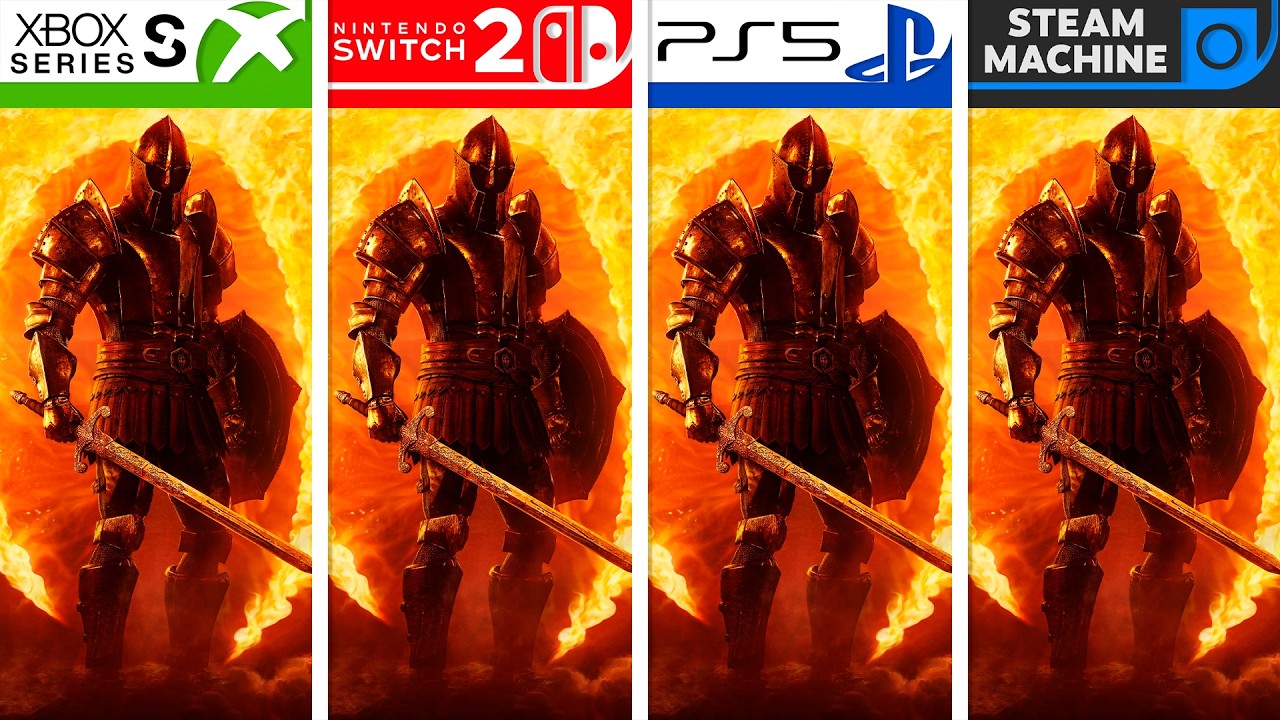
The Elder Scrolls IV: Oblivion Remastered represents the sort of game that immediately raises questions when it arrives on portable hardware. The remaster dramatically rebuilds the presentation of Bethesda’s 2006 RPG, and that means the Nintendo Switch 2 version has considerably more graphical work to handle than the original Oblivion ever demanded. A new comparison from ElAnalistaDeBits provides an opportunity to see how Nintendo’s version handles that challenge by placing it alongside PlayStation 5, Xbox Series S and Steam Machine footage. Unsurprisingly, Nintendo Switch 2 doesn’t reproduce every setting found on the more powerful systems. What matters more is how intelligently those compromises have been made. Based on the comparison, the port retains much of the remaster’s visual identity while selectively reducing settings that would place additional strain on the hardware. The result isn’t identical across platforms, but it doesn’t need to be. The more interesting question is whether Cyrodiil still looks convincing while you’re wandering across it with a Switch 2 in your hands.
Nintendo Switch 2 makes clear visual compromises while preserving the remaster’s look
Graphics comparisons can sometimes become a game of spotting individual blades of grass, but the broader impression matters just as much. Nintendo Switch 2 naturally sits below PlayStation 5 and more powerful PC hardware in several visual areas, yet the comparison suggests that Bethesda and its development partners haven’t simply pushed everything to the lowest possible setting. The Switch 2 presentation reportedly sits above low PC settings in a number of respects, allowing the remaster to retain much of its refreshed atmosphere. Lighting, environmental detail and the rebuilt landscapes remain important because Oblivion is a game where exploration is half the appeal. You’ll spend enormous amounts of time walking through forests, approaching distant ruins and watching settlements emerge over the horizon. If those environments lost too much detail, the world could start feeling strangely empty. Instead, the adjustments appear more targeted, prioritizing a recognizable version of the remastered Cyrodiil while accepting that certain aspects need to be pulled back.
Reduced draw distance is one of the more visible Switch 2 differences
Draw distance is among the clearer compromises visible in the Nintendo Switch 2 release. That’s hardly surprising for an open-world RPG where the game may need to display forests, architecture, characters, terrain and environmental effects across considerable distances. Reducing how much detail is rendered far away can free resources for the things happening closer to the player, and that trade makes particular sense on portable hardware. The difference becomes easier to spot when footage is placed directly beside versions running on stronger systems. Distant vegetation or environmental details may appear less prominently, while other objects can become visible closer to the player. During ordinary play, however, most people won’t spend their evening repeatedly pausing beside a tree to count how many bushes exist three hills away. The important balance is whether these reductions become distracting while exploring. Judging from the available comparison, they’re noticeable but don’t fundamentally transform the appearance of Cyrodiil.
DLSS helps Nintendo Switch 2 deliver surprisingly sharp image quality
One of Nintendo Switch 2’s most valuable tools for demanding games is NVIDIA DLSS, and Oblivion Remastered appears to make meaningful use of it. Rather than relying exclusively on brute-force rendering, DLSS can reconstruct an image from a lower internal resolution and produce a cleaner final presentation. That matters enormously for something as demanding as Oblivion Remastered because it gives developers additional room to balance graphical quality and performance. According to the new comparison, DLSS performs particularly well here, helping the Switch 2 version produce a sharp image. ElAnalistaDeBits even indicates that Nintendo’s version can appear sharper than Xbox Series S in some comparisons despite the Switch 2 having a lower output target. Sharpness isn’t the only measurement of visual quality, of course, but it can make a substantial difference on detailed architecture, foliage, character equipment and distant scenery. It’s one of those technical tricks that largely disappears when it works properly, which is exactly what you want.
Oblivion Remastered targets 1080p docked and 900p in handheld mode
Bethesda has confirmed that The Elder Scrolls IV: Oblivion Remastered targets 1080p at 30 FPS when Nintendo Switch 2 is docked, while handheld play targets 900p at 30 FPS. Those numbers provide useful context for the latest comparison. A 900p target is particularly well suited to the system’s portable display, where the smaller screen can make resolution differences less obvious than they would appear on a large television. Docked play increases the target to 1080p, allowing the game to present a higher-resolution image when connected to a TV. DLSS then becomes part of the equation, helping reconstruct the final picture while keeping the underlying workload manageable. Raw resolution figures never tell the entire story, especially once modern reconstruction techniques get involved. Image stability, anti-aliasing, texture detail and reconstruction quality can all influence how clean a game actually looks. In Oblivion’s case, the early comparison suggests that the chosen combination produces a surprisingly crisp result on Switch 2.
A 30 FPS target comes with more noticeable drops in demanding outdoor areas
Both portable and docked play target 30 FPS, giving Oblivion Remastered a consistent performance goal across the two Nintendo Switch 2 configurations. The graphics comparison indicates, however, that performance can fall below that target more noticeably in open environments. Large outdoor spaces are naturally difficult territory for a game like this. Cyrodiil can have vegetation, distant scenery, NPCs, enemies, physics objects, weather and lighting effects all demanding attention at once, and the remaster’s dramatically upgraded visual presentation adds even more pressure. Indoor areas or less complicated scenes can therefore behave differently from sprawling exterior landscapes. Players who are particularly sensitive to frame-rate fluctuations are likely to notice those dips more quickly than others. Still, the fact that such a visually ambitious remaster is running on a portable Nintendo system remains noteworthy. The comparison also gives prospective players a clearer idea of the trade involved: portability and the complete Oblivion experience come with a 30 FPS ceiling and some performance fluctuations.
The remaster brings the complete Oblivion adventure to Nintendo Switch 2
Technical comparisons are interesting, but they’re only one side of what Oblivion Remastered brings to Nintendo Switch 2. Underneath the resolutions, reconstruction methods and frame-rate measurements is one of Bethesda Game Studios’ best-known RPGs. The remaster modernizes the 2006 release with substantially rebuilt visuals and refined gameplay while preserving the enormous adventure that made the original so memorable. Players are dropped into Cyrodiil as the Empire faces a catastrophic supernatural threat. Oblivion Gates are opening across the province, allowing Daedric forces to spill into Tamriel, and what begins as one prisoner’s unexpected escape quickly grows into something much larger. You’re free to follow the central storyline, wander away for hours, join factions, explore caves or discover strange side stories that have almost nothing to do with saving the world. That’s classic Bethesda design. The main quest may be shouting for your attention, but there’s always a suspicious ruin on the horizon whispering, “What if you went over here instead?”
Cyrodiil’s open world remains the heart of the experience
Cyrodiil is ultimately the reason players can disappear into Oblivion for dozens or even hundreds of hours. The province combines forests, mountains, settlements, forts, caves, ruins and major cities into a world designed around curiosity. Follow a road and you might discover an inn with its own problem. Ignore the road and you may stumble across an ancient ruin filled with enemies and treasure. Head toward a city and you can easily become distracted by faction quests, rumors or unusual characters before remembering what you originally intended to accomplish. Oblivion Remastered rebuilds that landscape with far more modern visual technology while keeping the underlying geography and identity recognizable. On Nintendo Switch 2, that structure gains another appealing quality: portability. An RPG built around wandering naturally suits a system that can move between a television and handheld play. You can spend an evening exploring Cyrodiil on the couch, then continue the same adventure elsewhere without changing platforms.
Character freedom lets players create their own path through Tamriel
Oblivion doesn’t lock you into a predefined hero with one style of combat. You can become a heavily armored warrior who settles arguments with an enormous weapon, an assassin who treats shadows like a second home, a spellcaster capable of turning dangerous encounters into magical chaos or a character combining several disciplines. That flexibility remains central to the remaster. Skills, equipment, magic and exploration all contribute to the feeling that you’re developing your own version of the protagonist rather than simply following somebody else’s script. It also creates plenty of room for experimentation. Maybe you planned to create a respectable knight and somehow ended up sneaking through houses at midnight. Oblivion has a habit of doing that. Factions and side quests further reinforce that freedom by opening storylines that can feel almost like separate adventures. The Dark Brotherhood, Mages Guild, Fighters Guild and Thieves Guild provide very different experiences, while numerous standalone quests offer their own characters, twists and rewards.
Shivering Isles, Knights of the Nine and additional DLC are included
The Nintendo Switch 2 release isn’t limited to the original base adventure. Bethesda confirms that the standard experience includes the major Shivering Isles and Knights of the Nine expansions along with the additional downloadable releases associated with Oblivion. Shivering Isles is the obvious star of that collection, opening the door to the bizarre realm ruled by the Daedric Prince Sheogorath. Its unusual landscapes, eccentric residents and distinctive storyline make it feel dramatically different from Cyrodiil. Knights of the Nine takes another approach, sending players through a more traditional heroic quest centered around a legendary order and sacred relics. Additional releases include Fighter’s Stronghold, Spell Tomes, Vile Lair, Mehrune’s Razor, The Thieves Den, Wizard’s Tower, The Orrery and, yes, the famous Horse Armor Pack. The latter became one of gaming’s earliest symbols of paid downloadable extras, so its inclusion now feels almost like preserving a peculiar little piece of industry history alongside the game itself.
Oblivion Remastered launched on Nintendo Switch 2 on August 11
The Elder Scrolls IV: Oblivion Remastered launches digitally and physically for Nintendo Switch 2 on August 11, 2026. Bethesda has confirmed that the physical Deluxe Edition includes a cartridge containing the full base game rather than functioning solely as a download key, while the various editions provide access to the main expansions and additional downloadable extras. The Switch 2 version also introduces hardware-specific features such as motion controls. For Nintendo players, this marks the arrival of another major Bethesda RPG on the platform and gives Oblivion something it hasn’t traditionally had on consoles: a genuinely portable way to roam Cyrodiil. The graphics comparison makes clear that portability requires compromises, particularly in draw distance and performance during demanding outdoor sequences. Yet DLSS appears to help the system maintain a sharp presentation, while the 1080p docked and 900p handheld targets provide sensible profiles for each mode. The gates are opening again, and this time you can carry Cyrodiil with you.
Conclusion
The Elder Scrolls IV: Oblivion Remastered graphics comparison provides an encouraging first look at how Bethesda’s ambitious remaster translates to Nintendo Switch 2. It can’t match every visual setting offered by PlayStation 5 or stronger hardware, with reduced draw distance and frame-rate drops in open environments among the more obvious compromises. At the same time, DLSS appears to be doing valuable work, creating a sharp final image despite the system’s lower rendering targets. With 1080p targeted while docked, 900p targeted in handheld mode and a 30 FPS target across both configurations, the technical profile is now reasonably clear. What players ultimately receive is still the enormous Oblivion experience, complete with Cyrodiil, its flexible character progression, the Shivering Isles and Knights of the Nine expansions and the additional DLC. For anyone who has wanted to explore Bethesda’s remastered RPG away from a television or desk, the Nintendo Switch 2 release offers a distinctly different way to return to Tamriel.
FAQs
- When does The Elder Scrolls IV: Oblivion Remastered release on Nintendo Switch 2?
- The Elder Scrolls IV: Oblivion Remastered launches for Nintendo Switch 2 on August 11, 2026. Bethesda is releasing the game digitally and physically.
- What resolution does Oblivion Remastered target on Nintendo Switch 2?
- The Nintendo Switch 2 version targets 1080p while docked and 900p during handheld play. DLSS reconstruction is used as part of the game’s visual presentation.
- Does Oblivion Remastered run at 60 FPS on Nintendo Switch 2?
- No. Bethesda’s Nintendo Switch 2 version targets 30 FPS in both docked and handheld modes. The graphics comparison also shows more noticeable performance drops in some open environments.
- Does Oblivion Remastered use DLSS on Nintendo Switch 2?
- Yes. The Nintendo Switch 2 version uses NVIDIA DLSS, which helps reconstruct the image and contributes to a sharp presentation despite the hardware’s lower output targets compared with some competing platforms.
- Are Shivering Isles and Knights of the Nine included on Switch 2?
- Yes. The Nintendo Switch 2 release includes the Shivering Isles and Knights of the Nine story expansions along with additional DLC including Fighter’s Stronghold, Spell Tomes, Vile Lair, Mehrune’s Razor, The Thieves Den, Wizard’s Tower, The Orrery and the Horse Armor Pack.
Sources
- The Elder Scrolls 4: Oblivion Remastered Nintendo Switch 2 vs. PS5 vs. Xbox Series S vs. Steam Machine graphics comparison, Nintendo Everything, August 10, 2026
- The Elder Scrolls IV: Oblivion Remastered Comes to Nintendo Switch 2 on August 11, Bethesda Softworks, June 30, 2026
- Elder Scrolls IV Oblivion Remastered Switch 2 is 900p 30fps handheld and 1080p 30fps docked, has DLSS, My Nintendo News, June 30, 2026
- Elder Scrolls IV: Oblivion Remastered Launches August, Physical Edition Confirmed, Nintendo Life, June 30, 2026
- The Elder Scrolls IV: Oblivion Remastered, Bethesda Softworks, August 11, 2026