




Summary:
The Legend of Zelda: Ocarina of Time on Nintendo Switch 2 brings back a lot of the game you remember, but Nintendo has quietly added small touches that change how the adventure feels. From a new Hall of Fallen Foes and collectible fairy thoughts to gameplay tweaks like a manual jump button and a confirmed 60 frames per second mode, these adjustments polish the original while preserving its soul. Inventory and quality-of-life changes – such as a fifth bottle, a bug-catching moment in the potion shop, and a consumable that summons a Deku merchant – affect how you approach exploration and dungeons. Amiibo support is broader, NPC dialogue has been expanded with voice work, and the soundtrack has been given an orchestral refresh. Whether you want to hunt every secret or just enjoy the visuals and smoother controls, these tweaks matter to both new players and longtime fans.
The Legend of Zelda Ocarina of Time – New museum-style hub – Hall of Fallen Foes
The Hall of Fallen Foes is a fresh feature that acts like a museum and a challenge room in one. Statues and displays commemorate enemies you have defeated, while detailed entries let you learn more about enemy behavior and where they appear across Hyrule. More importantly for players who love combat or speedrunning, many statues also let you initiate timed rematch fights against bosses and minibosses, turning familiar encounters into optional time trials. That adds replay value without forcing anyone to redo the main story. If you enjoy comparing kill times or testing new tactics, the Hall gives you a reason to revisit battles. It also functions as a narrative touchstone, reminding you of the journey so far with visual flourishes and small lore bits. The combination of record-keeping, optional challenge, and aesthetic fan service makes this hub a neat new reason to poke around the world map again.
Fairy thoughts and Navi’s updated role
Fairy thoughts are collectible environmental moments that trigger Navi to reveal memories or secrets tucked into the scenery. Unlike the original title, where Navi occasionally pointed you to a useful spot, these fairy thoughts are a deliberate, discoverable feature that rewards curiosity. You will find glowing marks around Hyrule that, when approached, expand into short text or voiced lines that add context to places and characters. This makes exploration feel richer because the world now stores tiny narrative flourishes you can uncover if you look closely. Meanwhile, Navi’s presentation has been subtly updated – the fairy’s light looks slightly fuzzy and her wings carry a more intricate pattern – giving her more personality in cutscenes and gameplay. These changes let Navi offer useful hints without breaking immersion, and they give long-term fans new small details to notice on repeat visits to favorite locations.
Performance and controls – smoother play at 60 frames per second
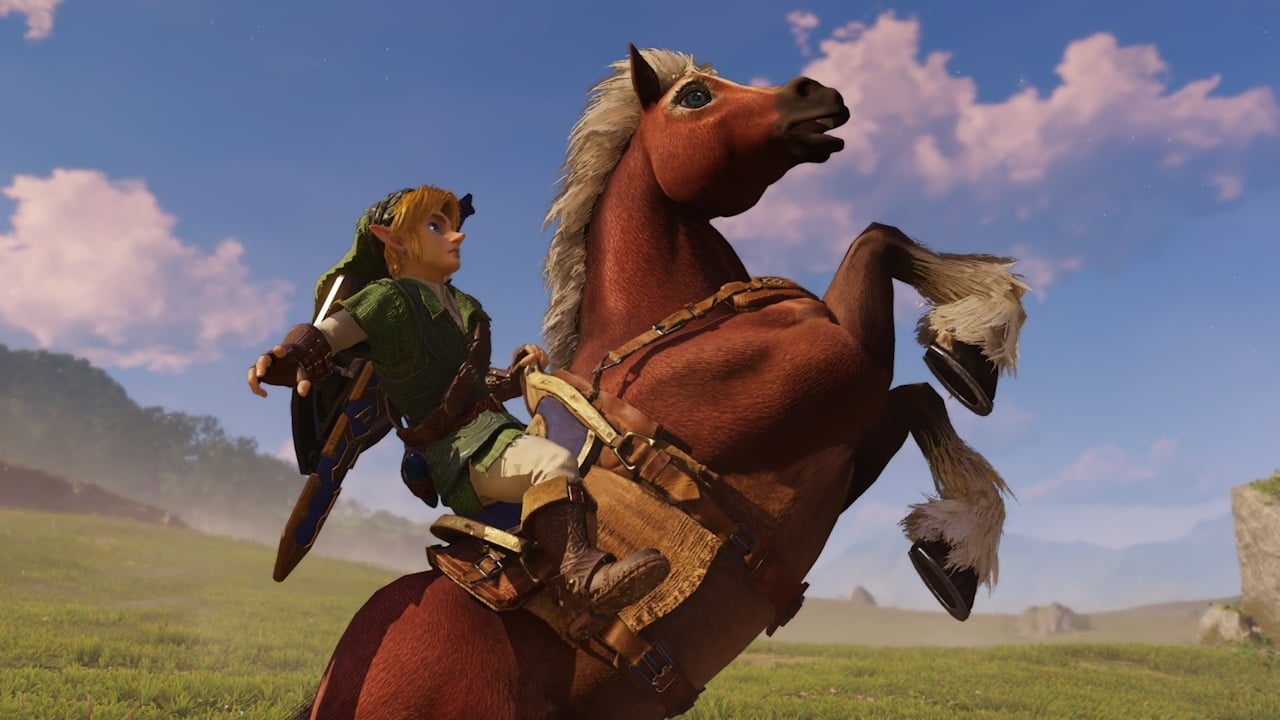
One of the most welcome technical updates is the remake running at 60 frames per second, which makes movement, combat, and camera responses feel much snappier compared to the original. That higher frame rate pairs with modern camera controls and a dedicated jump button, so platforming and combat can use precise inputs instead of relying on older automatic actions. A more responsive control scheme changes how you approach encounters and puzzles – you can time jumps, weave attacks midair, and react to enemy patterns with less latency. These improvements are especially noticeable in dungeons where camera angles and tight spaces used to complicate navigation. The net result is a version of Ocarina that plays like a modern action-adventure while keeping the mechanics and pacing that made the original memorable.
Inventory tweaks and on-the-fly convenience items
The remake updates how you manage supplies and opens up new options during exploration. Inventory now includes five bottle slots instead of four, and the extra bottle is earned through a short in-town side moment: the potion shop owner asks you to catch a bug running around the store. That small sequence blends charm with reward, and it gives you another slot for potions, fairies, or helpful items. Another clever addition is the Business Scrub Seed – a consumable that summons a Deku scrub merchant right where you are. If you run out of arrows, bombs, or potions deep in a dungeon, you can summon a shop and restock instead of backtracking. Both changes reduce tedious runs to town and encourage continuous play, while the new bottle moment adds a bit of world-building personality to something that used to be purely functional.
Amiibo support and the two new figures
Amiibo compatibility has been broadened – existing Legend of Zelda series amiibo provide in-game rewards like health and ammo refills when scanned. Nintendo also plans two new Young Link and Young Zelda amiibo in 2027 that unlock Nintendo 64-style masks inside the game. That means whether you have older figures on the shelf or pick up the new ones later, amiibo scanning is a viable way to get emergency items or cosmetic touches. The amiibo drops are presented as optional conveniences – not mandatory progression tools – so collectors and completionists can benefit without the system feeling paywalled. If you want to skip a long fetch or survive a tricky room, a quick tap of an amiibo can turn the tide, and the retro masks are a nice nod to the N64 original for fans who enjoy visual callbacks.
Ocarina options and playing the songs
Playing ocarina tunes is more flexible in this remake. The inventory shows both Saria’s Ocarina and the Ocarina of Time when you own both, and you can choose which one to play – preserving sentimental beats from the story instead of having them quietly replaced. The game also supports multiple input options for songs: button-based playing remains, but you can hum into the Switch 2’s microphone or even play a real instrument to trigger melodies. There’s a virtual songbook to help remember inputs and the Nintendo Switch App includes a Play Ocarina feature for practice and sharing. Those options make music feel tactile again and add accessibility – if you struggle with quick button patterns you can sing or hum and still get the correct in-game effect.
Dungeon changes and redesigned puzzle moments
While the remake keeps the original dungeon order and core themes intact, some rooms and puzzles have been retuned or redesigned to suit modern expectations. The Forest Temple previews show new lifts, slightly altered puzzle sequences, and visual cues that help clarity without removing the challenge. Small changes like removing unnecessary timers or adding a lift to reduce repetition demonstrate a focus on quality-of-life instead of difficulty reduction. Expect similar small revisions across other dungeons – tweaks to enemy placement, adjusted puzzles, and new visual hints help maintain flow while still rewarding attention and skill. These changes keep the spirit of exploration alive, letting the dungeons feel fresh for returning players while remaining fair to newcomers.
Voice work and the orchestral soundtrack
Voice acting and a fully orchestrated score are two of the biggest presentation upgrades. Cutscenes now include spoken lines and NPC dialogue has been expanded, which gives side characters more personality and clarifies motivations in key scenes. The orchestral soundtrack refreshes familiar themes with live instruments and richer arrangements while keeping the melodies you remember. Together these upgrades change the tone of the world – dialogue now carries more emotional weight and the music adds cinematic presence. If you’re used to silent exchanges, hearing Saria, the Deku Tree, or Ganondorf in full voice will feel different, but it’s designed to enhance storytelling rather than overwrite the memories fans hold of the original soundtrack.
Conclusion
Ocarina of Time on Nintendo Switch 2 refreshes the classic with a careful blend of nostalgia and modern design. Small additions – the Hall of Fallen Foes, fairy thoughts, a fifth bottle, and the Business Scrub Seed – combine with technical upgrades like 60fps and improved controls to make the game feel both familiar and new. Expanded dialogue, voice work, and an orchestral score give the world added depth, and amiibo support provides optional convenience for players who want it. Whether you are replaying the story for the hundredth time or stepping into Hyrule for the first time, these tweaks make exploration smoother and moments more memorable. Keep an eye out for the little secrets – they are designed to reward curiosity and a player’s attention.
FAQs
- Will the remake run at 60 frames per second?
- Yes – the remake has been confirmed to run at 60 frames per second, giving smoother movement and a more responsive feel during exploration and combat.
- How do I get the fifth bottle?
- The extra bottle is obtained from a small side moment in the potion shop where the shopkeeper asks you to catch a bug running around the store.
- What does the Business Scrub Seed do?
- Throwing a Business Scrub Seed summons a Deku scrub merchant to your current location so you can buy arrows, bombs, and other supplies without leaving a dungeon.
- Do old Zelda amiibo work with the remake?
- Yes – existing Legend of Zelda series amiibo provide in-game rewards, and two new Young Link/Young Zelda amiibo in 2027 unlock retro-style masks.
- Can I still play ocarina songs with buttons?
- Absolutely – button input remains available, but you can also hum into the Switch 2 mic or play a real instrument to have Link respond.
Sources
- You have been summoned to watch the new Legend of Zelda: Ocarina of Time – Overview Trailer!, Nintendo News, October 14, 2026
- Zelda: Ocarina Of Time On Switch 2 Brims With Breathtaking Detail, Plus One Familiar Irritation, Nintendo Life, October 15, 2026
- New Ocarina of Time trailer reveals a hall of monster statues and hidden fairy secrets, Notebookcheck, October 15, 2026
- Zelda: Ocarina of Time remake details you may have missed, Nintendo Everything, October 24, 2026