




Summary:
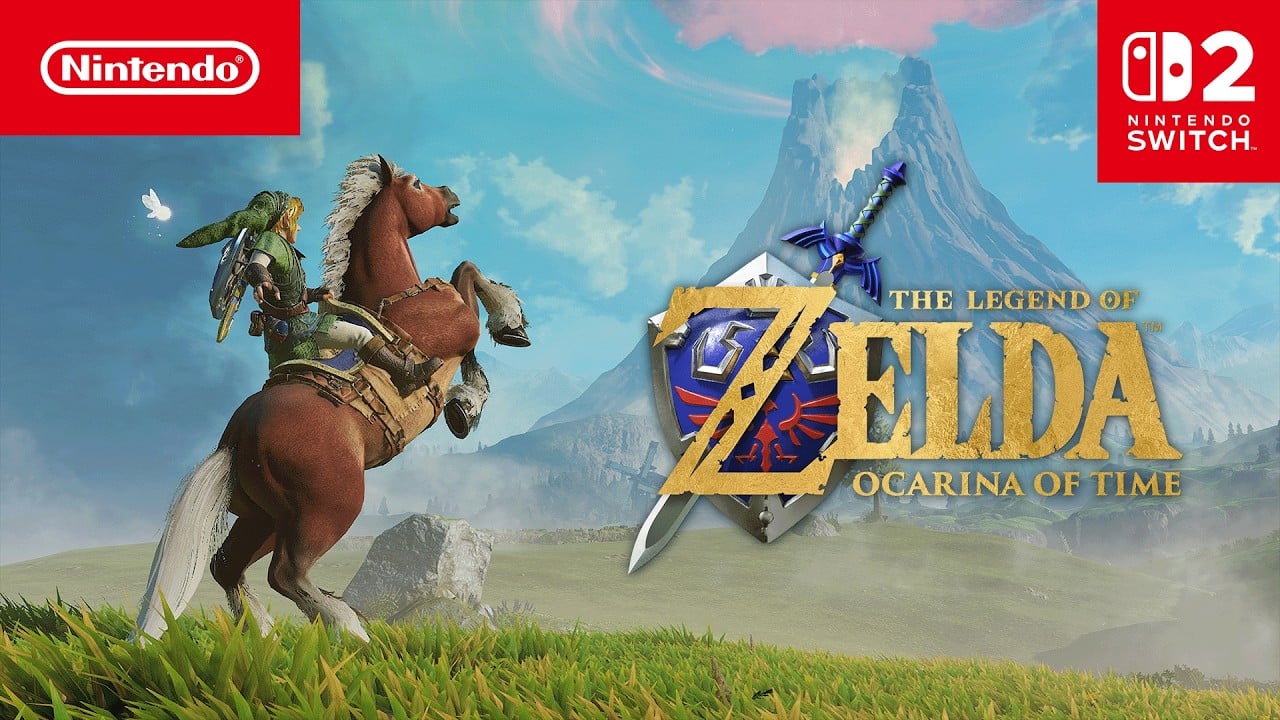
The new “What’s New” trailer for The Legend of Zelda: Ocarina of Time on Nintendo Switch 2 lays out a bold reimagining of the classic that keeps the soul of the original while modernizing how you play. The trailer highlights fresh movement options like dash and manual jump, optional gyro aiming, and a fully controllable camera that makes exploration feel freer and more intentional. Nintendo also leaned into immersion with fully voiced cutscenes, a full symphonic score, and a microphone-powered ocarina that responds when you hum or play real notes. Added systems such as Threads of Time and the Hall of Fallen Foes give players better ways to track progress and rematch memorable enemies. If you’re following NintendoReporters for Switch 2 coverage, this trailer confirms that Nintendo is balancing reverence for the original with meaningful updates for modern players.
The Legend of Zelda: Ocarina of Time – Trailer Highlights – A quick guide to what stood out
The trailer serves as a concise showcase of the remake’s major changes and fan-facing additions, and it does so without hiding the game’s original charm. You get a clear look at updated traversal, combat tweaks and UI improvements that make the game feel current while keeping familiar beats intact. Key moments in the video underline how environments are rebuilt with higher-fidelity assets and richer lighting, while cutscenes now include voice acting and expanded dialogue to give characters more personality. The ocarina mechanic is explicitly shown working with the system microphone, which is a neat bridge between the player’s world and Link’s. All of this is presented in a way that reassures longtime fans the story and level designs remain recognizably Ocarina of Time, even as the remake adds new layers to play with.
Movement and control changes – jump, dash, camera and gyro options
One of the biggest quality-of-life shifts shown is that automatic jumps are gone and replaced with a manual jump button, which changes how platforming and edge interactions play out. Dashing and a roll-into-sprint option let Link move with more intent, which speeds up exploration and reduces momentum friction. The trailer also highlights full right-stick camera control, finally giving players the freedom to examine Hyrule from any angle rather than relying on context-sensitive framing. For ranged combat, gyro aiming is available as an optional control method, appealing to players who prefer motion-assisted precision. These updates collectively modernize the feel of the game: they preserve the puzzles and level flow but introduce player agency that was limited in the original. If you prefer classic input, many of these options are optional so you can tailor the experience to your taste.
Ocarina interaction and microphone features
The remake leans hard into the ocarina as a tactile element that connects the player to Link’s world. You can still play songs with traditional button input, but the Switch 2’s built-in microphone adds an alternate route: hum, whistle or play notes on a real instrument and the game can recognize them to trigger in-game effects. Nintendo also showed a playable physical ocarina accessory and hinted at an electric version from a third party, which suggests an emphasis on musical play outside of pure button presses. This feature is clever because it rewards creativity and gives players a sense of presence—there’s a satisfying novelty to seeing Link respond to sound you produce in the room. The Zelda Notes companion features and app tie-ins also make it easier to collect and share songs or quiz yourself, expanding the ocarina into a social, app-connected experience as well.
Threads of Time and other quality-of-life systems
New UI systems like Threads of Time help you keep track of objectives and story milestones, turning the tapestry of progress into a visible record you can consult whenever needed. That kind of in-game journal reduces the need to chase NPC hints or recheck a long list of tasks, which is especially useful if you step away and come back later. The trailer shows examples of gossip quests and map hints tied to the Zelda Notes app, which can push reminders or unlockables into a companion experience on your phone. These additions are clearly intended to help both newcomers and veterans by offering gentle direction without robbing exploration of its mystery. With progress tracking and optional hints, Nintendo is lowering friction for players who want to focus on puzzles and story rather than hunting for the next objective.
Hall of Fallen Foes and rematch options
A new area called the Hall of Fallen Foes gives the remake a museum-like touch where statues of defeated enemies are displayed and catalogued. That gallery concept is both a collector’s corner and a boss rematch hub: approach a statue to read details about the foe, where it was encountered, and even trigger a rematch battle for select bosses. For completionists and trophy chasers, this provides a tidy checkpoint to revisit battles and improve clear times. The feature also adds a meta layer of reward and lore, because reading enemy descriptions can reveal bits of in-world context that enrich the narrative. It’s a smart way to celebrate victories and keep the late game engaging without altering the main campaign’s pacing.
Visuals, orchestral music and fully voiced cutscenes
Visually, the remake upgrades models, textures and environmental detail while keeping the original level geometry familiar enough to trigger nostalgia. Lighting, particle effects and animation polish lift the world without turning it into a wholly different map; you should recognize every major location but enjoy seeing it in a new light. Musically, Nintendo moved away from synthesized audio to a full symphonic orchestral presentation, which gives iconic themes more emotional weight. Cutscenes are now fully voiced with expanded lines for characters, which adds personality and clarity to interactions that were once text-only. All three elements—visuals, soundtrack and voice work—combine to make Hyrule feel more cinematic, so moments that used to rely on player imagination now carry extra emotional beats performed by voice actors and a richer score.
Zelda Notes, amiibo and app integration
The remake supports the Zelda Notes service inside the Nintendo Switch App, bringing features like trivia, daily records and map-linked gossip quests into companion play. You can earn points, unlock songs and even share custom ocarina scores via QR codes—little systems that encourage daily engagement long after the main quest is finished. Nintendo also confirmed two new amiibo figures launching in 2027 that unlock special masks, and legacy Zelda amiibo will grant in-game rewards when scanned. These tie-ins extend the experience beyond the console, letting collectors and social players interact with the game’s extras. If you like tracking stats, experimenting with unlocks or collecting cosmetic rewards, the app and amiibo support add meaningful post-launch play value.
Release timing, editions and what to expect at launch
Nintendo has set the release date for The Legend of Zelda: Ocarina of Time on Nintendo Switch 2 for November 5, 2026, and there are several special editions tied to the 40th anniversary festivities. A special Switch 2 40th Anniversary Edition and related hardware launches a week earlier, and early physical print runs include textured foil cover art for collectors. Expect both digital and physical versions to be available at launch, with accessory and peripheral announcements close behind—the trailer and Nintendo’s site mention an official playable ocarina accessory and a HORI electric ocarina. For the latest Switch 2 specific info and hardware details, check our Nintendo Switch 2 hub for ongoing coverage and guides to prepare for launch. The combination of modern systems and nostalgic structure makes this one of the most talked-about remakes in recent Nintendo memory.
Conclusion
The “What’s New” trailer confirms Nintendo’s aim to honor Ocarina of Time’s legacy while updating its mechanics, presentation and systems for modern audiences. Between improved controls, mic-enabled ocarina play, a stat-tracking Threads of Time feature, a Hall of Fallen Foes, and the shift to orchestral music and voiced scenes, the remake looks designed to satisfy longtime fans and newcomers alike. NintendoReporters will be watching launch coverage and player reactions closely as November 5, 2026 approaches—if you’re planning to jump back into Hyrule or try it for the first time, this remake promises a familiar heart with fresh ways to play.
FAQs
- When does the Ocarina of Time Switch 2 remake release?
- It launches on November 5, 2026 across Nintendo Switch 2 regions, with special anniversary hardware available a week earlier.
- Can I still use button input for ocarina songs?
- Yes. Traditional button input remains available alongside the new microphone-based option, so you can choose whichever method you prefer.
- Are the new controls optional?
- Many updates such as gyro aiming and some modern control schemes are optional, letting players customize the balance between classic and updated input.
- What is the Hall of Fallen Foes?
- It’s a new gallery area that catalogs defeated enemies and offers rematch battles for certain bosses, plus lore entries about foes you’ve encountered.
- Will there be amiibo and app features?
- Yes. The game supports the Zelda Notes service in the Nintendo Switch App, and two new Ocarina of Time amiibo figures are planned for 2027, in addition to compatibility with existing Zelda amiibo.
Sources
- You have been summoned to watch the new The Legend of Zelda: Ocarina of Time — Overview Trailer!, Nintendo, October 15, 2026
- The Legend Of Zelda: Ocarina Of Time Remake Has Fully Voiced Cutscenes, A Jump Button, And Tons More, GameInformer, September 8, 2026
- Legend of Zelda: Ocarina of Time Remake Trailer Highlights Gameplay and New Features, Siliconera, October 14, 2026
- Video: Nintendo Highlights Eight New Things In Zelda: Ocarina Of Time (Switch 2), Nintendo Life, October 31, 2026