














Summary:
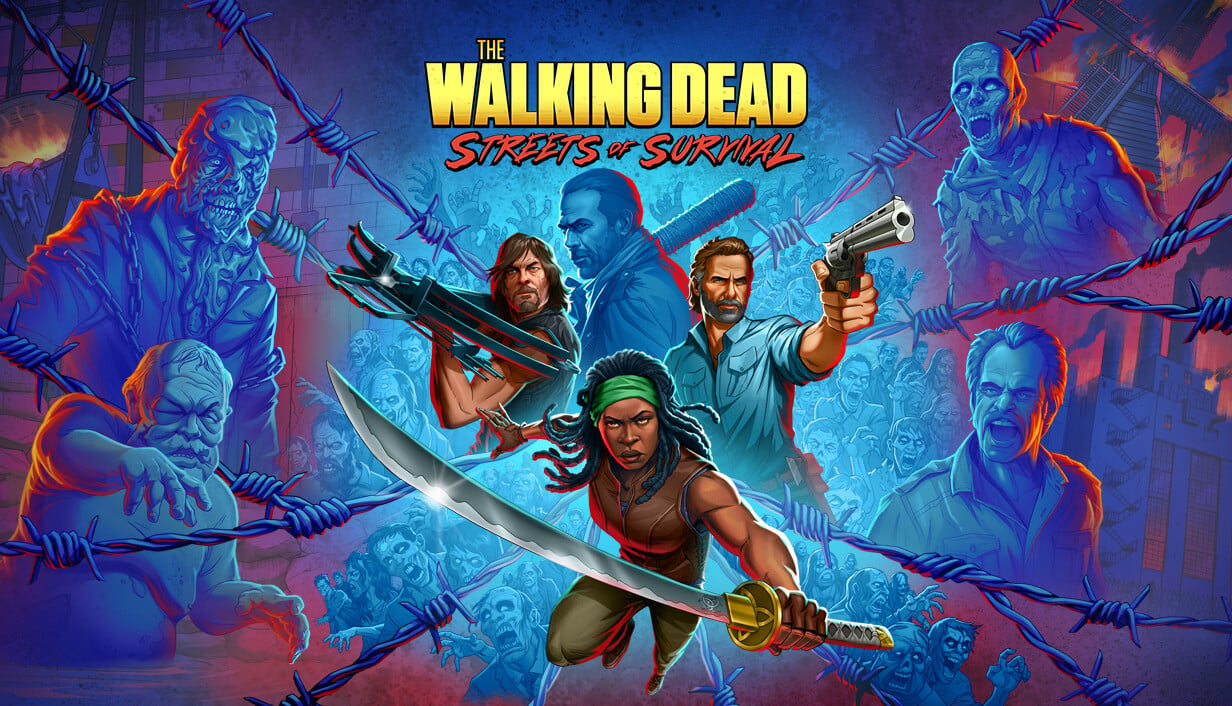
The Walking Dead: Streets of Survival has been revealed for Nintendo Switch 2 and Switch, bringing AMC’s zombie survival world into a hard-hitting arcade brawler format. Developed by Odaclick Game Studio and published by Trailmark Games, the game puts Rick Grimes, Daryl Dixon, and Michonne at the center of a side-scrolling fight against walkers, Saviors, and some of the franchise’s most recognizable threats. Rather than leaning into slow survival horror, this new release focuses on fast combat, signature weapons, crowd control, boss battles, and replayable challenge. The All Out War storyline forms the foundation, giving the campaign a clear conflict built around Alexandria’s fight against Negan and the Saviors. Familiar locations such as Alexandria, Hilltop, and the Sanctuary return, now reshaped as dangerous arcade arenas filled with hazards, swarms, and set-piece moments. Each playable survivor has a different fighting style inspired by the show, with Rick’s magnum, Michonne’s katana, and Daryl’s crossbow offering clear identity on the battlefield. Launch timing has not been confirmed yet, but the announcement already gives Nintendo players a strong look at what to expect: a violent, character-driven beat ’em up that trades quiet dread for frantic survival.
The Walking Dead: Streets of Survival brings arcade survival to Switch 2 and Switch
The Walking Dead: Streets of Survival is taking AMC’s famous undead world in a punchier, more immediate direction on Nintendo Switch 2 and Switch. Instead of asking players to quietly tiptoe through ruined streets with a half-empty backpack and a nervous glance over the shoulder, this new release throws them straight into an arcade brawler where survival is measured in combos, finishers, and split-second decisions. That shift matters because The Walking Dead has always been about pressure, but pressure can take many shapes. Sometimes it is a whisper in the dark. Sometimes it is a locked door. Sometimes it is a crowd of walkers closing in while a human enemy swings first and asks questions never. Here, the pressure looks fast, loud, and messy in the best arcade sense. We get familiar faces, recognizable threats, and a campaign rooted in one of the franchise’s most intense conflicts. The result feels like a different kind of Walking Dead experience, one that keeps the bleak atmosphere but gives it the rhythm of a side-scrolling fight. For Switch 2 and Switch players, that creates an interesting promise: a recognizable world filtered through a genre built around momentum. It is not just about surviving another day; it is about surviving another screen, another swarm, another boss, and another brutal mistake that can turn a clean run into chaos.

A new brawler built around familiar Walking Dead tension
The most interesting thing about The Walking Dead: Streets of Survival is not only that it uses a brawler format, but that the format actually fits the source material better than it might first appear. The Walking Dead has always had a physical, grounded brutality to it. Characters are not superheroes leaping across skylines; they are exhausted survivors who use whatever they have, whatever they know, and whatever nerve remains in the tank. A beat ’em up can turn that survival instinct into something immediate. Every enemy on screen becomes a problem that has to be solved right now, not later. Walkers crowd the space, human enemies bring sharper aggression, and the battlefield becomes a nasty little pressure cooker. That is where the arcade design can shine, because the genre works best when the player is always juggling risk. Do we clear the walkers first, or deal with the armed threat? Do we save a heavy attack for the next wave, or spend it now because this screen is already getting ugly? The Walking Dead thrives on that kind of tension. It is rarely clean, rarely fair, and rarely polite enough to wait its turn. Streets of Survival seems built around that same idea, only with more direct control, more repeatable challenge, and a combat loop that invites players to keep sharpening their instincts.
Rick, Daryl, and Michonne take the fight to the streets
Rick Grimes, Daryl Dixon, and Michonne are smart choices for the playable lineup because each character immediately tells the player something different. Rick brings leadership, grit, and that classic survivor image of someone forced to make impossible decisions under impossible pressure. Daryl brings the loner edge, the hunter’s patience, and a crossbow that feels instantly recognizable even before the first bolt flies. Michonne brings precision, discipline, and her katana, which might be one of the most visually distinct weapons in the entire series. Together, they give the game a strong foundation without needing to explain too much. Fans already understand why these characters matter. Newcomers can still read them clearly from their silhouettes, weapons, and combat roles. That is useful in an arcade brawler, where clarity is gold. When a screen fills with walkers, Saviors, hazards, and boss attacks, the player needs to understand who they are controlling and what that character can do. It is a bit like choosing the right tool from a shed during a storm. A hammer, a saw, and a crowbar can all be useful, but each one solves a different kind of problem. Rick, Daryl, and Michonne should bring that same feeling to combat, giving repeat runs more variety and giving players a reason to master more than one survivor.
The All Out War storyline gives the action a brutal backbone
The Walking Dead: Streets of Survival uses the All Out War storyline as its narrative base, and that gives the game a strong spine from the start. All Out War is not a quiet chapter built around small misunderstandings or isolated danger. It is open conflict, community against community, survival philosophy against survival philosophy, and everyone is trapped in the middle with blood on their boots. That kind of setup is ideal for an arcade brawler because it naturally creates escalation. The player can move from walker-heavy encounters to Savior ambushes, from battered settlements to fortified strongholds, and from ordinary threats to named enemies who carry real weight for fans. It also gives the action a reason to keep moving forward. We are not just clearing random streets because the genre needs another level. We are pushing through a conflict that has recognizable stakes inside The Walking Dead universe. The All Out War framework also allows the game to reimagine events rather than simply retell them scene for scene. That distinction is important. A strict retelling can feel like walking through a museum with buttons. A reimagining gives the developers room to surprise players, remix encounters, and pull threats from across the broader world of the show. That creates a more flexible playground while still keeping the emotional and thematic center intact.
The Saviors turn every encounter into a dangerous standoff
The Saviors are a strong enemy faction for a brawler because they are not just another group of bodies waiting to be knocked down. In The Walking Dead, they represent organization, intimidation, cruelty, and control. That makes them different from walkers in a way that can meaningfully affect the feel of combat. Walkers are pressure through numbers. The Saviors can be pressure through tactics, aggression, and personality. A good arcade encounter needs both. If every enemy behaves like a slow wall of teeth, the rhythm can become predictable. Add human opponents who strike differently, interrupt movement, defend territory, or force quick adaptation, and suddenly the battlefield has teeth of its own. The Saviors can turn a basic street fight into a standoff where positioning matters and mistakes hurt. They also connect directly to Alexandria’s larger struggle, which gives even smaller fights more context. When players face them, it should feel like another step in a broader war rather than a random brawl in a ruined hallway. That matters because the best beat ’em ups often create personality through opposition. The enemies define the stage as much as the heroes do. In Streets of Survival, the Saviors can act as the human blade opposite the walkers’ undead flood, creating a nasty one-two punch that keeps players on edge.
Negan and Simon raise the stakes beyond ordinary enemies
Negan and Simon are exactly the kind of names that make a boss encounter feel heavier before it even begins. Not every enemy needs a long introduction when the audience already knows the danger they represent. Negan, in particular, carries a theatrical menace that fits arcade boss design almost too well. He is not just a physical threat; he is a performance, a threat wrapped in a grin, and that kind of energy can make a multi-phase fight feel personal. Simon brings a different kind of menace, one that can lean into volatility and brute force. Together, they give the Saviors more than faceless muscle. They give the campaign villains who can punctuate the action and make progress feel earned. A strong boss fight in a brawler should do more than soak up damage. It should ask the player to understand spacing, timing, attack patterns, and the character they are using. It should feel like a final exam after the level has spent several screens teaching harsh little lessons. Negan and Simon can serve that role well because they are tied to the story and recognizable to fans. When a boss has narrative weight, every dodge and counter lands with extra flavor. It is the difference between fighting a locked door and fighting the person holding the key.
Walker swarms make survival feel constant and messy
Walkers are the heartbeat of The Walking Dead, and Streets of Survival appears to understand that they need to be more than background decoration. In an arcade brawler, swarms can create instant tension by shrinking safe space and forcing the player to act before the screen becomes unmanageable. One walker is a problem. Ten walkers are a crowd-control test. A swarm mixed with armed human enemies is where things start to feel delightfully awful. That is the kind of chaos that can make a brawler memorable, especially when the player has to switch between melee attacks, ranged options, finishers, and movement. The undead do not need clever tactics to be dangerous. Their strength is persistence. They keep coming, they keep crowding, and they punish hesitation like a bill arriving at the worst possible moment. When paired with responsive combat, that pressure can feel satisfying rather than frustrating. The player is not just mashing buttons into a pile of enemies; they are carving paths, managing space, and trying to stay one step ahead of disaster. That is pure Walking Dead energy. Survival is not always about being the strongest person in the room. Sometimes it is about keeping the room from swallowing you whole.
Environmental hazards add pressure to every battlefield
Environmental hazards can do a lot of heavy lifting in a game like this because they make each stage feel less like a flat fighting lane and more like a dangerous place. The Walking Dead’s world is broken, unstable, and full of ugly surprises, so the environments should feel like they are fighting back too. A tunnel packed with walkers should not feel the same as a devastated settlement or a hostile stronghold. Each space can create its own rhythm, and hazards are one of the easiest ways to make that happen. They can push players to reposition, punish careless movement, or create opportunities for smart crowd control. The best hazards are not just obstacles; they are ingredients. They add spice to the fight. Maybe a dangerous object changes how enemies approach. Maybe a stage element turns a messy swarm into an opening for a satisfying clear. Maybe the player has to avoid being boxed in near something that can make a bad situation worse. That kind of design keeps repeat runs from feeling stale. It also fits the fantasy of surviving in a world where nothing is safe, not even the ground under your feet. When the battlefield feels hostile, victory tastes better because it was never handed over politely.
Familiar locations return with a more action-driven edge
Streets of Survival brings back familiar locations from AMC’s The Walking Dead, including Alexandria, Hilltop, and the Sanctuary. That choice matters because these places are more than scenery. They are emotional landmarks. Alexandria represents fragile stability, the dream that civilization might still be patched together if enough people are brave, stubborn, and lucky. Hilltop carries its own sense of community, defense, and uneasy survival. The Sanctuary, meanwhile, has a harder edge, tied closely to the Saviors and their system of control. Turning these spaces into arcade battlegrounds gives the game an immediate sense of identity. Players are not fighting through generic ruins with a Walking Dead sticker slapped on top. They are stepping into places that already carry meaning. Of course, the genre changes how those places function. A location that once created drama through dialogue, silence, or moral tension now has to support movement, combat, hazards, enemy waves, and set pieces. That can be exciting when handled well. It is like seeing a familiar room during a power outage; everything is recognizable, but the mood changes completely. The locations can honor the show while also becoming something more kinetic, more dangerous, and more directly playable.
Alexandria, Hilltop, and the Sanctuary become arcade battlegrounds
Alexandria, Hilltop, and the Sanctuary each offer different flavors of conflict, which can help Streets of Survival avoid feeling visually or mechanically repetitive. Alexandria can lean into defense, desperation, and the discomfort of seeing a supposed safe haven under attack. Hilltop can bring a more rugged, fortified feel, with the sense that every wall and pathway has been shaped by people trying to stay alive. The Sanctuary can feel more oppressive, industrial, and enemy-controlled, giving Savior encounters a natural home. These locations also give the game a useful emotional map. Players can feel the movement from community to conflict, from fragile safety to hostile territory. In a brawler, that sense of movement is important because levels are often linear by nature. Strong location identity helps the journey feel bigger than the path from left to right. It gives each stage a mood, and mood is what keeps arcade action from becoming plain noise. The Walking Dead has always known how to make places feel haunted by what happened there. Streets of Survival can use that same strength, only with more explosions, more fists, and probably more moments where the player mutters, “Well, that escalated quickly.” Familiar locations do not need to be quiet to be meaningful. Sometimes they speak loudest when everything is falling apart.
Each survivor brings a different combat identity
A brawler lives or dies by how good its characters feel, and Streets of Survival has a clear opportunity with Rick, Daryl, and Michonne. Each survivor has a signature weapon and a long-established personality, which means the game can build different combat identities without forcing players to study a complicated manual first. Rick can feel balanced and commanding, the kind of character who brings reliability when the screen gets ugly. Michonne can feel sharper, faster, and more precise, built around close-range control and decisive strikes. Daryl can bring a different tempo, using his crossbow and survival instincts to create space and punish enemies from a safer distance. That variety matters because replayability depends on more than difficulty settings. Players need reasons to come back and try a different approach. A good character roster is like a toolbox with personality. Every tool can help you survive, but the way it solves problems changes the rhythm of the whole run. When each survivor feels distinct, players start developing favorites. They also start developing habits, strategies, and little moments of pride when a risky move works exactly as planned. That is where an arcade brawler becomes sticky. It stops being only about clearing the game and starts being about clearing it your way.
Rick’s magnum gives him a classic survivor presence
Rick’s magnum is one of those weapons that instantly carries history with it. It is not just a gun; it is part of the image many fans associate with him. In Streets of Survival, that gives Rick a strong combat identity before the first stage even begins. He can represent the classic survivor archetype: determined, adaptable, and ready to make hard choices under pressure. A magnum also creates a natural contrast with melee-heavy brawler action. It can give Rick crowd-control moments, ranged punctuation, or a way to turn a dangerous enemy formation into an opening. The trick is making that power feel useful without letting it flatten the challenge. In an arcade brawler, ranged attacks should feel satisfying but still require judgment. Use them too early, and they may not be available when the real mess arrives. Use them too late, and the walkers are already close enough to make regret part of the gameplay loop. That push and pull could make Rick feel like a strong all-rounder. He is the character players might choose when they want a dependable path through chaos. Like a weathered sheriff’s hat in a storm, Rick’s presence brings a familiar shape to a world that refuses to stay still.
Michonne’s katana keeps close-range combat sharp
Michonne’s katana is a perfect fit for arcade combat because it communicates speed, danger, and precision in a single glance. Close-range brawler design often depends on impact, and a katana can deliver that impact with style. Michonne should feel like the survivor for players who enjoy getting close, reading enemy movement, and cutting through pressure before it grows too large. Her weapon naturally suggests sweeping attacks, quick strikes, and finishers that can make walker swarms feel manageable when used well. It also fits her personality. Michonne has always carried a sense of discipline, control, and quiet intensity. That can translate into a combat style that rewards timing rather than panic. Of course, close-range strength comes with risk. Getting near enemies means living near danger, and that is where the fun can bloom. A good Michonne run should feel like dancing on the edge of a knife, except the knife is also in her hands and the dance floor is full of walkers. That is a very specific kind of joy. It is tense, stylish, and just a little bit unhinged, which is exactly why it belongs in a Walking Dead brawler.
Daryl’s crossbow supports a more measured fighting style
Daryl’s crossbow gives him a different kind of appeal because it suggests patience in a genre often built around immediate chaos. That contrast can be valuable. While Rick may feel dependable and Michonne may thrive up close, Daryl can support players who like spacing, timing, and carefully picking targets before the crowd gets too close. His identity as a tracker and survivor makes that approach feel natural rather than forced. A crossbow is not just a ranged weapon; it is a statement about control. It says the player is watching the field, choosing the moment, and refusing to let the enemy dictate every step. In a brawler filled with walkers and Saviors, that style could be especially satisfying when threats arrive from different angles. Daryl might be the character players choose when they want to thin out danger, interrupt key enemies, or play with a bit more breathing room. Still, breathing room is never guaranteed in The Walking Dead. That is the fun little cruelty of it. The moment a player feels safe, the swarm can close in and turn calm into panic. A strong Daryl moveset would lean into that rhythm, rewarding careful play while still forcing quick reactions when the apocalypse gets rude.
Boss battles aim to test timing, strategy, and nerve
Boss battles can give Streets of Survival some of its most memorable moments because they break up the flow of standard enemy waves and ask players to prove they have been paying attention. In a brawler, a good boss is not just a bigger enemy with a longer health bar. A good boss changes the conversation. It forces the player to learn patterns, recognize danger, manage space, and choose the right moments to attack. The Walking Dead universe gives the game plenty of material for that kind of design because its threats are often memorable for reasons beyond raw strength. Some are grotesque. Some are theatrical. Some are frightening because of what they represent. Streets of Survival is set to include fan-favorite walker threats and Savior bosses, which should help the campaign feel more varied. A multi-phase boss battle can create escalation inside a single encounter, turning a fight into a miniature story. First comes recognition. Then comes pressure. Then comes the moment where the player understands the pattern but still has to execute under stress. That is where the controller grip gets tighter. That is also where arcade games earn their best little victories, the ones that make players lean back and say, “Okay, one more run.”
Winslow and the Well Walker bring fan-favorite horror to the fight
Winslow and the Well Walker are strong inclusions because they bring the stranger, nastier side of The Walking Dead’s walker history into focus. The Well Walker is memorable because it is grotesque in a way that sticks in the mind, the kind of undead image that makes the franchise feel grimy and uncomfortable. Winslow brings a different kind of spectacle, with a more arena-ready sense of danger that fits boss design. Including these kinds of threats helps Streets of Survival avoid treating walkers as a single repeated enemy type. Not all undead encounters need to feel the same. Some can be swarms. Some can be hazards. Some can be boss fights that force players to respect the creature in front of them. That is important because walker fatigue can set in quickly if the undead are only used as disposable bodies. Giving them distinctive roles keeps the horror flavor alive even in a faster arcade format. The game does not need to become slow survival horror to feel unsettling. It can use grotesque designs, sudden pressure, and recognizable walker moments to keep players uncomfortable while still delivering punchy combat. That balance is the secret sauce. Too much action, and the walkers become furniture. Too much horror, and the arcade rhythm slows down. The best version sits right between the two, grinning like a walker behind a fence.
Replayability leans into difficulty, mastery, and Easy Mode
Replayability is a major part of the arcade brawler appeal, and Streets of Survival appears built with repeat runs in mind. That is good news because a game like this should not feel finished the moment the credits roll or the campaign is cleared once. The genre is often at its best when players return to master characters, improve routes, take fewer hits, clear harder settings, and discover which survivor best matches their instincts. Multiple difficulty levels can help create that ladder. The first run teaches the basics. The next run tests confidence. Later runs start asking for precision. That progression can be very satisfying, especially when each character has a different moveset and the player begins to understand the small details that separate survival from failure. Easy Mode is also a smart inclusion because it opens the door to casual players who may be here for The Walking Dead more than for arcade punishment. Not everyone wants to be dropkicked by difficulty after a long day. Sometimes people just want to play as Michonne and cut through walkers like the world’s angriest gardener. Giving players options does not weaken the experience. It lets more people find the version of the fight that feels right for them.
Multiple difficulty levels make repeat runs more tempting
Multiple difficulty levels can transform Streets of Survival from a one-time campaign into something players return to when they want sharper challenge. The key is escalation. A stronger difficulty setting should not simply make enemies feel like brick walls wearing shoes. It should make the player think more carefully, react more quickly, and use each character’s strengths more deliberately. That is where mastery becomes fun. The first time through, players might rely on instinct and button pressure. Later, they may start noticing enemy tells, safer routes, better attack chains, and smarter ways to manage walker swarms. That sense of improvement is one of the most rewarding parts of arcade design. It is like learning a song on an instrument. At first, the hands barely keep up. Then the rhythm clicks. Suddenly, what once felt impossible starts to feel natural. Streets of Survival can tap into that feeling by making each difficulty level a meaningful step rather than a blunt wall. Easy Mode can provide a welcoming entry point, while tougher settings can satisfy players who want the apocalypse to bite back harder. That range matters because The Walking Dead attracts many kinds of fans. Some want story flavor. Some want challenge. Some want both, preferably with a crossbow and a dramatic finisher.
Why this announcement matters for Switch and Switch 2 players
The announcement matters for Switch and Switch 2 players because it adds another recognizable franchise to Nintendo’s growing action lineup while offering something different from open-world survival, tactical drama, or narrative adventure. A side-scrolling arcade brawler is direct. It is easy to understand, quick to start, and built around satisfying moment-to-moment action. That kind of design can be a strong fit for Nintendo hardware, especially for players who enjoy pick-up-and-play sessions but still want recognizable characters and a dramatic setting. The Switch version keeps the game connected to the massive existing Nintendo audience, while the Switch 2 version gives the release a place on newer hardware as well. That dual-platform approach is useful because it avoids leaving current Switch players behind while still acknowledging where Nintendo’s ecosystem is heading. For The Walking Dead fans, it also means the franchise is arriving in a form that does not require deep genre homework. You know the characters. You know the enemies. You know the world is probably going to ruin your day. The question is simply how well you can fight through it. That clarity is valuable. In a crowded release calendar, a familiar franchise with an immediate arcade hook can stand out without needing a thirty-minute explanation and a corkboard full of red string.
A familiar franchise is taking a more immediate arcade route
The Walking Dead has appeared in games before, but Streets of Survival stands out because it leans into immediacy. This is not about slowly weighing dialogue choices or creeping through long stretches of quiet dread. This is about stepping into a dangerous screen and dealing with the mess right in front of you. That does not make it less faithful to the franchise. In some ways, it highlights a different side of it. The Walking Dead has always had sudden violence, desperate close calls, and moments where characters have no time to discuss the perfect plan. A brawler takes that urgency and turns it into the whole rhythm of play. The appeal is easy to grasp: take iconic survivors, place them in familiar conflicts, surround them with walkers and Saviors, and let the player fight. There is something refreshingly old-school about that. Not every licensed game needs to be enormous. Not every adaptation needs to behave like a prestige drama with an inventory screen. Sometimes the strongest idea is also the cleanest one. Streets of Survival looks like it understands that, using arcade structure as a way to deliver fast conflict, recognizable fan moments, and repeatable challenge. It is The Walking Dead with fewer pauses and more knuckles, and honestly, that sounds like a pretty natural fit.
What still needs to be confirmed
The biggest thing still missing is launch timing. The game has been announced for Nintendo Switch 2 and Switch, but a final release date has not been confirmed. That detail matters because release timing affects anticipation, coverage, preorders, and how the game fits into the broader Nintendo calendar. Platform-specific details also remain important. Players will likely want to know whether the Switch 2 version includes performance or visual differences compared with the Switch version. They may also want confirmation on local co-op, online features, pricing, physical release plans, file size, supported languages on Nintendo platforms, and whether any demo will arrive outside PC. Those are practical questions, not nitpicks. When a brawler is built around repeat runs and combat feel, performance can matter a lot. When a franchise has a large fan base, edition details and launch plans matter too. For now, the safest position is to focus on what has been shown and confirmed: the playable survivors, the arcade brawler direction, the All Out War inspiration, the enemy lineup, the familiar locations, the difficulty options, and the confirmed Nintendo platforms. More details should fill in the gaps later. Until then, Streets of Survival has already made its pitch clearly. It wants to turn The Walking Dead into a fast, brutal, replayable fight for survival.
Launch timing remains the biggest missing detail
Launch timing is the question hanging over The Walking Dead: Streets of Survival like a walker hand tapping against a window. The announcement gives players the shape of the game, the core characters, the conflict, and the platforms, but it does not yet give the final date. That means expectations should stay grounded. It is tempting to fill silence with guesses, especially when a trailer exists and a demo is available on PC, but confirmed information is the safer road. For Nintendo players, the release date will be especially important because Switch and Switch 2 libraries are moving through a busy period with many publishers balancing both platforms. A clear launch window would help players understand whether Streets of Survival is a near-term release or something further down the road. It would also help answer practical questions around wishlisting, coverage timing, and buying plans. Until that detail arrives, the announcement still gives plenty to discuss. The playable trio is strong, the All Out War setup is recognizable, and the brawler format gives the franchise a more immediate gameplay identity. Still, a release date is the missing flare in the dark. Once Trailmark Games and Odaclick Game Studio provide it, the picture will become much easier to place on the calendar.
Conclusion
The Walking Dead: Streets of Survival gives Nintendo Switch 2 and Switch players a new way to enter AMC’s undead universe, and it does so with a clear arcade identity. Rick Grimes, Daryl Dixon, and Michonne bring instant recognition, while the All Out War storyline gives the campaign a fierce conflict built around walkers, Saviors, Negan, Simon, and familiar locations such as Alexandria, Hilltop, and the Sanctuary. The brawler format feels like a smart match for the franchise’s constant pressure, turning survival into a fast cycle of movement, crowd control, boss fights, and character mastery. The inclusion of multiple difficulty levels and Easy Mode also suggests a game built for both casual fans and repeat-run players who want to sharpen their skills. Launch timing still needs to be confirmed, but the announcement already paints a clear picture of what Streets of Survival wants to be. We are looking at a bruising, direct, character-driven fight through one of The Walking Dead’s most intense conflicts, and that gives Nintendo players a familiar world with a very different pulse.
FAQs
- What is The Walking Dead: Streets of Survival?
The Walking Dead: Streets of Survival is an arcade brawler set in the world of AMC’s The Walking Dead. It focuses on fast combat, walker swarms, human enemies, boss battles, and playable survivors with signature weapons. - Is The Walking Dead: Streets of Survival coming to Nintendo Switch 2?
Yes, The Walking Dead: Streets of Survival has been announced for Nintendo Switch 2. It is also planned for the original Nintendo Switch, giving both current and newer Nintendo players access to the game. - Which characters are playable in The Walking Dead: Streets of Survival?
The confirmed playable survivors include Rick Grimes, Daryl Dixon, and Michonne. Each character has a distinct combat identity inspired by the series, including Rick’s magnum, Daryl’s crossbow, and Michonne’s katana. - What storyline is The Walking Dead: Streets of Survival based on?
The game is based on the All Out War storyline and reimagines the conflict against the Saviors. Players can expect familiar locations, dangerous human enemies, walker threats, and story-driven moments connected to that conflict. - Does The Walking Dead: Streets of Survival have a release date?
A final release date has not been confirmed yet. Launch timing will be shared later, so players should treat any specific date as unconfirmed unless it comes from an official update.
Sources
- The Walking Dead: Streets of Survival – Trailmark Games – June 12, 2026
- The Walking Dead: Streets of Survival on Steam – Steam – June 12, 2026
- Side-scrolling beat ’em up game The Walking Dead: Streets of Survival announced for PS5, Xbox Series, Switch 2, Switch, and PC – Gematsu – June 12, 2026
- The Walking Dead: Streets of Survival announced for Nintendo Switch 2, Switch – Nintendo Everything – June 12, 2026
- Beat ’em up game van The Walking Dead aangekondigd – Gamed.nl – June 12, 2026