















Summary:
Trailmark Games and developer Odaclick Game Studio have confirmed that The Walking Dead: Streets of Survival will launch on September 18, 2026. The single-player, side-scrolling beat-’em-up is heading to Nintendo Switch and Nintendo Switch 2 alongside PlayStation 5, Xbox Series X|S, and PC. Pre-orders are already available, giving players a choice between a Standard Edition and a Deluxe Edition with additional modes, cosmetic items, and other digital extras.
The game transforms the world of AMC’s The Walking Dead into a fast-moving arcade brawler starring Rick Grimes, Daryl Dixon, and Michonne. Each survivor has individual statistics, abilities, and signature weapons based on their role in the television series. Players will use Rick’s magnum, Michonne’s katana, and Daryl’s crossbow while battling walkers, hostile Saviors, and several recognisable bosses.
The campaign draws inspiration from the All Out War storyline and revisits locations such as Alexandria, Hilltop, and the Sanctuary. These familiar areas are rebuilt as interactive battlefields filled with environmental hazards, large enemy groups, and dramatic set pieces. Multiple difficulty options, character progression, skill trees, and replay-focused challenges are designed to keep the fighting interesting after the main campaign has been completed. Players who pre-order either edition will also receive the Golden Survival Pack, which contains seven gold weapon skins that can be used when the game arrives.
The Walking Dead: Streets of Survival arrives on September 18
The Walking Dead: Streets of Survival will officially launch on September 18, 2026, bringing its walker-smashing arcade combat to Nintendo Switch and Nintendo Switch 2. Trailmark Games is publishing the release, while Odaclick Game Studio is handling development. The title will also be available for PlayStation 5, Xbox Series X|S, and PC through Steam. Rather than building another slow survival experience where every tin of beans feels like buried treasure, the developers are taking a more direct approach. Players walk into dangerous streets, face groups of enemies, and fight their way forward with fists, blades, firearms, and character-specific abilities. It is a format that fits The Walking Dead surprisingly well. The television series has always balanced tense personal drama with sudden bursts of violence, and a beat-’em-up can place those explosive confrontations at the centre of the experience without losing the franchise’s grim atmosphere.
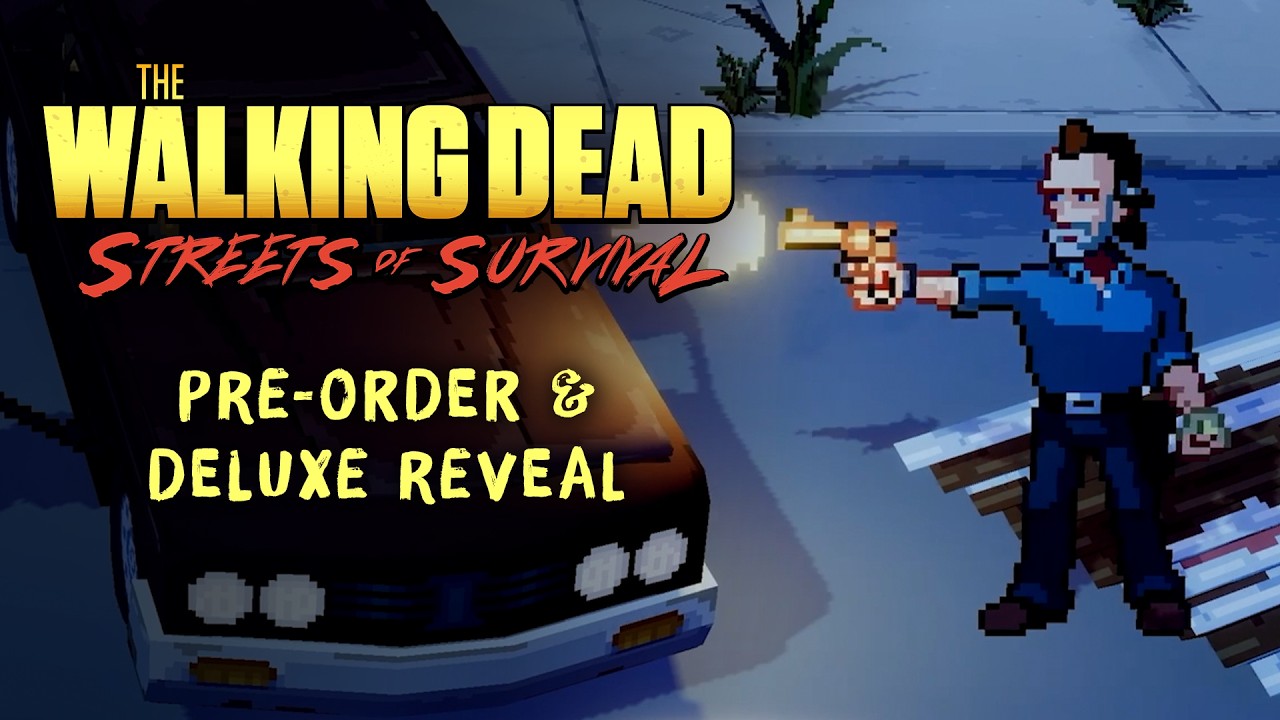
Pre-orders include a free Golden Survival Pack
Pre-orders for The Walking Dead: Streets of Survival are now available, and every pre-order includes the Golden Survival Pack. This downloadable bonus contains seven golden weapon skins, allowing players to give their equipment a polished makeover when the game launches. Gold may not be the most practical camouflage during an undead apocalypse, but subtlety has rarely stopped video game heroes from carrying flashy gear into battle. The pack is included with pre-orders of both the Standard Edition and Deluxe Edition, so players do not need to purchase the more expensive version to receive it. These skins appear to be cosmetic and should not alter weapon strength or character statistics. That distinction matters because it means the bonus offers visual customisation without placing additional combat power behind an early purchase. Players who enjoy collecting alternate appearances will have something extra waiting for them, while anyone focused entirely on punching walkers can simply equip whichever design looks best.
Standard and Deluxe Editions offer different ways to survive
The Standard Edition includes the complete base game and is intended for players who mainly want to experience the campaign, playable survivors, progression systems, and regular difficulty options. The Deluxe Edition includes the same base experience but adds the Arcade Apocalypse Pack, which expands the package with cosmetic items and additional challenges. According to the confirmed edition details, the Deluxe Edition also includes a digital soundtrack. The two versions therefore serve fairly different audiences. Players interested in following the reimagined All Out War campaign can choose the Standard Edition without losing access to the central adventure. Those who expect to replay stages, test themselves against tougher conditions, and spend more time mastering every fighter may find greater value in the Deluxe Edition. It is a straightforward split rather than a maze of confusing bundles, currencies, and upgrade charts, which is refreshing in an age where buying a game can sometimes feel like completing a tax return during a walker attack.
The Arcade Apocalypse Pack expands the challenge
The Deluxe Edition’s Arcade Apocalypse Pack adds several extras designed for players who want more than the regular campaign. It includes Tactical Magnum and mystery weapon skins, as well as a Civic Republic Military outfit for Rick. More importantly, the pack contains The Walker Pit, an endless survival mode built around continuous combat. Instead of progressing through a conventional story stage, players will be challenged to survive increasingly dangerous encounters and push their skills as far as possible. The pack also introduces a Hell on Earth difficulty setting that removes checkpoints, creating a far less forgiving version of the adventure. That mode sounds aimed squarely at experienced beat-’em-up players who enjoy learning enemy patterns, perfecting combos, and discovering exactly how quickly one small mistake can become a spectacular disaster. Together, these additions give the Deluxe Edition a stronger arcade focus while preserving the same core campaign found in the Standard Edition.
Rick, Daryl, and Michonne lead the playable roster
Three of the best-known survivors from AMC’s The Walking Dead have been confirmed as playable characters. Rick Grimes, Daryl Dixon, and Michonne each bring a distinct approach to combat, supported by individual statistics, fighting styles, signature abilities, and familiar weapons. This variety should make character selection more meaningful than simply choosing a favourite face from the show. Rick can use his magnum to control enemies from a distance, Michonne is closely associated with fast katana attacks, and Daryl brings his reliable crossbow into battle. The game is designed around learning how these differences affect encounters, especially when enemies begin arriving from several directions. A fighter who excels at close-range damage may handle one confrontation easily but struggle when a crowd spreads across the screen. Another survivor may have better tools for keeping those threats under control. Switching between characters and mastering their strengths should therefore form an important part of the replay experience.
Each survivor enters battle with signature weapons
The weapons used by Rick, Daryl, and Michonne are closely tied to their identities in the television series. Rick’s magnum delivers powerful ranged attacks, Michonne’s katana supports aggressive close-quarters fighting, and Daryl’s crossbow provides precision from a safer distance. The developers have not simply placed these weapons in the characters’ hands for decoration. They are integrated into individual movesets that combine melee attacks, ranged abilities, crowd control, and finishing moves. That mixture gives the combat room to move beyond repeated punches and kicks. Players may need to knock back a nearby Savior, interrupt an approaching walker, and then use a stronger attack before the crowd closes in again. Successful fighting is likely to depend on positioning and timing as much as raw aggression. Charging into every group while wildly pressing buttons might work on an easier setting, but tougher difficulties should reward players who understand attack ranges, enemy behaviour, and the safest moment to unleash a signature ability.
The All Out War storyline shapes the campaign
The Walking Dead: Streets of Survival takes inspiration from the All Out War storyline, which centres on the conflict between Rick’s alliance and the Saviors led by Negan. The game does not appear to reproduce the television storyline scene by scene. Instead, it reimagines that conflict as a combat-focused campaign containing characters, threats, locations, and surprises drawn from across AMC’s version of The Walking Dead. This approach gives the developers freedom to create encounters that work naturally within a beat-’em-up while still using familiar events as the foundation. Fans will recognise the larger struggle, but they should not assume that every moment will unfold exactly as it did on television. That element of uncertainty could help the campaign remain interesting even for viewers who already know the original storyline. You may remember who controlled a settlement or how a confrontation ended, but the game can place new enemies, environmental dangers, and unexpected walker attacks between those recognisable moments.
Familiar settlements become dangerous battlegrounds
Alexandria, Hilltop, and the Sanctuary are among the confirmed locations appearing throughout the campaign. These settlements played major roles in the television series, but Streets of Survival turns them into active combat spaces filled with hazards and large enemy encounters. Players will also travel through walker-infested tunnels, devastated communities, and fortified areas controlled by hostile survivors. Dynamic set pieces and environmental dangers are intended to keep these stages from feeling like flat corridors with different backgrounds painted behind them. A collapsing structure, nearby explosive, narrow tunnel, or shifting group of walkers could change how a fight needs to be approached. The strongest arcade brawlers make their locations part of the action rather than treating them as scenery, and that appears to be the intention here. The world should feel hostile even before an enemy throws the first punch, creating the impression that every street and settlement is one bad decision away from complete chaos.
Combat mixes close-range combos with ranged attacks
The combat system combines hard-hitting melee combinations with ranged abilities and powerful finishers. Players can chain attacks together, push through groups of weaker enemies, and use firearms or other ranged weapons when approaching a target directly would be too dangerous. That flexibility is particularly important in a Walking Dead setting because the enemies do not all behave in the same way. Walkers may rely on numbers and gradually surround the player, while armed Saviors can create immediate pressure from a distance. A good combat rhythm will likely involve moving between targets, managing space, and deciding when to commit to a longer combo. Finishers offer a more dramatic way to end confrontations, although using them at the wrong time could leave another enemy free to attack. The goal is responsive arcade action rather than a slow simulation, so players should expect quick reactions and clear controls to matter throughout each encounter.
Walker swarms and Saviors create different threats
Walker hordes and human enemies force players to solve different combat problems. The undead are dangerous because they can arrive in overwhelming numbers, gradually reducing the amount of safe space available on the screen. A single walker may not seem particularly frightening, but a crowd pressing in from several directions is another matter entirely. The Saviors are more organised and can use weapons, positioning, and aggressive attacks to break through a player’s defence. Encounters that combine both groups could become especially unpredictable. Players may begin by fighting Saviors only to find the noise attracting a fresh wave of walkers, turning a controlled brawl into a desperate scramble. Crowd-clearing attacks should provide some relief, but stronger abilities will need to be used carefully. Spending everything on a small group could leave the player exposed when the real threat arrives moments later. Like any good apocalypse, the game seems eager to punish premature confidence.
Famous enemies return as multi-stage bosses
The campaign includes boss encounters with characters and creatures familiar to viewers of the series. Negan and Simon are confirmed as major human opponents, while Winslow and the Well Walker represent some of the more memorable undead threats. These fights will use multiple stages, meaning that players cannot rely on a single strategy from beginning to end. A boss may alter its attacks, summon additional enemies, or change the layout of the confrontation as its health decreases. Multi-phase design can make these battles feel more dramatic while testing whether the player has truly learned a character’s complete moveset. Ranged attacks may be useful during one phase, while another could demand careful dodging and close-range punishment. The variety should also help bosses feel different from ordinary enemies with larger health bars. Facing Negan should require a different plan from confronting a powerful walker, especially when each opponent brings distinct abilities and hazards into the fight.
Character upgrades and difficulty settings encourage repeat runs
Replayability is one of the game’s central features. Every playable survivor has a moveset to master and a skill tree that can improve or expand their abilities. Character progression should give players a reason to return to completed stages, experiment with another fighter, and discover different ways to handle familiar encounters. Multiple difficulty settings add another layer of challenge, allowing experienced players to test their understanding of enemy patterns and combat mechanics. An optional Easy Mode is also available for anyone who wants to enjoy the storyline without facing the harshest possible resistance. This range is a sensible choice because licensed games often attract players with very different levels of experience. Some fans may regularly play arcade brawlers and immediately chase high scores or perfect runs. Others may simply want to take control of Rick, Daryl, or Michonne and revisit a familiar conflict. Supporting both groups makes the game more welcoming without removing its tougher challenges.
Nintendo Switch and Switch 2 players can join the fight
The Walking Dead: Streets of Survival is confirmed for both Nintendo Switch and Nintendo Switch 2, ensuring that players do not need Nintendo’s newer system to access the game. The shared release also gives existing Switch owners a chance to experience the same campaign and playable roster rather than receiving a reduced spin-off. Platform-specific performance details have not been announced, so differences in resolution, frame rate, loading times, or visual effects remain unconfirmed. What is clear is that both Nintendo versions are scheduled for September 18 alongside the other platforms. The side-scrolling structure appears well suited to portable play, particularly for players who enjoy completing a stage or experimenting with a character during shorter sessions. Whether played on a television or in handheld mode, Streets of Survival aims to deliver a direct blend of familiar characters, arcade combat, and replayable challenges without requiring players to survive through several seasons of television-sized downtime between fights.
Conclusion
The Walking Dead: Streets of Survival gives AMC’s long-running universe a different kind of video game adaptation. Instead of focusing on dialogue choices, resource management, or first-person horror, it turns the conflict with Negan and the Saviors into a fast-paced single-player beat-’em-up. Rick, Daryl, and Michonne each have distinctive weapons and abilities, while walker swarms, armed enemies, environmental hazards, and multi-stage bosses keep the streets dangerous. The Standard Edition provides the complete campaign, and the Deluxe Edition adds an endless survival challenge, a checkpoint-free difficulty mode, cosmetic extras, and a digital soundtrack. Pre-orders of either edition include the Golden Survival Pack with seven weapon skins. The game launches for Nintendo Switch and Nintendo Switch 2 on September 18, 2026, giving fans a chance to revisit the All Out War storyline with a far more arcade-driven twist.
FAQs
- When will The Walking Dead: Streets of Survival be released?
- The game will launch on September 18, 2026, for Nintendo Switch, Nintendo Switch 2, PlayStation 5, Xbox Series X|S, and PC.
- Which characters are playable in The Walking Dead: Streets of Survival?
- Rick Grimes, Daryl Dixon, and Michonne have been confirmed as playable survivors, each with individual statistics, abilities, and signature weapons.
- What is included with a pre-order?
- Pre-orders of either edition include the Golden Survival Pack, which contains seven golden weapon skins.
- What does the Deluxe Edition include?
- The Deluxe Edition includes the base game, Arcade Apocalypse Pack, additional weapon and character skins, The Walker Pit endless mode, Hell on Earth difficulty, and a digital soundtrack.
- Is The Walking Dead: Streets of Survival a multiplayer game?
- The game has been announced as a single-player beat-’em-up focused on its campaign, character progression, multiple difficulty levels, and replayable arcade challenges.
Sources
- The Walking Dead: Streets of Survival, Trailmark Games, August 4, 2026
- The Walking Dead: Streets of Survival Launches September 18, Gematsu, August 4, 2026
- The Walking Dead: Streets of Survival, Steam, August 4, 2026
- The Walking Dead: Streets of Survival – Announce Trailer, Trailmark Games, June 12, 2026
- The Walking Dead: Streets of Survival Pre-Order Trailer, Trailmark Games, August 4, 2026