














Summary:
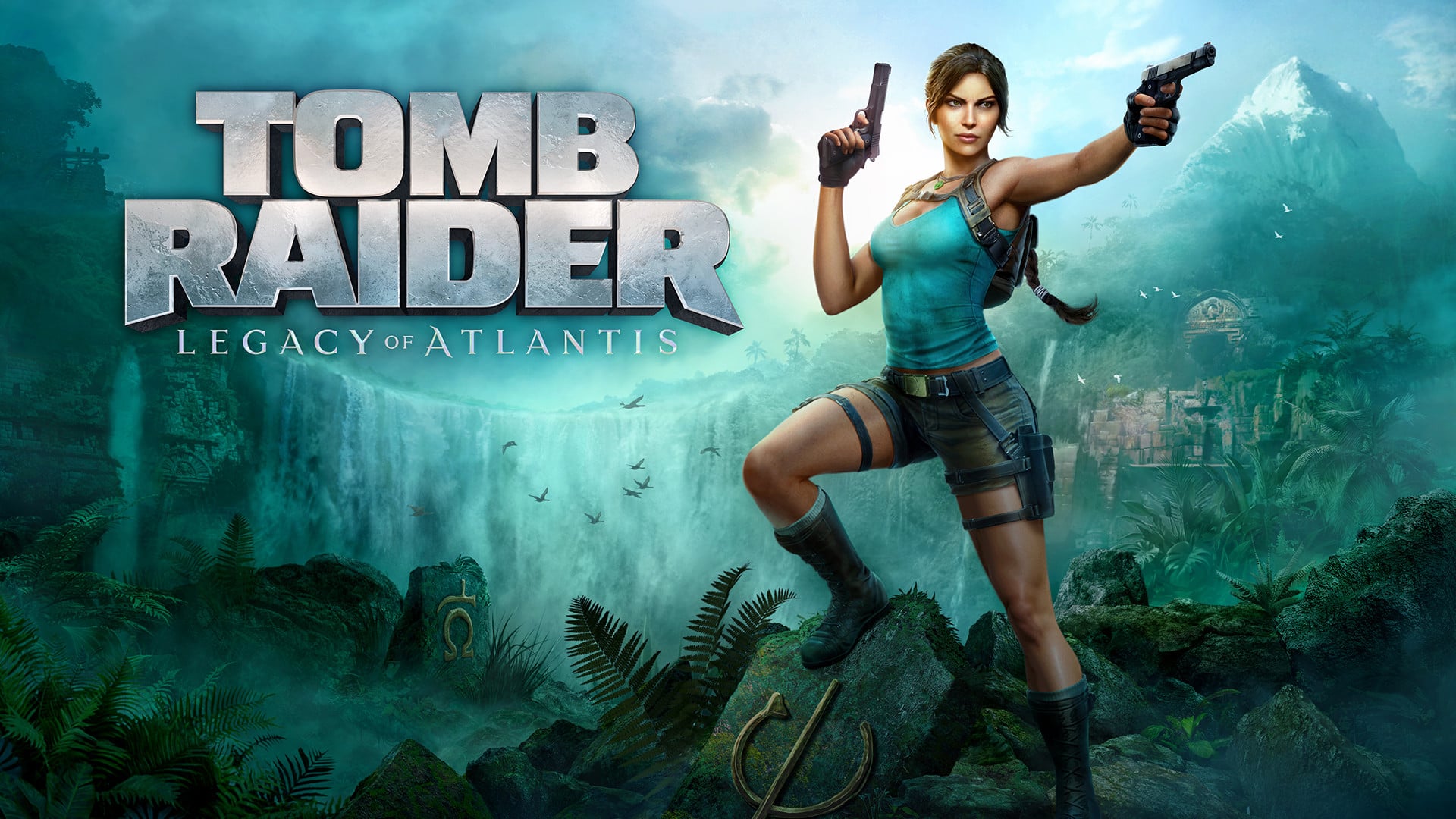
Tomb Raider: Legacy of Atlantis is shaping up to be more than a simple return trip through Lara Croft’s earliest expedition. Instead of polishing the 1996 classic and calling it a day, the upcoming adventure is being positioned as a full reimagining of Lara’s debut, with Alix Wilton Regan stepping into the role as the new voice and performance capture actor for the iconic explorer. That distinction matters. A remaster usually gives players cleaner visuals and smoother controls. A remake rebuilds something familiar. A reimagining, though, gets to ask a more exciting question: what would Lara’s first adventure look like if it had the emotional space, cinematic scale, and modern gameplay language available today?
That seems to be the promise behind Legacy of Atlantis. The game is still rooted in the core of the original Tomb Raider, with ancient locations, deadly ruins, strange myths, athletic exploration, and the hunt for the Scion all remaining central to the experience. Yet Regan’s comments suggest that the new version will expand Lara herself just as much as it expands the world around her. For fans who remember the angular cliffs, dinosaur encounters, and lonely tombs of 1996, that could make this feel like opening an old treasure chest and finding something surprisingly alive inside. For newcomers on Nintendo Switch 2, it could be the cleanest way yet to understand why Lara Croft became one of gaming’s most recognizable heroes.
Tomb Raider Legacy of Atlantis brings Lara Croft back to where the legend began
Tomb Raider: Legacy of Atlantis is built around a very powerful idea: taking Lara Croft back to her first great adventure while allowing that adventure to grow beyond the shape it originally had. The first Tomb Raider from 1996 was a landmark release, not just because it introduced a sharply defined heroine, but because it gave players a rare sense of isolation, danger, discovery, and physical challenge. You were not just walking through ruins. You were reading them, measuring them, listening to the silence, and wondering what horrible thing might be waiting around the next corner. Legacy of Atlantis appears to understand that this feeling is the real treasure. The hook is not simply nostalgia. It is the chance to revisit Lara’s first major expedition with more expressive performance, richer locations, and enough room for new surprises without losing the ancient heartbeat that made the original so memorable.
Alix Wilton Regan points to a bolder version of Lara Croft
Alix Wilton Regan’s comments about Lara Croft in Tomb Raider: Legacy of Atlantis are especially interesting because they frame this version of the character as familiar, but not frozen in amber. She describes the adventure as true to the core of the first Tomb Raider, while also making it clear that this is not a remake or a remaster. That gives the new performance a fascinating balancing act. Lara needs to feel like the confident adventurer fans recognize, but she also needs to have enough depth and presence to carry a modern reimagining. That is where voice and performance capture can make a real difference. A raised eyebrow, a sharper line reading, a quiet moment before a dangerous leap – those little human details can give Lara more texture without sanding away her edge. She still needs that famous Croft confidence. She just gets to show more of what is underneath it.
The phrase bigger and bolder says a lot about this Lara
When Regan teases a Lara who is back and bigger, bolder than ever, that does not have to mean the character is being turned into an unstoppable superhero. In Tomb Raider, bolder can mean something far more interesting. It can mean a Lara who enters danger with clarity rather than hesitation, who treats ancient death traps like puzzles instead of roadblocks, and who walks into myth with the slightly reckless curiosity that has always made her so entertaining. There is a lovely tension there, because Lara is at her best when she is both brilliant and just a little too eager to step where no sensible person would step. You know the type. The door has skulls carved into it, the floor looks suspicious, and somehow Lara is already halfway inside. That mix of intellect, nerve, and mischief could give Legacy of Atlantis a strong personality from the first scene.
Why a reimagining gives Tomb Raider more room to breathe
The word reimagining is doing a lot of work here, and for once, that might be a good thing. A straight remaster would likely focus on preservation. A remake would rebuild familiar places with modern assets and mechanics. A reimagining can keep the spine of the original adventure while adding muscle, movement, and a few new scars. That approach gives Legacy of Atlantis permission to expand scenes, deepen character beats, reshape encounters, and introduce twists that make returning players second-guess their memory. It also gives the team space to adjust older design ideas for a modern audience without pretending the original never happened. The first Tomb Raider was born in a different design world, one where slow movement, grid-based jumps, and harsh punishment were part of the texture. Legacy of Atlantis can honor that structure while making it feel more natural to players who expect responsive traversal, readable spaces, and cinematic pacing.
Familiar events can land differently when they are expanded
One of the most exciting parts of this approach is the possibility that well-known moments from the original game may return with more context and impact. A reimagined version of Lara’s first adventure does not need to discard the old route. It can widen the path. An encounter that once felt like a sudden gameplay obstacle might now carry more story weight. A location that originally served as a puzzle space could reveal more about the people who built it, the myths surrounding it, or Lara’s own obsession with uncovering what others left buried. That is where comparisons to other modern reworkings of classic games become easy to understand. The appeal is not just seeing a familiar place in sharper detail. It is feeling like the old map has secret ink on it, and the right light finally reveals the roads that were always implied.
New scenes should support the original rather than bury it
The big risk with any reimagining is that new material can overwhelm the clean appeal of the original. Tomb Raider does not need endless noise to feel dramatic. In fact, the classic formula often works because the quiet is so loud. A creaking stone door, distant animal calls, dripping water, and Lara’s footsteps can do more for atmosphere than a dozen characters talking over each other. Legacy of Atlantis will likely work best if its additions support that feeling rather than smother it. New twists can be brilliant when they sharpen the mystery, reveal more about Lara, or make old locations feel unpredictable again. They should feel like hidden chambers discovered behind a cracked wall, not like someone parked a neon billboard in the middle of an ancient temple.
The original Tomb Raider spirit still sits at the heart of the adventure
For many fans, the key question is simple: will Legacy of Atlantis still feel like Tomb Raider? Based on the way the project is being discussed, the answer seems to lean toward yes. The original Tomb Raider was not only about shooting wildlife, climbing ledges, or hunting artifacts. It was about solitude, spatial awareness, and the thrill of realizing that a massive ancient space could be understood piece by piece. Players had to study rooms, judge distances, spot patterns, and accept that the environment was often the real opponent. That design spirit is precious because it gives Tomb Raider its distinct flavor. The best Lara adventures are not obstacle courses with expensive scenery. They are ancient machines made of stone, myth, and bad decisions. Legacy of Atlantis has a strong foundation if it keeps that puzzle-first curiosity intact.
The Scion gives the adventure a classic treasure-hunting backbone
The hunt for the Scion remains one of the strongest anchors for this reimagining because it connects Lara’s personal drive with a globe-spanning sense of myth. It is a clean, powerful adventure setup. There is an artifact of immense importance, dangerous people want it, ancient places are hiding its secrets, and Lara is exactly the kind of person who cannot leave the mystery alone. That structure gives the story momentum without needing to overcomplicate things. It also allows the adventure to move through varied locations, from wild landscapes to ruins shaped by forgotten civilizations. When Tomb Raider gets that rhythm right, every location feels like another chapter in a dusty, dangerous travel journal. You are not just checking destinations off a list. You are following clues, surviving mistakes, and slowly realizing that the treasure may be more terrifying than beautiful.
Puzzles, predators, and ancient traps need to work together
A great Tomb Raider space is rarely just one thing. It is not only a puzzle room, only a combat arena, or only a pretty view. It is a knot of different threats that all pull at the player at once. You might be trying to line up a jump, but there is a predator nearby. You might solve a mechanism, only to hear stone shifting in a way that makes your stomach quietly resign from its job. Legacy of Atlantis can use modern technology to make those layered moments more vivid. Better animation can sell the danger of a desperate leap. Stronger environmental detail can make clues feel natural rather than obvious. More flexible combat can make animal encounters tense without turning the whole thing into an action parade. The magic lies in the balance.
New twists can make familiar ruins feel dangerous again
Regan’s mention of new twists and turns is exactly the kind of tease that can wake up longtime fans. A reimagining of a famous adventure faces a strange problem: the most dedicated players already know where the skeletons are hidden, sometimes literally. That means the new version needs to preserve the emotional shape of familiar locations while still making players feel uncertain. A changed route, a different puzzle solution, a reworked enemy encounter, or a new story reveal can make an old ruin feel unstable again. That is important because Tomb Raider works best when the player feels smart, cautious, and slightly underprepared. If Legacy of Atlantis can make veterans pause and think, “Wait, this isn’t how I remember it,” then it has already found a very promising kind of tension.
Surprises work best when they feel earned
Not every twist needs to be loud. In fact, the best surprises in an adventure like this can be quiet, almost sneaky. A corridor might lead somewhere unexpected. A familiar room might reveal a second purpose. A character beat might add emotional meaning to something that once felt purely functional. These are the kinds of changes that can make a reimagining feel respectful rather than random. Players do not want the original adventure shaken like a snow globe just for the fun of it. They want discoveries that feel like they belong. Legacy of Atlantis has the chance to make its surprises feel like missing pieces from an old archaeological record, carefully brushed clean after decades underground. That is a much better fit for Tomb Raider than twists that exist only to shout, “Look, this is different now.”
A stronger Lara can make the danger feel sharper
Expanding Lara Croft does not mean removing danger from the equation. Actually, it can do the opposite. When Lara is written and performed with more confidence, intelligence, and personality, the threats around her need to rise to meet her. That creates a more exciting contrast. A capable Lara makes a deadly tomb feel even deadlier, because if she is taking it seriously, players know they should too. The best version of the character is not someone who stumbles through danger by accident. She reads the room, takes the leap, makes the shot, and still sometimes finds herself one bad step away from disaster. That is where Tomb Raider gets its spark. Lara can be bold, but the world should be older, stranger, and meaner than she expects.
Nintendo Switch 2 gives Lara’s return a fresh platform moment
The Nintendo Switch 2 version gives Tomb Raider: Legacy of Atlantis an extra layer of interest because Lara’s return is not just happening on traditional home console hardware. Bringing this reimagining to Nintendo’s newer platform gives a fresh group of players a chance to experience a major Tomb Raider release in a flexible format. That matters for an adventure built around exploration. Tomb Raider has always had a stop-and-think rhythm, where players study spaces, test routes, and return to puzzles with fresh eyes. A platform that supports different play habits can make that rhythm feel natural. Maybe you solve a tomb on the couch. Maybe you chip away at a tricky puzzle later. Either way, the idea of carrying Lara’s first great adventure into modern Nintendo play feels like a neat full-circle moment for a series that has spent decades moving across platforms.
Switch 2 players could get a strong entry point into Lara Croft’s history
For players who know Lara Croft more as a gaming icon than as a character they have personally adventured with, Legacy of Atlantis could be an ideal starting line. A reimagining of the first Tomb Raider gives newcomers the historical importance of Lara’s debut without asking them to wrestle with every old control quirk or design convention from 1996. That is a smart doorway. It lets new players understand the roots of the series while experiencing a version built for modern expectations. The key is that it should not feel like a museum tour. Nobody wants to be handed a dusty plaque and told to admire it politely. Tomb Raider needs danger, speed, silence, mystery, and that lovely little panic when a jump looks just a bit too far. If Switch 2 captures that, it could win over plenty of first-time raiders.
Modern presentation can make old mysteries feel newly alive
One of the most appealing things about revisiting early Tomb Raider through modern hardware is the chance to make ancient spaces feel more physically convincing. The original game relied on imagination, atmosphere, and strong visual identity despite the limitations of its time. Legacy of Atlantis can build on that by giving ruins more texture, scale, and environmental storytelling. Stone can look weathered. Jungles can feel humid and alive. Dark chambers can carry that delicious sense of “maybe don’t go in there,” which of course means Lara absolutely will. Better presentation should not just make everything prettier. It should help players read spaces, sense danger, and feel the age of the world around them. Tomb Raider is at its best when beauty and threat are standing right next to each other.
Lara Croft’s expanded character may be the biggest change
While improved visuals and reworked locations will naturally draw attention, the expansion of Lara Croft herself may end up being the most meaningful shift in Legacy of Atlantis. The original Lara was iconic, stylish, witty, and unmistakable, but the storytelling tools of 1996 left plenty of room for interpretation. A modern reimagining can explore her confidence, ambition, curiosity, and emotional armor in more detail. That does not mean turning her into a completely different person. It means giving her more moments to breathe between the leaps, gunfights, discoveries, and disasters. Who is Lara when the tomb goes quiet? What does she chase besides treasure? How does she react when myth stops being theory and starts trying to kill her? Those questions can add weight to the adventure without slowing it into a crawl.
Performance capture can turn small moments into character details
Performance capture is especially useful for a character like Lara because so much of her personality lives in movement. She is not only defined by what she says. She is defined by how she stands at the edge of a cliff, how quickly she recovers after danger, and how she carries herself when everyone else would be looking for the nearest exit. Alix Wilton Regan’s work as both voice actor and motion capture model can help unify those details into one clear portrayal. That matters because Lara needs to feel physically present in the world. A sharp line is fun, but a sharp line delivered after a near-death escape, with the right breath and posture, can say much more. It lets players feel the human being behind the legend, even when she is doing something wildly unsafe before breakfast.
The best Lara is confident without becoming untouchable
There is a sweet spot for Lara Croft, and Legacy of Atlantis needs to live there. She should be capable enough that players believe she belongs in these impossible places, but not so invincible that the danger turns into decoration. Confidence is compelling when it has friction. A bold Lara who still has to think, adapt, and occasionally scramble out of trouble is far more engaging than one who glides through every threat without effort. That balance can make her expanded character feel richer. She can be witty, brave, brilliant, stubborn, and occasionally reckless, all at once. Honestly, that is part of the fun. Lara Croft should make you cheer, worry, and mutter, “That was a terrible idea,” sometimes within the same thirty seconds.
What longtime fans and newcomers can expect from this approach
Legacy of Atlantis seems positioned to serve two audiences at once, which is never easy. Longtime fans want the soul of Tomb Raider preserved. They want lonely ruins, clever puzzles, dangerous animals, ancient mechanisms, and a Lara who feels recognizably connected to the character who first changed gaming in the 1990s. Newcomers, meanwhile, need a game that feels smooth, readable, and exciting without requiring homework. The reimagining approach gives Crystal Dynamics and its partners a way to bridge that gap. Keep the core adventure, expand the character, refresh the structure, and make the old surprises surprising again. If that balance holds, Legacy of Atlantis could become more than a nostalgic return. It could become a statement about why Lara Croft still matters.
The word reimagining sets expectations higher than remake
Calling Legacy of Atlantis a reimagining sets a higher bar because it invites players to expect interpretation, not just reconstruction. That can be thrilling, but it also asks for trust. Fans will naturally compare every changed scene, every added twist, and every shift in Lara’s personality against what they remember. New players will judge it simply as a modern adventure. Both reactions matter. The safest path is not necessarily the best one. Tomb Raider became famous because it had nerve, mystery, and a lead character who felt unlike anyone else in the medium at the time. A careful but confident reimagining can honor that legacy by being brave enough to add meaning, but disciplined enough to know when silence, space, and a locked ancient door are all the drama you need.
The adventure needs to feel classic without feeling trapped in the past
The challenge for Legacy of Atlantis is not simply to recreate what players loved. It needs to understand why they loved it. That is a different job. The original Tomb Raider was not beloved because every rough edge was perfect. It was beloved because it made players feel like explorers in places that did not care whether they survived. The new version can smooth controls, expand storytelling, and modernize presentation, but it should still preserve that sense of respect for the unknown. A tomb should not feel like a theme park ride with convenient arrows everywhere. It should feel like a place built for forgotten rituals, guarded by danger, and solved through patience. Give Lara that world, and the reimagining has a real shot at feeling worthy of the name.
Why this return could matter for the wider Tomb Raider series
Tomb Raider: Legacy of Atlantis arrives at a moment when Lara Croft’s identity matters more than ever. The series has moved through different tones over the years, from acrobatic classic adventures to grittier survival stories, and each version has left a mark. Returning to Lara’s debut through a reimagined lens could help define what the character should feel like going forward. It can bring back the stylish confidence of classic Lara while keeping the emotional nuance modern audiences expect. That combination is not easy, but it is powerful when it works. Legacy of Atlantis can remind players that Lara is not just a survivor, treasure hunter, or action hero. She is curiosity with a passport, danger with a backpack, and one of gaming’s great symbols of adventure.
Conclusion
Tomb Raider: Legacy of Atlantis sounds like a return with real purpose behind it. By framing Lara Croft’s first adventure as a reimagining rather than a remake or remaster, the game has room to respect the original while building something with its own pulse. Alix Wilton Regan’s comments point toward a Lara who is familiar, expanded, and ready to carry a bigger version of the story without losing the confidence that made her iconic. For Nintendo Switch 2 players, this could be a strong way to experience the roots of Tomb Raider through a modern lens. For longtime fans, the promise is even more personal: the chance to step back into ancient danger and feel, just for a moment, that the tomb is unknown again.
FAQs
- What is Tomb Raider: Legacy of Atlantis?
- Tomb Raider: Legacy of Atlantis is a reimagining of Lara Croft’s original 1996 adventure. It keeps the core idea of her first major expedition while expanding the story, character work, locations, and surprises for modern players.
- Is Tomb Raider: Legacy of Atlantis a remake or remaster?
- No. Alix Wilton Regan has described it as a reimagining, not a remake or a remaster. That means it is expected to stay true to the spirit of the first Tomb Raider while adding new twists, expanded scenes, and a broader take on Lara herself.
- Who plays Lara Croft in Tomb Raider: Legacy of Atlantis?
- Alix Wilton Regan is the new voice and performance capture actor for Lara Croft in Tomb Raider: Legacy of Atlantis. Her comments suggest this version of Lara will feel bigger, bolder, and more expanded than before.
- Is Tomb Raider: Legacy of Atlantis coming to Nintendo Switch 2?
- Yes. Tomb Raider: Legacy of Atlantis has been listed for Nintendo Switch 2 alongside other modern platforms, giving Nintendo players a new way to experience Lara Croft’s reimagined first adventure.
- Will Tomb Raider: Legacy of Atlantis follow the 1996 game closely?
- It is expected to stay true to the core of the original Tomb Raider, but with new twists, expanded character work, and fresh surprises. That means familiar ideas should return, though not always in exactly the same form fans remember.
Sources
- I pre-ordini di Tomb Raider: Legacy of Atlantis sono aperti!, Tomb Raider, June 2, 2026
- Pre-purchase Tomb Raider: Legacy of Atlantis on Steam, Steam, February 12, 2027
- Tomb Raider: Legacy of Atlantis launches Feb 12, 2027 on PS5, PlayStation Blog, June 2, 2026
- “This isn’t a remake. A remake rebuilds what already exists” – Tomb Raider: Legacy of Atlantis’ Game Director shows off what classic Lara Croft is capable of in the modern era, GamesRadar+, June 7, 2026
- The new voice of Lara Croft is a veteran of Cyberpunk 2077, Lies of P, Dragon Age, Assassin’s Creed, and a whole bunch more, PC Gamer, December 2025