














Summary:
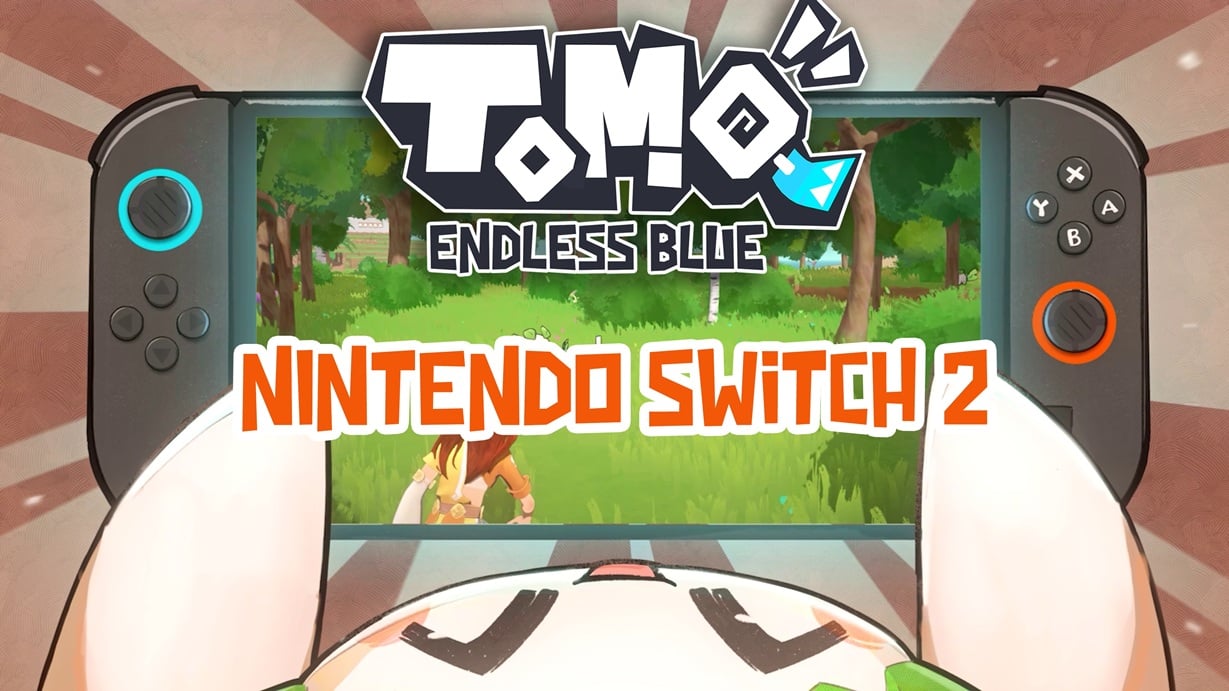
Onibi has confirmed that Tomo: Endless Blue is planned for Nintendo Switch 2, adding Nintendo’s latest system to the platforms being considered for the ambitious creature-collecting RPG. A release date has not been announced, but the studio says bringing the game to Nintendo Switch 2 is now officially part of its plans. The news arrived during the closing stage of a successful Kickstarter campaign that had raised more than $170,000 from over 1,400 supporters at the time of the announcement. The campaign passed its original $100,000 target in less than 60 hours, showing that players are clearly interested in its mixture of exploration, creature collecting, construction, combat, and social play.
Tomo: Endless Blue takes place across a vast voxel ocean filled with procedurally generated islands, unusual settlements, ancient ruins, and creatures known as Tomo. Players will be able to discover more than 150 of these companions, capture and breed them, build habitats, develop settlements, construct vehicles, and investigate the hidden history of the Vagari. Tomo are more than collectible battle partners, as they can also assist with farming, cooking, crafting, building, and other daily activities. Friends can join the adventure as well, creating a world that blends energetic expeditions with quieter moments at home. Onibi founder and CEO Benjamin Devienne explained that the fantasy of sailing away, finding rare creatures, and building a community around them feels naturally suited to Nintendo hardware.
Tomo: Endless Blue is officially planned for Nintendo Switch 2
Onibi has confirmed that Tomo: Endless Blue is planned for Nintendo Switch 2, answering one of the most common questions raised by the game’s community. The announcement does not yet include a launch date, pricing information, or technical details for the Nintendo version. Even so, the confirmation gives prospective players a much clearer picture of the studio’s ambitions. Tomo: Endless Blue was initially promoted for PC, but its colorful creature designs, approachable building systems, and focus on exploration have naturally attracted attention from Nintendo fans. The combination almost sounds made for portable play. You might spend one session pursuing a rare Tomo across a distant island and the next quietly improving a habitat from the comfort of the sofa. Onibi has not treated the Nintendo Switch 2 edition as a vague possibility either. The studio has directly stated that bringing the project to the platform is part of its development plan.

The Kickstarter campaign quickly exceeded its original target
The Nintendo Switch 2 announcement arrived alongside a strong crowdfunding performance for Tomo: Endless Blue. At the time Onibi shared the platform news, the Kickstarter campaign had collected more than $170,000 from over 1,400 backers. Its original funding goal was set at $100,000, which the campaign reached in under 60 hours. That kind of opening does more than produce an impressive number on a campaign page. It suggests that the basic idea has already connected with players who enjoy creature collecting, open-world discovery, cooperative play, and creative building. Crowdfunding still comes with the usual development challenges, of course, and a successful campaign is not the same thing as a finished game. However, exceeding the target so quickly gives Onibi a meaningful foundation on which to continue development. It also explains why the community began asking about Nintendo Switch 2 support almost immediately after the campaign began.
An ocean of mysterious islands forms the heart of the adventure
Tomo: Endless Blue places players in a sprawling ocean realm made up of mysterious islands, unusual towns, forgotten ruins, and fragments of lost civilizations. Rather than offering one continuous landmass, the world encourages players to sail outward and wonder what might be waiting beyond the horizon. Each voyage can lead to new Tomo, unfamiliar characters, environmental puzzles, valuable materials, or clues about the world’s past. The voxel presentation gives the islands a playful, handcrafted appearance while also supporting systems that allow players to alter and shape their surroundings. It is easy to imagine the ocean functioning like a giant treasure map with the edges constantly moving. One island might offer a peaceful village and good farming opportunities, while another could hide dangerous enemies or a creature that refuses to be found without a little persistence. Exploration is not merely a route between objectives. It is intended to be one of the main reasons to keep playing.
More than 150 Tomo will support exploration and everyday life
More than 150 Tomo are planned for the game, giving players a large collection of creatures to discover, capture, breed, and bring home. These companions will not simply wait in storage until the next battle begins. Onibi wants them to feel like active members of the player’s growing community. Different Tomo can help with combat, farming, cooking, crafting, construction, and other everyday jobs. Their abilities may therefore influence both how players approach dangerous encounters and how they organise life within a settlement. A useful companion could help gather resources, operate part of a machine, or make a difficult expedition considerably easier. This wider purpose distinguishes the Tomo from creatures that exist only as combat statistics. Naturally, some players will still choose favourites because one looks adorable rather than useful. That is practically a law of creature-collecting games. Fortunately, the mixture of practical abilities and expressive designs appears to leave room for both careful planning and emotional attachment.
Voxel physics make construction part of the adventure
The voxel world is more than a visual choice. Blocks in Tomo: Endless Blue are designed to interact with physical systems, allowing players to build structures, vehicles, and mechanical contraptions piece by piece. Boats will be especially valuable in an ocean-based world, but the construction tools are intended to support far more than simple rafts. Players may create cranes, transport machines, airships, unusual homes, or elaborate inventions that look as though someone emptied a toy box onto an engineering table. The important idea is that building can solve practical problems. A machine might help move heavy materials, cross a difficult area, reach an elevated location, or support work around a settlement. Physics-based construction also creates space for experimentation and the occasional glorious disaster. A vehicle falling apart halfway through its first journey may be inconvenient, but it will probably make a better story than a perfectly sensible boat ever could.
Settlements and habitats give players a place to call home
Adventure may begin on the open sea, but Tomo: Endless Blue also gives players reasons to return home. Captured Tomo can be placed in habitats, while settlements can grow as players gather resources, construct facilities, and shape the surrounding landscape. These home areas are expected to support activities such as farming, crafting, cooking, and community building. That creates a natural rhythm between outward exploration and quieter periods of development. A long journey might produce rare materials or a new companion, which can then unlock fresh possibilities back at the settlement. The next expedition begins with better equipment, additional knowledge, and perhaps a sturdier boat than the one that sank five minutes after leaving shore. This cycle could make progress feel personal because players are not only improving a character sheet. They are watching an entire home develop around the discoveries they have made. Every creature rescued and every resource collected can leave a visible mark on the world.
Multiplayer lets friends explore and create together
Onibi is building Tomo: Endless Blue around a world that can be shared with friends. Players will be able to travel across the ocean together, search for creatures, fight enemies, construct homes, and collaborate on ambitious building projects. Cooperative play fits naturally with the game’s broad collection of activities because not every participant needs to pursue the same goal. One player could gather materials while another improves a habitat, prepares food, or builds an unnecessarily complicated vehicle that somehow still floats. Shared exploration may also make unexpected discoveries more memorable. Finding a rare Tomo alone is satisfying, but watching an entire group panic while trying to catch it can turn a simple encounter into a story everyone remembers. The precise multiplayer structure and Nintendo Switch 2 networking features have not yet been detailed. Still, social play is clearly positioned as an important part of the larger experience rather than a small mode added beside the main adventure.
The history of the Vagari adds mystery to the open world
Beneath the colorful creatures and creative building systems lies a larger mystery involving the Vagari and the history of the Endless Blue. The islands are connected to civilizations that have been lost, fragmented, or transformed, giving players more to investigate than the location of the next collectible companion. Ruins, settlements, environmental clues, and character stories may reveal how these worlds became scattered across the ocean and what role the Vagari played in their history. This narrative layer could give exploration a stronger sense of purpose. Sailing toward a distant island is exciting because it might contain a rare Tomo, but it becomes even more intriguing when the landscape itself may answer questions about the world. Onibi has not revealed every major story detail, which is probably wise. A mystery loses some of its sparkle when the box already tells you exactly what is inside. For now, the Vagari provide a narrative thread connecting the game’s many systems and locations.
Nintendo Switch 2 feels like a natural home for the project
Benjamin Devienne, founder and CEO of Onibi, said the community had been asking about a Nintendo Switch 2 version from the earliest days of the Kickstarter campaign. He described the central fantasy as setting sail to discover rare creatures, bringing them home, and building a world around them. According to Devienne, that idea feels particularly natural on Nintendo hardware. It is not difficult to understand why. Nintendo systems have a long history with games built around memorable creatures, welcoming worlds, local creativity, and adventures that can be enjoyed in short or long sessions. Tomo: Endless Blue also combines systems that suit different moods. Players can chase a difficult objective, spend time perfecting a settlement, or simply wander in search of something unexpected. Portability could complement that flexibility, though Onibi has not yet discussed performance targets, handheld resolution, frame rate, loading times, or platform-specific functions for Nintendo Switch 2.
Release timing and development details remain unconfirmed
Tomo: Endless Blue does not currently have a confirmed Nintendo Switch 2 release date. Onibi plans to announce launch timing later, and important details about pricing, editions, save features, multiplayer support, and technical performance are still unknown. Players should therefore treat the platform announcement as a statement of intent rather than a finished release schedule. Development plans can change, especially for an ambitious project combining procedural environments, creature systems, voxel physics, online play, settlements, and user-created machines. Even so, confirming the Nintendo Switch 2 edition gives the project a clear additional direction. The successful Kickstarter campaign has demonstrated strong early interest, while the platform announcement ensures Nintendo players are now part of the conversation. The next major updates will likely focus on development progress, release timing, and how the studio plans to translate its large, dynamic world to Nintendo’s hardware. Until then, the announcement trailer offers the latest look at the adventure taking shape.
Conclusion
Tomo: Endless Blue is shaping up to be an unusually flexible creature-collecting RPG. Its world brings together more than 150 Tomo, mysterious islands, settlement development, physics-based construction, cooperative exploration, and a story tied to forgotten civilizations. The Kickstarter campaign’s rapid success shows that this mixture has already found an enthusiastic audience. Confirming Nintendo Switch 2 support gives that audience another way to follow the project and reflects the strong demand Onibi received during the campaign. Plenty of questions remain, particularly around release timing and the technical shape of the Nintendo version. Nevertheless, the main appeal is easy to see. Tomo: Endless Blue wants players to sail into the unknown, return with strange new companions, and gradually turn an empty corner of the ocean into a place that feels like home. Sometimes that home may include a beautiful harbour. Sometimes it may include a wobbling block-built airship. Both outcomes sound worthwhile.
FAQs
- Is Tomo: Endless Blue coming to Nintendo Switch 2?
- Yes. Developer Onibi has confirmed that bringing Tomo: Endless Blue to Nintendo Switch 2 is officially part of its plans. The studio has not yet announced a release date for this version.
- What type of game is Tomo: Endless Blue?
- It is an open-world creature-collecting action RPG set in a voxel ocean world. Players can capture Tomo, explore islands, build settlements, create vehicles, fight enemies, and play with friends.
- How many creatures will Tomo: Endless Blue include?
- Onibi says the game will feature more than 150 Tomo. These creatures can assist with combat, exploration, farming, cooking, crafting, construction, and other activities.
- Does Tomo: Endless Blue support multiplayer?
- Multiplayer is part of the game’s design, allowing friends to explore, build, fight, and develop homes together. Specific Nintendo Switch 2 networking details have not been announced.
- When will Tomo: Endless Blue be released?
- A final release date has not been confirmed. Onibi has stated that launch timing will be announced later, so players will need to wait for an official development update.
Sources
- Tomo: Endless Blue adds Switch 2 version, Gematsu, June 17, 2026
- Video Game Legacy Press Release #353 Tomo: Endless Blue, Video Game Legacy, June 17, 2026
- Tomo: Endless Blue adds Switch 2 version to 2026 release, Niche Gamer, June 18, 2026
- Tomo: Endless Blue Undergoing Kickstarter Campaign, RPGamer, May 26, 2026
- Voxel RPG Tomo: Endless Blue Kickstarter and Trailer Revealed, Inven Global, May 26, 2026