














Summary:
Tomodachi Life: Living The Dream has quickly become one of Nintendo’s most eye-catching recent success stories, selling more than 3.8 million units worldwide during its first two weeks on sale. That figure is especially notable because the series has often been treated as one of Nintendo’s stranger, more niche ideas rather than a guaranteed blockbuster. Built around Mii characters, island life, odd friendships, unpredictable comedy, and tiny social dramas that feel like a toy box with a mind of its own, Living The Dream clearly found an audience ready for something playful and different. Nintendo confirmed the figure through its financial materials, while also noting that around 40% of players are Nintendo Switch 2 owners, even though the game itself launched as a Nintendo Switch title. That detail makes the early result even more interesting. It suggests the game is not just leaning on the long-running Switch install base, but also attracting people who have already moved into Nintendo’s newer hardware ecosystem. With the original Tomodachi Life becoming one of the Nintendo 3DS family’s most memorable success stories, Living The Dream now has a strong foundation. The big question is whether it can keep selling beyond the launch rush, but its opening makes one thing clear: Nintendo’s weird little island still has a serious pull.
Tomodachi Life: Living The Dream opens with a huge worldwide sales milestone
Tomodachi Life: Living The Dream has made a loud entrance for a game built around tiny digital people doing wonderfully strange things. Nintendo confirmed that the game surpassed 3.8 million units sold worldwide during its first two weeks after release, turning what could have been seen as a charming return for a cult favorite into one of the company’s standout early sales updates of 2026. For a series that thrives on awkward conversations, random friendships, bizarre dreams, and Mii characters behaving like sitcom actors trapped inside a snow globe, that is a remarkable start. It shows that players were not merely curious. They were ready. The number also lands with extra weight because Tomodachi Life has never been the kind of franchise people discuss in the same breath as Mario Kart, Zelda, or Pokémon. It has always lived in its own odd little corner, wearing mismatched socks and somehow making that the whole point.
Why 3.8 million sales in two weeks matters for Nintendo
A figure like 3.8 million units in two weeks matters because it speaks to more than opening hype. It suggests that Nintendo managed to turn a highly specific idea into something with broad global reach. Life simulation games can be tricky because they often rely on personality rather than spectacle. There are no massive boss fights to dominate trailers, no sprawling fantasy kingdoms to explain in dramatic voiceover, and no obvious competitive hook to keep social feeds buzzing. Instead, Living The Dream asks players to care about custom characters, island routines, unexpected conversations, and little moments that are funny precisely because they feel so oddly personal. That kind of game needs trust from its audience. The early sales show that Nintendo had that trust ready and waiting. It also gives the company another reminder that its quieter, stranger brands can pull serious numbers when the timing, platform, and concept line up properly.
A quirky life sim finds a much bigger audience than expected
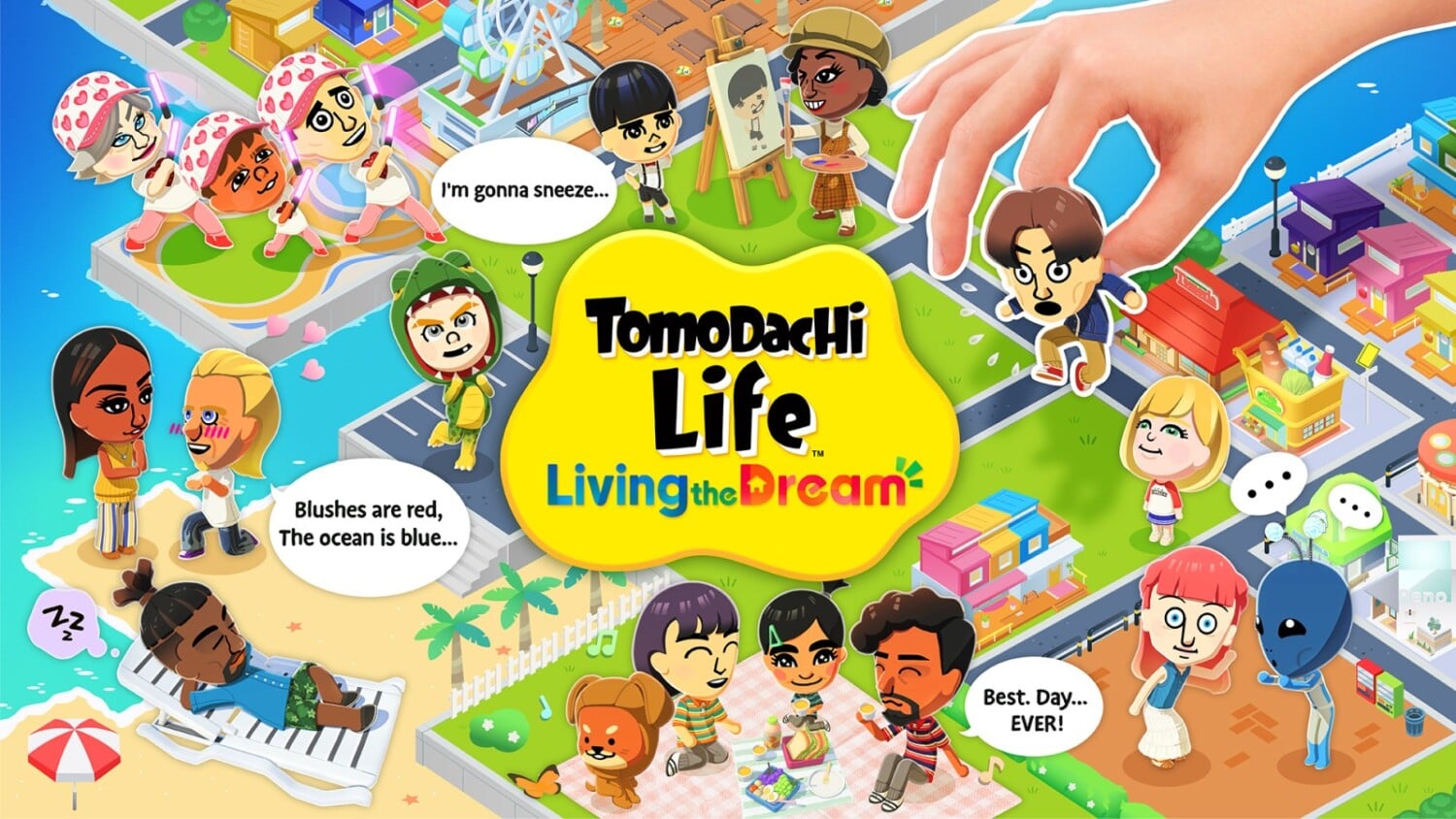
Tomodachi Life has always been hard to describe without sounding like someone explaining a dream they had after eating too much cheese. You create Mii characters, place them on an island, give them personalities and voices, then watch them form relationships, argue, sing, confess feelings, solve problems, and generally act like a chaotic neighborhood where everyone has slightly too much free time. That oddness is the hook. Living The Dream does not need to be polished into something conventional, because the fun comes from the way it refuses to behave like a standard game. Its early sales suggest that the audience for that kind of playful unpredictability is much larger than some expected. People still want games that surprise them, make them laugh, and give them stories worth sharing. Sometimes the strongest pitch is not a dramatic trailer. Sometimes it is a Mii wearing a ridiculous outfit and declaring their feelings with complete sincerity.
The appeal of Mii-driven stories and unpredictable island life
The heart of Tomodachi Life: Living The Dream is the player’s connection to their Mii characters. These are not just avatars standing around for decoration. They become the source of tiny dramas, jokes, and moments that feel oddly personal because players often model them after friends, family members, celebrities, favorite characters, or themselves. That creates a social sandbox where every interaction carries a little extra spark. When two Miis become friends, it can feel funny. When they argue, it can feel ridiculous. When they fall in love, players may react like they are watching a soap opera being performed by action figures. Living The Dream taps into the same playful energy that made earlier Mii-focused Nintendo software so memorable. It invites players to bring their own imagination, then lets the game twist that imagination into surprising little scenes. That is a powerful formula, especially in a market filled with louder and more predictable releases.
How word of mouth can carry a game with a strange personality
Games like Living The Dream are built for stories that players tell each other. A funny scene, a strange Mii friendship, an unexpected confession, or a bizarre island event can quickly become the kind of moment someone wants to show a friend. That kind of word of mouth is valuable because it feels natural. Nobody needs to explain every mechanic when the appeal can be captured in a single absurd screenshot or anecdote. The game’s personality does a lot of the talking. That matters because quirky games often live or die by whether players can communicate the fun in a simple way. Living The Dream seems to have crossed that bridge early. Its sales suggest that the game’s weirdness did not scare people away. It became part of the invitation. In a world where many releases fight for attention with louder trailers and bigger promises, this one appears to be winning attention with charm, comedy, and a steady stream of delightful nonsense.
Nintendo Switch and Nintendo Switch 2 players both shaped the result
One of the most interesting details behind the sales update is how the game connects with both Nintendo Switch and Nintendo Switch 2 players. Tomodachi Life: Living The Dream launched as a Nintendo Switch title, yet Nintendo stated that approximately 40% of players are Nintendo Switch 2 owners. That creates a fascinating picture of where the audience is coming from. The game benefits from the huge base of Nintendo Switch owners, while also finding traction among people who have already moved to Nintendo’s newer system. That kind of cross-generational energy can be a major advantage. It allows a release to feel current without abandoning the audience that helped Nintendo build so much momentum over the past several years. Living The Dream is not just selling because of nostalgia. It is selling because it sits in a sweet spot between familiar hardware, newer hardware excitement, and a concept that works well across both.
Why a Switch release still matters in 2026
The Nintendo Switch remains a major part of the story because its audience is enormous, familiar with Nintendo’s character-driven style, and still active. Releasing Living The Dream on Switch gives the game access to players who may have spent years building libraries around family games, cozy experiences, party titles, and unusual Nintendo experiments. That matters because Tomodachi Life fits naturally into that ecosystem. It is approachable, easy to understand, and flexible enough to be enjoyed in short sessions or longer play periods. A game like this does not need cutting-edge technical spectacle to shine. It needs personality, quick interactions, and enough surprise to keep players checking back in. Switch is still well suited to that rhythm. Players can dip into island life from the couch, in handheld mode, or during a quiet break. The result is a release that feels comfortable on older hardware while still gaining attention from the wider Nintendo audience in 2026.
The Nintendo Switch 2 connection behind the sales figure
The Nintendo Switch 2 player share adds an extra layer to the sales story. Even though Living The Dream was released as a Switch game, Nintendo’s note that about 40% of players are Switch 2 owners suggests strong compatibility between the game’s audience and the newer console’s early adopters. That is useful for Nintendo because it keeps software momentum moving across hardware generations. Players who buy a new system still want reasons to stay engaged with Nintendo’s broader library, and a game like Living The Dream can help bridge that gap. It also shows that early Switch 2 owners are not only chasing visually ambitious releases. They are still making room for playful, personality-led experiences. That is very Nintendo. The company’s strength has often come from making games that do not compete purely on technical power, but on ideas that feel instantly recognizable, easy to share, and hard to copy.
How Living The Dream compares with the Tomodachi Life legacy
The success of Tomodachi Life: Living The Dream becomes even more meaningful when placed beside the legacy of the original Tomodachi Life on Nintendo 3DS. The earlier game became one of the system’s standout titles, powered by its unusual premise and the easy appeal of Mii characters living strange little lives. It was not a typical blockbuster, yet it kept finding players because it offered something Nintendo does better than almost anyone: a playful world where simple tools produce unpredictable stories. Living The Dream benefits from that memory. Many players who enjoyed the 3DS entry likely returned out of affection, while newer players may have heard years of stories about how strange and funny the series could be. That creates a strong mix of nostalgia and discovery. The sequel did not need to explain why its world was odd. It simply needed to prove that the oddness still worked, and the early sales suggest it did.
The 3DS original helped build a loyal audience
The original Tomodachi Life gave Nintendo a different kind of hit. It was not built around speed, combat, platforming, or competition. It was built around social comedy and player imagination. That made it memorable because it stood apart from the usual rhythm of handheld gaming. Players could check on their Miis, solve small problems, watch relationships develop, and walk away with stories that felt uniquely theirs. Those memories can be surprisingly sticky. A player might forget a level layout from another game, but they may remember the time their best friend’s Mii married a celebrity Mii or performed a song in a ridiculous costume. That kind of personal comedy builds loyalty. Living The Dream arrives with the advantage of that emotional history, but it also has to satisfy an audience that has waited a long time for another full entry. Its early performance suggests that the appetite never really disappeared.
Why the sequel’s opening suggests wider mainstream appeal
Living The Dream’s early sales suggest that the series has moved beyond being a strange favorite for a smaller circle of fans. Selling more than 3.8 million units worldwide in two weeks points to broader awareness, stronger anticipation, and a market that is more open to cozy, character-led games than ever before. Players have become increasingly comfortable with games that focus on expression, routine, humor, and social interaction rather than traditional win conditions. That trend plays directly into Tomodachi Life’s strengths. It is not trying to be a life sim in the same way as Animal Crossing, The Sims, or Story of Seasons. It has its own flavor, more like a digital dollhouse that occasionally starts writing its own sitcom. That gives it a clear identity. When a sequel with such a specific personality opens this strongly, it suggests Nintendo has a valuable franchise that can reach far beyond nostalgia alone.
What the early success could mean for Nintendo’s casual game lineup
The strong opening for Tomodachi Life: Living The Dream could encourage Nintendo to keep giving space to its more casual and experimental ideas. Nintendo has always had a special talent for turning simple concepts into memorable experiences, but not every franchise receives the same level of attention or release frequency. When a game like Living The Dream performs this well, it sends a clear message: players still want the weird stuff. They want games that feel warm, funny, social, and a little unpredictable. That could matter for how Nintendo thinks about future projects across Switch and Switch 2. The company does not need every release to be a massive action adventure or a competitive multiplayer title. Its lineup becomes stronger when it includes playful oddities that fill different moods. Living The Dream gives Nintendo another reason to trust those instincts. Sometimes the left-field idea is not a side dish. Sometimes it is the meal people came for.
Life sims still have room to surprise the market
The life sim space has changed a lot since the original Tomodachi Life. Players now have more cozy games, more social sandboxes, more farming sims, more decorating games, and more character-driven experiences than ever. That could have made Living The Dream feel less unusual, but the opposite seems to be happening. Its personality remains distinct because it does not simply ask players to manage a town, farm, or home. It asks them to create a cast and watch the chaos unfold. That gives the game a playful unpredictability many polished sims cannot replicate. The market may be crowded, but players can still spot something with a clear voice. Living The Dream has that voice. It is goofy, sincere, awkward, and proud of itself. In a genre where comfort matters, its sense of humor gives it an extra spark. It feels like a cozy blanket that occasionally tells a joke at exactly the wrong time.
Nintendo’s character-first design gives the series its odd charm
Nintendo’s greatest strength with Tomodachi Life is not realism. It is character. The Miis are simple, expressive, and flexible enough for players to project almost anything onto them. That simplicity is not a weakness. It is the magic trick. Because Miis are not too detailed, they can become anyone. A family member, a fictional hero, a school friend, a famous musician, or a completely original oddball can all fit into the same island world. Living The Dream understands that the player’s imagination does half the work, while the game provides the stage, props, and perfectly timed awkward pauses. This design lets small moments feel funnier than they should. A silly argument can become memorable. A friendship can feel strangely sweet. A performance can become comedy gold. Nintendo has spent decades making characters that players care about, and here it lets players bring their own cast to life.
Momentum will decide whether Living The Dream becomes a long-term hit
The early sales are impressive, but the next stage will decide how big Tomodachi Life: Living The Dream can truly become. Launch excitement can create a strong first burst, especially for a returning Nintendo series with a loyal fanbase, but lasting success depends on whether players keep talking, sharing, and returning to their islands. The game has the right ingredients for that. It is built around repeat visits, unexpected moments, and personal stories that can keep unfolding over time. If players continue to treat it as a daily check-in game, its sales could keep climbing well beyond the first two weeks. If conversation slows, the launch may remain its biggest moment. Still, crossing 3.8 million units worldwide so quickly gives Living The Dream a powerful foundation. For a series once viewed as quirky and niche, that is not just a good start. It is a reminder that Nintendo’s strangest ideas can still become major events.
Conclusion
Tomodachi Life: Living The Dream has turned a quirky comeback into a major Nintendo sales moment, with more than 3.8 million units sold worldwide in its first two weeks. The result stands out because the series has always been unusual by design, leaning on Mii characters, social comedy, island routines, and unpredictable player-made stories rather than traditional blockbuster spectacle. Its strong start shows that players still have a big appetite for Nintendo games that feel personal, playful, and a little ridiculous in the best possible way. The Switch audience gave it a huge base, while the strong share of Switch 2 players suggests the game is also finding life across Nintendo’s newer ecosystem. Whether it keeps this pace will depend on long-term interest, word of mouth, and how often players return to their islands. For now, Living The Dream has already made its point clearly: strange can sell, charm still matters, and Tomodachi Life is very much alive.
FAQs
- How many units has Tomodachi Life: Living The Dream sold?
- Tomodachi Life: Living The Dream has sold more than 3.8 million units worldwide during its first two weeks after release, according to Nintendo’s financial materials.
- Is Tomodachi Life: Living The Dream a Nintendo Switch game?
- Yes, Tomodachi Life: Living The Dream was released as a Nintendo Switch title. Nintendo also noted that approximately 40% of players are Nintendo Switch 2 owners.
- Why are the early sales figures important?
- The sales figure is important because Tomodachi Life has often been seen as a quirky, more niche Nintendo series. Passing 3.8 million units in two weeks shows much broader demand than some may have expected.
- What kind of game is Tomodachi Life: Living The Dream?
- It is a Mii-focused life simulation game where players create characters, place them on an island, and watch them build friendships, solve problems, interact, and create strange little stories.
- Can Tomodachi Life: Living The Dream keep selling strongly?
- Its long-term performance will depend on player engagement, word of mouth, and whether people keep returning to their islands. The opening figure gives it a strong foundation, but future momentum will decide how far it climbs.
Sources
- Financial Results Explanatory Material, Nintendo, May 8, 2026
- Financial Results Briefing, Nintendo, May 8, 2026
- Tomodachi Life: Living The Dream Sales Are Off To A Flying Start, Nintendo Life, May 8, 2026
- Tomodachi Life: Living the Dream sells over 3.8 million units, Shacknews, May 8, 2026
- Tomodachi Life: Living The Dream Sales Surpass 3.8 Million Copies, Nintendo Insider, May 8, 2026