














Summary:
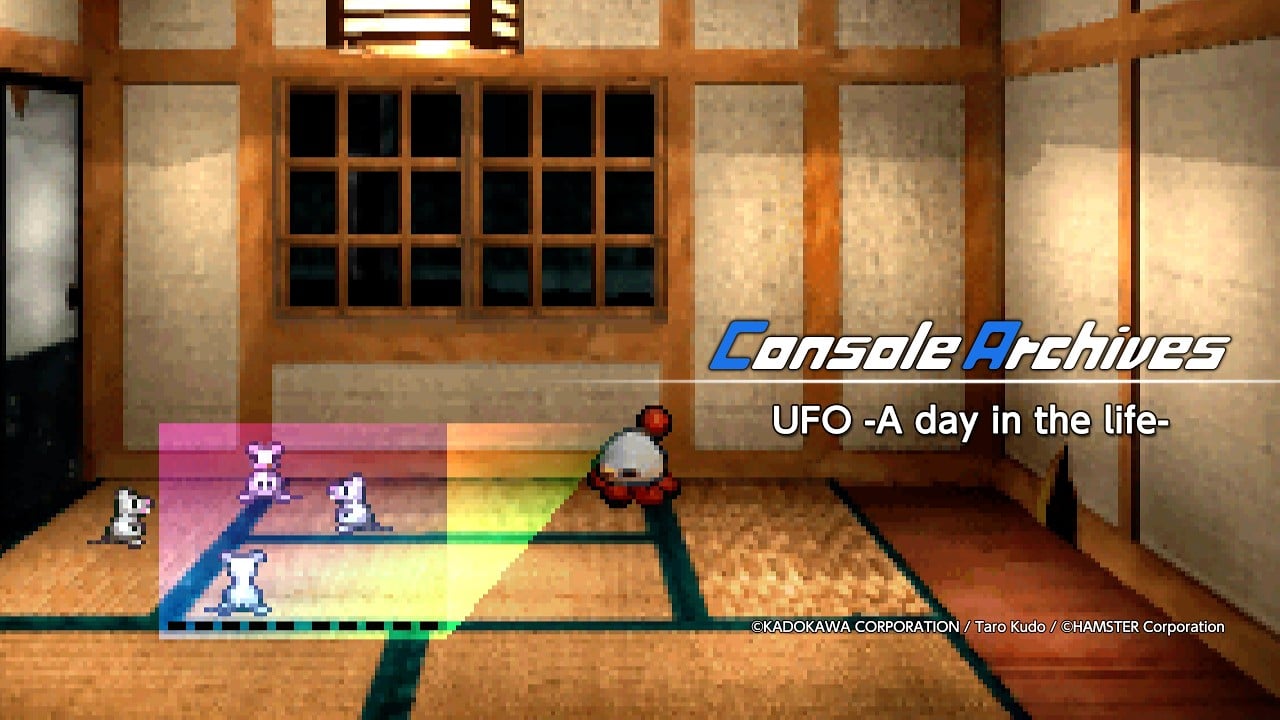
UFO: A Day in the Life has recently made its way to Nintendo Switch 2 as the latest classic revived through HAMSTER Corporation’s Console Archives series. Originally released by ASCII in Japan in 1999, the unusual adventure asks players to search an apartment building for missing aliens following the crash of the space passenger ship Daimaoh. Rather than turning the extraterrestrial disaster into an intergalactic battle, the game focuses on observation, unusual characters and the everyday lives unfolding inside the building.
The Nintendo Switch 2 release preserves that unusual premise while surrounding the original experience with several modern conveniences. Console Archives supports features such as customizable controls, rapid-fire settings, multiple save points, screen configuration options and visual filters designed to imitate the appearance of older CRT televisions. However, there is one particularly important detail for players outside Japan. Although the interface and manual support multiple languages including English, the actual game itself remains in Japanese.
That language barrier means the release is likely to appeal most strongly to retro enthusiasts, preservation-minded players and anyone fascinated by experimental Japanese games from the late 1990s. UFO: A Day in the Life is available digitally on Nintendo Switch 2 for $11.99, giving a curious piece of console history its first official opportunity to reach a much broader audience.
UFO: A Day in the Life arrives on Nintendo Switch 2 through Console Archives
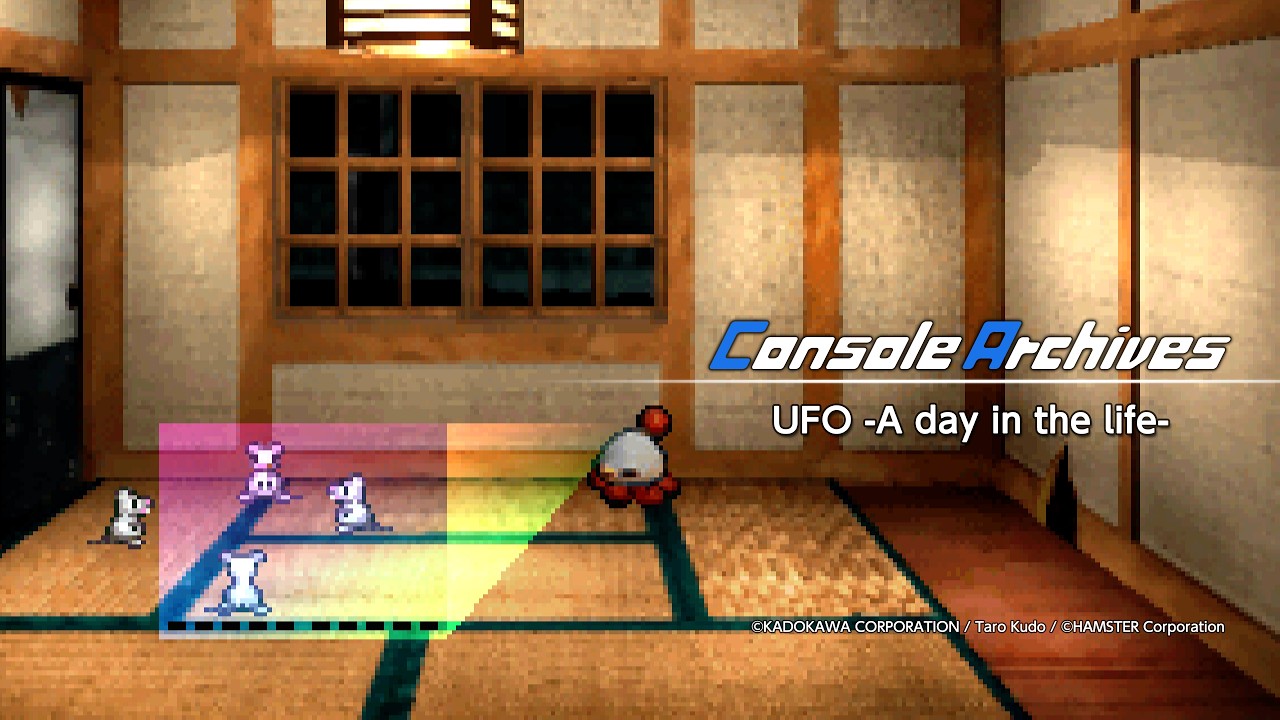
One of the more unusual games from Japan’s late-1990s console scene has returned, with UFO: A Day in the Life recently becoming available for Nintendo Switch 2 through HAMSTER Corporation’s Console Archives line. Originally released by ASCII in 1999, the game trades spaceships, laser cannons and galaxy-saving heroics for something considerably stranger: an apartment building filled with ordinary residents and misplaced extraterrestrials. That contrast is a large part of its personality. Instead of asking you to fight an invading alien army, UFO turns you into an observer attempting to locate visitors who are hiding among seemingly mundane everyday events. More than two decades later, that premise still sounds wonderfully peculiar, and Console Archives now provides an official way for Nintendo Switch 2 owners to experience it.
The unusual 1999 adventure finally reaches players outside Japan
UFO: A Day in the Life was originally released exclusively in Japan, which meant importing a copy and owning compatible hardware were once among the only realistic ways for players elsewhere to experience it. Its Console Archives appearance changes that considerably. HAMSTER has released the game for Nintendo Switch 2 and PlayStation 5, bringing it to modern digital storefronts and making an official version available in additional territories. There is still an important language limitation, but simply having the game commercially accessible outside Japan represents a notable change for such an unusual release. Retro libraries often revisit internationally famous names first, so seeing something this unconventional emerge from the archives gives players an opportunity to discover a part of Japanese console history that was considerably harder to encounter when it originally appeared.
Players search an apartment building for stranded aliens
The story begins with an appropriately bizarre disaster. A space passenger ship named Daimaoh has crashed on Chikyu, a planet located within the Chahaya star system, leaving aliens scattered inside an apartment building. Your objective is to locate and rescue those missing extraterrestrials. The setting gives the game an unusual sense of intimacy for a science-fiction adventure. Rather than roaming distant planets or gigantic futuristic cities, you spend your time paying close attention to what happens inside a relatively confined residential environment. Somewhere amid the rhythms of ordinary life, something alien is waiting to be discovered. The result is a premise built around curiosity rather than combat, where noticing an odd occurrence can be far more valuable than having quick reflexes or an inventory full of weapons.
Observation and the apartment residents shape the experience
The residents are more than background decoration. UFO: A Day in the Life places considerable emphasis on the people occupying the apartment building and the strange situations that develop around them. Watching their routines and understanding what is happening inside individual rooms becomes part of the broader mystery surrounding the missing aliens. That approach gives the experience an almost voyeuristic quality, as if you are looking into a tiny mechanical dollhouse and waiting for something unusual to happen. The aliens themselves add another layer of eccentricity, giving each discovery its own little surprise. It is an unusual mixture of science fiction, observation and human drama, which explains why the game remains difficult to compare directly with many conventional adventure titles released during the same period.
Console Archives adds modern conveniences to the original release
HAMSTER’s Console Archives series is built around bringing games originally made for home consoles onto current hardware while providing features that make older releases easier to handle today. UFO: A Day in the Life benefits from that framework rather than appearing as a completely untouched relic. Console Archives includes customizable button layouts, rapid-fire settings and multiple save points, although available functionality can vary depending on the individual game. These additions are especially useful for older releases that were created around hardware expectations and habits from decades ago. They do not attempt to rebuild the underlying adventure into something modern. Instead, they provide a more convenient shell around the original experience, letting players preserve progress and configure the presentation without stripping away the qualities that made the game distinctive in the first place.
Language support requires an important distinction for Western players
The international release comes with one substantial caveat: UFO: A Day in the Life has not received a complete English localization. HAMSTER states that the user interface and manual are available in English, alongside several other supported languages, but the game’s actual content remains Japanese. That distinction matters considerably for anyone considering a purchase. You can navigate the surrounding Console Archives functions without relying entirely on Japanese, but dialogue and other material inside the original game have not suddenly been translated. For an experience that places so much importance on characters and unusual events, this can create a genuine obstacle. Players who understand Japanese will naturally get the smoothest experience, while everyone else should go in knowing that the release preserves much of the linguistic character of its original Japanese edition.
Visual settings help recreate the game’s original presentation
Older games were designed for displays very different from the crisp modern panels connected to today’s consoles, and Console Archives acknowledges that difference with several presentation options. Players can adjust the screen layout and choose filters intended to recreate characteristics associated with CRT televisions. It is a small feature on paper, yet it can noticeably change how artwork created for older display technology appears. Pixels, colors and fine details were often viewed through the softer characteristics of a CRT rather than the sharp individual pixels visible on a modern screen. Players who prefer a cleaner presentation can configure the display according to their taste, while those chasing something closer to the atmosphere of the original hardware can experiment with the available filters. Retro authenticity, after all, sometimes involves making a beautiful new television look deliberately old.
The Nintendo Switch 2 release costs $11.99 digitally
UFO: A Day in the Life is available as a digital release for Nintendo Switch 2, with the US version priced at $11.99. That places it firmly within the individually sold classic-game model used by HAMSTER rather than bundling the title into a subscription library or a larger compilation. Players therefore know exactly what they are purchasing: a modern release of this specific 1999 adventure accompanied by the supporting functions offered through Console Archives. The individual-release approach can be particularly interesting for obscure games because it allows unusual titles to stand on their own instead of becoming one forgotten entry buried halfway down a giant retro collection. For anyone specifically interested in UFO, its history or the experimental side of Japanese game development, the release provides straightforward access without requiring original hardware or an increasingly difficult-to-find physical copy.
UFO: A Day in the Life remains one of ASCII’s stranger releases
More than anything else, UFO: A Day in the Life is memorable because it refuses to behave like the sort of game its title might suggest. Mention aliens and a crashed passenger vessel and you could easily imagine an action game filled with explosions, military squads and ominous government laboratories. Instead, players receive an apartment building, a cast of residents and a search built around carefully observing what happens around them. That willingness to be strange gives the game much of its lasting identity. The late 1990s produced plenty of experimental Japanese console releases, but many never traveled beyond their original market. Bringing one of those games back does more than add another icon to the Nintendo Switch 2 HOME Menu. It preserves a small example of how wonderfully unpredictable game design could become when developers were willing to ignore familiar genre boundaries.
The Console Archives series is preserving more than arcade history
HAMSTER has become closely associated with making older games accessible on modern platforms, but Console Archives approaches preservation from a different angle than the company’s familiar arcade releases. The series specifically targets games that originated on home consoles, opening the door to adventures, RPGs, simulations and other experiences that would not naturally fit within an arcade-focused collection. UFO: A Day in the Life demonstrates why that distinction matters. This isn’t a score-chasing arcade experience designed around short sessions and repeated attempts. It is a peculiar home-console adventure shaped by characters, observation and its carefully constructed setting. By expanding preservation efforts into home-console libraries, Console Archives can potentially give many similarly unusual releases another chance to find players decades after their original systems disappeared from store shelves.
Modern hardware makes obscure classics considerably easier to revisit
Playing an original 1999 console release can involve considerably more effort than simply finding the game. You may need functioning legacy hardware, appropriate cables, compatible television equipment and, in the case of region-exclusive software, a way to run games released for another market. Physical copies can also become increasingly expensive or difficult to locate as the years pass. A native Nintendo Switch 2 release removes most of those practical obstacles. It does not erase the language barrier inside UFO, but it does make the software itself readily accessible through contemporary hardware. That distinction is important for preservation. A game does not need to be globally famous to deserve another opportunity to be played, studied and discussed, and digital reissues can keep unusual works available long after their original commercial lifespan would otherwise have ended.
The original Japanese identity remains central to the re-release
There is a fascinating tension in this version of UFO: A Day in the Life. On one hand, it is more internationally accessible than ever before, appearing on contemporary hardware and offering translated interface elements and documentation. On the other hand, its core Japanese game material remains untouched. That makes this less of a localization project and more of an archival reissue designed to preserve the original experience. Whether that approach works for you depends heavily on what you want from the release. Someone hoping for a newly translated edition may find the limitation disappointing. A collector or enthusiast who simply wants legitimate access to the original version may see things differently. Either way, understanding that distinction before purchasing is essential because this is not an English localization of a previously Japan-exclusive game.
The release gives Nintendo Switch 2 owners a particularly unusual retro option
Nintendo Switch 2 already provides a natural home for games that work well in both short handheld sessions and longer television play, and UFO’s deliberate observation-based structure makes it an intriguing addition to that library. It is not a release likely to compete for attention through enormous cinematic battles or cutting-edge graphical technology. Its attraction lies somewhere else entirely. Here is a game from 1999 built around an eccentric idea, preserved on hardware released generations later and suddenly available to people who may never have known it existed. That sort of rediscovery is one of the joys of retro releases. Sometimes revisiting gaming history means returning to a universally recognized masterpiece. Sometimes it means opening the door to an apartment building and discovering that the place happens to be crawling with stranded aliens.
Conclusion
UFO: A Day in the Life is now available on Nintendo Switch 2 through HAMSTER Corporation’s Console Archives series, giving the unusual 1999 ASCII release a significantly wider audience than it enjoyed originally. Its combination of alien searching, apartment life and character-driven observation remains strikingly unconventional more than two decades later, while modern features such as configurable controls, multiple save points and display adjustments make the original experience easier to approach on current hardware. The biggest consideration is language support: the interface and manual can be displayed in English, but the game itself remains Japanese. For players comfortable with that limitation, the $11.99 digital release offers a rare opportunity to explore one of the stranger corners of Japan’s late-1990s console library without digging an original system out of storage.
FAQs
- Is UFO: A Day in the Life available on Nintendo Switch 2?
- Yes. UFO: A Day in the Life was released for Nintendo Switch 2 through HAMSTER Corporation’s Console Archives series on August 6, 2026.
- How much does UFO: A Day in the Life cost?
- The digital Nintendo Switch 2 release is priced at $11.99 in the United States.
- Is UFO: A Day in the Life available in English?
- Only partially. The Console Archives interface and manual support English, but the actual game remains in Japanese.
- When was UFO: A Day in the Life originally released?
- ASCII originally released UFO: A Day in the Life in Japan in 1999 for a 32-bit home console.
- What is Console Archives?
- Console Archives is a HAMSTER Corporation series that brings games originally released for home consoles to modern platforms. Its releases can include conveniences such as configurable controls, multiple save points and adjustable display options.
Sources
- Console Archives UFO -A day in the life-, HAMSTER Corporation, August 6, 2026
- Console Archives, HAMSTER Corporation, 2026
- Console Archives UFO -A day in the life-, Nintendo, August 6, 2026
- Console Archives UFO: A day in the life launches August 6, Gematsu, August 5, 2026
- Console Archives UFO -A day in the life-, Nintendo UK, August 6, 2026