














Summary:
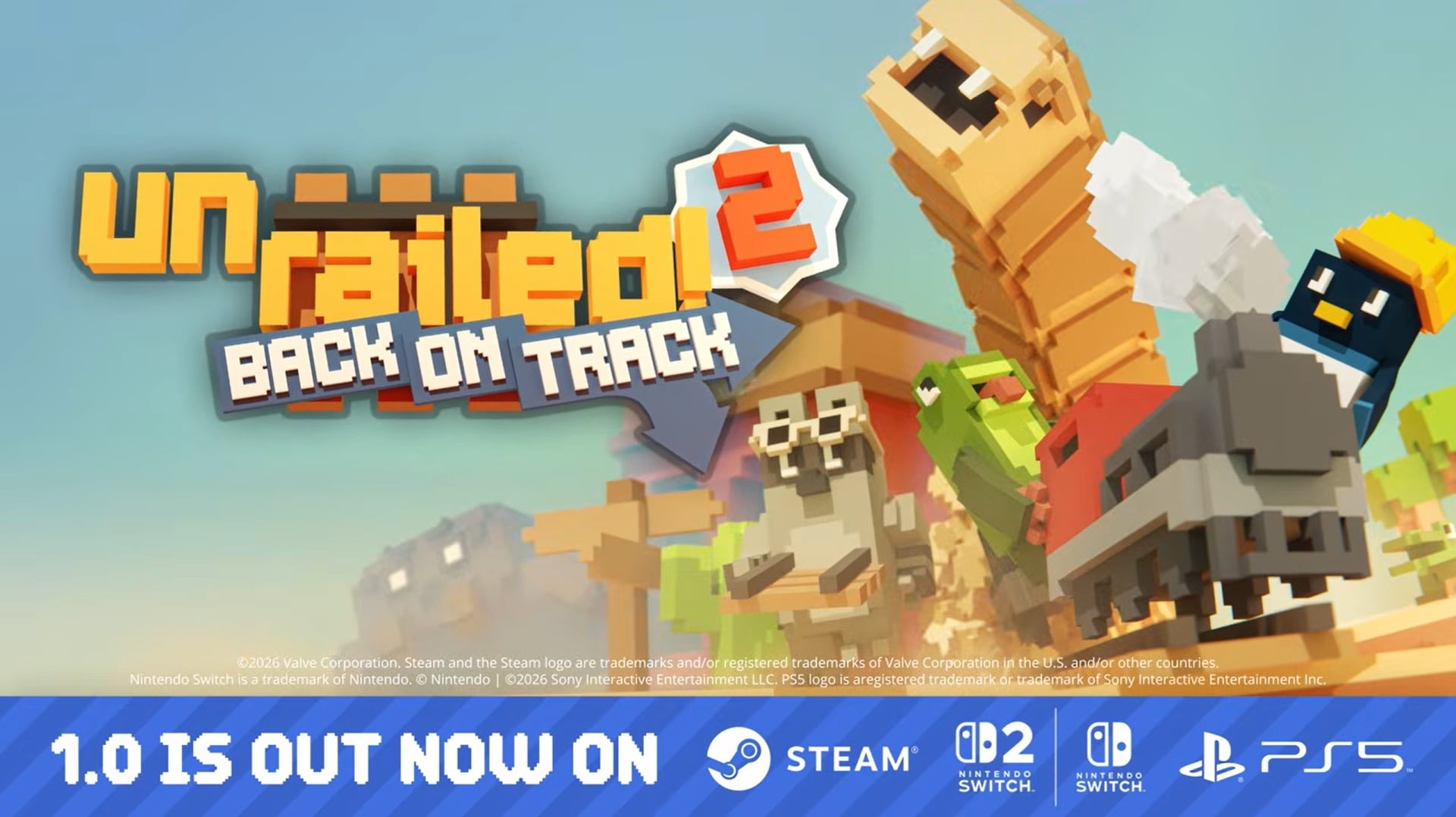
Unrailed 2: Back on Track has officially reached its 1.0 release, and Indoor Astronaut is marking the moment with a launch trailer that puts the game’s chaotic co-op energy front and center. Now available on Nintendo Switch 2 and Nintendo Switch, the sequel builds on the frantic railroad-building formula that made the original Unrailed such a lively couch co-op favorite. The idea sounds simple enough: gather resources, craft tracks, keep the train moving, and stop the whole thing from derailing. In practice, it quickly becomes a shouting, laughing, tool-swapping scramble where one player is chopping trees, another is mining stone, someone else is carrying track pieces, and everyone is wondering why the train is suddenly heading toward disaster.
The 1.0 release also brings a major new challenge with The Underground Unit, a secret seventh biome hidden inside a United Rail Division lab. This area introduces laser barriers, hidden buttons, and a dangerous new boss known as the floating Head of the United Rail Division. Alongside that new biome, players can now enjoy a broader set of modes, including Classic, Time Attack, Sandbox, and Versus options. New skins also add extra charm, with crossover appearances such as the Crewmate from Among Us, the Cat from Cat Quest III, and Tchia from Tchia. For players who enjoy teamwork with just the right amount of panic sprinkled on top, Unrailed 2 looks ready to make co-op nights loud, messy, and very memorable.
Unrailed 2: Back on Track pulls into its full 1.0 release
Unrailed 2: Back on Track has left its earlier development phase behind and arrived as a full 1.0 release, bringing Indoor Astronaut’s railroad-building sequel to Nintendo Switch 2 and Nintendo Switch. The launch trailer gives players a fresh look at the game’s central promise: work together, move quickly, and keep that train from becoming a very expensive pile of regrets. It is the kind of co-op setup that sounds manageable when described calmly, then turns into pure living-room noise once the train starts rolling and everyone realizes the track does not build itself.
The sequel follows the original Unrailed, which became known for its frantic multiplayer construction, resource gathering, and constant pressure. Unrailed 2 keeps that spirit intact while expanding the structure around it. There are more places to visit, more ways to play, more unlocks to chase, and more reasons for friends to blame each other in the most affectionate way possible. That last part is important. Great co-op games are not just about winning. They are about the ridiculous stories that happen when everyone is trying their best and somehow the rails still end up pointing into a wall.
Why the sequel still runs on panic, teamwork, and perfect timing
The heart of Unrailed 2 is still teamwork under pressure. Players need to gather materials, craft track pieces, clear paths, manage hazards, and make split-second decisions while the train keeps moving forward. There is no polite pause where the locomotive says, “Take your time, folks.” It simply rolls on, which means the team has to keep up or watch everything fall apart. That pressure gives every match its rhythm. One moment feels calm, the next feels like trying to organize a kitchen during dinner rush while someone has replaced the floor with lava.
That constant momentum is what makes the series click. Everyone has a job, but those jobs can change in seconds. Maybe you were mining stone, but now a teammate needs help carrying track. Maybe the route ahead is blocked, and suddenly chopping trees becomes more urgent than breathing. Maybe someone throws an item across the map with the confidence of an Olympic athlete and the accuracy of a sleepy raccoon. These tiny emergencies keep the experience lively, especially when players start developing their own communication habits, shortcuts, and inside jokes.
How teamwork becomes the real track beneath the train
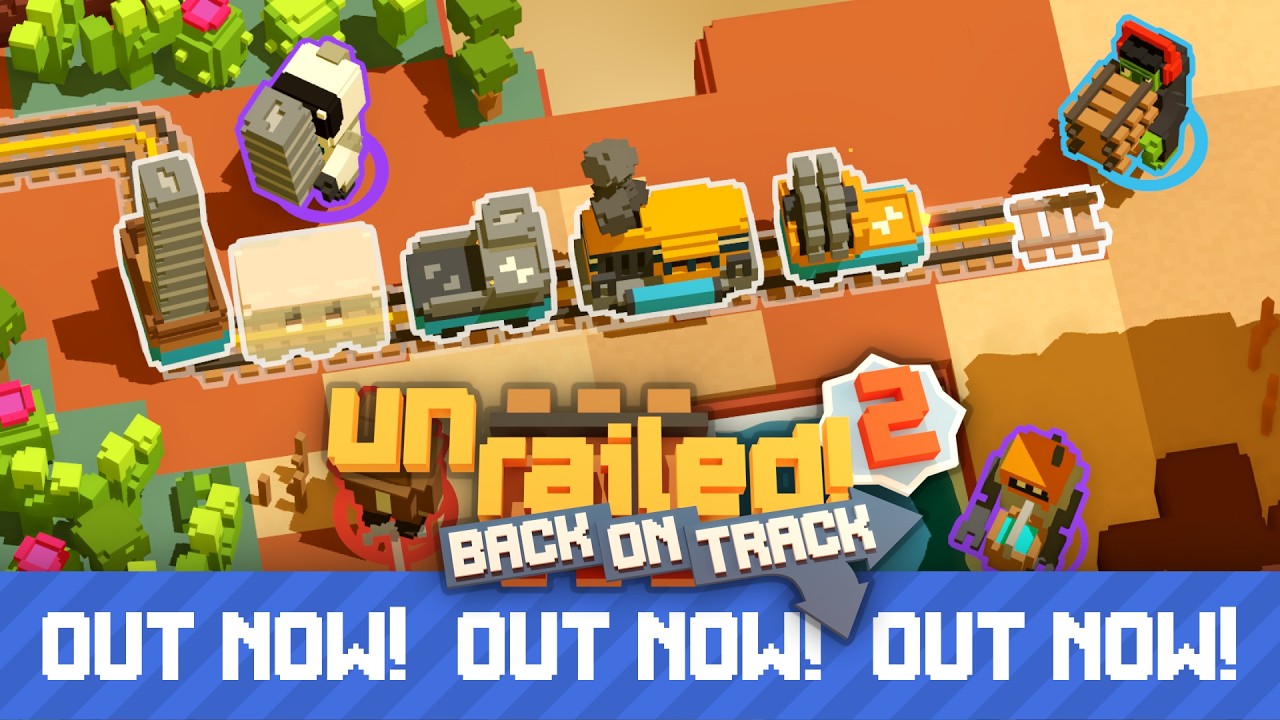
Unrailed 2 works because the railroad is only part of the challenge. The real test is how well the team communicates when everything starts happening at once. Players can be skilled on their own, but the train survives when the group moves like a slightly chaotic machine. Someone needs to see what is coming next. Someone needs to keep resources flowing. Someone needs to remember that bridges, tools, upgrades, and route choices all matter. In the best runs, the team begins to feel almost musical, with each player adding their own beat to the rhythm.
Of course, that music sometimes sounds like pots and pans falling down a staircase. That is part of the charm. Unrailed 2 does not need every run to be perfect. It thrives on recovery. A bad decision can become a funny rescue mission. A derailment can become the spark for a better strategy in the next attempt. The game understands that failure in co-op can be entertaining when it gives players something useful to learn and something silly to laugh about afterward.
How the railroad-building loop keeps every run moving
The core loop in Unrailed 2 is easy to grasp but hard to master. Players mine resources, cut down trees, craft track pieces, and place those pieces ahead of the train before it runs out of safe path. Procedurally generated worlds help keep the route unpredictable, so teams cannot simply memorize a single solution and cruise through. Instead, they have to react to whatever the map throws at them. That keeps each journey feeling like a moving puzzle, one where the puzzle is also honking at you and refusing to slow down.
That structure gives Unrailed 2 a strong pick-up-and-play quality. New players can understand the objective quickly, while experienced teams can chase smoother routes, smarter resource management, and more ambitious strategies. The game also uses progression to soften the sting of failure. Losing a locomotive does not simply mean the fun is over. It can open the door to new abilities, perks, upgrades, and better plans. That gives each attempt a sense of forward motion, even when the train itself has very much failed to keep moving forward.
Procedural worlds keep the pressure from becoming predictable
Procedural generation is a big part of why Unrailed 2 can stay fresh over repeated sessions. Since the worlds can change from run to run, players need to remain alert instead of falling into autopilot. Terrain, resource placement, hazards, and route decisions can shift the mood quickly. A team might begin with a simple path and suddenly find itself trying to thread rails through an awkward section that feels designed by a mischievous goblin with a clipboard. That unpredictability creates tension without making the concept harder to understand.
It also makes the game a strong fit for groups that enjoy replayable co-op. Some games are fun once, then fade after everyone knows the trick. Unrailed 2 is built around the idea that the trick keeps changing. The same basic objective remains, but the situations around it can turn a familiar task into a fresh little crisis. That is where the best moments tend to happen, especially when a team barely saves the train and celebrates as if it just won a championship.
Resource gathering turns simple chores into urgent choices
Cutting trees and mining stone may sound like basic tasks, but Unrailed 2 makes them feel urgent because every action competes with the train’s movement. Do you spend time clearing a wider path, or do you rush just enough track into place to survive the next few seconds? Do you split the team evenly, or stack players on one job because the situation has turned spicy? These decisions matter because the train does not care about good intentions. It only cares whether the track exists when it arrives.
This is where the game’s simple tools become surprisingly expressive. Carrying, throwing, dashing, building, and clearing all feed into the same shared goal, but the way a group uses them can vary wildly. Some teams become organized and efficient. Others create beautiful disasters that somehow work. Both styles can be fun, which is one of the reasons Unrailed 2 has such a natural party-game flavor despite being structured around survival and progression.
The Underground Unit adds a secret biome with sharper hazards
The 1.0 release introduces The Underground Unit, a new seventh biome that takes players into a hidden United Rail Division lab. It is a strong thematic shift from the more natural railroad-building landscapes, trading open terrain for a secretive facility filled with laser barriers, hidden buttons, and fresh obstacles. That kind of setting fits Unrailed 2 well because it gives the team new hazards to read while still keeping the main question beautifully blunt: can you keep the train alive?
Secret lab areas often work because they make players feel like they are somewhere they were not supposed to find. The Underground Unit leans into that feeling. It turns the journey into something more mysterious, with the sense that the team has rolled into a strange place full of dangerous machinery and suspiciously unfriendly design choices. Lasers and hidden switches are exactly the kind of hazards that can make co-op communication more interesting, because one player’s action in one part of the map may help or hinder someone elsewhere.
Laser barriers and hidden buttons change the way teams read the map
New hazards matter most when they alter how players think, not just when they add decoration. Laser barriers and hidden buttons can force teams to observe the map more carefully, coordinate movement, and adjust priorities on the fly. Instead of simply clearing a path and laying rails, players may need to figure out how different parts of the environment connect. That gives The Underground Unit a sharper puzzle-like edge while still preserving the series’ familiar rush of movement, resource gathering, and emergency decision-making.
It also creates room for wonderfully silly mistakes. Someone presses a button too early. Someone gets blocked at the worst possible moment. Someone insists they have everything under control, which in co-op language often means the opposite. These little mishaps are part of the emotional texture of Unrailed 2. The game wants players to succeed, but it also seems perfectly happy to watch them panic their way into a better story.
The floating Head boss raises the pressure in the new lab
The Underground Unit does not stop at environmental hazards. It also introduces a new boss: the floating Head of the United Rail Division, officially known as The Administrative Intelligence of the United Railway Division. That name alone sounds like paperwork became sentient and decided trains were the enemy. As a boss encounter, the Head gives the new biome a clear final threat, adding another layer of pressure for players who already have enough to worry about with tracks, resources, barriers, and the ever-moving locomotive.
Bosses in Unrailed 2 work best when they complicate the team’s priorities. Players cannot simply focus on the train in isolation. They need to handle whatever the boss throws at them while still feeding the core railroad-building machine. That can create some of the game’s most memorable moments, because bosses test whether a group can stay coordinated when the usual routine breaks. In The Underground Unit, that test seems especially fitting. A secret lab with lasers, hidden buttons, and a floating administrative head is not exactly a relaxing train ride through the countryside.
Boss encounters make each biome feel like a destination
One of the sequel’s smart ideas is using biome progression and bosses to make each area feel more distinct. A biome is not just a backdrop. It becomes a place with its own rhythm, dangers, and final challenge. The floating Head gives The Underground Unit a personality, turning the lab into more than a visual change. It becomes a destination with a specific threat waiting at the end, which gives skilled teams a reason to master the biome rather than simply survive it once and move on.
That matters for replay value. When each biome asks the team to adapt, players can develop preferences, strategies, and grudges. Maybe one group loves the lab’s puzzle flavor. Maybe another group fears it. Maybe someone refuses to trust hidden buttons ever again. Those reactions make co-op games stick in memory, because the locations become tied to shared victories and hilarious defeats.
Game modes give different groups their own way to play
Unrailed 2 now offers several ways to approach its railroad chaos, including Classic, Time Attack, Sandbox, and Versus modes. That range matters because co-op groups do not all want the same kind of session. Some players want the original-style experience with fewer extra layers. Others want timed pressure, competitive team battles, or a more flexible space to test setups and experiment. Giving players these choices makes the game easier to recommend to different groups, from casual couch crews to players who treat efficiency like a sacred art.
Classic mode is especially useful for players who loved the first Unrailed and want something closer to that familiar formula. Time Attack brings a more focused challenge for teams that enjoy racing against the clock. Sandbox gives players room to shape the experience and test ideas without the same structure as standard runs. Versus mode, meanwhile, turns the chaos outward, letting teams compete and probably develop very strong opinions about each other’s track-building habits.
Classic mode keeps the original spirit within reach
Classic mode gives returning players a way to reconnect with the simpler feel of the first game. That is a smart inclusion because sequels can sometimes become so layered that they leave part of their original audience behind. Unrailed 2 avoids that by letting players choose a mode that keeps the focus closer to the first game’s appeal: build tracks, manage resources, and keep moving. It offers a familiar rhythm for anyone who wants the co-op scramble without every newer progression system taking center stage.
This also helps new players ease in. Not every group wants to learn every system immediately, especially during a party night when half the room is still figuring out which button picks up wood. Classic mode can act like a friendly station stop before the bigger routes begin. It gives the game flexibility, and flexibility is valuable when a co-op title needs to work for families, friends, online groups, and mixed-skill teams.
Time Attack, Sandbox, and Versus widen the replay loop
Time Attack, Sandbox, and Versus modes each stretch Unrailed 2 in a different direction. Time Attack creates a sharper challenge for players who enjoy measurable goals and quick improvement. Sandbox lets teams experiment with setups, which can be great for curious players who want to understand the game’s systems without always being chased by disaster. Versus mode adds competition, turning the railroad-building formula into a team-based contest where coordination matters just as much as disruption and speed.
These modes help Unrailed 2 become more than a single co-op routine. A group might warm up in Classic, test strange ideas in Sandbox, chase better runs in Time Attack, then end the night in Versus with everyone dramatically pretending not to be competitive. That variety can make the game easier to return to, because players can pick the mood that fits the evening.
New skins and crossover characters add personality to the chaos
Unrailed 2 also brings more cosmetic variety, including crossover skins such as the Crewmate from Among Us, the Cat from Cat Quest III, and Tchia from Tchia. These additions do not change the central objective, but they do add personality to the frantic teamwork. In a game where players are constantly sprinting, carrying tools, throwing items, and narrowly avoiding disaster, recognizable characters can make the action even more entertaining. There is something instantly funny about watching a cute or familiar character panic-carry resources while a train inches toward doom.
Cosmetics are not just decoration in a social game. They help players identify with their role, pick a favorite look, and add a little extra silliness to the shared experience. The best co-op sessions often have a theatrical quality, where each player becomes known for certain habits. The cautious planner. The reckless runner. The person who throws everything. The friend who says “trust me” seconds before disaster. Skins give those personalities a visual hook, and that can make each run feel even more personal.
Crossovers fit the playful tone without distracting from the main loop
The crossover skins work because Unrailed 2 already has a playful tone. It is frantic, but not grim. It is challenging, but not cold. Characters from Among Us, Cat Quest III, and Tchia fit naturally into that energy because they bring charm without pulling attention away from the train. The focus remains on teamwork and survival, while the skins add a cheerful layer of recognition. It is like putting stickers on a toolbox. The tools still matter most, but the stickers make the whole thing feel more yours.
That kind of personality can be especially valuable on Switch 2 and Switch, where local multiplayer often carries a social, shared-screen energy. A good co-op game does not just need strong mechanics. It needs little touches that make people smile before the chaos begins. Unrailed 2 seems to understand that, and the expanded skin selection gives players another reason to jump back in for another run.
Switch 2 and Switch make the co-op pitch easy to understand
Unrailed 2 feels like a natural fit for Nintendo Switch 2 and Nintendo Switch because the concept is immediately readable. Gather friends, build tracks, save train. That is the kind of pitch that works well on a couch, across a table, or online with a group that wants something lively. The game supports both local and online co-op, which gives players flexibility depending on how they prefer to play. Not every great co-op night happens in the same room, though it is hard to beat the sound of friends yelling helpful nonsense from the same sofa.
The Nintendo audience has long had a strong appetite for multiplayer games that are easy to start but rich enough to keep groups engaged. Unrailed 2 fits that space by combining simple goals with escalating pressure. It is not difficult to understand why the train needs tracks, but keeping those tracks coming under changing conditions is where the challenge lives. That balance can help the game appeal to both casual players and more serious co-op fans.
Local and online play support different kinds of co-op groups
Local co-op gives Unrailed 2 its most immediate party flavor. Players can react in real time, point at the screen, laugh at mistakes, and negotiate roles without needing a perfect plan. Online play, meanwhile, keeps the game practical for groups who cannot always gather in one place. That combination is important because modern co-op needs flexibility. Friends move, schedules get weird, and sometimes the best gaming session happens through a headset after a long day.
The game’s structure works in both settings because the objective is so visual. Players can see the train, the track, the resources, and the danger. That helps communication stay grounded, even when things become hectic. A good co-op game should make players feel like they are solving the same problem together, and Unrailed 2 puts that problem right on the screen in the form of a train that absolutely will not wait.
Switch 2 visibility may help the sequel find new passengers
Launching on Nintendo Switch 2 gives Unrailed 2 a chance to reach players looking for fresh multiplayer experiences on newer hardware, while the Switch version keeps the door open for the existing Nintendo audience. That dual-platform presence is useful because the game’s appeal does not depend on a complicated premise or a long-running story. It depends on the immediate fun of teamwork under pressure. Players can understand the hook from a trailer, then discover the depth through repeated runs.
That accessibility could help the sequel find both fans of the original and newcomers who simply want a good co-op game. Not everyone follows every indie release closely, but a launch trailer full of frantic railroad building can communicate a lot in seconds. Sometimes a game does not need to explain itself with a megaphone. Sometimes it just needs to show four players desperately saving a train while everything goes sideways.
Why Unrailed 2 could become a favorite for couch co-op nights
Unrailed 2 has the ingredients that make couch co-op games stick around: simple rules, immediate tension, escalating chaos, and plenty of room for player-driven stories. It is easy to imagine a group saying they will play one more run, then accidentally playing several more because the last derailment was clearly unfair, obviously fixable, and definitely someone else’s fault. That loop of failure, laughter, adjustment, and renewed confidence is the secret sauce of many memorable multiplayer games.
The 1.0 release strengthens that appeal by giving players more modes, more biomes, more cosmetics, and a bigger sense of progression. The Underground Unit adds a fresh high-pressure destination, while Classic, Sandbox, Time Attack, and Versus modes support different moods. Whether a group wants relaxed experimentation, competitive chaos, or a cleaner original-style experience, there is now more room to find the right track. The result is a sequel that feels broader without losing the urgent charm of keeping a moving train alive.
The best moments will probably come from near-disasters
In games like Unrailed 2, the most memorable moments are rarely the clean wins. They are the near-disasters. The last-second track placement. The resource toss that somehow lands perfectly. The teammate who saves the run after everyone had already begun emotionally preparing for failure. These moments feel great because they are shared. Everyone sees the danger, everyone feels the pressure, and everyone gets to celebrate when the train survives by the width of a rail spike.
That is why Unrailed 2 has such strong co-op potential. It creates tiny stories constantly. A single run can produce panic, frustration, relief, laughter, and triumph in quick succession. It is a small emotional roller coaster with a train attached, which is either very fitting or a safety violation. Either way, it is exactly the kind of experience that can keep players talking after the screen fades.
Small mistakes can turn into the funniest memories
Unrailed 2 is not only about perfect play. It is about what happens when plans wobble. A missed resource, a poorly placed track, or a badly timed dash can turn a smooth run into a comedy scene. That kind of mistake-friendly fun is valuable because it keeps the mood light. Players can improve without feeling like every failure is a dead end. The game keeps nudging everyone back toward the rails, both literally and figuratively.
That makes it especially appealing for mixed groups. Skilled players can chase efficiency and progression, while newer players can still contribute and enjoy the chaos. The train gives everyone a shared goal, and the unpredictable worlds make every contribution matter. When co-op works well, the group becomes the main character. Unrailed 2 seems built around that idea, and the 1.0 release gives that group plenty of tracks to build together.
Conclusion
Unrailed 2: Back on Track arrives on Nintendo Switch 2 and Nintendo Switch with a clear identity: frantic co-op railroad building where teamwork is just as important as speed. Indoor Astronaut has expanded the sequel with new modes, new skins, progression systems, procedural worlds, and the newly added Underground Unit biome, giving players more reasons to return for another run. The launch trailer captures the appeal well. This is a game about keeping calm while the train refuses to slow down, which is funny because keeping calm is probably the first thing most teams will fail to do. With its 1.0 release now here, Unrailed 2 looks ready to become a lively pick for players who want couch co-op chaos, online teamwork, and the kind of shared disasters that turn into favorite gaming stories.
FAQs
- What is Unrailed 2: Back on Track?
- Unrailed 2: Back on Track is a cooperative railroad-building game from Indoor Astronaut. Players work together to gather resources, craft tracks, and keep a moving train from derailing across procedurally generated worlds.
- Is Unrailed 2 available on Nintendo Switch 2 and Nintendo Switch?
- Yes, Unrailed 2: Back on Track is available on both Nintendo Switch 2 and Nintendo Switch as part of its full 1.0 launch.
- What is new in the 1.0 release of Unrailed 2?
- The 1.0 release adds The Underground Unit, a secret seventh biome with laser barriers, hidden buttons, and a new boss called the floating Head of the United Rail Division. It also reflects the many modes, skins, and refinements added through earlier updates.
- Can Unrailed 2 be played in local co-op?
- Yes, Unrailed 2 supports local co-op, making it a strong fit for couch multiplayer sessions. It also supports online play, giving groups more flexibility when they cannot play in the same room.
- Which modes are included in Unrailed 2?
- Unrailed 2 includes several modes, such as Classic, Time Attack, Sandbox, and Versus. These options let players choose between a more traditional Unrailed experience, timed challenges, experimental play, and competitive team-based chaos.
Sources
- Unrailed 2: Back on Track launch trailer – couch co-op railroad builder follow-up on Nintendo Switch 2, Switch, Nintendo Everything, June 13, 2026
- Version 1.0 is OUT NOW! · Unrailed 2: Back on Track update for 11 June 2026, SteamDB, June 11, 2026
- Unrailed! 2: Back on Track launches June 11, Gematsu, May 21, 2026
- UNRAILED 2: BACK ON TRACK is headed down the tracks to full PC and console launch soon!, Cosmocover, March 3, 2026
- Unrailed 2: Back on Track!, Indoor Astronaut, 2026