














Summary:
The newly released side-by-side comparison video for The Legend of Zelda: Ocarina of Time on Nintendo Switch 2 makes the scale of this remake obvious. From redesigned character models and richer textures to modern lighting and smoother animations, the difference between the N64 original and the Switch 2 remake is dramatic. This piece breaks down what the video highlights, how the remake updates the presentation without changing the core design, what to expect from performance on the new hardware, and how these visual changes might affect fans who love the classic. If you care about how Link, Hyrule Field, and the series’ signature locales look on modern hardware, this overview points out the most notable improvements and what still feels faithful to the original experience.
What the side-by-side The Legend of Zelda Ocarina of Time comparison reveals about visual upgrades
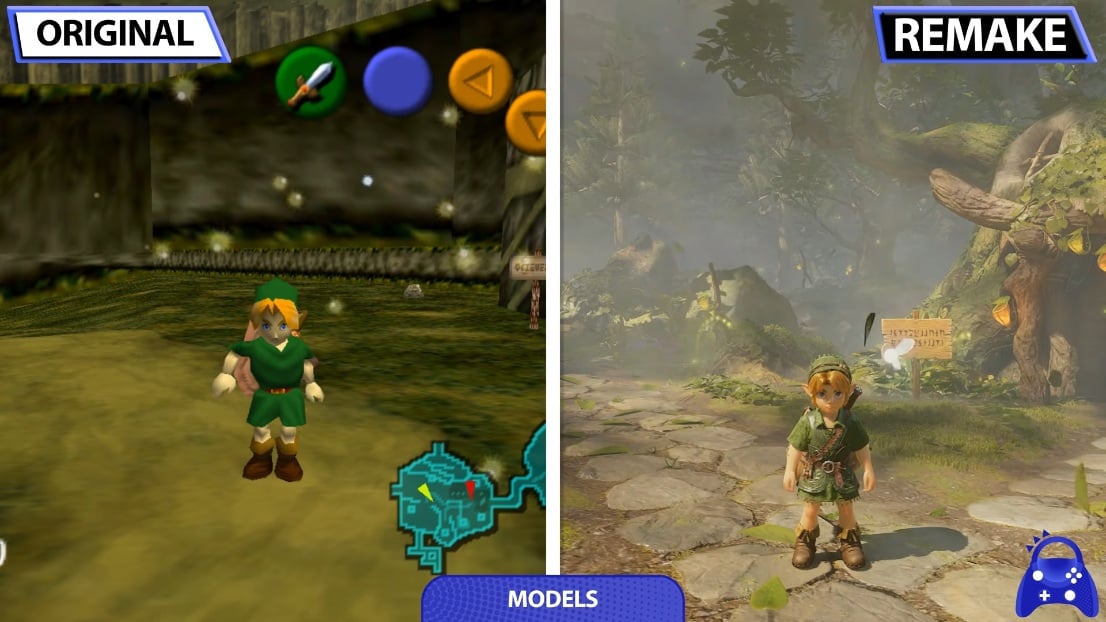
The comparison clip lines up footage from the Nintendo 64 original and the Switch 2 remake so you can see changes frame by frame, and it highlights a handful of areas where the remake really pulls ahead. Textures are no longer flat mosaics – fabrics, foliage, and stone have depth and detail that were impossible on the older hardware. Character faces and clothing now carry distinct shapes and shading, which makes expressions and movement feel more alive. Environmental objects react to light in ways that were absent before, and small touches like grass animation and water reflections add motion and richness that change how scenes read emotionally. The remake keeps key compositions and level layouts intact, so the nostalgia is preserved while the visual storytelling gains new clarity, making familiar moments feel fresh without altering their intent.

Video credits: ElAnalistaDeBits
Character models, expressions, and animation improvements
The most obvious update is to Link and the cast: models are higher-poly, proportions are refined, and facial details show clear design choices instead of the blocky shapes from the N64 era. Animations look less robotic – turns, idle motions, and combat swings have more fluidity and nuance that match modern expectations. Importantly, the remake seems to respect the original character silhouettes and costumes, so recognizable visuals remain intact even as details are modernized. For players who loved the N64 art, these changes may feel like a careful restoration rather than a wholesale redesign. For newcomers, the updated models will simply look like a modern 3D action-adventure. Either way, the improvement in body language and facial cues helps cutscenes and interactions land with stronger emotional weight than before.
Environments and lighting that reshape Hyrule
Hyrule Field and other major areas gain the largest visual payoff from revamped lighting systems and denser environmental detail. Where the N64 used simple shading and low-resolution textures, the Switch 2 remake layers subtle ambient light, directional shadows, and localized bloom that give each time of day a distinct mood. Terrain and distant landmarks are more readable, and the sense of scale increases because of improved draw distances and richer foreground detail. The remake also adds micro-details – weathered stonework, distinct foliage types, and particle effects – that make exploring feel more rewarding. Even well-worn locations from the original suddenly reveal new corners to admire, and the added environmental animation makes the world feel like it breathes, which strengthens immersion without changing level layout or navigation.
How the remake balances fidelity to the original with modern touches
One of the remake’s clearest goals is staying faithful to the original game while applying modern presentation techniques. The comparison video shows that designers preserved level geometry and pacing, only updating surfaces, lighting, and animations. This means puzzles, enemy placement, and map structure should feel familiar to returning players, while new visual cues make it easier to parse important objects and paths. The remake also modernizes convenience with features like a dash ability and reworked controls mentioned in official previews, yet maintains era-specific mechanics so the two-era storytelling remains intact. In short, this approach invites longtime fans to re-experience classic beats with modern polish and gives new players a visually current version without rewriting the game’s DNA.
Gameplay refinements and control modernizations
Beyond looks, the remake introduces control and quality-of-life updates that the comparison video hints at through gameplay segments. Movement feels tighter in modern footage, and actions like aiming, swapping items, and performing the dash look smoother and more responsive. The remake supports motion aiming and other input conveniences, which helps younger players or those used to modern controllers. Item availability across eras still factors into exploration, keeping the original’s time-based puzzle structure, but the interface and item management have been updated to match contemporary expectations. These changes aim to reduce friction during play without removing the sense of discovery and challenge that defines the original experience.
Switch 2 performance, resolution, and technical notes
The comparison frames suggest the Switch 2 is running the remake at a far higher internal resolution and with improved frame pacing compared to the N64. While the original relied on clever tricks to sell scale on limited hardware, the Switch 2 version uses higher-resolution assets, better anti-aliasing, and modern post-processing to produce clean edges and stable visuals. Early footage shown during the recent showcase indicates the game can run at 60 FPS in certain modes and outputs at a scaled 4K when docked, although exact performance may vary by area and settings. Fans who care deeply about frame rate or resolution should expect options or modes that favor smoothness or visual quality, but the core takeaway is that the remake leverages the new hardware to make the world look and feel markedly more modern.
Nostalgia, art direction, and player reactions
The remake’s art decisions have sparked mixed responses in the community – some players appreciate the fresh textures and richer animation, while others prefer the simpler, more stylized charm of the original. The side-by-side comparison shows how small changes in facial design, character proportions, and atmospheric lighting can alter the tone of familiar scenes. That contrast is natural; every remake has to choose how literal or interpretive it will be when updating beloved material. What matters most is that the remake keeps the original designs recognizable while offering a new way to experience them. For many, the updated presentation is a welcome bridge between retro nostalgia and contemporary standards, even if personal taste will determine how winning the choices feel.
Where to watch the comparison and official footage
If you want to see the differences yourself, the side-by-side comparison videos are available on major video platforms, and Nintendo also posted official gameplay during its recent presentations. The comparison clips typically place the original N64 footage next to the Switch 2 footage for direct visual reference, which makes it easy to spot upgrades in texture, lighting, and animation. For context on the remake – including the game’s features and release details – check the official announcements and publisher materials. Watching both the official trailer and fan-made comparisons gives the best sense of how the remake preserves the original while upgrading presentation, and it helps you judge whether the changes align with what you expect from a modern Zelda experience.
Conclusion
The side-by-side footage makes one thing clear: The Legend of Zelda – Ocarina of Time on Nintendo Switch 2 is more than a visual gloss. It reinterprets the original with modern assets, lighting, and animation while keeping the game’s structure and spirit intact. Whether you grew up with the N64 original or are discovering it for the first time, the remake promises a recognizable adventure that benefits from modern hardware capabilities. For prospective players, the comparison is a useful tool to decide if the updated visuals match your nostalgia or expectations. NintendoReporters will continue to follow community reaction and technical breakdowns as more footage and hands-on impressions appear.
FAQs
- Will the Switch 2 remake change the story or puzzles from the N64 original?
- The remake appears to keep the original story and puzzle structures intact while modernizing presentation and controls. Expect the same key beats and era-based item availability, but with updated visuals and conveniences that make navigation and item use smoother.
- How much better does the Switch 2 version look compared to the N64?
- Visually, the remake adds higher-resolution textures, better lighting, improved draw distance, and smoother animations. The comparison video highlights clearer environments, more detailed character models, and subtle environmental motion that the N64 could not produce.
- Is the remake exclusive to Nintendo Switch 2?
- Yes, official announcements note the remake is developed for Nintendo Switch 2 and showcases features that leverage the system’s hardware and built-in microphone for ocarina input among other functions.
- When does the remake launch?
- Nintendo has announced a launch date of November 5, 2026 for the remake, and special edition hardware related to the release arrives around the same window.
- Where can I find the side-by-side video myself?
- Search major video platforms for side-by-side or comparison uploads, and look for the official Nintendo gameplay posted during the recent Zelda showcase. Community channels also often post frame-by-frame comparisons that make changes easier to spot.
Sources
- The Legend of Zelda: Ocarina of Time, the return of the critically acclaimed Nintendo 64 classic for a new generation, reborns for Nintendo Switch 2 in 2026, Nintendo, June 12, 2026
- Video: Zelda: Ocarina of Time Nintendo Switch 2 remake vs. N64 graphics comparison, NintendoEverything, September 8, 2026
- Video: Zelda: Ocarina Of Time Side-By-Side Comparison, Switch 2 Vs. N64, Nintendo Life, September 8, 2026