














Summary:
Pokémon Pokopia puts Ditto in a starring role, and director Shigeru Ohmori has now explained why the transforming Pokémon was such a natural fit for the Nintendo Switch 2 title. While characters such as Pikachu, Eevee, Charizard, and Mewtwo tend to receive much of the franchise’s spotlight, Ditto offered something particularly useful from a design perspective: its ability to become other Pokémon. Ohmori’s original idea revolved around building a world while meeting Pokémon, learning abilities from them, and using those abilities to alter the environment. Making Ditto the protagonist meant those mechanics could feel like an extension of the character rather than an unrelated ability handed to a human player.
The decision also influenced the visual design of Pokémon Pokopia. Ohmori wanted the player character to exist at roughly the same scale as the Pokémon they encountered while still having proportions suitable for navigating and interacting with the game’s block-based environments. A transformed Ditto offered the perfect excuse for a stylized humanoid design with a larger head and compact proportions. That appearance could remain playful without looking strange because Ditto is already defined by transformation. The explanation provides an interesting look at how closely Pokémon Pokopia’s protagonist, world design, and progression system were connected during development. Rather than choosing Ditto simply because the Pokémon was cute or recognizable, the developers found a character whose established abilities could support almost every part of the experience.
Pokémon Pokopia director explains why Ditto became the protagonist
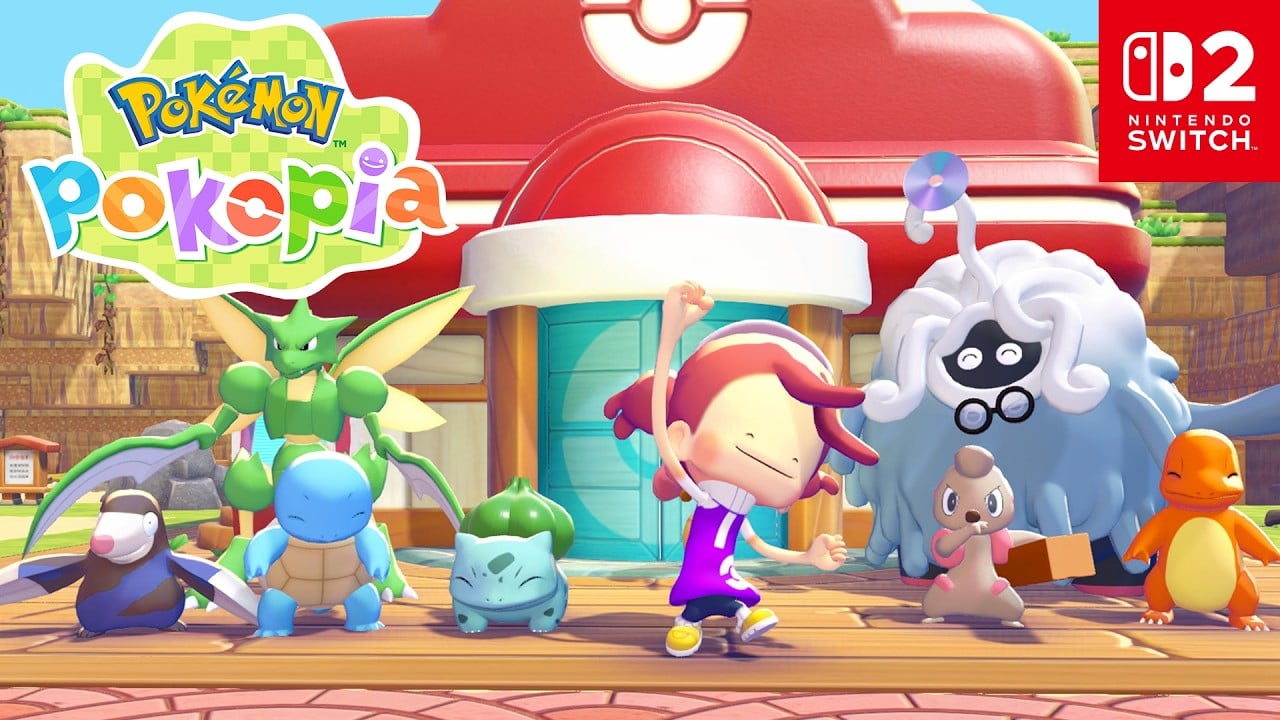
Choosing the central character for a Pokémon game can shape almost everything that follows, and Pokémon Pokopia presented an unusual challenge. The game isn’t built around the familiar idea of playing as a Trainer who captures Pokémon and commands them in battle. Instead, players control a Ditto that has transformed into a humanoid form and works alongside Pokémon while rebuilding a withered world. Shigeru Ohmori has explained that the choice grew directly from the earliest ideas behind the project. He imagined a game where players would meet different Pokémon while gradually developing the surrounding environment. Once the team began considering how those encounters could provide new abilities and expand what players were able to accomplish, Ditto quickly became much more than an amusing candidate. Its signature transformation power provided a logical bridge between meeting a Pokémon and gaining access to something new.
Ditto’s Transform ability inspired Pokémon Pokopia’s gameplay loop
At the heart of Ohmori’s original concept was a simple cycle that could continually open new possibilities. Players would encounter Pokémon, gain access to useful moves, and then apply those abilities to the environment. Something blocking the path wouldn’t necessarily require a traditional key or item. Instead, a Pokémon ability could become the solution. Ohmori specifically discussed examples such as clearing grass or breaking rocks, illustrating how familiar Pokémon moves could take on environmental purposes rather than simply serving as attacks. Ditto made that idea surprisingly elegant. Because transformation has always been the defining feature of the Pokémon, copying characteristics or abilities from creatures it encounters feels natural. The protagonist doesn’t need a complicated explanation for suddenly acquiring new powers. Ditto is practically built for the job, turning a familiar Pokémon trait into the backbone of an entirely different style of progression.
Learning abilities from Pokémon opened up the world
The clever part of this approach is that learning a new ability doesn’t merely add another tool to a menu. It changes the player’s relationship with the landscape itself. Pokémon Pokopia revolves around restoring, shaping, crafting, gardening, and building, so environmental interaction is constantly important. Official descriptions of the game show Ditto using Pokémon-inspired moves for practical purposes, including growing plants with Leafage, smashing obstacles with Rock Smash, travelling across water, and gliding between elevated areas. That gives encounters with Pokémon a clear mechanical value even when traditional battles aren’t driving the experience. You might meet a new creature because you’re curious about it, but the ability associated with that encounter can also change where you can travel or what you can create. It’s a satisfying little domino effect: meet somebody new, gain another possibility, reshape the world, and discover what your actions reveal next.
New terrain could attract even more Pokémon
Ohmori’s explanation makes the original concept sound almost like a self-feeding ecosystem. Ditto meets Pokémon and increases what it can do, those abilities allow players to alter the terrain, and the changing environment can then encourage other Pokémon to appear. Those new encounters can provide additional possibilities, keeping the cycle moving. It’s an idea that suits Pokémon remarkably well because the creatures aren’t treated simply as collectibles waiting to be checked off a list. Their characteristics have practical consequences for the world around them. A newly created habitat can feel like an invitation, while discovering another Pokémon can become a reason to reconsider an area you thought you had already finished. Ditto sits neatly in the middle of that process. Its transformations allow the protagonist to absorb ideas from the Pokémon around it without losing its identity, which helps connect exploration, interaction, world building, and progression into the same playful loop.
Using Ditto solved an important problem with the player’s perspective
Gameplay wasn’t the only reason Ohmori gravitated toward Ditto. The physical relationship between the player character and surrounding Pokémon also mattered. Pokémon come in wildly different shapes and sizes, but placing a conventional human protagonist beside them immediately creates certain expectations about scale. Pokémon Pokopia needed a character capable of performing human-like activities such as building and interacting with a constructed environment while still looking as though it belonged among the Pokémon themselves. Ditto gave the developers room to bend those expectations. Its transformed appearance could retain enough humanoid qualities to make crafting and exploration readable while remaining unmistakably unusual. That flexibility is difficult to achieve with an ordinary human character. With Ditto, however, a slightly exaggerated body doesn’t need to obey realistic anatomy. If anything, the oddness works in its favor because transformation has always made Ditto one of the franchise’s most visually flexible Pokémon.
Shigeru Ohmori wanted the protagonist to match Pokémon in scale
Ohmori specifically explained that he wanted the player’s scale to remain close to that of the Pokémon. That sounds like a small visual consideration, but it can dramatically affect how a world feels. Put a towering human beside smaller Pokémon and the creatures can begin to resemble pets following their owner. Bring the protagonist closer to their scale and the relationship feels more equal. That distinction is particularly fitting for Pokémon Pokopia, where interacting and living alongside Pokémon is more important than commanding them from the sidelines. Ohmori also referred to the human proportions seen in Pokémon X and Y and Pokémon Omega Ruby and Alpha Sapphire while discussing the type of dimensions he felt worked for the block-based terrain. The challenge, then, was finding something humanoid enough for the environment without creating a character who visually dominated every Pokémon standing nearby. Ditto offered an unusually convenient answer.
A humanoid Ditto could naturally use stylized proportions
Once Ditto had entered the picture, the development team had an excuse to push the protagonist toward more exaggerated proportions. Ohmori felt that a transformed Ditto could have a stylized, large-headed appearance without seeming out of place, and he asked the designers to explore those proportions during prototyping. That decision helps explain why Pokémon Pokopia’s protagonist can look human-like without simply appearing to be an ordinary person with a Ditto face. The design sits somewhere between the two ideas, which is exactly what makes it work. Ditto’s body has never been governed by the same rules as most Pokémon, so players already understand that transformation can produce unusual results. A chunky, compact humanoid form therefore feels playful rather than anatomically bizarre. It’s one of those design solutions that seems obvious after you’ve seen it, but only because the character’s established identity does so much of the heavy lifting.
Ditto’s unusual role shows how Pokémon Pokopia grew from its prototype
The explanation becomes even more interesting when considered alongside the early Pokémon Pokopia prototype footage shared by Game Freak. Ohmori has discussed how the project began with a very small team after work on Pokémon Scarlet and Violet, allowing ideas to be tested before the concept expanded. Early experiments already revolved around changing the environment and creating conditions in which different Pokémon could appear. Ditto’s role was consequently tied to the project’s foundations rather than added once the broader design had already been established. The team also experimented with the extent of Ditto’s transformations when abilities were used, including questions about whether only parts of the body needed to change or whether larger transformations were necessary. Those experiments highlight how an apparently simple idea can require plenty of visual testing. Ditto might be famous for transforming, but translating that familiar ability into readable environmental actions creates an entirely new design problem.
Pokémon Pokopia gives a familiar Pokémon a very different purpose
Ditto is hardly an obscure Pokémon. It has been part of the series since the original generation, and Transform makes it instantly recognizable to longtime players. Even so, it traditionally hasn’t occupied the same mascot territory as Pikachu or Eevee. Pokémon Pokopia demonstrates why that doesn’t matter when the character fits the mechanics. In fact, using somebody less associated with a fixed starring role arguably gives the developers more freedom. Players already understand what Ditto does, but they don’t bring decades of expectations about how a Ditto-led adventure is supposed to work. Pokémon Pokopia can therefore take its transformation ability and reinterpret it around crafting, environmental restoration, exploration, and cooperation. That’s a refreshing use of an established Pokémon. Instead of creating a completely new creature to justify the mechanics, the developers looked back through the existing roster and found one whose defining gimmick could become the foundation for an entirely new type of adventure.
Conclusion
Shigeru Ohmori’s explanation makes it clear that Ditto wasn’t chosen for Pokémon Pokopia simply because the developers wanted an unexpected face on the box. Its Transform ability supported the project’s original progression ideas, allowing the protagonist to learn from Pokémon and gain new ways of interacting with the environment. Ditto also solved a visual challenge by giving the designers freedom to create a humanoid character with compact, stylized proportions that could remain close to Pokémon in scale. Those two advantages connected the protagonist directly to both the mechanics and appearance of the game. It is a smart example of character choice serving design rather than merely marketing. Pokémon Pokopia is available for Nintendo Switch 2, where Ditto’s familiar transformation talent has been turned into something quite different from its traditional battle role. Sometimes the best protagonist isn’t the biggest mascot. It’s the one whose abilities make the whole idea click.
FAQs
- Why was Ditto chosen as the protagonist of Pokémon Pokopia?
- Shigeru Ohmori wanted a protagonist that could naturally gain abilities from the Pokémon it encountered. Ditto’s established transformation powers made it an ideal match for a gameplay loop built around meeting Pokémon, learning new moves, changing the environment, and opening additional possibilities.
- How does Ditto’s transformation ability fit Pokémon Pokopia?
- Transformation provides an in-universe explanation for Ditto acquiring useful abilities connected to other Pokémon. Those abilities can then help with activities such as changing terrain, growing vegetation, overcoming obstacles, travelling through the environment, and expanding what players are able to create.
- Why does Ditto have a humanoid appearance in Pokémon Pokopia?
- Ohmori wanted proportions that worked well with the game’s block-based environments while keeping the protagonist relatively close to Pokémon in scale. Because Ditto can transform, the designers could give it an exaggerated humanoid shape with a larger head without making the appearance feel inconsistent with the character.
- Was Ditto part of the original Pokémon Pokopia concept?
- Yes. Ohmori’s comments indicate that Ditto became closely connected with the early concept as the team experimented with a cycle involving meeting Pokémon, acquiring abilities, changing terrain, and attracting additional Pokémon. Prototype development also explored how Ditto should visually transform when using different powers.
- What platform is Pokémon Pokopia available on?
- Pokémon Pokopia is available exclusively for Nintendo Switch 2. The game launched on March 5, 2026 and focuses on crafting, building, restoring environments, meeting Pokémon, and creating settlements rather than following the traditional structure of a mainline Pokémon RPG.
Sources
- Pokemon Pokopia director explains why Ditto was chosen as the game’s protagonist, Nintendo Everything, August 8, 2026
- Game Freak reveals first ever prototype footage of Pokemon Pokopia, Nintendo Everything, August 7, 2026
- Game Freak Reveals Early Prototype Video For Pokémon Pokopia, Nintendo Life, August 7, 2026
- Create Your Own Pokémon Paradise with Pokémon Pokopia, Available Now, The Pokémon Company International, March 5, 2026
- Pokémon Pokopia, Launching on March 5, 2026, is Available for Preorder Now, Pokémon, November 11, 2025