














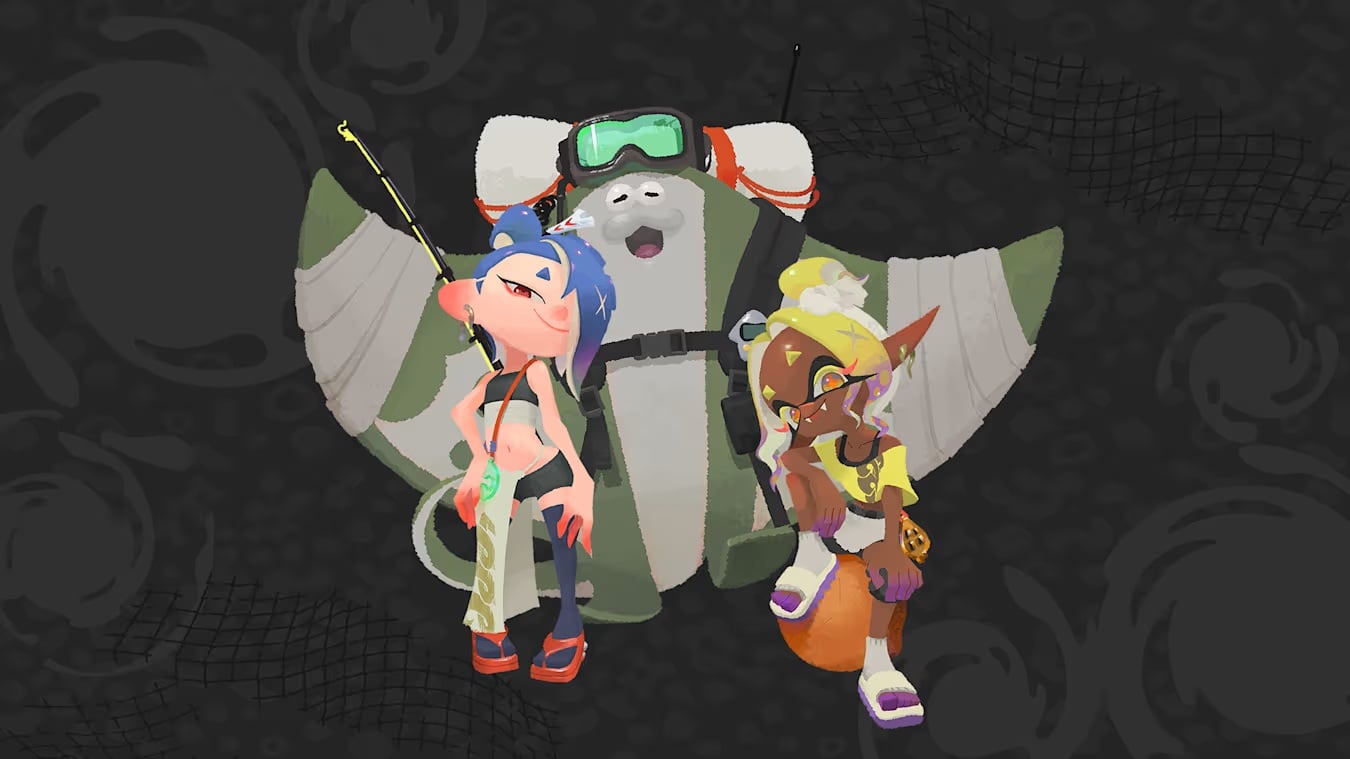
Summary:
Nintendo has explained why the next major Splatoon release is Splatoon Raiders rather than Splatoon 4. After spending more than 11 years developing three main entries and supporting them with regular updates, the team wanted to explore a different side of its colorful ink-based universe. Producer Seita Inoue said the developers were interested in creating an experience that would let players enjoy the action on their own instead of placing competitive multiplayer at the center of everything.
That idea grew as development on Splatoon 3’s updates began winding down. Director Yoshihiko Ito and the team investigated whether the hectic foundations of Salmon Run could support a full single-player experience. Rather than coordinating with three teammates, one player would need to handle crowds of Salmonids, changing objectives, resource collection, and constant pressure alone. It was an ambitious concept, especially once the developers started increasing the number of enemies appearing at the same time.
Nintendo Switch 2 gave the studio the performance it needed to experiment with busier encounters and a more demanding style of solo action. Those experiments eventually developed into Splatoon Raiders, the series’ first standalone spin-off built primarily around single-player gameplay. Nintendo chose not to call it Splatoon 4 because it does not represent a replacement for the competitive formula. Inoue made it clear that Nintendo intends to continue developing competitive Splatoon gameplay. Splatoon Raiders is therefore a detour rather than a permanent change of course, offering something fresh while the road toward the next mainline entry remains open.
Nintendo Explains Why Splatoon Raiders Came Before Splatoon 4
Splatoon Raiders may look like the next major chapter in Nintendo’s ink-covered universe, but its name carries an important message. This isn’t Splatoon 4 wearing a clever disguise. It is a standalone spin-off created to explore ideas that would not naturally fit inside another competitive mainline release. Nintendo had spent more than a decade establishing Turf War, Ranked Battles, Splatfests, Salmon Run, and story campaigns as interconnected parts of the same package. The development team eventually saw an opportunity to take one of those supporting pillars and place it in the spotlight. Instead of asking how Splatoon could become bigger in the usual sense, the developers asked a more interesting question: what would happen if players were allowed to enjoy its frantic action entirely on their own?
The answer became Splatoon Raiders. Producer Seita Inoue explained that the team wanted to try a slightly different approach after developing and updating three games across more than 11 years. That history matters because Splatoon has traditionally been defined by social competition. Players cover stages in ink, contest objectives, coordinate special weapons, and react to unpredictable opponents. Splatoon Raiders preserves the speed and personality of that action while changing the player’s relationship with it. You are no longer preparing for another contest against a rival team. The focus moves toward surviving escalating encounters, managing several problems at once, and enjoying the mechanics without the pressure that often accompanies competitive multiplayer.
More Than a Decade of Splatoon Inspired a Change of Direction
The original Splatoon launched in 2015, introducing a playful shooter where covering the environment could be just as important as hitting an opponent. Nintendo followed it with Splatoon 2 and Splatoon 3, supporting each release through updates, seasonal events, new equipment, balance adjustments, and additional modes. Maintaining that pace for more than 11 years gave the developers plenty of experience, but it also created a natural desire to stretch their creative muscles. Even the most colorful routine can begin to feel familiar when you have followed it for over a decade.
Inoue described the team as having moved at full speed throughout the series’ life. Rather than immediately repeating the established cycle with Splatoon 4, the developers wanted to make something that players could savor independently. That word choice reveals what makes Splatoon Raiders different. Competitive matches demand quick reactions and constant awareness of other people, while a dedicated solo release can give players more control over their pace. It can introduce challenges gradually, encourage experimentation, and allow someone to fail without feeling as though they have disappointed three teammates. For players who love Splatoon’s movement and weapons but find online competition intimidating, that change could feel like someone finally opened a side door into the party.
Splatoon Raiders Turns Supporting Modes Into the Main Attraction
Splatoon has never been limited to competitive multiplayer. Every mainline entry has included a solo campaign, while Splatoon 2 introduced Salmon Run as a cooperative alternative built around defeating waves of Salmonids and collecting Golden Eggs. Those experiences were meaningful, but they existed alongside modes that shaped the series’ public identity. When most people picture Splatoon, they tend to imagine two teams painting a stage rather than one player fighting through a large group of computer-controlled enemies.
Splatoon Raiders changes that balance. Nintendo is taking non-competitive ideas that once supported the broader package and developing an entire release around them. This gives the studio room to build progression systems, enemy encounters, environments, and objectives specifically for solo play instead of treating them as companions to online battles. It is similar to promoting a talented supporting character into the leading role. The familiar personality remains, but the structure around it can be rebuilt to suit a different kind of adventure.
Inoue said one motivation was to create a new entry point for the franchise. Someone should not need to become comfortable with competitive matchmaking before enjoying Splatoon’s movement, weapons, humor, and unusual world. By turning its non-competitive qualities into a standalone release, Nintendo can appeal to players who prefer to explore, progress, and overcome challenges without facing human opponents. That does not diminish the importance of competition. It simply acknowledges that the series has more than one kind of fun hidden beneath all that ink.
Salmon Run Provided the Foundation for a Solo Adventure
Director Yoshihiko Ito explained that the earliest ideas for Splatoon Raiders appeared as work on Splatoon 3’s updates was winding down. The team began investigating whether Salmon Run could be adapted into an experience that one person could play for as long as they wanted. It was a logical starting point. Salmon Run already offers enemy waves, changing objectives, boss encounters, resource collection, and an escalating sense of panic. It regularly asks players to make rapid decisions while several problems compete for their attention.
The major difference is that traditional Salmon Run divides those responsibilities among four players. One teammate may draw a boss away from the basket while another collects Golden Eggs. Someone else might revive a defeated ally or clear smaller Salmonids before they overwhelm the group. Converting that design into a solo experience means placing every responsibility on a single pair of shoulders. It sounds slightly cruel, but in the best possible video game sense. The resulting action can be exhausting, chaotic, and deeply satisfying when everything finally clicks.
Ito believed adapting Salmon Run for one player could produce something both hectic and exhilarating. That combination appears to be one of the central design goals behind Splatoon Raiders. The game is not simply removing three players from an existing mode and calling the job finished. Nintendo needed to reconsider how enemies behave, how objectives overlap, how pressure builds, and how a lone player receives the tools required to survive. The familiar Salmon Run framework became a starting point rather than a finished blueprint.
Nintendo Switch 2 Made Larger Salmonid Battles Possible
Hardware performance became an important part of the experimentation. Nintendo had already discussed developing the next Splatoon release for Nintendo Switch 2, giving the team access to a more capable system than the original Nintendo Switch. Ito said this encouraged the developers to increase the number of Salmonids and pursue an experience in which one player must fight everything alone. Nintendo refers to this concept as the ultimate multitasker experience, an appropriate description for battles where every corner of the screen can become a fresh emergency.
Increasing the enemy count is not merely a visual trick. Every additional Salmonid may require artificial intelligence, movement calculations, attack behavior, collision detection, animation, effects, and interaction with ink-covered environments. A larger crowd also changes the rhythm of play. Safe routes can disappear within seconds, minor enemies become dangerous when they gather, and hesitation can turn a manageable wave into a wall of fins and frying pans. Nintendo Switch 2 allows the developers to make those scenes busier without sacrificing the responsiveness that Splatoon’s movement demands.
The stronger hardware also gives Nintendo room to explore more ambitious encounter designs. Large enemy groups can be combined with bosses, environmental hazards, collectible objectives, and effects that communicate several threats at once. Raw numbers alone will not make the game engaging, of course. A screen filled with enemies can become visual soup if the action is not carefully directed. The real challenge is ensuring that players can read the chaos, understand their options, and feel responsible for victory rather than merely lucky to have survived.
Why Nintendo Classified Splatoon Raiders as a Spin-Off
Nintendo’s decision to use the Splatoon Raiders name instead of Splatoon 4 protects the identity of both projects. Mainline Splatoon games are associated with competitive battles, evolving multiplayer communities, weapon balance, social events, and years of post-launch support. Calling a solo-focused release Splatoon 4 could create expectations it was never designed to meet. Players might reasonably assume that another numbered sequel would place competitive multiplayer at its center and expand the familiar online structure.
Splatoon Raiders signals a different promise. It tells players that this release belongs to the same world but follows its own rules. Spin-offs can concentrate on a particular mechanic, character, or style without carrying every obligation of the main series. That freedom is especially valuable for Splatoon because its established formula involves many interconnected systems. Nintendo can experiment more boldly when it does not need to maintain the exact balance between solo campaigns, cooperative activities, competitive modes, equipment, events, and online progression expected from a numbered entry.
Inoue directly connected the spin-off classification to Nintendo’s continued interest in competitive play. Splatoon Raiders was not named Splatoon 4 because the developers still intend to work on competitive gameplay going forward. That distinction should reassure fans who worried that the series was abandoning its multiplayer foundation. Nintendo is broadening Splatoon rather than replacing its center. The franchise can support a solo spin-off now and return to team-based competition in another release later.
Splatoon Raiders Creates a Different Entry Point for New Players
Competitive games can be difficult to approach after several entries and more than a decade of refinement. Experienced Splatoon players understand movement routes, weapon ranges, stage layouts, special abilities, team roles, and the small decisions that separate a comfortable victory from a spectacular collapse. A newcomer entering that environment may feel as though everyone else received a secret instruction manual. Even casual matches can be overwhelming when veteran players move through ink with the confidence of caffeinated dolphins.
A single-player-focused release removes much of that social pressure. Players can learn how weapons behave, practise movement, experiment with upgrades, and repeat encounters without worrying about rankings or teammates. Challenges can be arranged in a deliberate order, allowing Nintendo to teach one skill before combining it with another. This makes Splatoon Raiders potentially valuable for both newcomers and returning fans. Beginners receive a friendlier introduction, while experienced players encounter familiar mechanics under new forms of pressure.
The spin-off format also gives Nintendo more freedom to develop the world and its characters. Competitive matches move quickly and generally leave little space for extended storytelling. A solo adventure can slow down between battles, reveal new locations, introduce narrative mysteries, and let personalities breathe. Splatoon’s world has always suggested a larger history beneath its bright surfaces. Splatoon Raiders can use that foundation without needing to hurry players back into the next online queue.
Competitive Splatoon Still Has a Future
Perhaps the most important statement from Nintendo’s interview is that competitive gameplay will continue to be developed. Inoue did not announce Splatoon 4, provide a release window, or confirm what form the next competitive experience will take. Still, his comments establish that Splatoon Raiders is not intended to close the door on the traditional series. It is a parallel experiment created because the developers wanted to explore something different before returning to familiar territory.
This approach could ultimately benefit the next mainline release. Development teams can discover new mechanics more easily when they are not required to fit every idea into an established structure. Systems created for managing large enemy groups, clearer threat indicators, improved artificial intelligence, new movement abilities, or more flexible progression could influence future projects. Even lessons about what does not work can be valuable. Game development is often less like following a map and more like throwing ink at a wall until an interesting path appears.
Fans should nevertheless be careful not to treat Inoue’s statement as a formal Splatoon 4 announcement. Nintendo has confirmed an ongoing interest in competitive gameplay, but it has not publicly detailed the next numbered entry through these comments. Splatoon Raiders deserves to be evaluated as its own release rather than merely as a waiting room for another sequel. Its success will depend on whether Nintendo can transform Splatoon’s familiar action into a satisfying experience built around one player.
What Splatoon Raiders Could Teach Nintendo About Splatoon 4
Splatoon Raiders gives Nintendo a valuable opportunity to study how players respond to a more focused version of the franchise. The mainline games need to serve several audiences at once. Competitive fans want balanced weapons and strong stages, cooperative players want memorable Salmon Run challenges, and solo players want inventive campaigns. A standalone release can examine one part of that equation with far greater attention.
The lessons could influence how Nintendo designs future enemy encounters, tutorials, progression systems, accessibility features, and artificial intelligence. A solo game must communicate information clearly because there are no teammates to compensate for confusion. It must also create variety without relying on the unpredictability of human opponents. These demands encourage different solutions from those used in competitive multiplayer, and some of those solutions may eventually strengthen the wider series.
Splatoon Raiders could also help Nintendo understand how much demand exists for experiences outside the traditional competitive framework. Strong interest may lead to more spin-offs, additional story-focused projects, or greater investment in solo modes within future numbered entries. The most exciting possibility is not that Raiders will replace Splatoon 4. It is that both styles can coexist, allowing Nintendo to build a broader franchise without forcing every idea into the same ink tank.
Conclusion
Nintendo created Splatoon Raiders because its developers wanted to explore the series from a different angle after more than 11 years of mainline development and updates. The team saw potential in turning Salmon Run’s frantic cooperative structure into a single-player experience where one person handles every threat, objective, and rapidly multiplying disaster. Nintendo Switch 2 provided the performance needed to experiment with larger groups of Salmonids and more demanding encounters, helping those early ideas grow into a standalone release.
The game is classified as a spin-off because Nintendo does not consider it a replacement for competitive Splatoon. Inoue confirmed that competitive gameplay remains part of the franchise’s future, even though Splatoon 4 has not been formally detailed through these comments. Splatoon Raiders is therefore best understood as a creative expansion of the series. It gives solo players a new entry point, allows established fans to experience familiar mechanics differently, and offers Nintendo room to experiment without the expectations attached to a numbered sequel. Splatoon 4 may come later, but Raiders has a clear reason to exist now.
FAQs
- Why did Nintendo make Splatoon Raiders instead of Splatoon 4?
- Nintendo’s developers wanted to try a different gameplay approach after spending more than 11 years creating and updating three mainline Splatoon games. The team chose to build an experience where players could enjoy the action alone rather than immediately developing another competitive numbered entry.
- Is Splatoon Raiders a single-player game?
- Splatoon Raiders was designed as a single-player-focused spin-off. Nintendo wanted to turn the series’ non-competitive elements into the main attraction and create an experience players could enjoy without relying on competitive multiplayer.
- How did Salmon Run inspire Splatoon Raiders?
- The development team explored whether Salmon Run’s enemy waves, Golden Egg collection, bosses, and frantic multitasking could be adapted for one player. This concept eventually developed into a game where a solo player faces large numbers of Salmonids and manages several objectives at once.
- Has Nintendo cancelled Splatoon 4?
- Nintendo has not said that Splatoon 4 has been cancelled. Producer Seita Inoue stated that the company will continue developing competitive gameplay, which is why Splatoon Raiders was classified as a spin-off rather than a numbered sequel.
- How does Nintendo Switch 2 affect Splatoon Raiders?
- Nintendo Switch 2 gave the developers additional performance for experiments involving larger numbers of Salmonids. This helped the team pursue its ultimate multitasker concept, where one player must respond to many enemies and overlapping threats.
Sources
- Ask the Developer Vol. 22, Splatoon Raiders – Chapter 1, Nintendo, July 21, 2026
- Nintendo Explains Why It’s Coming Out With Splatoon Raiders Instead of Splatoon 4, Nintendo Everything, July 22, 2026
- Nintendo Didn’t Make Splatoon 4 Because It Wanted a Different Approach, GamesRadar+, July 22, 2026