














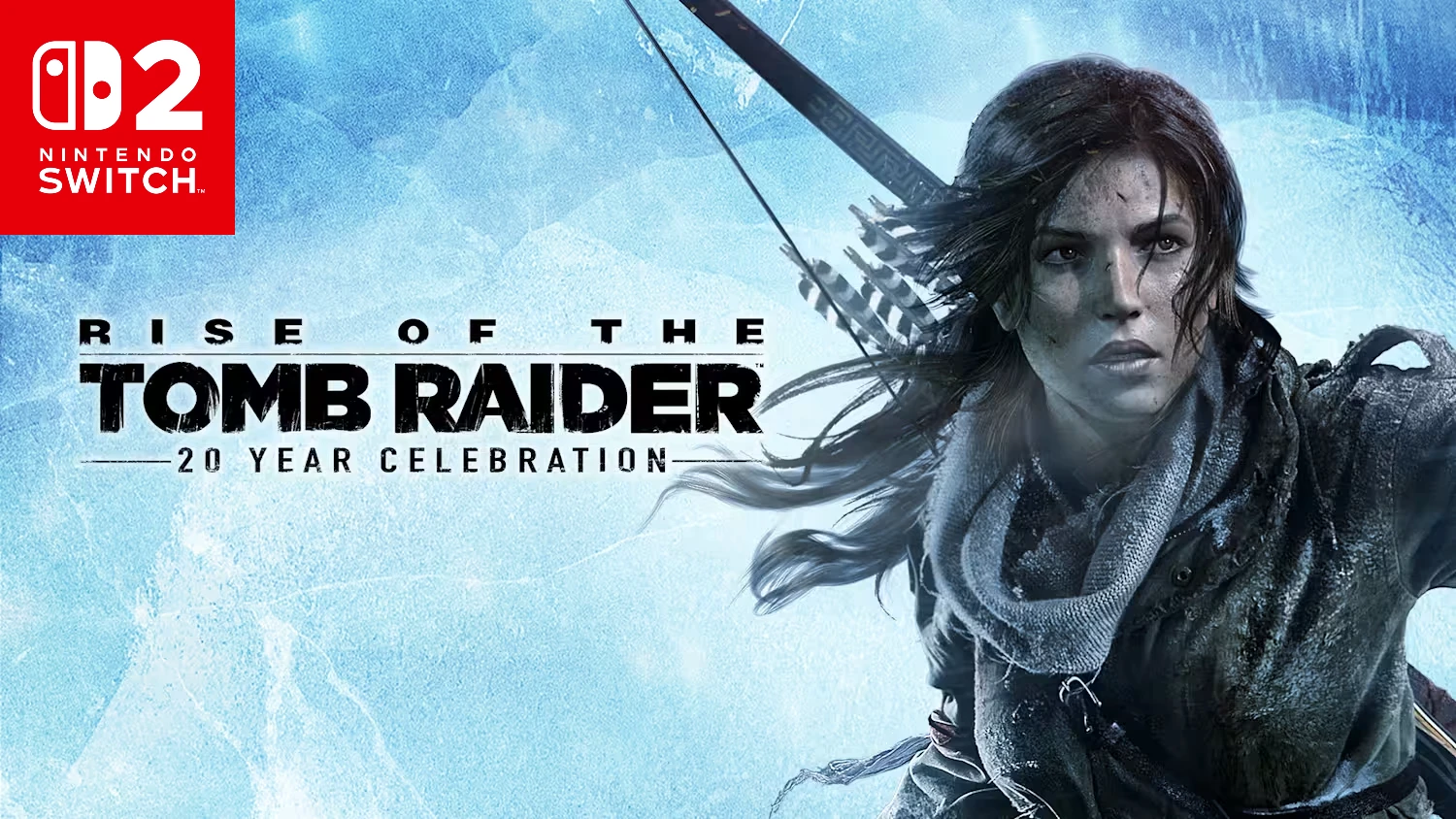
Summary:
Rise of the Tomb Raider may now be available on Nintendo Switch 2, but Lara Croft’s latest portable expedition comes with a firm technical limit. Aspyr has confirmed that the game runs at 30 frames per second rather than targeting 60 FPS or offering an unlocked performance option. That decision was not made without experimentation. According to the developers, the team spent months attempting to achieve a consistent 60 FPS experience before concluding that the necessary compromises would negatively affect visual quality and frustrate players.
The challenge reportedly stems from the game’s demanding graphics workload. Although Rise of the Tomb Raider originally launched years ago, it remains considerably more demanding on the GPU than Tomb Raider: Definitive Edition. Reaching twice the frame rate on Switch 2 would therefore have required noticeable reductions to the presentation. Aspyr wanted to avoid repeating concerns raised about its earlier Tomb Raider release, where some players felt that visual fidelity had been traded too aggressively for smoother performance.
An unlocked frame rate was also evaluated, but the results were not stable enough. Aspyr found that busy action sequences could introduce stuttering and uneven responsiveness, potentially pulling players out of the experience at the worst possible moment. The studio ultimately selected a locked 30 FPS target to provide greater consistency across exploration, combat and the game’s cinematic set pieces. It may not be the headline number some Switch 2 owners hoped to see, but Aspyr believes it represents the strongest overall balance for this version.
Rise of the Tomb Raider Is Capped at 30 FPS on Switch 2
Rise of the Tomb Raider runs at a locked 30 frames per second on Nintendo Switch 2, putting an immediate ceiling on how smoothly Lara Croft’s movements and the surrounding action can be displayed. Some players expected more from the newer Nintendo hardware, particularly because the game originally appeared on older consoles. A 60 FPS mode would naturally have been welcomed, while a 40 FPS option might have provided a tempting middle ground for compatible displays. Aspyr ultimately decided against both possibilities. The studio determined that a consistent 30 FPS experience offered a better overall result than chasing a higher target that the game could not maintain without substantial sacrifices. It is a classic balancing act: one side of the scale holds responsiveness, while the other carries image quality, detail and stability. Push too hard in either direction and something valuable tumbles off the edge.
The decision also reflects the fact that age alone does not determine how easily a game can reach a particular frame rate. Rise of the Tomb Raider remains a visually rich production with large environments, complex lighting, detailed character models and dramatic sequences that place considerable pressure on the hardware. A game does not become technically weightless simply because several years have passed. It may be older, but it still arrives with a backpack full of demanding effects, dense scenery and ambitious set pieces. Aspyr’s challenge was therefore not simply to make the adventure function on Switch 2, but to find a dependable balance that could hold together from Lara’s quietest moments to her most chaotic escapes.
Aspyr Spent Months Attempting to Reach 60 FPS
Aspyr did not immediately settle on 30 FPS and call it a day. Product manager Anna Grant and senior game producer Kay Gilmore explained that the development team spent months trying to make Rise of the Tomb Raider run consistently at 60 FPS. That wording matters. Briefly reaching 60 FPS in an empty corridor is one thing, but maintaining it across an entire adventure filled with combat, weather effects, destructible scenery and cinematic action is another challenge entirely. Players would quickly notice if the frame rate soared during quiet exploration and then collapsed as soon as the arrows started flying.
A stable performance target must account for the game’s most demanding scenarios rather than its easiest ones. The team needed to consider crowded encounters, broad outdoor areas, rapid camera movement and the visually intense moments for which the Tomb Raider series is known. Those sequences are designed to feel thrilling and dangerous, so sudden performance drops could undermine the pacing. Nobody wants Lara to leap from a crumbling structure only for the frame rate to appear equally keen on falling. After prolonged testing, Aspyr concluded that 60 FPS could not be sustained at the desired visual standard. The target was technically explored, but the cost of reaching it proved too high for the experience the studio wanted to deliver.
Visual Quality Would Have Suffered at the Higher Target
The central concern was visual fidelity. Aspyr said Rise of the Tomb Raider could not operate at 60 FPS on Switch 2 without serious compromises that would have frustrated players. Although the studio did not provide a precise list of every setting that would have needed adjustment, common compromises can include lower resolutions, reduced shadow quality, simplified effects, shorter environmental draw distances and less detailed scenery. Any combination of those changes could noticeably alter the atmosphere of an adventure that relies heavily on dramatic landscapes and cinematic presentation.
Rise of the Tomb Raider regularly places Lara in snowy mountain regions, ancient ruins, underground chambers and densely decorated wilderness areas. These locations are not merely backdrops. They support the mood, guide exploration and make each discovery feel like part of a believable place. Reducing too much detail to meet a higher performance target could leave those settings feeling flatter or less convincing. The team therefore chose not to treat 60 FPS as the only number that mattered. Smooth movement is valuable, but so are lighting, textures, environmental density and the visual effects that sell each dangerous situation. Aspyr’s choice suggests it believed a stable and attractive 30 FPS presentation would serve the game better than a noticeably stripped-back 60 FPS alternative.
Rise of the Tomb Raider Places Greater Demands on the GPU
One reason the frame rate discussion may seem surprising is that Tomb Raider: Definitive Edition had already established certain expectations. However, Aspyr stressed that Rise of the Tomb Raider is far more demanding on the graphics processor than its predecessor. The sequel expanded nearly every part of the formula, from the size and density of its environments to the complexity of its lighting, materials and visual effects. That additional ambition makes a straightforward comparison between the two games misleading, even though they belong to the same series.
The sequel’s larger exploration areas allow Lara to hunt, gather materials, discover optional tombs and approach objectives through more open spaces. Those environments require the system to process many elements simultaneously, including geometry, vegetation, shadows, particles and distant scenery. The game also features dynamic weather, detailed snow deformation, reflective surfaces and elaborate cinematic effects. Each element takes a portion of the available graphics budget. Doubling the frame rate from 30 to 60 FPS effectively asks the hardware to prepare each frame in half the time, leaving far less room for those calculations. It is similar to asking a restaurant kitchen to produce twice as many meals without changing the staff, equipment or ingredients. Something must either become simpler, arrive inconsistently or be removed from the menu.
Player Feedback Influenced Aspyr’s Priorities
The decision was also shaped by reactions to Tomb Raider: Definitive Edition on Nintendo hardware. Aspyr acknowledged that players had expressed concerns about visual fidelity being sacrificed in favour of improved performance. That feedback appears to have encouraged the team to take a different approach with Rise of the Tomb Raider. Rather than aggressively reducing the presentation to chase a higher frame rate, Aspyr focused on preserving what it considered the strongest version possible for Switch 2.
This illustrates how feedback from one release can influence the technical direction of the next. Performance numbers are easy to compare, but they do not tell the whole story. Two games running at the same frame rate can look and feel dramatically different depending on resolution, image stability, lighting quality, input response and frame pacing. Aspyr seemingly wanted to avoid delivering an option that looked appealing in a specification list but proved disappointing once players saw the compromises in motion. Whether every player agrees with that priority is another matter, of course. Some people will always prefer smoother movement, even when it comes with a softer or less detailed image. Others would rather preserve the cinematic appearance. There is no magical setting that satisfies everyone, which makes the developer’s chosen balance especially important.
Why an Unlocked Frame Rate Was Also Rejected
Aspyr considered removing the 30 FPS cap and allowing the frame rate to rise whenever spare performance was available. On paper, an unlocked option may sound like the perfect compromise. Quiet areas could potentially run above 30 FPS, while more demanding scenes would simply drop closer to the existing target. In practice, however, constantly changing performance can feel less pleasant than a lower but predictable frame rate. Aspyr found that the results were not consistent enough to satisfy players.
The studio specifically pointed to the risk of stuttering and other frustrating behaviour during busy action sequences. An unlocked frame rate could make the game feel smooth one moment and noticeably uneven the next. This variability can be particularly distracting during aiming, platforming or rapid camera movement because the player’s inputs no longer produce the same visual response from one scene to another. A dramatic escape should make your heart race because Lara is narrowly avoiding danger, not because the frame pacing suddenly resembles a shopping trolley with one stubborn wheel. By retaining the cap, Aspyr could focus on delivering a steadier rhythm throughout the adventure instead of allowing performance to fluctuate according to the complexity of each location.
Stable Performance Was Chosen Over Higher Numbers
The final decision reflects a preference for consistency over headline specifications. A locked 30 FPS target gives the development team a defined performance budget for every frame. That makes it easier to preserve visual features while reducing sudden drops and uneven pacing. Although 60 FPS provides smoother animation and quicker visual feedback when properly maintained, an unstable attempt can introduce its own problems. Frequent changes in frame rate may be more noticeable than a steady lower target, particularly during long play sessions.
Frame pacing is equally important. A game can technically report an average of 30 FPS while still feeling uneven if individual frames are not delivered at consistent intervals. Locking performance does not automatically guarantee flawless pacing, but it gives developers a clearer foundation for optimisation. Aspyr’s explanation indicates that the team believed Rise of the Tomb Raider would feel more cohesive when tuned around one dependable target. That consistency matters in an adventure combining precise climbing, ranged combat, stealth and rapid cinematic transitions. Players need to trust that Lara will respond predictably when jumping between ledges or aiming at an enemy. A stable frame rate supports that trust, even if the final number is lower than some Switch 2 owners expected.
What the Decision Means for Switch 2 Players
For players, the practical takeaway is straightforward: Rise of the Tomb Raider should not be purchased with the expectation of a 60 FPS performance mode on Switch 2. The game is designed around 30 FPS, and Aspyr has not presented the cap as a temporary measure awaiting a simple update. The studio’s comments suggest that the limitation is tied to the fundamental balance between graphics workload, image quality and performance rather than a minor issue that can be quickly patched away.
That does not mean future optimisation is impossible, but there is currently no confirmed plan to introduce a higher frame-rate mode. Players should judge the release according to the experience it offers now. Those particularly sensitive to 30 FPS may find the limitation disappointing, especially after becoming accustomed to smoother modes in other Switch 2 releases. Players who value portable access, visual detail and consistent performance may find the compromise easier to accept. The question becomes less about whether 30 FPS is objectively good or bad and more about whether it suits your preferences. Technical discussions love neat winners and losers, but real-world choices are rarely that tidy. One player’s unacceptable limitation can be another player’s perfectly reasonable trade-off.
Rise of the Tomb Raider Remains an Ambitious Adventure
The frame rate conversation should not overshadow the scale of the game itself. Rise of the Tomb Raider builds on the foundations of Lara Croft’s rebooted origin story with larger areas, more optional challenges and an increased focus on exploration. Players travel through hostile wilderness, uncover ancient secrets, raid hidden tombs and confront a dangerous organisation while Lara continues developing into the seasoned adventurer associated with the series.
Its environments remain one of the game’s defining strengths. Snow-covered valleys, ruined settlements and forgotten underground spaces create a strong sense of place, while optional paths reward players who wander away from the main objective. The game mixes cinematic action with quieter moments of discovery, crafting and survival. That variety helps explain why the graphics workload remains demanding despite the original release being several years old. Rise of the Tomb Raider was built as a visual showcase, and Aspyr’s approach attempts to preserve that identity on Nintendo’s console. The Switch 2 version may not deliver the smoothness some players imagined, but it brings a substantial Lara Croft adventure to a portable system while retaining the visual qualities the team considered essential.
Conclusion
Aspyr’s explanation makes it clear that Rise of the Tomb Raider’s 30 FPS cap on Nintendo Switch 2 was the result of prolonged testing rather than a casually chosen restriction. The team spent months pursuing 60 FPS but found that maintaining it would require serious visual compromises. Because the sequel is significantly more demanding on the GPU than Tomb Raider: Definitive Edition, the studio could not simply double the performance target without affecting other parts of the presentation.
An unlocked frame rate was considered as well, but inconsistent performance introduced the possibility of stuttering during demanding action scenes. Aspyr therefore prioritised stability, visual fidelity and predictable responsiveness. That choice will not satisfy every Switch 2 owner, especially those who strongly prefer 60 FPS, but it offers a clear explanation for the technical direction. Rather than chasing a more impressive number at any cost, the studio selected the target it believed would provide the most balanced experience. Lara may not be exploring at 60 frames per second, but at least her adventures are intended to unfold without the performance equivalent of loose rocks tumbling beneath her boots.
FAQs
- Does Rise of the Tomb Raider run at 60 FPS on Nintendo Switch 2?
- No. The Nintendo Switch 2 version is capped at 30 FPS. Aspyr tested a 60 FPS target but determined that maintaining it would require visual compromises that could negatively affect the experience.
- Why did Aspyr choose 30 FPS for Rise of the Tomb Raider?
- Aspyr chose 30 FPS to preserve visual fidelity and deliver more consistent performance. The game places heavier demands on the GPU than Tomb Raider: Definitive Edition, making a stable 60 FPS mode impractical without significant reductions.
- Did Aspyr attempt to make the game run at 60 FPS?
- Yes. The development team reportedly spent months trying to achieve a consistent 60 FPS result before deciding that the necessary compromises would frustrate players.
- Does the Switch 2 version offer an unlocked frame rate?
- No. Aspyr explored an unlocked option but found that performance varied too much. Busy action sequences could produce stuttering and other inconsistencies that disrupted immersion.
- Could a future update add a 60 FPS mode?
- Aspyr has not announced a 60 FPS update. Its explanation indicates that the current cap is connected to the game’s graphics demands and the team’s chosen balance between visual quality and stability.
Sources
- Rise of the Tomb Raider Nintendo Switch 2 Devs Explain Why It Doesn’t Run at 60 FPS on the Console, Nintendo Everything, July 3, 2026
- Rise of the Tomb Raider Nintendo Switch 2 Interview: Devs on Bringing the Game Over, Lack of Switch 1 Version, Gyro Controls, More, Nintendo Everything, July 5, 2026
- Darum Bleibt Rise of the Tomb Raider auf der Switch 2 bei 30 FPS, Nintendo-Online.de, July 4, 2026
- Rise of the Tomb Raider für Switch 2: Entwickler Erklären, Warum das Spiel Nicht mit 60 FPS Läuft, Nintendo Connect, July 3, 2026
- Aspyr Explains 30 FPS Cap for Rise of the Tomb Raider on Nintendo Switch 2, VGTimes, July 3, 2026