














Summary:
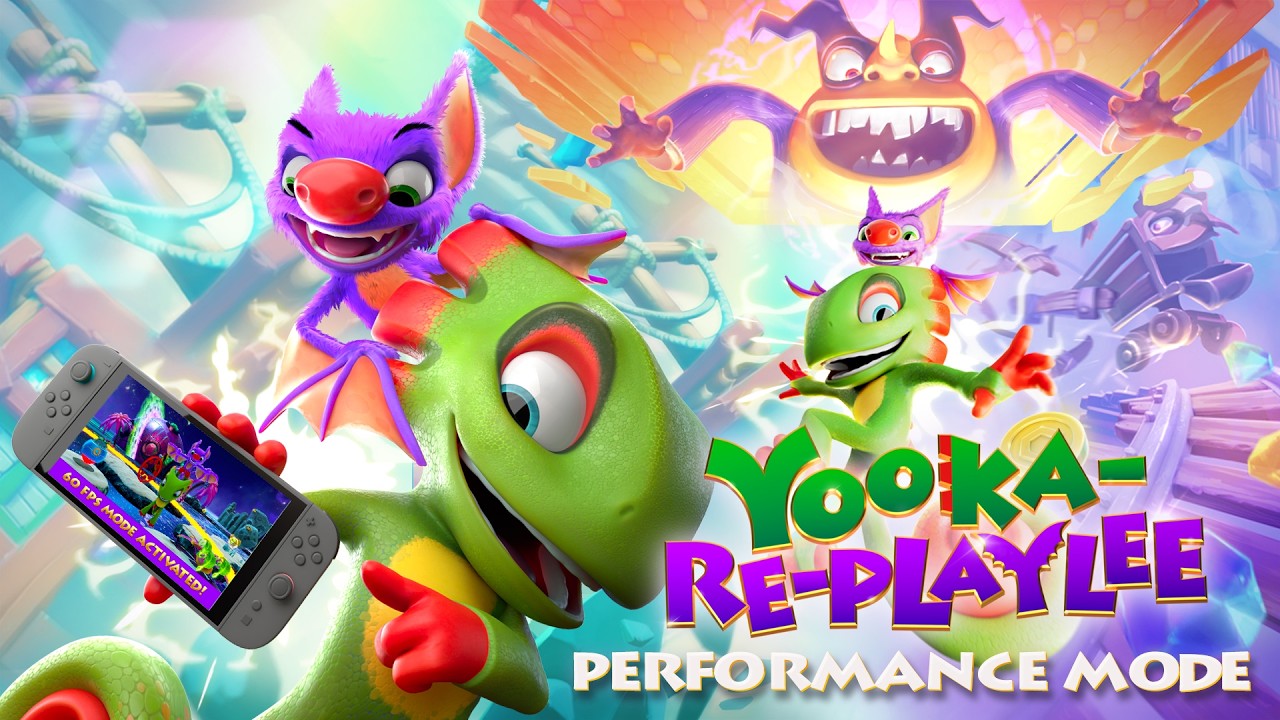
Yooka-Replaylee has recently taken a meaningful step forward on Nintendo Switch 2 with the arrival of a new Performance Mode that lets the game run at 60fps. That change matters more than a simple number on a settings screen might suggest. For a bright, bouncy 3D platformer built around movement, timing, camera control, and fluid exploration, a higher frame rate can make the whole experience feel more responsive and more natural in your hands. It gives jumps a cleaner rhythm, makes traversal feel less heavy, and helps the world come across with a little more spark. In other words, this is the sort of upgrade players notice almost instantly.
The update also introduces a clear split between two ways to play. Performance Mode now prioritizes smoother gameplay and has been set as the default option, while Fidelity Mode offers a higher quality image and locks the game to 30fps. That gives players a straightforward choice based on what they value most. Some will want the crispest possible presentation, while others will happily trade some visual sharpness for motion that feels quicker and more alive. Neither preference is wrong, and that is exactly why the addition works so well.
What stands out most is that this update addresses one of the main talking points around the Switch 2 version. When people pick up a colorful platformer on newer hardware, they naturally hope it will feel nimble and buttery smooth. Now, Yooka-Replaylee can deliver that option. It does not magically erase every technical compromise, and it does not pretend there is no trade-off involved, but it does give the game a stronger identity on Nintendo Switch 2. More importantly, it shows that Playtonic kept working on the release and listened to what players wanted. That gives this version more momentum, more appeal, and a much better shot at becoming the way many people choose to play.
Yooka-Replaylee gets the Switch 2 upgrade many players wanted
Recent updates have given Yooka-Replaylee a notable boost on Nintendo Switch 2, and it is the kind of improvement players tend to latch onto right away. Playtonic has added a new Performance Mode that allows the game to run at 60fps, while also keeping a Fidelity Mode in place for those who prefer image quality over smoother motion. That might sound like a simple menu addition, but it changes the conversation around the game in a big way. Before this, the Switch 2 version was often discussed in terms of what it lacked. Now it can be talked about in terms of choice, responsiveness, and player preference. That is a healthier place for any platformer to be. When a game built on movement starts feeling more agile, the entire experience benefits. Suddenly the camera feels less stubborn, jumps feel more readable, and the world seems to move with you rather than against you. It is a bit like loosening the laces on a shoe that always felt slightly too tight. The shape is the same, but the comfort level changes fast.
Why the new performance mode matters so much
A 60fps option is not just a spec sheet trophy for people who like counting frames for sport. In a 3D platformer, it can reshape how the game feels from minute to minute. Yooka-Replaylee is built around movement, momentum, hopping across space, and reading the environment as you go. Those things naturally benefit from smoother motion. Inputs feel snappier, camera movement feels less draggy, and the general sense of control becomes easier to trust. That matters because platformers live and die by feel. If a jump looks cleaner and lands cleaner, confidence goes up. If the world scrolls past you with less blur and less hesitation, exploration starts to feel more playful. That is why this update lands with real impact. It is not only about visual polish. It is about rhythm. A good platformer has rhythm like a song you can walk to without thinking. At 60fps, Yooka-Replaylee has a better chance of finding that groove on Switch 2.
Fidelity mode keeps the original visual target in place
Performance Mode may be getting most of the attention, but Fidelity Mode still serves a clear purpose. According to Playtonic, it locks the game to 30fps and offers a graphical bump for players who want a higher quality image. That means the update is not replacing one vision with another. Instead, it is opening the door to two priorities. Some players care first about smooth motion. Others want the cleaner presentation, richer image, or stronger visual clarity that can come from putting more resources toward the picture rather than the frame rate. On a screen full of saturated colors, exaggerated world design, and playful visual details, that preference makes sense. Not everyone wants their platformers tuned like a race car. Some want the scenic route. Fidelity Mode gives them that option without forcing everyone else to take it too. It is a sensible split, and it respects the fact that players do not all judge game feel in exactly the same way.
The trade-off between smoother motion and image quality is easy to understand
One of the best things about this update is how clear the trade-off appears to be. Performance Mode aims for 60fps, while Fidelity Mode focuses on a better looking image at 30fps. There is no mystery box here, no foggy wording that leaves players wondering what changed and whether it matters. That clarity helps because technical settings can sometimes be dressed up like restaurant menus with too many adjectives and not enough plain English. Here, the decision is simple. Do you want smoother motion, or do you want the stronger image? That kind of straightforward choice is good for everyone. It lowers the barrier for casual players while still giving enthusiasts something meaningful to compare. It also sets expectations properly. If you switch to Performance Mode, you know the visuals may take a hit. If you switch to Fidelity Mode, you know you are giving up speed for presentation. That honesty makes the upgrade feel more useful and more trustworthy.
Playtonic’s update changes the first impression immediately
There is something important about the fact that Performance Mode now runs by default following the update. Defaults matter because they shape the first conversation a player has with a game before any words are spoken. Most people do not march straight into options menus like they are inspecting a used car. They press start and play. By setting Performance Mode as the default on Switch 2, Playtonic is effectively saying this is now the most broadly appealing way to experience Yooka-Replaylee on the system. That is a strong statement, and it suggests confidence in how the game now feels at 60fps. First impressions can stick like wet paint, especially with platformers where control feel is everything. If the opening minutes are smoother, quicker, and more responsive, players are more likely to settle in and keep going. That is not a tiny change. It can influence reviews, word of mouth, and whether someone keeps playing past the first hour or drifts away to something else in their backlog jungle.
Why 60fps can transform a 3D platformer
Not every genre feels the jump to 60fps in the same way. In slower adventures or heavily cinematic games, the difference can be welcome without being defining. In a platformer, though, it often hits harder. The reason is simple. Platformers ask you to judge distance, timing, direction, momentum, and camera position all the time, often in motion and often quickly. When motion is smoother, those judgments become easier. The world stops feeling slightly sticky and starts feeling more conversational. You press, the character reacts. You swing the camera, the environment answers cleanly. You adjust mid-jump, and the correction feels more natural. It is the same melody, just played with better timing. For Yooka-Replaylee, that matters because its identity is rooted in bright worlds, movement-heavy play, and the joy of roaming around spaces packed with things to collect. A smoother frame rate supports that style. It lets the charm breathe rather than making it work uphill.
Switch 2 players now get a real choice instead of a single compromise
Before this update, the discussion around the Switch 2 version could feel boxed in by a single technical ceiling. Now there is a genuine choice, and that makes the version more inviting. One player may sit down in handheld mode and want the smoothest possible feel for platforming and exploration. Another may dock the system and decide they would rather prioritize the image. Both can now make that call themselves. That freedom is valuable because hardware discussions can become oddly rigid, as if there must be one correct answer for everyone. There rarely is. Games are personal. Some people chase fluidity. Some chase clarity. Some change their mind depending on the day, the display, or whether they are doing careful collectible cleanup or just bouncing through a level for fun. By giving Switch 2 players both options, Playtonic avoids trapping the whole audience inside one compromise. Instead, it hands them the steering wheel and lets them pick the road.
What this says about Playtonic’s post-launch support
This update also reflects well on Playtonic’s willingness to keep improving the game after release. That matters because technical complaints can sometimes linger around a title long after the underlying work has been done to fix them. In this case, the new mode suggests the studio kept pushing until it could produce a result players would actually notice. That kind of support helps build trust. It tells players the team did not simply launch the Switch 2 version and move on with a shrug. Instead, it kept refining the experience and delivered an update that directly responds to a widely discussed issue. There is something refreshing about that. Game support can often feel like vague promises floating around in the air like balloons at a birthday party after everyone has gone home. Here, the result is concrete. Turn on the mode, and you feel the difference. That sort of practical improvement speaks louder than marketing language ever could.
Why the update strengthens Yooka-Replaylee’s position on Switch 2
For Nintendo players, platformers are not a casual side dish. They are part of the meal. That means expectations are naturally high when a colorful 3D platformer lands on newer Nintendo hardware. People want motion that feels lively, controls that feel dependable, and a presentation that matches the energy of the design. With Performance Mode now in place, Yooka-Replaylee has a stronger answer to those expectations. It may not suddenly become a different game, but it becomes easier to recommend with confidence. That is important because perception can be fragile. Once people start framing a version as compromised, it can take real work to shift that narrative. A proper 60fps option helps do exactly that. It gives the Switch 2 edition a more attractive identity and makes the platform itself feel like a better fit for the game’s style. In a crowded library, those shifts matter. Small technical wins can change purchasing decisions more than flashy slogans ever do.
The bigger takeaway for players choosing between modes
The best part of the update is that there is no need to pretend one mode automatically invalidates the other. Performance Mode will likely be the go-to choice for many players because smoother motion suits this type of game so naturally. Still, Fidelity Mode has a place, especially for those who prefer a more polished image or simply do not mind 30fps. The real win is flexibility. That is what makes the update meaningful. Instead of forcing everyone into one technical profile, Yooka-Replaylee now adapts more easily to different tastes. Players who value responsiveness can lean into that. Players who care more about presentation can do the opposite. Everyone else can experiment and decide what feels right. That freedom fits the tone of the game itself. Yooka-Replaylee is playful, colorful, and built around exploration, so it makes sense that the best version of it on Switch 2 is the one that lets players explore their own preferences too. Sometimes a settings menu is just a settings menu. Other times it is the difference between a version that feels limited and one that feels fully settled into its own skin.
Conclusion
Yooka-Replaylee’s recent Switch 2 update gives the game something it clearly needed: a smoother 60fps Performance Mode for players who want faster, more responsive action. Just as importantly, it keeps Fidelity Mode available for those who would rather prioritize image quality at 30fps. That balance makes the release more appealing, more flexible, and easier to recommend. In a 3D platformer, feel matters enormously, and smoother motion can change the experience from the moment you pick up the controller. Playtonic did not remove the trade-off, but it made the trade-off worthwhile by giving players a clear and useful choice. That alone strengthens Yooka-Replaylee on Nintendo Switch 2.
FAQs
- Does Yooka-Replaylee run at 60fps on Nintendo Switch 2?
- Yes. A recent update added a Performance Mode on Nintendo Switch 2 that allows Yooka-Replaylee to run at 60fps.
- What is the difference between Performance Mode and Fidelity Mode?
- Performance Mode prioritizes smoother gameplay at 60fps, while Fidelity Mode locks the game to 30fps and focuses on stronger visual quality.
- Which mode is the default on Switch 2 now?
- Performance Mode is now the default option after the update, which means players are pushed straight toward the smoother experience unless they change it in the settings.
- Is Fidelity Mode still worth using?
- Yes. Fidelity Mode is still a good fit for players who prefer a sharper or more visually polished image and do not mind playing at 30fps.
- Why does 60fps matter so much in a platformer like Yooka-Replaylee?
- Because smoother motion can improve responsiveness, camera feel, movement readability, and overall control, which are all especially important in a 3D platformer built around jumping and exploration.
Sources
- Yooka-Replaylee Hits 60FPS on Nintendo Switch 2 in Major New Performance Update, Playtonic Games, April 17, 2026
- Boom! Yooka-Replaylee’s 60fps Switch 2 Performance Mode Is Finally Here, Nintendo Life, April 17, 2026
- “A Huge Balancing Act” – Playtonic Spills The Beans On Yooka-Replaylee’s Massive Switch 2 Update, Nintendo Life, April 17, 2026
- Yooka-Replaylee Runs At 30fps On Switch 2, Team Investigating Performance Mode, Nintendo Life, September 26, 2025
- Yooka-Replaylee, Nintendo, October 8, 2025