














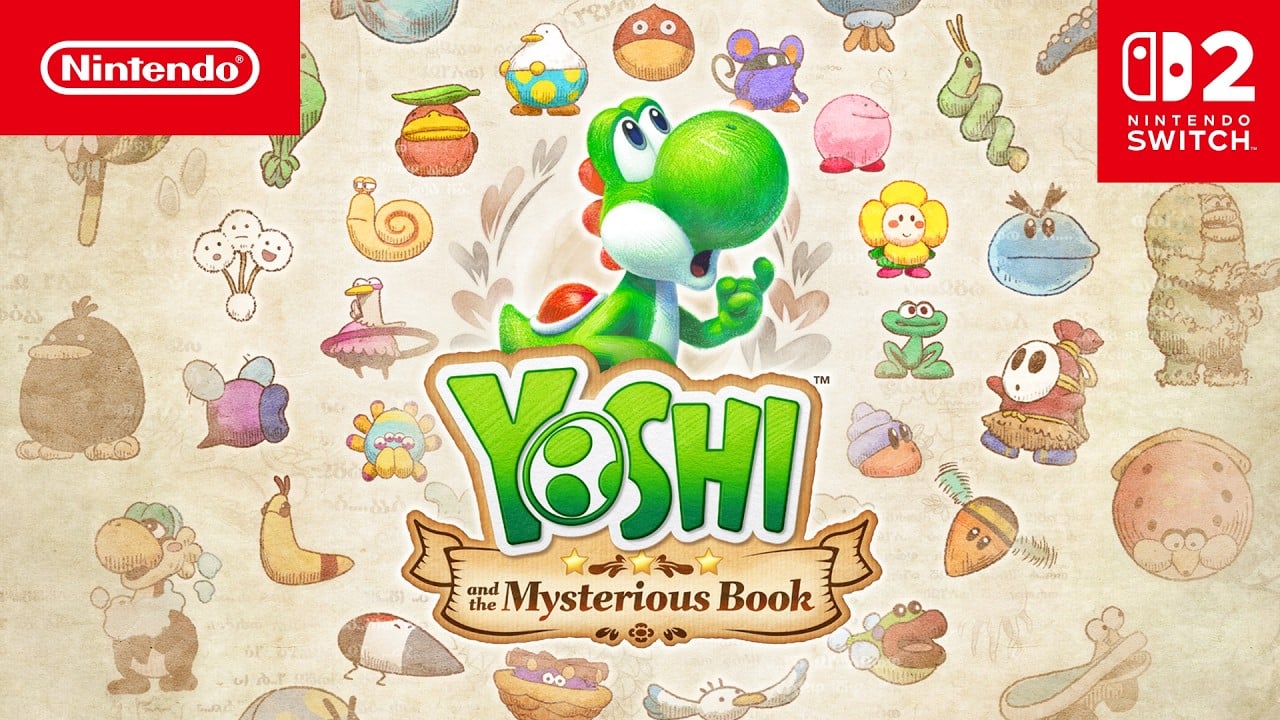
Summary:
Yoshi and the Mysterious Book has arrived in the review spotlight with a strong early critical response, earning an 81 Metascore based on 73 critic reviews. That score places the Nintendo Switch 2 title in Metacritic’s “Generally Favorable” range and puts it slightly ahead of Yoshi’s Crafted World, which currently sits at 79. For a series often associated with gentle platforming, soft visuals, and playful collectibles, that small jump matters because it suggests this new entry has done more than simply repeat a familiar formula.
The critical conversation around Yoshi and the Mysterious Book is especially interesting because reviewers are not all praising it for the same reasons. Some describe it as a fresh, inventive side-scroller filled with experimentation, discovery, and personality. Others see the same relaxed structure as a limitation, arguing that its best ideas do not always grow into deeper challenges. That tension gives the game a more layered reception than a simple score can show. We are looking at a Yoshi adventure that seems warm, curious, and easy to enjoy, but not necessarily built for players who want demanding platforming or long-term mechanical depth. In other words, it sounds like a cozy blanket with a few clever secrets stitched inside, even if not every critic thinks those secrets go far enough.
Yoshi and the Mysterious Book lands with a strong early review score
Yoshi and the Mysterious Book has made a confident first impression with critics, earning an 81 Metascore from 73 reviews. That places the Nintendo Switch 2 release in a healthy position before its wider audience has had time to fully weigh in. For a character like Yoshi, who often lives in the gentler corner of Nintendo’s platforming library, this kind of response is notable. It tells us that critics are not just responding to cuteness, bright colors, or the familiar comfort of flutter jumps and egg throws. They are also reacting to how this new game reshapes Yoshi’s familiar appeal around investigation, creature discovery, and a more open-ended sense of play.
The score also gives the game a small but meaningful edge over Yoshi’s Crafted World, which currently holds a 79. That does not automatically make one game better than the other, of course. Scores are not magic numbers pulled from a treasure chest. Still, they help show the broad direction of the critical response, and in this case, Yoshi’s latest adventure appears to have landed a little more warmly overall. The difference may come down to how Yoshi and the Mysterious Book frames its world. Rather than simply sending players from one crafted stage to another, it invites them into the pages of a strange book where curiosity becomes the main engine.
Why the 81 Metascore matters for Yoshi’s Switch 2 debut
An 81 Metascore gives Yoshi and the Mysterious Book a useful boost as one of Yoshi’s first major steps on Nintendo Switch 2. Launch window and early-generation games often carry extra weight because they help shape the personality of a new system. Players are not only asking whether a game is good. They are asking whether it gives them a reason to pick up the new hardware, whether it feels fresh enough for the moment, and whether Nintendo’s familiar characters still have new tricks hiding in their pockets. In this case, critics seem to agree that Yoshi’s new outing brings enough imagination to stand out, even if some believe it does not fully escape the series’ lighter difficulty.
That balance is important because Yoshi has never needed to become Mario, Donkey Kong, or Kirby to matter. The character’s appeal has always lived somewhere softer, stranger, and more tactile. Yoshi games often feel like toy boxes, craft tables, or picture books that happen to have platforming tucked inside them. Yoshi and the Mysterious Book appears to lean even harder into that identity by making discovery feel central rather than decorative. The 81 score suggests many critics found that shift refreshing. It also suggests Nintendo and Good-Feel may have found a direction that gives Yoshi room to evolve without losing the easygoing charm that makes the green dinosaur so lovable.
How critics are responding to Yoshi’s new storybook direction
The most positive reviews describe Yoshi and the Mysterious Book as a playful reinvention rather than a safe sequel. VGC awarded it top marks and praised its imagination, while Siliconera highlighted its experimental nature and the way every creature can become a little mystery to solve. That is a key part of why the game seems to have sparked such an interesting response. We are not simply moving through themed levels and grabbing collectibles because the screen says so. Instead, the experience appears to ask players to observe, poke, test, and learn. What happens if Yoshi interacts with this creature? What can this odd little character reveal? What secret is hiding just off the edge of the obvious path?
That shift gives the game a warmer, more investigative rhythm. It is less about conquering danger and more about filling in the blank spaces of a living storybook. That can make the experience feel almost like a nature walk with platforming shoes on. You are still jumping, throwing eggs, and exploring colorful spaces, but the reason for doing those things changes. The reward is not always a harder challenge or a dramatic boss fight. Sometimes the reward is a funny animation, a new discovery, or the simple satisfaction of figuring out how a creature behaves. For players who enjoy relaxed experimentation, that can be a powerful hook.
The strongest praise centers on discovery and imagination
The best-reviewed side of Yoshi and the Mysterious Book keeps coming back to one idea: discovery. Critics who enjoyed the game most seem to value the way it encourages players to interact with its world instead of rushing through it. That sounds small, but it can completely change how a platformer feels. A traditional side-scroller often pushes you forward like a little conveyor belt of obstacles. This one appears to slow the pace down and ask you to look closer. It is the difference between sprinting through a museum and stopping because one tiny painting in the corner suddenly catches your eye.
That focus on discovery also helps explain why some reviewers describe the game as unusual for the genre. It is still recognizable as a Yoshi game, but its heart seems to beat closer to puzzle-solving, experimentation, and environmental interaction. Siliconera’s praise for the creature-based investigations speaks directly to that appeal, while Destructoid’s positive review points toward the delight of curiosity and whimsy. When the formula works, Yoshi and the Mysterious Book sounds like it turns small moments into little surprises. A creature is not just background dressing. A level is not just a hallway with platforms. The whole book becomes a playground where every page might hide a strange little trick.
Some reviewers wanted more depth and challenge
Not every critic was swept away by the charm, and that is where the review spread becomes more useful than the average score alone. IGN and Nintendo Life were more reserved, both pointing toward concerns around depth, repetition, and challenge. That does not mean they dismissed the game entirely. The criticism is more specific than that. The issue seems to be that Yoshi and the Mysterious Book introduces clever ideas but does not always develop them into something richer or more demanding. For some players, that may not matter much. For others, it could make the adventure feel like a beautiful pop-up book that does not have quite enough pages.
This is the central tension around the game. Its relaxed design may be the reason some players love it, but also the reason others bounce off it. A low-pressure platformer can be wonderful when you want something cozy, especially if you are playing with younger family members or simply need a break from games that treat every button press like a final exam. Still, players who come in hoping for tight challenge, layered mechanics, or long-term mastery may find the structure too gentle. That split does not make the game confusing. It makes its identity clearer. Yoshi and the Mysterious Book seems built around charm and discovery first, challenge second.
How Yoshi and the Mysterious Book compares to Yoshi’s Crafted World
The comparison to Yoshi’s Crafted World is unavoidable because both games carry Good-Feel’s soft, playful touch and both place Yoshi in a world that values texture, color, and gentle exploration. Crafted World leaned into a handmade diorama style, where cardboard, paper, and household objects gave each level a charming craft-project feel. Yoshi and the Mysterious Book appears to trade that tabletop craft identity for a storybook structure filled with mysterious creatures and encyclopedia-like discoveries. That change gives the new game a different flavor, even though both share a family-friendly spirit and an inviting pace.
The Metascore comparison also works in the new game’s favor, at least for now. With an 81 compared to Crafted World’s 79, Yoshi and the Mysterious Book is sitting slightly higher in the critical average. Again, that gap is not huge. Nobody should treat two points like a thunderbolt from the gaming gods. But it does suggest that the new direction has connected with reviewers in a way that feels a little more exciting. The storybook idea gives the series a fresh frame, and the creature-discovery system seems to give players a stronger reason to explore beyond simply collecting everything in sight. That could be the difference between a pleasant sequel and a more memorable Yoshi adventure.
Why the score spread makes this release more interesting
One of the most interesting things about Yoshi and the Mysterious Book is not just that it scored well, but that the individual reviews vary so much. VGC loved it, Siliconera strongly praised its experimental structure, and Destructoid found plenty to enjoy in its sense of discovery. On the other side, IGN and Nintendo Life were more critical, especially when discussing depth and repetition. That kind of spread often points to a game with a strong personality. When everyone gives the same safe score, the conversation can feel flat. When a game earns both glowing praise and visible criticism, it usually means it is making specific choices that will land differently depending on what the player wants.
That may be exactly what is happening here. Yoshi and the Mysterious Book does not appear to be aiming for the usual “bigger, harder, louder” sequel path. Instead, it seems more interested in slowing down, making players curious, and rewarding small observations. For some critics, that is refreshing. For others, it is not enough to sustain the experience. Both reactions can be fair. A gentle game can still be inventive, and an inventive game can still feel thin if its mechanics do not grow. That is why the 81 Metascore should be read alongside the review details. The number says the response is positive. The spread explains why not everyone arrived there by the same path.
Who Yoshi and the Mysterious Book seems best suited for
Yoshi and the Mysterious Book seems best suited for players who enjoy relaxed exploration, cheerful visuals, and the pleasure of finding little secrets at their own pace. Families are an obvious fit, especially because Yoshi has always worked well as an approachable entry point into platforming. Younger players may enjoy the friendly tone and creature interactions, while longtime Nintendo fans may appreciate the softer nostalgia wrapped around the new discovery systems. It sounds like the kind of game you play on a quiet afternoon with a drink nearby, not the kind that has you gripping the controller like it owes you money.
That does not mean older or more experienced players should ignore it. The stronger reviews suggest there is enough imagination here to entertain anyone willing to meet the game on its own terms. The key phrase is “on its own terms.” If you want punishing platforming, sharp difficulty spikes, or elaborate combat, this may not be your ideal pick. If you want a charming Switch 2 adventure that rewards curiosity and lets you enjoy Nintendo’s softer side, Yoshi and the Mysterious Book looks much more appealing. It is not trying to be a mountain climb. It is more like opening a strange illustrated book and realizing the doodles inside can talk back.
What the reviews suggest about Yoshi’s future on Switch 2
The early response suggests Yoshi still has room to grow on Nintendo Switch 2, especially when Nintendo lets the series lean into its stranger and more playful instincts. Yoshi and the Mysterious Book may not satisfy every player, but its best-reviewed qualities point toward a clear path forward. Critics are responding to creativity, discovery, and the feeling that Yoshi can be more than a traditional platform mascot. That matters because Nintendo’s smaller character-led releases often thrive when they embrace a specific mood rather than chase the scale of the company’s biggest franchises.
The criticisms are just as useful. If a future Yoshi game keeps the curiosity-driven structure but adds more depth, stronger challenge options, and mechanics that develop more fully across the adventure, Nintendo could have something even stronger. The foundation sounds promising. The creature discoveries, storybook framing, and relaxed exploration all give the series a distinct identity on Switch 2. The next step would be giving those ideas more room to bloom. For now, Yoshi and the Mysterious Book appears to be a warmly received debut that reminds players why Yoshi remains one of Nintendo’s most charming comfort characters.
Conclusion
Yoshi and the Mysterious Book has opened to a positive critical response, earning an 81 Metascore and landing slightly above Yoshi’s Crafted World. The reviews paint a clear picture of a gentle, imaginative Nintendo Switch 2 platformer built around curiosity, creature discovery, and relaxed exploration. Its biggest fans praise its creativity and sense of wonder, while more critical voices argue that its ideas do not always gain enough depth or challenge. That split makes the game easier to understand, not harder. Yoshi’s latest adventure seems ideal for players who want charm, discovery, and cozy Nintendo magic, but less suited to anyone looking for a demanding platforming workout. As a Switch 2 debut for Yoshi, it looks like a sweet and memorable step forward, even if a future sequel could push its best ideas further.
FAQs
- What is the Metacritic score for Yoshi and the Mysterious Book?
- Yoshi and the Mysterious Book currently has an 81 Metascore based on 73 critic reviews, placing it in Metacritic’s “Generally Favorable” range.
- How does Yoshi and the Mysterious Book compare to Yoshi’s Crafted World?
- Yoshi and the Mysterious Book currently sits slightly higher, with an 81 Metascore compared to Yoshi’s Crafted World at 79. The new game also appears to focus more heavily on discovery and creature-based experimentation.
- What did critics praise most about Yoshi and the Mysterious Book?
- Many positive reviews praised its imagination, relaxed discovery loop, creature interactions, and storybook-style approach to platforming.
- What were the main criticisms of Yoshi and the Mysterious Book?
- Some critics felt the game lacked depth, challenge, and meaningful evolution across its structure, even while acknowledging its charm and variety.
- Is Yoshi and the Mysterious Book good for younger players?
- Based on the reviews, it appears well suited for younger players and families thanks to its relaxed tone, friendly presentation, and approachable platforming style.
Sources
- Yoshi And The Mysterious Book Scores 81 On Metacritic, NintendoSoup, May 20, 2026
- Yoshi and the Mysterious Book Reviews, Metacritic, May 21, 2026
- Yoshi and the Mysterious Book Review, VGC, May 19, 2026
- Review: Yoshi and the Mysterious Book Encourages Experimentation and Exploration, Siliconera, May 19, 2026
- Yoshi and the Mysterious Book Review, Destructoid, May 19, 2026
- Yoshi And The Mysterious Book Review, Nintendo Life, May 19, 2026
- Round Up: The Reviews Are In For Yoshi And The Mysterious Book, Nintendo Life, May 19, 2026
- Yoshi And The Mysterious Book Is About Curiosity, Not Conquest, GameSpot, May 19, 2026