














Summary:
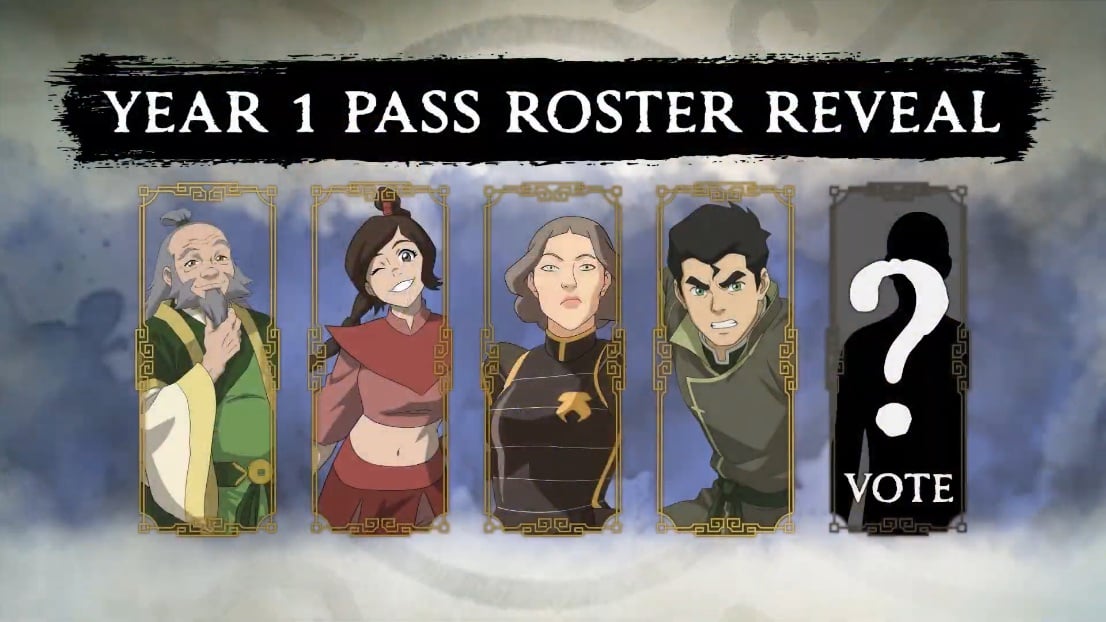
Avatar Legends: The Fighting Game has revealed the first four characters joining its Year 1 Pass following the game’s launch. The announcement was made during EVO 2026, where fans learned that Iroh, Ty Lee, Lin Beifong and Bolin will expand the playable roster over the course of the first year. Iroh will arrive first, although individual release dates for the remaining fighters have not yet been announced.
The DLC selection brings together two familiar faces from Avatar: The Last Airbender and two major characters from The Legend of Korra. Iroh and Ty Lee represent the original animated series, while Lin Beifong and Bolin give its sequel series additional room in the spotlight. Their personalities, abilities and approaches to combat are wildly different, creating plenty of opportunities for distinctive movesets.
One position in the Year 1 Pass remains open, and the community will help decide who receives it. Fans can choose between Tenzin, Kuvira, Amon, King Bumi and Asami. That line-up covers airbending, metalbending, bloodbending, earthbending and technology-driven combat, so the result could significantly shape the game’s future roster.
The Digital Deluxe Edition includes the complete Year 1 Pass, giving owners access to all five additional playable characters as they become available. Avatar Legends: The Fighting Game launches for Nintendo Switch 2 and Nintendo Switch on July 23, 2026. Its hand-drawn presentation, accessible controls, rollback netcode, crossplay and selection of single-player and multiplayer modes aim to welcome both Avatar enthusiasts and dedicated fighting game players.
Avatar Legends Reveals Four Year 1 DLC Fighters at EVO 2026
Avatar Legends: The Fighting Game made its presence felt at EVO 2026 by revealing four of the five characters planned for its Year 1 Pass. Iroh, Ty Lee, Lin Beifong and Bolin will all join the roster after launch, bringing heroes from both major Avatar animated series into the arena. It is a line-up that balances beloved personalities with a wide range of potential combat styles. You have a patient firebending master, an acrobatic chi-blocker, a hard-nosed metalbending police chief and an earthbender who rarely lets danger get in the way of a good joke. That is quite a party, even by Avatar standards. Rather than filling the entire pass behind closed doors, the developers are also allowing the community to influence its final addition through a fan vote.

Iroh Begins the Year 1 Pass With Wisdom and Firebending
Iroh will be the first character released through the Year 1 Pass. Known for his warmth, wisdom and love of tea, the former Fire Nation general is also one of the most accomplished firebenders in the Avatar universe. Anyone who mistakes his friendly personality for weakness tends to learn a very hot lesson. His experience and measured approach make him an intriguing addition to a fighting game in which timing, positioning and carefully chosen attacks can matter just as much as raw aggression. No detailed moveset has been shown yet, but Iroh’s history provides plenty of inspiration. His combat could draw upon traditional firebending, powerful defensive techniques and the lightning-redirection skill he famously developed by studying waterbenders. Whatever direction the developers choose, Iroh has the personality and abilities needed to become an immediate favourite.
Why Iroh Could Feel Different From Other Firebenders
Firebending is often associated with speed, pressure and explosive offence, but Iroh represents a calmer interpretation of the element. His fighting philosophy is shaped by patience, observation and lessons borrowed from other cultures. That makes him a natural candidate for a more deliberate moveset built around counters, defensive reads or attacks that become stronger when used at the right moment. He could stand apart from younger firebenders by rewarding players who remain composed rather than constantly charging forwards. Imagine facing an opponent who appears relaxed, waits for one small mistake and then turns the entire match around. That would suit Iroh perfectly. His presence also adds emotional weight to the Year 1 Pass, as he remains one of the most respected and recognisable characters from Avatar: The Last Airbender.
Ty Lee Brings Acrobatics and Chi-Blocking Potential
Ty Lee is the second Avatar: The Last Airbender representative confirmed for the Year 1 Pass. Unlike many characters in the wider universe, she is not a bender. She relies on remarkable agility, precise strikes and chi-blocking techniques that temporarily prevent opponents from using their limbs or bending abilities. Translating those talents into a fighting game could produce a fast, close-range character focused on mobility and relentless pressure. Her movements in the animated series already resemble something designed for a 2D fighter, with flips, handstands, rapid jumps and pinpoint attacks flowing together in quick succession. She could dance around slower opponents before darting in to interrupt their plans. Players who enjoy speedy characters and long strings of attacks may find plenty to appreciate, although getting close enough to begin that pressure could require careful movement.
Chi-Blocking Could Create an Unusual Combat Mechanic
Ty Lee’s signature technique gives the developers an opportunity to experiment with temporary restrictions or carefully balanced status effects. A successful chi-blocking strike could interfere with certain attacks, weaken an opponent’s bending options or create a brief opening for a follow-up combination. Such mechanics would need to remain fair, of course. Nobody enjoys putting down the controller while their character stands there like a confused cabbage merchant. Even without disabling abilities directly, Ty Lee’s animations and attack patterns could reflect the precision of chi-blocking through targeted strikes, rapid pressure and strong interruption tools. Her inclusion also demonstrates that Avatar Legends is not limited to traditional elemental duels. Skilled non-benders can compete alongside some of the world’s most powerful benders, which opens the door for an even more varied roster in the future.
Lin Beifong and Bolin Represent The Legend of Korra
The Legend of Korra receives two Year 1 representatives through Lin Beifong and Bolin. Both are earthbenders, but their personalities, backgrounds and specialised abilities could make them play nothing alike. Lin is disciplined, direct and experienced in metalbending, while Bolin is energetic, adaptable and capable of lavabending. Bringing both characters into the pass allows the developers to explore different branches of the same elemental discipline. Earthbending does not have to mean planting your feet and throwing the largest rock available, although that admittedly remains a respectable strategy. Lin could emphasise control and precision, while Bolin might combine heavy attacks with more unpredictable movement. Their arrival also strengthens the connection between the two animated eras, ensuring that the sequel series remains an important part of the game’s identity rather than a small collection of guest appearances.
Lin Beifong Adds Metalbending Power to the Roster
Lin Beifong is the daughter of Toph and the former chief of Republic City’s Metalbending Police Force. She approaches danger with discipline, determination and very little patience for foolish behaviour. Those qualities should translate naturally into a focused fighting style. Lin frequently uses retractable metal cables to grab targets, swing through environments and control the space around her. In a traditional fighting game, those cables could support long-range pokes, grappling attacks or movement options that allow her to approach from unusual angles. Her armour and metalbending experience could also give her a more defensive identity than some other fighters. She might excel at controlling the middle of the screen, punishing reckless advances and forcing opponents to respect her reach. Facing Lin should feel a little like arguing with the law, except the law can launch metal cables across the room.
Metal Cables Could Give Lin Exceptional Reach
Lin’s metal cables are likely to be one of the most important ingredients in her eventual moveset. They could pull enemies closer, extend combos or let her reposition herself after an attack. Fighting game players often value characters who can influence space from a distance, particularly when their tools create uncertainty about where it is safe to stand. Lin has everything needed to fill that role. Her earthbending could provide sturdy close-range attacks, while her cables threaten opponents who attempt to remain farther away. This combination could make her flexible without sacrificing the forceful character associated with the Beifong family. Although her gameplay details remain unannounced, her established abilities give the development team a strong foundation for a character who feels instantly recognisable without simply copying another earthbender’s techniques.
Bolin Combines Earthbending Strength With a Playful Personality
Bolin brings a much lighter personality to the Year 1 roster, but his cheerful attitude should not distract anyone from his abilities. He is an experienced pro-bender, a skilled earthbender and one of the relatively rare characters capable of lavabending. His background in organised pro-bending could inspire quick, sport-like combinations rather than the slower attacks sometimes associated with earthbending. Meanwhile, lavabending offers an obvious way to control parts of the arena and place opponents under sustained pressure. Bolin could potentially create hazardous areas, launch molten projectiles or force rivals to move before setting up a larger attack. His natural charisma may also shine through his animations, expressions and victory scenes. Plenty of fighting game characters take themselves very seriously. Bolin is more likely to celebrate a successful attack as though he just scored the winning point in a packed pro-bending arena.
Lavabending May Turn the Arena Into Bolin’s Playground
Lavabending could make Bolin one of the most visually distinctive additions in the pass. Unlike ordinary rocks that strike once and disappear, pools or streams of lava could remain dangerous for a short period, changing how both players move. Bolin might use those hazards to close off escape routes or encourage opponents to jump, giving him a chance to anticipate their next action. This is only one possible interpretation, since the developers have not revealed his complete combat design. Still, the source material offers enough flexibility to create something memorable. Bolin can fight at close range, throw earth-based projectiles and manipulate lava, giving him tools that could work across several distances. His mix of power and humour should also help the Year 1 Pass avoid feeling too stern. Sometimes a roster needs someone who can crack the ground and a joke at roughly the same time.
Fans Will Decide the Fifth Year 1 DLC Character
The final position in the Year 1 Pass has not been assigned to a character chosen solely by the development team. Instead, fans will be able to vote on which candidate should complete the line-up. The options are Tenzin, Kuvira, Amon, King Bumi and Asami. Each character brings a different background, personality and possible approach to combat, making the decision far more interesting than choosing between five similar benders. The winning candidate will become the fifth additional playable character included in the pass. Community voting also gives players a direct stake in the roster’s development. Naturally, it may lead to passionate debates as everyone explains why their favourite is clearly the only sensible option. That friendly chaos is part of the fun, especially when every candidate has a believable case for inclusion.
The Five Candidates Offer Very Different Fighting Styles
Tenzin could introduce disciplined airbending built around movement, evasion and controlling space. Kuvira would offer precise metalbending and the calm efficiency of an experienced military leader. Amon presents one of the most mysterious options, combining chi-blocking influences with his frightening bloodbending abilities. King Bumi could deliver an unpredictable earthbending style filled with unusual angles, deceptive behaviour and overwhelming strength. Asami would represent another important non-bender, using martial arts training and advanced technology rather than elemental abilities. There is no obvious weak option here. The vote is not simply a popularity contest, as the winner could also fill a particular gameplay role that is missing from the initial roster. Whether fans prefer air currents, metal strips, electric gloves or one very muscular old king, their decision will shape how Year 1 concludes.
Tenzin, Kuvira and Amon Bring Specialised Bending Skills
Tenzin would give the roster another prominent airbender and could offer a technical style based on graceful movement. His experience and disciplined personality suggest a fighter who controls the pace rather than relying on chaotic attacks. Kuvira would likely feel more direct. Her metal strips function as projectiles, restraints and precise striking tools, making her suitable for players who enjoy calculated pressure. Amon is harder to predict. He is an expert fighter even before his hidden abilities are considered, and his presence could support a dangerous style built around counters, disabling attacks or intimidating command grabs. These three candidates each occupy a serious and highly controlled corner of the Avatar universe. Choosing among them may depend on whether fans value elegant mobility, metalbending precision or the unsettling presence of one of Republic City’s most memorable villains.
King Bumi and Asami Could Broaden the Roster Further
King Bumi and Asami represent two dramatically different possibilities. Bumi is among the strongest earthbenders shown in Avatar: The Last Airbender, yet his unpredictable personality makes him difficult to read. His moves could feature delayed attacks, unusual poses and enormous chunks of earth arriving from directions an opponent did not expect. Asami, by contrast, would rely on speed, martial arts and technology. Her electrified glove could form the centre of a close-range style, while gadgets or vehicles might appear during special attacks. Adding Asami would further demonstrate that bending is not required to compete with the world’s strongest warriors. Adding Bumi would demonstrate that age is not a problem when you can throw half a mountain at someone. Either choice could provide a welcome contrast to the four confirmed DLC fighters.
The Deluxe Edition Includes the Complete Year 1 Pass
Players who purchase the Digital Deluxe Edition will receive access to all five Year 1 Pass characters as they are released. That means Iroh, Ty Lee, Lin Beifong, Bolin and the winner of the community vote will be included without requiring separate character purchases. The additional fighters are scheduled to arrive after launch rather than appearing in the starting line-up on July 23. Their individual release dates have not yet been detailed, so players will need to watch for future announcements concerning the pass schedule. The Deluxe Edition is aimed at anyone who already expects to spend plenty of time with the game and wants the full first wave of roster expansions. Players interested only in a particular character may prefer to wait until the publisher explains whether individual DLC fighters will also be available separately.
A Hand-Drawn Fighting Game Built Around the Avatar Universe
Avatar Legends: The Fighting Game uses hand-drawn 2D animation designed to remain faithful to the visual character of Avatar: The Last Airbender and The Legend of Korra. That approach is especially important for a series in which movement communicates so much about each bending discipline. Water flows, earth strikes with weight, fire surges forwards and air circles around its target. A fighting game must capture those differences in every stance, attack and reaction. The developers have promoted a roster of 12 playable fighters at launch, with the Year 1 Pass eventually increasing that number by five. Rather than squeezing the characters into a generic combat framework, the presentation aims to preserve their individual personalities and elemental techniques. When it works, every battle should resemble an animated confrontation that players can control rather than a collection of familiar faces wearing standard fighting game costumes.
Story and Arcade Modes Expand the Single-Player Experience
The game includes a main Story mode involving the fate of time and space, giving its large collection of characters a reason to meet and fight across different eras. That setup is well suited to the Avatar universe, where several generations of heroes and villains would not normally share the same moment in history. Arcade mode offers individual runs with unique storylines for each playable fighter, allowing players to explore smaller character-focused scenarios alongside the central narrative. These options should give solo players more to do than repeatedly challenge computer-controlled opponents without context. Fighting games live or die by their combat, but memorable stories, dialogue and character interactions make the roster feel more meaningful. After all, watching Iroh meet characters from a later generation could be just as entertaining as seeing whether he can defeat them.
Offline and Online Modes Offer Several Ways to Fight
Players can compete through offline and online Versus modes, making it possible to challenge someone on the same system or search for opponents elsewhere. Ranked matches provide a structured environment for players who want to measure their progress, while casual options and lobbies offer a more relaxed setting. Spectator functionality, saved replays and other supporting features are also planned. Together, these modes aim to serve people who want a quick match with friends as well as those who intend to study every matchup and climb the competitive rankings. The distinction matters because not every Avatar enthusiast arrives with years of fighting game experience. Some players simply want to make Toph launch rocks at Zuko after dinner. Others will spend hours discovering precisely how many frames they need to punish a missed attack. Both approaches are perfectly valid.
Accessible Controls Are Supported by Deeper Combat Systems
Avatar Legends is designed to be approachable for newcomers while retaining enough mechanical depth to reward experienced competitors. Its controls are described as simple and intuitive, allowing players to perform useful actions without first memorising a small instruction manual. Accessibility does not necessarily mean shallow combat. A well-designed fighting game gives new players tools that feel satisfying immediately, then reveals more advanced possibilities through positioning, timing, resource management and character-specific techniques. That balance is difficult to achieve, but it is particularly valuable for a licence with such a broad audience. Avatar fans may be drawn in by the characters and animation, while fighting game enthusiasts will expect reliable systems they can continue exploring for months. The best result would let both groups meet in the middle, preferably without one group flattening the other in ten seconds.
Rollback Netcode and Crossplay Support Online Competition
Online play is supported by rollback netcode and crossplay across modern platforms and PC. Rollback netcode is widely valued in fighting games because it is designed to keep matches responsive when players are separated by long distances or imperfect internet connections. Crossplay expands the available player pool by allowing people on supported platforms to compete without being divided into isolated communities. These features can be especially important after launch, when healthy matchmaking depends on having enough active opponents at different skill levels. Ranked and casual matches, online lobbies, spectator tools and replays provide the surrounding structure needed for a long-term competitive scene. Technical performance will ultimately need to be judged once the game is available, but including these systems from the outset gives Avatar Legends a strong online foundation.
Replays and Spectator Tools Support Learning and Competition
Replays allow players to review their matches and identify moments where a different decision might have changed the result. It is not always pleasant to watch yourself walk directly into the same attack three times, but recognising the pattern is how improvement begins. Spectator functionality can be equally valuable. Friends can observe lobby matches, tournament organisers can follow ongoing sets and newer players can learn by watching stronger competitors handle familiar situations. These tools also make it easier for communities to organise events and share discoveries. A fighting game grows when players exchange strategies, demonstrate character techniques and build friendly rivalries. Avatar Legends already has a large fictional world behind it, but features such as replays and spectator modes can help it develop a player-driven history of its own.
Training Tools Help Players Understand Every Matchup
A robust Training mode will provide tools for players at different skill levels, including hitbox displays, frame data and save states. Hitboxes show where attacks can connect, helping players understand why a move succeeded or appeared to pass through an opponent. Frame data explains how quickly actions begin, how long they remain active and how vulnerable a fighter may be afterward. Save states allow players to recreate a particular position or situation without repeatedly setting everything up from the beginning. These features are useful for competitive players, but they can also make learning less frustrating for newcomers who are curious about what happened during a match. Instead of blaming invisible spirits, bad luck or a suspicious controller, players can inspect the situation and discover a practical answer.
Advanced Features Can Make Difficult Lessons Easier to Practise
The strongest Training modes turn complicated problems into repeatable exercises. A player could record an opponent performing a troublesome attack, save the position and practise several possible responses. Another player might use frame data to discover which moves are safe or examine hitboxes to understand the range of an unusual bending technique. This kind of experimentation makes improvement feel less mysterious. Fighting games often appear intimidating because experienced players recognise situations that newcomers cannot yet see. Training tools reveal those hidden patterns one piece at a time. They will also become increasingly useful as the Year 1 DLC characters arrive. Every new fighter introduces fresh attacks, strategies and matchups, giving dedicated players another reason to return to the laboratory and start testing.
The Art Gallery Celebrates the History of Avatar
Outside of combat, the game includes an Art Gallery featuring original material connected to the Avatar franchise. The gallery is intended to celebrate the characters, history and world of the animated series, including artwork that has not previously been shown. This provides an additional attraction for players who care as much about the universe as they do about competitive matches. Unlockable artwork can also encourage people to explore different modes, complete challenges or spend time with characters they might otherwise overlook. The hand-drawn visual style makes this feature especially fitting, since the game itself depends heavily on illustration and animation. After an intense series of matches, browsing concept art sounds considerably more relaxing than immediately challenging the same opponent who just defeated you twelve times in a row.
The Latest Trailer Prepares Players for the July Launch
A new pre-order trailer accompanied the recent announcements, showcasing the hand-drawn presentation, playable roster and core features ahead of release. Avatar Legends: The Fighting Game is scheduled to launch for Nintendo Switch 2 and Nintendo Switch on July 23, 2026, alongside its other supported platforms. The standard launch roster contains 12 fighters, while the Year 1 Pass will add five more over time. With Iroh, Ty Lee, Lin Beifong and Bolin now confirmed, attention turns to the community vote and the eventual DLC schedule. There are still important details to learn, including complete movesets and individual release dates, but the first-year plan is taking shape. The four nations may need balance, but a fighting game roster benefits from a little friendly chaos.
Conclusion
Avatar Legends: The Fighting Game is building a promising first year by combining four popular DLC choices with a community-selected fifth fighter. Iroh, Ty Lee, Lin Beifong and Bolin each offer distinctive abilities that could translate into dramatically different combat styles. The vote between Tenzin, Kuvira, Amon, King Bumi and Asami gives fans an opportunity to influence the final shape of the pass rather than simply waiting for another announcement. Beyond the DLC, the game offers hand-drawn animation, story and arcade experiences, offline and online battles, rollback netcode, crossplay and detailed training features. Its July 23 release on Nintendo Switch 2 and Nintendo Switch will reveal whether those ingredients bend together as smoothly as intended. For now, the roster already looks livelier, stranger and considerably more dangerous with Iroh and his companions preparing to enter the arena.
FAQs
- Which characters are confirmed for the Avatar Legends Year 1 Pass?
- Iroh, Ty Lee, Lin Beifong and Bolin are the first four confirmed Year 1 DLC fighters. A fifth character will be selected through a community vote.
- Who can become the fifth Year 1 DLC character?
- The five candidates are Tenzin, Kuvira, Amon, King Bumi and Asami. The winning character will complete the Year 1 Pass roster.
- Which Avatar Legends DLC character will be released first?
- Iroh will be the first fighter added through the Year 1 Pass. Release dates for Iroh and the other DLC characters have not yet been detailed.
- Does the Deluxe Edition include every Year 1 DLC fighter?
- Yes. The Digital Deluxe Edition includes the Year 1 Pass, providing access to all five additional playable characters as they are released.
- When does Avatar Legends: The Fighting Game launch?
- Avatar Legends: The Fighting Game launches for Nintendo Switch 2 and Nintendo Switch on July 23, 2026. It will also be available on other modern platforms and PC.
Sources
- Avatar Legends: The Fighting Game Year 1 Pass DLC Characters Bolin, Ty Lee, Lin Beifong, and Uncle Iroh Announced, Gematsu, June 26, 2026
- Avatar Legends: The Fighting Game Pre-Orders Live, Gamers Heroes, June 28, 2026
- Avatar Legends: The Fighting Game, Steam, June 2026
- Avatar Legends: The Fighting Game Console Pre-Order Trailer, PM Studios, June 27, 2026
- Avatar Legends: The Fighting Game Digital Deluxe Edition, Xbox, June 2026