














Summary:
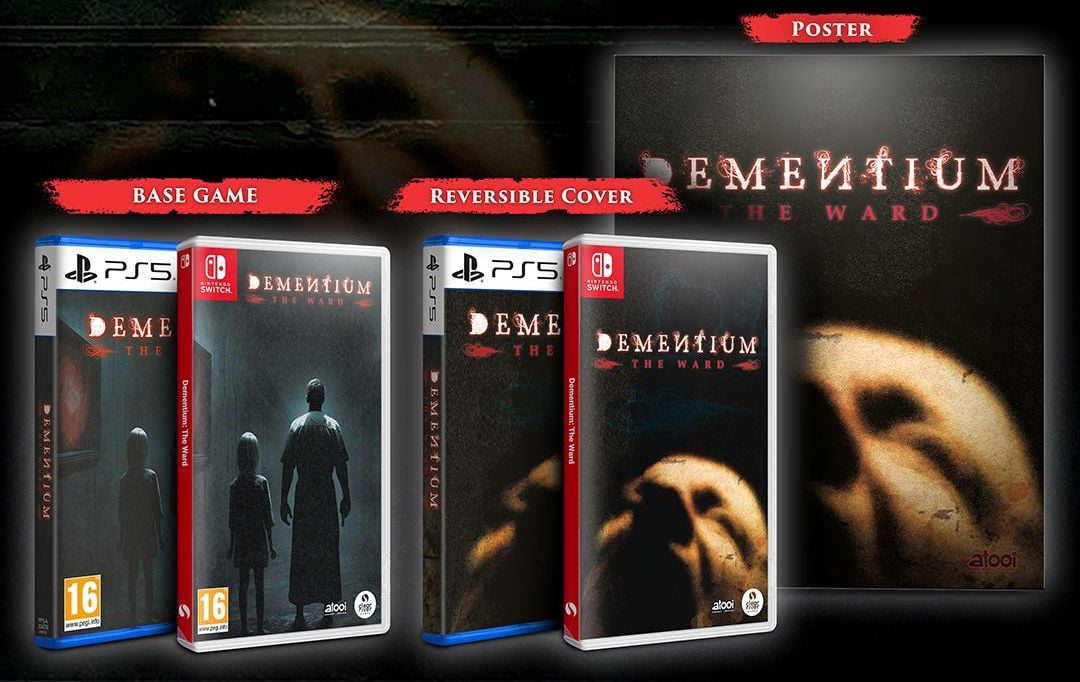
Dementium: The Ward is finally receiving a physical release for Nintendo Switch, giving horror fans and collectors an opportunity to place Atooi’s unsettling first-person adventure on their shelves. The boxed edition is scheduled to launch in Europe on July 23, 2026, nearly three years after the updated game first appeared digitally on Nintendo Switch. Although the physical version is currently associated with the European market, Nintendo Switch consoles are region free, so players elsewhere can import and play it without requiring European hardware.
Pre-orders are already available through Clear River Games and selected international retailers. Some stores also offer shipping to the United States, making the release accessible to North American collectors who do not want to miss it. The physical package contains the modern Nintendo Switch edition, which runs at 60 frames per second and offers both retro and HD display options.
Dementium: The Ward began life as an ambitious Nintendo DS survival horror game in 2007. It later returned as Dementium Remastered for Nintendo 3DS before Atooi adapted that improved version for newer platforms. The adventure places players inside an abandoned hospital with no memory, no obvious escape route and no comforting receptionist waiting behind the front desk. Instead, its corridors are filled with grotesque creatures, locked doors, scarce supplies and disturbing clues. The upcoming boxed edition does not introduce a newly announced campaign, but it gives the cult horror release something fans have requested since its digital Switch debut: a proper physical copy.
Dementium: The Ward Physical Edition Brings the Hospital Horror Home
Dementium: The Ward has spent years creeping from one handheld platform to another, yet its Nintendo Switch incarnation has remained a digital-only experience since launching in October 2023. That is finally changing. Clear River Games is preparing a boxed Nintendo Switch edition, allowing players to own the disturbing hospital adventure on a cartridge rather than leaving it entirely tied to an eShop account. For collectors, that difference can be enormous. A digital icon is convenient, but it cannot sit beside the original Nintendo DS release and stare ominously across the room at three in the morning. The physical edition gives this cult horror favourite a more permanent place in Nintendo collections while introducing its claustrophobic nightmare to shoppers who may have overlooked the earlier download.

Video credits: GameXplain
European Nintendo Switch Release Scheduled for July 23
The physical Nintendo Switch edition of Dementium: The Ward is scheduled for release on July 23, 2026. Current listings position it primarily as a European release, with Clear River Games handling publication of the boxed version. The company specialises in bringing distinctive games to physical platforms, making this a natural home for a title with a long history and a dedicated niche audience. Retail availability and delivery timing can differ between countries, so individual stores may display slightly different fulfilment dates. The central European launch date, however, is July 23. That gives collectors a specific date to circle on the calendar, preferably with something less alarming than the blood-smeared messages players encounter inside the game’s hospital.
International Players Can Import the Region-Free Edition
A European release does not mean Dementium: The Ward is restricted to European Nintendo Switch owners. Nintendo Switch game cartridges are generally region free, allowing a European physical copy to run on North American and other compatible Switch systems. Players should still consider practical details such as retailer shipping costs, delivery times and any local import fees before placing an order. The game itself supports English alongside French, Italian, German and Spanish text, while its spoken language is listed as English. That makes the European edition approachable for a broad international audience. In other words, the hospital doors may be located in Europe, but they are perfectly willing to admit terrified visitors from elsewhere.
Physical Pre-Orders Are Already Available
Pre-orders for the boxed edition are open through the Clear River Games store and participating retailers. International shops are also listing the European import, including sellers that ship copies to customers in the United States. Prices may vary considerably once international postage and taxes enter the equation, so comparing retailers is sensible before checking out. It is also worth confirming whether a store is selling the Nintendo Switch edition rather than the separately announced PlayStation 5 release. The physical package is aimed at players who already have access to the digital version but prefer permanent ownership, as well as collectors who deliberately waited for a cartridge. There is no newly announced collector’s edition packed with novelty hospital pills or a suspicious flashlight, but the standard boxed copy should satisfy fans who simply wanted the game preserved physically.
From Nintendo DS Experiment to Cult Horror Favourite
Dementium: The Ward did not originally release on Nintendo 3DS, as is sometimes reported. Its story began on Nintendo DS in North America on October 31, 2007. Developed by Renegade Kid, the game stood out because it attempted something unusually ambitious for Nintendo’s dual-screen handheld: a fully 3D first-person survival horror experience running at a smooth frame rate. Players explored grim corridors, fought monsters, solved puzzles and navigated an environment that felt strikingly different from the colourful adventures commonly associated with the system. The technical achievement helped Dementium earn a following even when aspects of its design divided players. It was compact, repetitive in places and relentlessly grim, but it had personality. Few Nintendo DS releases were willing to turn off the lights, lock the doors and whisper something unpleasant from the other side of the room.
The Nintendo 3DS Remaster Revived the Original Nightmare
The game later returned as Dementium Remastered for Nintendo 3DS in 2015. That edition addressed several issues associated with the Nintendo DS original while refreshing the presentation for newer hardware. Improved visuals, more accommodating checkpoints and mechanical refinements made the hospital easier to revisit without draining away its oppressive atmosphere. The remaster became an important foundation for the modern version because the Nintendo Switch release follows the updated experience rather than simply emulating the untouched 2007 cartridge. This distinction explains why players may remember different versions of certain systems or visuals. The nightmare has been renovated more than once. Admittedly, nobody seems to have replaced the flickering lights or cleaned the suspicious stains, but the underlying technology has received far more care.
Atooi Rebuilt the Experience for Nintendo Switch
Atooi brought Dementium: The Ward to Nintendo Switch on October 12, 2023. The studio is led by Jools Watsham, who co-founded original developer Renegade Kid and directed the game. Its Switch adaptation was presented as a version built for the larger screen, combining first-person shooting, puzzle solving and survival horror with modern controls and smoother performance. The release preserved the deliberate simplicity of the earlier handheld versions instead of transforming Dementium into a completely different production. That approach makes the Switch edition feel like a restored piece of portable horror history. It is recognisably rooted in Nintendo DS design, yet it no longer depends on a stylus, dual screens or hardware released nearly two decades ago.
Exploring a Hospital Filled With Monsters and Missing Memories
The premise immediately places players in an uncomfortable position. The protagonist awakens inside an abandoned hospital without a clear memory of how he arrived, what happened to the building or who might be manipulating the nightmare around him. There is no friendly companion offering a tutorial and no sensible exit glowing at the end of the first corridor. Instead, players move through dim rooms filled with disturbing medical imagery, cryptic messages and creatures that do not seem especially concerned about hospital visiting hours. The fragmented story encourages exploration because each new room may contain a clue, a weapon or another question. Is the hospital real? Who created the monsters? Why does everything feel like part of a carefully arranged experiment? Dementium keeps those mysteries close while steadily pulling players farther into its maze.
First-Person Combat Keeps Every Corridor Dangerous
Combat unfolds from a first-person perspective and relies on a mixture of melee weapons and firearms. Players begin with limited means of defending themselves, but gradually locate equipment that provides a better chance against the hospital’s inhabitants. Ammunition is valuable enough to discourage careless shooting, although the experience is more action-oriented than survival horror games built almost entirely around avoidance. Enemies can appear in narrow spaces where retreat is awkward, turning seemingly ordinary corridors into miniature panic chambers. The controls on Nintendo Switch remove the stylus-based aiming associated with the original Nintendo DS release, offering a more conventional console setup. That makes encounters easier to manage mechanically, but not necessarily comfortable. Better controls cannot stop something unpleasant from crawling around the corner when you are already low on health.
Puzzles, Supplies and Exploration Shape the Survival Experience
Dementium is not built around combat alone. Locked doors, environmental puzzles and scattered clues regularly interrupt the player’s path through the hospital. Progress often depends on paying attention to nearby details rather than sprinting forward with a loaded weapon and heroic confidence. Flashlights illuminate dark areas, pills restore health and ammunition keeps ranged weapons useful, but each item must be located while exploring hostile surroundings. The structure is relatively direct compared with sprawling modern horror releases, yet it creates tension by repeatedly asking players to move through spaces they would probably rather avoid. A door may conceal a useful supply, a puzzle solution or a monster waiting to ruin the evening. Naturally, curiosity wins. Horror protagonists have never been famous for respecting sensible boundaries.
How the Hospital Setting Sustains the Uneasy Atmosphere
The hospital is more than a convenient collection of corridors. Its treatment rooms, patient areas and clinical equipment give the horror an intimate, uncomfortable quality. Hospitals normally represent safety, recovery and care, so watching that familiar environment decay into a hostile maze creates a powerful contrast. Cold walls, harsh lighting and medical imagery turn ordinary spaces into signs that something has gone deeply wrong. The limited visual scope also works in the game’s favour. Dementium does not need an enormous world when a single locked ward can feel suffocating. Repeated architectural elements reinforce the sensation of being trapped inside a place that refuses to follow normal logic. Every hallway resembles the last one just enough to make players question whether they are progressing or simply circling back into the nightmare.
Display Modes and 60 FPS Performance Modernise the Classic
The Nintendo Switch release runs at 60 frames per second, giving movement and aiming a smoother feel than players might expect from a game with roots on Nintendo DS. Atooi also provides multiple presentation options. The retro display mode recreates a lower-resolution appearance inspired by the handheld editions, while an HD option offers a sharper image for modern screens. The HD mode arrived through a free update after the initial Switch launch, giving players greater control over how faithfully they want to reproduce the older visual character. Some may prefer the crunchy pixels and slightly grimier presentation of the retro setting. Others will choose the clarity of HD without hesitation. Both approaches suit Dementium in different ways, and switching between them is considerably less frightening than opening most of the hospital’s doors.
The Switch Edition Preserves Its Handheld Horror Identity
Although Dementium now works on a television, its design still carries the rhythm of a portable game. Chapters are manageable, environments are tightly arranged and objectives tend to remain focused. Those qualities made sense on Nintendo DS and continue to suit Switch players who alternate between handheld and docked play. The game can be experienced in short sessions, although stopping directly after a loud encounter may feel suspiciously like letting the monsters win. Its straightforward structure also separates it from larger modern survival horror releases filled with elaborate crafting systems and enormous maps. Dementium offers a leaner kind of fear. Players enter the ward, search for supplies, solve the obstacle ahead and hope the next room contains fewer teeth than the last.
Why a Boxed Edition Matters to Horror Collectors
Physical editions have particular appeal for smaller horror games because they preserve releases that might otherwise exist only through digital storefronts. Dementium already has a meaningful connection to physical Nintendo history through its original DS and later 3DS versions. Adding a Nintendo Switch box lets collectors place the modern adaptation beside those earlier releases and see the game’s unusual journey across three generations of Nintendo hardware. It also gives new players an alternative to buying through the eShop. The cartridge may require patches to access every update, including improvements introduced after launch, but the presence of a boxed edition still offers a tangible form of ownership that many enthusiasts value.
A Long-Awaited Addition to the Nintendo Switch Library
The arrival of a physical copy nearly three years after the digital Switch launch shows that smaller releases do not always follow a predictable schedule. Sometimes a game appears digitally, develops a steady audience and only later receives the boxed treatment. Dementium fits that pattern well because its reputation has grown over a long period rather than exploding overnight. Its audience includes players who experienced the Nintendo DS original, fans of the Nintendo 3DS remaster and newcomers interested in retro-styled survival horror. The physical edition brings those groups together around one satisfyingly old-fashioned object: a game box. No login screen, no cloud-shaped icon and no need to explain why a download code in a case feels like receiving an empty sandwich wrapper.
What Buyers Should Check Before Ordering
Prospective buyers should verify several details before selecting a retailer. First, confirm that the listing is for the Nintendo Switch physical edition and shows the expected European packaging. Second, check whether the seller ships to the destination country and whether taxes or import charges are collected in advance. Third, review the estimated dispatch date, as some retailers list July 23 while others may ship one day later depending on local distribution. Finally, compare the total price rather than the product price alone. A cheaper cartridge can quickly become the more expensive option once international delivery is added. The Switch’s region-free support keeps compatibility simple, but the person delivering the parcel still expects to be paid.
Conclusion
Dementium: The Ward will receive its long-awaited Nintendo Switch physical edition in Europe on July 23, 2026. Pre-orders are available, and international retailers are offering options for players outside Europe, including customers in the United States. Since Nintendo Switch cartridges are region free, importing the European edition should not create a hardware compatibility problem. The release contains the modern version of a horror game that began on Nintendo DS, returned through a Nintendo 3DS remaster and reached Switch digitally in 2023. Its first-person combat, unsettling hospital setting, puzzles and 60 FPS performance remain intact, now accompanied by the simple pleasure of a cartridge and box. For longtime fans, it is a fitting physical homecoming. For newcomers, it is an invitation to enter one of Nintendo’s grimmest hospital wards and discover why some doors are better left locked.
FAQs
- When will the physical Nintendo Switch edition of Dementium: The Ward be released?
- The European physical edition is scheduled to launch on July 23, 2026. Dispatch timing may vary slightly between individual retailers and countries.
- Is the physical edition exclusive to Europe?
- The announced boxed edition is currently associated with the European market. However, international retailers are offering imported copies and some provide shipping to the United States.
- Will a European copy work on a North American Nintendo Switch?
- Yes. Nintendo Switch game cartridges are region free, so the European physical edition should run on a North American Nintendo Switch console.
- Was Dementium: The Ward originally a Nintendo 3DS game?
- No. The original game launched for Nintendo DS in 2007. An improved version called Dementium Remastered later appeared on Nintendo 3DS in 2015.
- What does the Nintendo Switch version improve?
- The Switch release features modern console controls, 60 FPS gameplay and both retro and HD display options while retaining the first-person combat, puzzles and hospital setting of the earlier versions.
Sources
- Dementium: The Ward Gains Nintendo Switch Physical Release, Pre-Orders Open, Nintendo Everything, July 13, 2026
- Dementium: The Ward – Nintendo Switch, Clear River Games, April 28, 2026
- Dementium: The Ward, Nintendo UK, October 12, 2023
- DS Horror Classic Dementium: The Ward Slashes Onto Switch eShop Soon, Nintendo Life, September 28, 2023
- Dementium: The Ward on Switch Receives Free HD Update, Nintendo Life, December 20, 2023
- Dementium: The Ward Switch Review, Nintendo World Report, October 11, 2023
- Dementium History, Atooi, October 31, 2025