














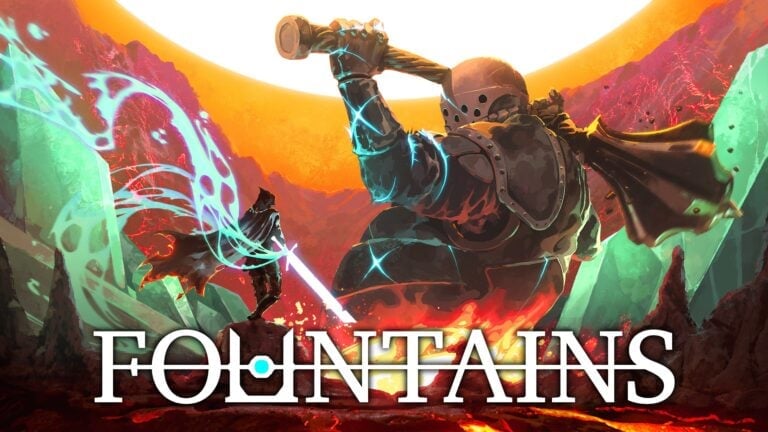
Summary:
Publisher Crunching Koalas and developer John Pywell are bringing the Soulslike action RPG FOUNTAINS to Nintendo Switch on September 10, 2026. Originally released for PC in December 2024, the dark fantasy adventure combines demanding real-time combat with a top-down perspective, detailed pixel art and an enormous interconnected world that functions like one continuous dungeon. Players step into the worn boots of a mysterious hooded prisoner attempting to escape a tyrannical regime while uncovering the secrets of a shattered empire.
Combat sits at the heart of the experience, demanding careful timing, quick reactions and thoughtful use of every available tool. Enemies strike hard, hesitation can be costly and even ordinary encounters may turn into tense exchanges where one mistake changes everything. However, adjustable difficulty settings allow players to shape the challenge around their experience and preferred intensity. The intention is not simply to punish mistakes, but to make every victory feel earned.
Exploration carries equal importance. The world twists around itself through hidden passages, locked routes and shortcuts that gradually connect distant areas. New abilities, equipment and upgrades open previously inaccessible locations, encouraging players to revisit familiar spaces with fresh possibilities. Environmental storytelling, unusual characters and concealed discoveries help reveal the history of the war-torn setting without constantly stopping the action. FOUNTAINS also includes an online message system, allowing adventurers to leave useful clues or mischievous traps for others. Together, these ideas create a compact but richly layered adventure for Nintendo Switch players who enjoy difficult battles, rewarding exploration and mysteries hidden just beyond the obvious path.
FOUNTAINS Launches for Nintendo Switch in September 2026
FOUNTAINS is heading to Nintendo Switch on September 10, 2026, giving players another dark fantasy adventure to carry between the television and handheld play. Published on consoles by Crunching Koalas and developed by John Pywell, the game originally arrived for PC on December 20, 2024. Its transition to Nintendo’s hybrid system places a tightly designed, top-down Soulslike experience in the hands of an audience already familiar with difficult action RPGs, labyrinthine adventures and exploration-driven progression. Rather than stretching its world across disconnected stages, FOUNTAINS presents a seamless environment filled with looping paths, hostile creatures, hidden chambers and dangerous encounters. Every corner appears designed to invite one more cautious step forward. You might find a powerful upgrade, uncover a valuable shortcut or walk straight into something with far too many teeth. That uncertainty is part of the appeal. The Nintendo Switch release also supports the system’s television, tabletop and handheld play styles, allowing players to tackle its mysterious empire wherever they feel brave enough to continue.

A Hooded Prisoner Enters a War-Torn Empire
The story begins with a hooded stranger imprisoned under the rule of a tyrannical regime. That opening immediately places the player in a vulnerable position, stripped of certainty and surrounded by forces that clearly have no interest in offering a warm welcome. Escape is only the beginning. Beyond the prison lies a scarred empire shaped by conflict, strange beliefs and the legend of the hidden Fountain of Youth. According to the game’s central prophecy, a figure known as the Usurper is destined to slay the Ageless and uncover the fountain once more. Exactly how the imprisoned stranger fits into that prophecy remains one of the mysteries waiting beneath the surface. FOUNTAINS does not rely solely on long conversations or constant exposition to explain its world. Much of its history is discovered through surroundings, enemy placement, forgotten structures and the people encountered along the journey. It treats the player like a curious investigator rather than a guest attending a lengthy royal lecture, which makes each discovery feel more personal.
A Soulslike Adventure Viewed From Above
The top-down viewpoint immediately separates FOUNTAINS from many familiar Soulslike games. Instead of following the hero from behind, the camera provides a broader view of chambers, pathways and approaching threats. That perspective may recall classic overhead adventures, including older entries in The Legend of Zelda series, but the combat carries a much sharper edge. Enemies are aggressive, positioning matters and carelessly rushing into a room can end a promising journey in seconds. The camera also complements the interconnected level design by making the world’s routes easier to read without stripping away its secrets. Players can see nearby ledges, sealed passages and suspicious corners, yet reaching them often requires a new ability or a less obvious route. This creates a satisfying tension between what you can see and what you can actually access. The answer may be only a few steps away, but those steps might require a dangerous detour through an entire ruined district. It is a familiar adventure-game temptation wrapped around the harsher rhythm of a Soulslike RPG.
Responsive Combat Rewards Precision and Patience
Combat is built around deliberate actions rather than frantic button mashing. Attacks, evasive movements and defensive tools must be used with purpose because enemies punish hesitation as eagerly as they punish reckless aggression. A poorly timed strike can leave the hero exposed, while a carefully chosen response can turn a seemingly hopeless encounter around. This back-and-forth structure gives battles a conversational quality, although the conversation mostly consists of steel, claws and increasingly worried breathing. You watch an opponent, identify its patterns and decide when to act. Some enemies pressure the player directly, while others may force movement or exploit the surrounding terrain. Every confrontation becomes a small test of observation and control. The goal is not simply to reduce an enemy’s health before it reduces yours. It is to understand the rhythm of the encounter and find the safest moment to break it. When everything works, victory feels less like luck and more like solving a dangerous puzzle at sword point.
Tools and Tactics Shape Every Encounter
FOUNTAINS expects players to use the full range of abilities and equipment they gather throughout the world. New tools do more than add decorative icons to an inventory screen. They create additional ways to defend against threats, control space and approach difficult opponents. A tactic that works perfectly against one creature may prove useless against another, encouraging experimentation instead of dependence on a single comfortable routine. Environmental positioning can be just as important as raw damage. Narrow passages may limit movement, open spaces can provide room to dodge and nearby hazards may complicate an otherwise manageable fight. This flexibility gives players room to develop a personal style while still respecting the game’s demanding nature. Some may prefer patient defensive play, while others will look for aggressive openings and quick finishes. Neither approach removes the need for awareness. The world keeps asking the same uncomfortable question: are you paying attention? Those who answer yes are far more likely to survive what waits around the next corner.
Adjustable Difficulty Opens the Gates to More Players
Although FOUNTAINS draws heavily from the Soulslike tradition, it includes adjustable difficulty settings that allow players to choose how intensely the game pushes back. That decision makes the adventure more approachable without abandoning the tension that defines its combat. Experienced players can pursue the demanding experience they expect, while newcomers can select settings that provide more room to learn enemy patterns, understand the controls and explore without repeatedly colliding with the same wall. Difficulty options can also benefit players who love interconnected worlds and environmental storytelling but do not necessarily want every encounter to become a test of stubborn endurance. Challenge remains an important part of the design, but it does not have to become a locked gate. Think of it as choosing how steep the mountain should be before beginning the climb. The destination remains the same, the mysteries remain intact and victories can still feel rewarding. Players simply gain more control over how punishing the path becomes.
One Seamless World Designed Like a Giant Dungeon
The world of FOUNTAINS is presented as one enormous seamless dungeon rather than a collection of isolated levels. Areas twist, overlap and reconnect in ways that gradually reveal the logic behind the wider map. A route that initially appears to lead deeper into danger may eventually circle back to a familiar location, opening a shortcut that makes future journeys much safer. This structure rewards memory and curiosity. Players who notice an unreachable platform, strange doorway or suspicious gap may later return with the exact ability needed to progress. The result is a world that changes as the hero becomes more capable, even though the physical environment was always waiting there. That sense of recognition can be wonderfully satisfying. A frustrating barrier from several hours earlier suddenly becomes an invitation rather than an obstacle. The design encourages players to build a mental map of the empire instead of simply following objective markers from one destination to another. Getting lost may happen, but in FOUNTAINS, getting lost often leads to the best discoveries.
Exploration Constantly Rewards Curiosity
Secrets are scattered throughout the world, turning careful observation into a valuable skill. Hidden items, unusual paths, new powers and equipment upgrades may sit outside the most direct route. Players who only march toward the next major objective risk missing the smaller discoveries that make exploration memorable. A cracked wall might hide a passage. An apparently decorative platform may become reachable later. A dangerous side path could lead to an upgrade that changes how future battles unfold. FOUNTAINS understands that exploration feels best when curiosity produces meaningful results instead of another empty room containing three disappointed barrels. Even familiar areas can gain new significance after the player obtains additional traversal options. This encourages backtracking without making it feel like administrative work. Returning to an old location becomes an opportunity to test a new idea and uncover what was previously out of reach. The environment is not merely a backdrop for combat. It is an evolving puzzle that asks players to remember, experiment and occasionally ignore the sensible path.
New Abilities Turn Old Obstacles Into Fresh Opportunities
Progression is closely tied to the abilities and tools discovered during the journey. These upgrades improve the player’s ability to survive, but they also expand movement through the world. A previously inaccessible ledge, sealed route or dangerous barrier may become manageable once the correct power is acquired. This design connects character growth directly to exploration, creating the familiar Metroidvania satisfaction of returning stronger and better prepared. The world itself becomes a record of the player’s progress. Early areas that once seemed restrictive begin opening like folded pieces of a map, revealing shortcuts and hidden spaces that were always nearby. New abilities can also influence combat by providing additional defensive or offensive possibilities, making exploration valuable even for players primarily focused on battle. Every upgrade carries the potential to solve multiple problems at once. It may help defeat a difficult enemy, reach a concealed chamber or reveal a more efficient route through hostile territory. That interconnected usefulness keeps progression meaningful instead of reducing it to slightly larger numbers.
Environmental Storytelling Builds the Dark Fantasy Setting
FOUNTAINS tells much of its story through the places players visit and the details they notice. The empire has been shaped by war and oppression, and the environment reflects that history through ruined architecture, hostile territories and unsettling encounters. Rather than placing every answer in a convenient explanation, the game encourages players to interpret what happened. A damaged structure can suggest an old conflict. The placement of an enemy may reveal who controls an area. An abandoned chamber might raise questions that are answered much later, or perhaps never answered completely. This approach gives the setting room to breathe and allows mystery to remain part of the experience. Dark fantasy is often most effective when it feels larger than the player’s immediate journey, and FOUNTAINS appears interested in creating exactly that impression. The hooded stranger is entering a world with its own history, factions and wounds. Players are not present for the beginning of every tragedy. They arrive afterward and must piece together what remains.
Strange Characters Add Humanity to a Hostile World
The player encounters a range of characters during the journey, including individuals who may be friendly, hostile or difficult to classify. In a setting dominated by danger, these meetings can offer moments of relief, suspicion or unexpected humour. Not every figure standing quietly in a ruined corridor should immediately be trusted, of course. Dark fantasy worlds have a habit of making friendly smiles feel slightly more alarming than drawn weapons. Still, character encounters help the empire feel inhabited rather than designed solely as an obstacle course. Conversations can reveal fragments of lore, hint at hidden locations or complicate the player’s understanding of the regime and its enemies. Some figures may provide assistance, while others could pursue their own interests. This uncertainty suits a story centred on imprisonment, tyranny and prophecy. The player must decide who seems reliable without receiving perfect information. Those choices add emotional texture to the exploration and remind us that every ruined kingdom contains people attempting to survive its collapse.
Online Messages Let Players Help or Mislead Each Other
FOUNTAINS includes an online message system that allows players to leave notes throughout the world. These messages can warn others about nearby threats, point toward hidden rewards or provide encouragement before a difficult confrontation. They can also be used for mischief. A player may confidently recommend jumping from a suspicious ledge when the only reward below is an abrupt lesson about gravity. That mixture of cooperation and playful deception has become one of the most recognisable social elements associated with Soulslike adventures. It creates a sense that other players are travelling through the same lonely world, even though the main adventure remains a single-player experience. A small message beside a dangerous doorway can feel like advice passed between strangers exploring the same haunted ruin. Whether that advice deserves trust is another matter entirely. The system adds personality to the environment and gives the community a way to communicate without interrupting the atmosphere with conventional multiplayer activity.
Community Interaction Fits the Solitary Adventure
The message system works because it supports the feeling of isolation instead of removing it. Players do not need to form parties, organise schedules or wait for another person before progressing. The main journey remains personal, but traces left by others create brief moments of connection. A helpful warning may prevent an embarrassing defeat, while a misleading note can produce the sort of story that is irritating for five seconds and funny for much longer. These interactions also encourage players to contribute their own observations. Discovering a well-hidden item naturally creates the temptation to guide someone else toward it. Surviving a dangerous ambush may inspire a warning for the next traveller. The community gradually adds another layer to the map, decorating it with advice, jokes and questionable decisions. In a game built around secrets, that shared language becomes particularly useful. It does not reveal everything, but it may provide just enough confidence to inspect one more suspicious wall.
Pixel Art Gives the Ruined Empire a Distinct Identity
The pixel art presentation gives FOUNTAINS a visual identity that balances nostalgia with detailed modern animation. Its top-down environments use colour, lighting and texture to distinguish ruined settlements, dangerous pathways and mysterious interiors. Characters remain readable during fast combat, which is especially important when precise reactions determine whether an encounter ends in triumph or a sudden return to safety. The visual style also supports the game’s atmosphere without chasing realism. A few carefully placed pixels can make a creature look unsettling, a chamber feel ancient or a distant doorway seem far too inviting. There is something uniquely effective about pixel art in dark fantasy. The limited detail leaves enough room for imagination, allowing the player to fill the shadows with possibilities that may be worse than anything explicitly shown. At the same time, clear environmental design helps players identify routes, hazards and interactive elements. Beauty and function work together, ensuring the empire remains readable even when the screen fills with movement.
Small Visual Details Encourage Careful Observation
Exploration-focused games depend on visual communication, particularly when hidden passages and environmental clues form an important part of progression. FOUNTAINS uses its detailed surroundings to reward players who slow down and inspect the scenery. Slight differences in walls, floors or surrounding objects may suggest a concealed route. Lighting can draw attention toward an overlooked corner, while enemy placement may reveal that an apparently unimportant area deserves closer investigation. These details make the world feel intentionally constructed rather than randomly assembled. Players begin learning the visual language of the environment and using that knowledge to predict where secrets might be hidden. It is similar to recognising a magician’s habits after watching several tricks. You still do not know exactly what will happen, but you become better at noticing where the misdirection begins. That growing awareness turns exploration into a skill of its own and gives every newly discovered pathway a sense of earned satisfaction.
What the Nintendo Switch Version Includes
The Nintendo Switch edition is scheduled to launch digitally on September 10, 2026. Nintendo lists Crunching Koalas as the publisher and John Pywell as the developer. The game is designed for a single player, while its online message functionality allows indirect interaction with the wider community. Save Data Cloud support is also listed through Nintendo Switch Online, helping players preserve their progress across compatible systems. The European Nintendo listing reports a download size of approximately 419 MB, making FOUNTAINS a relatively compact addition to the system’s storage. It supports television, tabletop and handheld modes, as well as the Nintendo Switch Pro Controller. Multiple languages are available, including English, French, German, Spanish, Japanese, Portuguese, Russian and Chinese. The American version carries an ESRB rating for Blood and Violence, while the European release is rated PEGI 16 for intense violence. These details place the Nintendo Switch version alongside the broader console release planned for 2026.
Handheld Play Could Suit the Interconnected Structure
The ability to play in handheld mode may be especially convenient for an adventure built around exploration, short discoveries and repeated attempts at difficult encounters. A player can investigate a hidden path during a brief session, suspend the system and continue later without losing the thread of the journey. Longer sessions on a television may be better suited to major bosses or complicated new areas, while handheld play offers flexibility for revisiting earlier locations and searching for missed secrets. The game’s pixel art presentation should also translate naturally to the smaller display, where clean silhouettes and detailed environments can remain visually distinct. Of course, dangerous battles will still demand concentration. Attempting a difficult boss while surrounded by distractions may transform an already challenging encounter into an act of heroic optimism. Even so, the freedom to choose where and how to play matches the structure of a game that constantly encourages one more attempt, one more corridor and one more suspicious doorway.
Why FOUNTAINS Could Appeal to Zelda and Soulslike Fans
FOUNTAINS sits at an interesting meeting point between classic top-down adventures, Metroidvania exploration and modern Soulslike combat. Players who enjoy older Zelda games may recognise the overhead perspective, hidden pathways and ability-based progression. Soulslike fans will find deliberate battles, dangerous enemies, environmental storytelling and community messages. Metroidvania enthusiasts can look forward to an interconnected map where new abilities reopen old routes. None of those influences defines the experience alone. The appeal comes from the way they overlap. A player might enter an area because of a story clue, survive a demanding battle, discover a traversal upgrade and then remember a sealed passage encountered much earlier. Each system feeds into the next, creating a journey where combat and exploration rarely feel separate. The result could be particularly appealing to Nintendo Switch owners who enjoy challenging adventures but prefer a top-down viewpoint or adjustable difficulty. FOUNTAINS looks ready to offer a difficult road without insisting that everyone travel it under identical conditions.
Conclusion
FOUNTAINS will arrive for Nintendo Switch on September 10, 2026, bringing its top-down Soulslike combat and tightly connected dark fantasy world to Nintendo’s hybrid system. The adventure combines precise battles with exploration that rewards memory, experimentation and a willingness to inspect every suspicious corner. Adjustable difficulty settings give more players an opportunity to enter the ruined empire, while new tools and abilities steadily open routes that once appeared impossible to reach. Environmental storytelling adds mystery to the journey, and the online message system lets other adventurers provide help, encouragement or wonderfully terrible advice. With detailed pixel art, a compact download size and support for handheld, tabletop and television play, the Nintendo Switch version appears well suited to both focused sessions and shorter journeys through previously explored areas. Players who enjoy Zelda-style discovery, Metroidvania progression or Soulslike tension may find plenty waiting beneath the surface. Just remember that a friendly message beside a cliff is not necessarily written by a friend.
FAQs
- When will FOUNTAINS be released for Nintendo Switch?
- FOUNTAINS is scheduled to launch digitally for Nintendo Switch on September 10, 2026.
- Who developed and published FOUNTAINS?
- FOUNTAINS was developed by John Pywell. Crunching Koalas is publishing the Nintendo Switch version.
- Is FOUNTAINS a Soulslike game?
- Yes. It features demanding real-time combat, dangerous enemies, environmental storytelling and an online message system, combined with a top-down viewpoint and Metroidvania-style exploration.
- Does FOUNTAINS have adjustable difficulty settings?
- Yes. Players can adjust the difficulty to choose an intensity that better suits their experience and preferred level of challenge.
- Does FOUNTAINS include multiplayer?
- FOUNTAINS is a single-player adventure, but it includes an online message system that lets players leave hints or misleading notes throughout the world.
Sources
- FOUNTAINS for Nintendo Switch, Nintendo, July 2026
- FOUNTAINS Nintendo Switch Download Software, Nintendo Nederland, July 2026
- FOUNTAINS on Steam, Steam, December 20, 2024
- FOUNTAINS – Console Announcement Trailer, Crunching Koalas, July 2026
- Fountains Announced for Nintendo Switch, Nintendo Everything, July 22, 2026