














Summary:
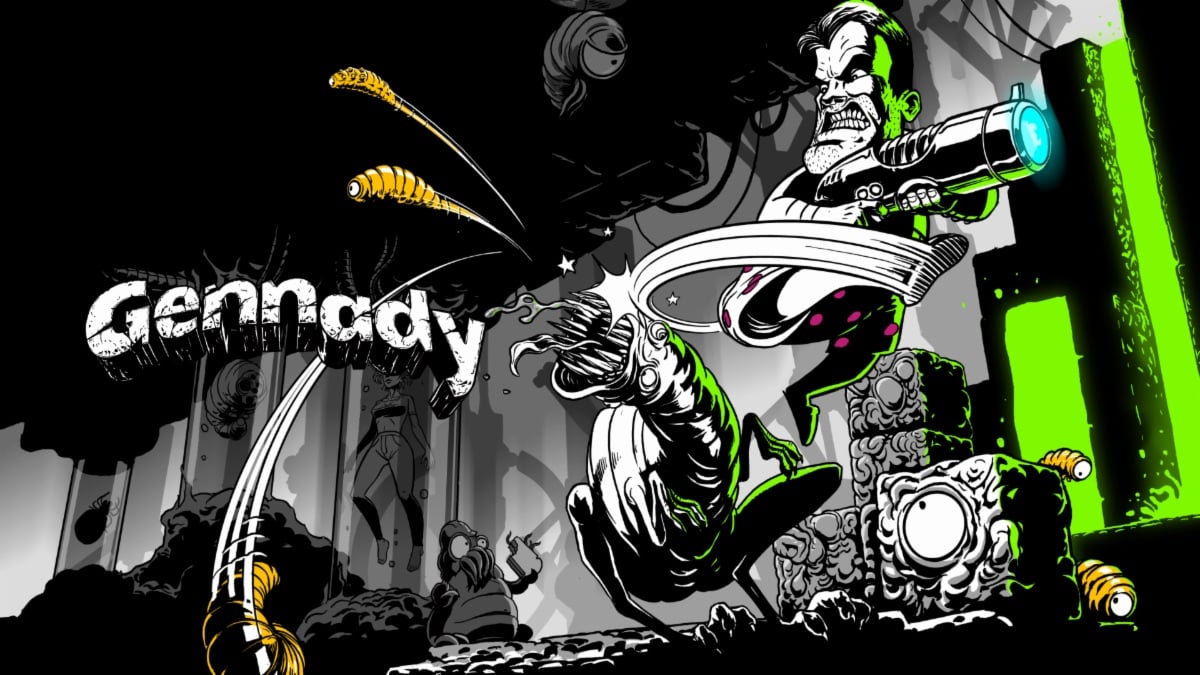
Gennady is officially heading to Nintendo Switch in Q4 2026, bringing its unusual blend of roguelike progression, fast platforming and hand-drawn brutality to Nintendo’s console. Published by Sobaka Studio and developed by Feed 64, the monochrome adventure follows an unfortunate hero who awakens inside an alien meat factory. Escaping will require more than carefully timed jumps and a hopeful attitude. Gennady must punch chthonic creatures, collect alien weapons and hurl his entire body through enemies and obstacles as though he were a furious human cannonball.
The game pairs its bizarre premise with procedurally generated environments, meaning the corridors, threats and opportunities encountered during each run can change. Players will gather ammunition, shields and useful trinkets while building Rage Mode through successful combat. Once activated, Rage Mode temporarily makes Gennady invulnerable, and strong performance can extend its duration. That encourages players to keep moving and attacking rather than hiding in a corner and waiting for the factory’s horrors to become polite.
Although failure can end a run, Gennady includes ways to soften the familiar sting of roguelike permadeath. Certain artifacts can be carried into later attempts, while permanent improvements to weapons and abilities gradually prepare the hero for larger threats and colossal bosses. With its stark visual presentation, frame-by-frame animation and clear affection for the exaggerated style associated with the Earthworm Jim era, Gennady looks ready to offer Nintendo Switch owners one very strange escape attempt later in 2026.
Gennady Is Coming to Nintendo Switch in Q4 2026
Publisher Sobaka Studio and developer Feed 64 have confirmed that Gennady will be released for Nintendo Switch in Q4 2026. The console version will arrive alongside editions for PlayStation 4, PlayStation 5, Xbox One and Xbox Series X|S, while a PC version is also planned through Steam. A specific release date has not yet been announced, so the fourth quarter window currently places the launch somewhere between October and December 2026. For Nintendo Switch players, the announcement adds another distinctive independent release to the system’s upcoming schedule. Gennady is not trying to blend quietly into that schedule, either. Its monochrome artwork, grotesque setting and aggressive movement mechanics give it a personality that is difficult to mistake for anything else.
The announcement also gives players a clearer idea of the project’s intended scope. Gennady combines platforming with roguelike systems, procedurally generated environments, melee attacks, ranged weapons and permanent progression between attempts. That mixture suggests a game designed around repeated escapes rather than one uninterrupted journey through a fixed series of stages. Each defeat may send Gennady back, but it should also leave the player with more knowledge about the factory, its creatures and the tools needed to survive. It is a familiar roguelike rhythm wrapped in a setting where almost nothing else feels familiar.

An Ordinary Nightmare Becomes an Alien Meat Factory
Gennady begins with the sort of nightmare many people would already consider unbearable. He dreams that he is standing on a crowded bus wearing nothing but his underwear. Unfortunately for him, waking up does not improve the situation. Instead, he finds himself trapped inside an alien meat factory populated by chthonic creatures that have no intention of showing him the nearest exit. It is an absurd opening, but it quickly establishes the game’s sense of humor. Gennady may be surrounded by blood, industrial machinery and extraterrestrial horrors, yet the presentation is knowingly ridiculous rather than solemn. His predicament is horrifying, but it is also the setup for a frantic physical comedy routine in which punches and body slams replace clever conversation.
The factory serves as more than a gruesome backdrop. It gives the developers plenty of room to create hazardous machinery, organic walls, acidic barriers and corridors that look as though they were assembled from equal parts nightmare and digestive system. Every area reinforces the idea that Gennady has awakened somewhere he was never meant to see. There is no rescue team waiting outside and no helpful alien guide offering a map. Freedom lies on the other side of a hostile facility, and the only practical route is straight through everything standing in his way.
Monochrome Artwork Gives the Adventure a Distinct Identity
One of Gennady’s most noticeable features is its hand-drawn monochrome presentation. Black lines and pale backgrounds create an immediately recognizable appearance, while splashes of blood and slime stand out sharply against the restrained palette. The result resembles a rough animated sketch that has suddenly become angry enough to fight back. Rather than chasing polished realism, Feed 64 uses exaggerated forms, expressive movement and grotesque imagery to make every encounter feel animated by hand. That visual direction should help the game remain readable even when the screen fills with enemies, projectiles and environmental hazards, although the final balance will become clearer once players can experience the full release.
The artwork also suits the game’s unpredictable structure. Procedurally generated environments can sometimes feel disconnected when rooms are assembled from reusable pieces, but a strong visual identity can hold those pieces together. Here, the alien factory appears to operate according to its own twisted biological logic. Pipes, walls, machinery and creatures all belong to the same unpleasant ecosystem. It is gross, energetic and occasionally funny, like discovering that someone has turned a cartoon sketchbook into a functioning slaughterhouse. That is not a sentence anyone expects to write every day, which is precisely why the design leaves such a strong impression.
Combat Turns Gennady Into a Living Projectile
Gennady is not limited to conventional attacks. He can use his fists, grab alien weaponry and launch his own body as a projectile. This movement ability appears to sit at the heart of both traversal and combat, allowing players to break through bloodstained walls, cross dangerous spaces and smash directly into hostile creatures. Instead of separating platforming from fighting, the mechanic connects them. Momentum becomes a weapon, and the quickest path through an obstacle may involve turning Gennady himself into the impact. There is something wonderfully reckless about solving an alien infestation by throwing a man at it, but the mechanic could also add a meaningful layer of precision to every room.
Successful use of the living-projectile ability should depend on timing, direction and awareness of the surrounding environment. Launch too early and Gennady may miss the intended target. Choose the wrong angle and he could land near another enemy or hazard. When executed properly, however, the move can transform a corridor into a sequence of rapid impacts. Walls crumble, creatures scatter and Gennady continues moving before the dust has settled. It is less like walking through a factory and more like becoming the pinball in a machine designed by furious extraterrestrials.
Rage Mode Rewards Relentless and Aggressive Play
Hand-to-hand combat feeds into a Rage Mode that temporarily turns Gennady into an invulnerable force. The better the player performs while eliminating threats, the longer the rage can continue. This creates an obvious incentive to maintain momentum. Instead of backing away after every successful attack, players are encouraged to look for the next creature, the next breakable barrier and the next opportunity to keep the sequence alive. Rage Mode therefore appears to function as both a reward and a challenge. It grants protection, but only players who continue acting decisively will receive its full benefit.
That design could create satisfying peaks during each run. A room might begin cautiously, with the player dodging attacks and searching for an opening. One well-timed strike could then begin a chain reaction, filling the rage meter and turning Gennady into an unstoppable blur. These moments should provide a welcome contrast to the tension associated with permadeath. When a run is going badly, every enemy looks dangerous. When Rage Mode is active, the same room may look like a buffet of opportunities. The trick will be knowing when confidence has become carelessness, because roguelikes have a special talent for punishing anyone who starts feeling invincible five seconds too early.
Roguelike Items Shape Every Attempt to Escape
Players can collect shields, ammunition and other useful trinkets during their attempts to escape the factory. These resources are expected to shape how each run develops, especially when procedural generation changes the order in which items and dangers appear. A shield could give Gennady enough protection to survive an otherwise disastrous room, while extra ammunition may encourage greater reliance on alien firearms. Another item might support close-range combat or make aggressive movement easier. The full selection has not yet been detailed, but the announced systems indicate that players will need to adapt to whatever the factory provides rather than expecting the same perfect equipment every time.
This improvisational structure is one of the genre’s main attractions. A weak beginning does not always lead to a failed run, and an excellent collection of upgrades does not guarantee victory. Players must constantly decide how to use limited resources and whether a dangerous route is worth the possible reward. Gennady’s physical combat mechanics may make those decisions feel particularly immediate. You are not simply adjusting statistics in a menu. You are choosing whether to save ammunition, trust your fists or launch yourself through the next wall and deal with whatever is waiting on the other side.
Artifacts Offer a Clever Twist on Permadeath
Gennady includes a way to bend the usual rules of roguelike permadeath. Players can shoot collected artifacts and carry them into the next run, preserving selected advantages after an attempt ends. The wording suggests that keeping an artifact will involve a deliberate action rather than an automatic reward. That could create difficult choices near the end of a run. Is the current artifact useful enough to secure for the future, or would using it now create a better chance of reaching the next area? Decisions like these can give failure a sense of purpose, because even an unsuccessful escape may produce something valuable for the next attempt.
The system should also prevent repeated runs from feeling completely disconnected. Although the factory may rearrange itself and defeated enemies may return, Gennady can gradually establish a foothold by carrying carefully chosen resources forward. That makes permadeath feel less like a brick wall and more like a stubborn door that loosens each time you kick it. Progress still has to be earned, but players are given a practical reason to begin again after defeat. The next run is not merely a repetition. It begins with another possibility created by the decisions made during the previous one.
Weapons and Permanent Upgrades Prepare Gennady for Bosses
Beyond temporary equipment and transferable artifacts, players will be able to improve Gennady’s abilities and weapons. These upgrades provide a longer-term progression path as the hero prepares to face colossal boss encounters blocking his escape. Permanent growth is especially important in a roguelike built around demanding action. Players naturally become more skilled through repetition, but improvements to damage, mobility or survivability can provide an additional sense of advancement. Even after a painful defeat, an unlocked enhancement can make the next attempt feel more manageable and open new tactical possibilities.
The promised boss battles should serve as major tests of everything learned during ordinary rooms. Movement, body-projectile attacks, weapon management and Rage Mode may all become essential when facing an enemy too large to overwhelm with simple punches. Bosses can also give structure to a procedurally generated adventure by acting as fixed milestones within an otherwise changing journey. Reaching one should feel like evidence that a particular build worked, while defeating it may unlock another section of the facility. Considering the factory’s grotesque inhabitants, it is probably safe to expect bosses that look as unpleasant as they are dangerous.
Procedural Corridors Keep the Factory Unpredictable
The corridors within Gennady’s alien meat factory will shift between runs through procedural generation. This means players should not expect every room, item and enemy encounter to appear in the same location. Learning individual layouts will still help, especially when familiar room components return, but memorizing a single route is unlikely to solve the entire game. Players will instead need to understand broader systems, including enemy behavior, movement options and the relative value of available upgrades. The factory becomes a puzzle that rebuilds itself after every failed attempt, cheerfully moving the pieces while Gennady is not looking.
Procedural generation can support replayability when it produces meaningful variations rather than superficial rearrangements. Gennady’s combination of destructible barriers, platforming hazards and combat abilities gives Feed 64 several elements to recombine. A weapon that felt ordinary during one run could become essential during another because of the rooms and enemies surrounding it. Likewise, an artifact may gain new value when paired with a different set of upgrades. The effectiveness of these systems will depend on the variety present in the final version, but the basic design is well suited to repeated play.
Earthworm Jim Inspiration Meets Modern Roguelike Design
Gennady draws inspiration from the era of Earthworm Jim, particularly its exaggerated animation, absurd humor and willingness to make grotesque imagery look playful. That influence is visible in the elastic character movement and bizarre premise, but Feed 64 is not simply recreating a traditional platformer from the 1990s. Modern roguelike systems give the project a different structure. Procedural stages, temporary builds, permanent upgrades and repeated attempts turn the journey into an evolving challenge rather than a fixed sequence of levels.
The combination could appeal to two different audiences. Players who remember the expressive animation and strange humor of older platformers may recognize the creative spirit behind Gennady’s presentation. Roguelike fans, meanwhile, can focus on its builds, risk-and-reward decisions and changing environments. Bringing those ideas together is not automatically easy. Fast cartoon action needs to remain readable, while random elements need to support rather than interrupt the platforming. Still, the mixture gives Gennady a clear identity. It feels inspired by an earlier generation without behaving as though game design stopped there.
Sobaka Studio Discusses Bringing Gennady to Consoles
Sobaka Studio head Dmitry Kachkov said the publisher enjoys games about tough warriors trapped in even tougher situations, making Gennady a natural fit when the opportunity arose to bring it to consoles. He also joked that Gennady and Morgan from KIBORG would either get along or leave one another in a bloody pulp. The comparison links the new project to Sobaka Studio’s existing taste for hard-hitting action, while also capturing Gennady’s rough sense of humor. This is a hero whose main response to an alien factory is to punch it until an exit appears, so subtle diplomacy was probably never an option.
Sobaka Studio’s involvement as console publisher should help Feed 64 bring the project beyond its initially announced PC version. Console releases require platform-specific development, certification and technical preparation, making publishing support an important part of the process. The Nintendo Switch edition will need to preserve the responsiveness demanded by its fast movement and combat. Detailed performance information has not been shared, so resolution, frame rate, loading times and platform-specific features remain unconfirmed. The announcement nevertheless establishes that the Switch version is part of the main Q4 2026 launch plan rather than a later addition.
The Console Announcement Trailer Sets the Tone
The console announcement trailer offers a direct look at Gennady’s stark artwork, violent movement and unusual enemies. Footage shows the hero tearing through the factory, using close-range attacks and turning himself into a projectile to cross rooms and destroy obstacles. The animation gives each impact an exaggerated sense of weight, while the limited palette makes blood and other unpleasant substances particularly noticeable. It is messy, but deliberately so. The factory is not meant to feel clean, safe or remotely compliant with workplace regulations.
More importantly, the trailer demonstrates how quickly traversal and fighting can flow together. Gennady does not pause politely before entering combat. He crashes into it, moves through it and attempts to emerge on the opposite side with Rage Mode still burning. That rhythm could become the defining feature of the final release. Rather than treating every room as an isolated arena, players may be encouraged to connect attacks and movement across an entire sequence. Nintendo Switch owners can now see the concept in action ahead of the planned Q4 2026 release, although further details and a specific launch date are still expected.
Conclusion
Gennady is shaping up to be one of the stranger action platformers scheduled for Nintendo Switch in 2026. Its hero awakens in an alien meat factory, fights chthonic creatures with his fists and scavenged weapons, then launches himself through walls as a living projectile. Underneath that absurd setup is a structured roguelike built around procedural environments, Rage Mode, temporary items, transferable artifacts and permanent improvements. The hand-drawn monochrome artwork gives the game an identity of its own, while its Earthworm Jim-era inspiration adds a welcome dose of cartoon grotesquerie. Gennady is currently planned for Q4 2026, with an exact release date yet to be confirmed. Until then, the console announcement trailer provides an appropriately chaotic introduction to a factory escape where the employee safety manual was apparently eaten by aliens.
FAQs
- When will Gennady be released for Nintendo Switch?
- Gennady is scheduled to launch for Nintendo Switch in Q4 2026. A specific release date has not yet been announced.
- Who is developing and publishing Gennady?
- Gennady is being developed by Feed 64, while Sobaka Studio is handling publishing duties for the console versions.
- What type of game is Gennady?
- Gennady is a hand-drawn monochrome action platformer with roguelike progression, procedurally generated corridors, melee combat and alien weapons.
- How does Rage Mode work in Gennady?
- Rage Mode temporarily makes Gennady invulnerable. Performing well and continuing to eliminate enemies can extend how long the mode remains active.
- Does Gennady include permanent progression?
- Yes. Players can upgrade Gennady’s abilities and weapons, while certain collected artifacts can be preserved and carried into a later run.
Sources
- Gennady – Console Announcement Trailer, Sobaka Studio, July 20, 2026
- Monochrome Roguelike Platformer Gennady Adds PS5, Xbox Series, PS4, Xbox One, and Switch Versions, Gematsu, July 20, 2026
- Hand-Drawn Roguelike Platformer Gennady Announced for Nintendo Switch, Nintendo Everything, July 20, 2026
- Monochrome Roguelike Platformer Gennady Launches in Q4 2026, Demo Out Now, Noisy Pixel, July 20, 2026
- Feed 64’s Gennady Set for Q4 2026 Launch on PS5, Xbox Series X|S, PS4, Xbox One, and Switch, mxdwn Games, July 20, 2026