














Summary:
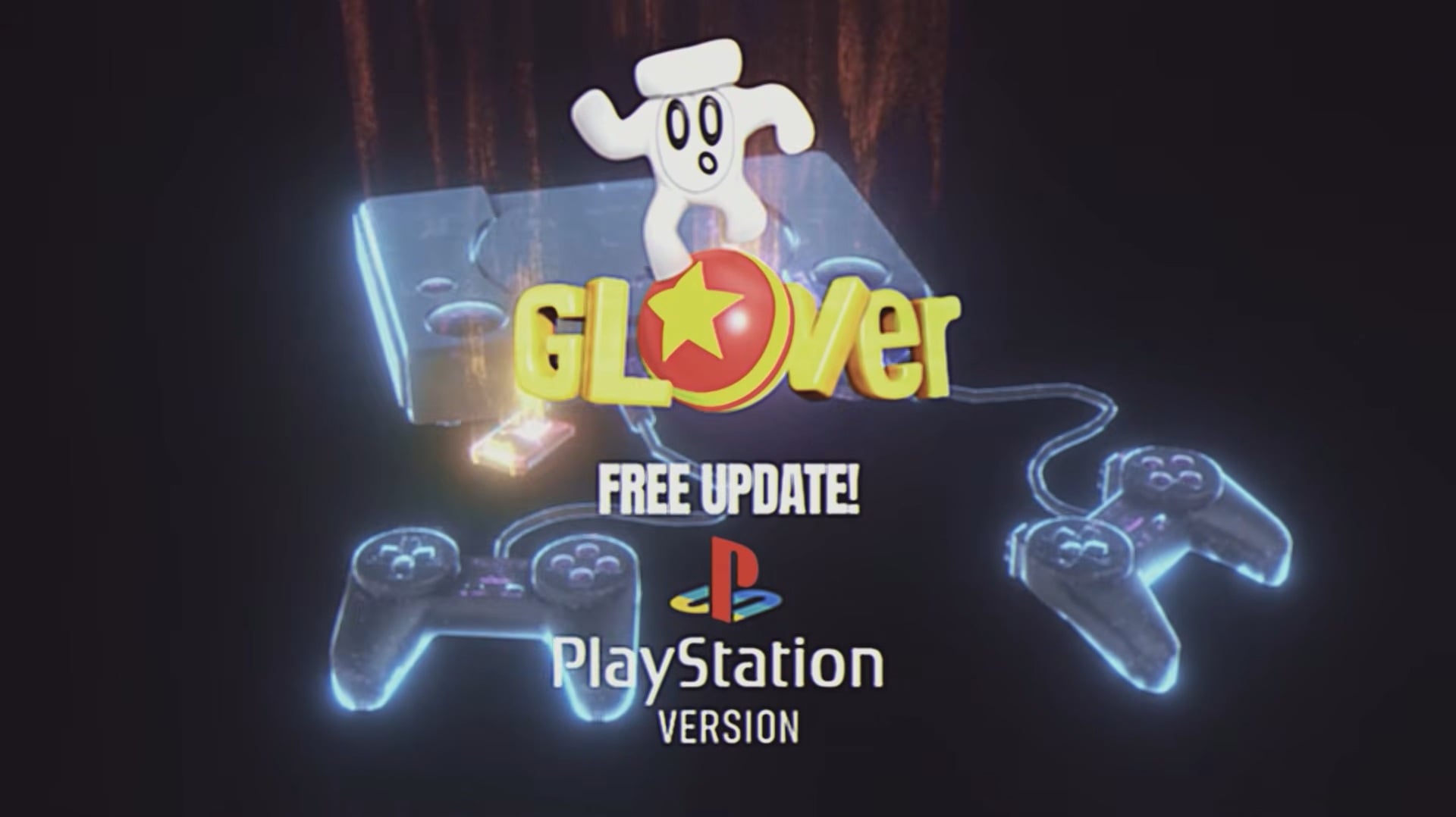
QUByte Interactive has announced that Glover and Street Racer Collection will both receive free updates that add their original PlayStation versions to the existing Nintendo Switch releases. The updates are scheduled to arrive in 2027, giving current owners access to two notably different interpretations of familiar retro games without requiring another purchase. While these additions may sound like straightforward platform ports, neither PlayStation edition is merely the same experience running on different hardware. Glover underwent substantial visual, cinematic, mechanical, and technical changes when it moved from Nintendo 64 to the original PlayStation. Street Racer changed even more dramatically, replacing the visual style associated with its earlier console editions with polygonal vehicles, fully three-dimensional circuits, and redesigned layouts.
That makes these updates particularly interesting for players who enjoy comparing how games evolved across competing systems. Hardware differences frequently forced developers to rebuild assets, reconsider mechanics, and make compromises that gave each edition its own personality. Sometimes those changes improved the experience. Sometimes they created rough edges. Either way, they became part of gaming history. By placing these PlayStation editions alongside the versions already available on Nintendo Switch, QUByte is turning both releases into broader snapshots of their respective development stories. Players will be able to experience familiar ideas through a different technical lens, while existing owners benefit from a meaningful expansion delivered at no additional cost.
Glover and Street Racer Collection will expand with PlayStation in 2027
Glover and Street Racer Collection are set to grow beyond the versions currently included in their Nintendo Switch releases. QUByte Interactive revealed that both games will receive updates in 2027, with each patch adding the corresponding original PlayStation edition. It is an unusual but welcome type of expansion. Rather than introducing newly designed stages, modern visual filters, or cosmetic extras, the updates will preserve alternate versions shaped by the hardware and development realities of the 1990s. That distinction matters because games released across several systems during that period were often far from identical. Developers could not simply press a magical conversion button and call it a day. Different processors, storage formats, memory limits, and rendering capabilities demanded practical compromises. The result was often a collection of related experiences rather than one perfectly consistent game. These upcoming additions will let Nintendo Switch players examine those differences directly instead of relying on old screenshots, magazine descriptions, or fuzzy memories from a television that weighed roughly as much as a small refrigerator.
The 2027 window leaves QUByte with time to prepare both PlayStation editions for current hardware while retaining the qualities that make them historically distinct. No exact release date has been announced, so players should currently treat 2027 as the confirmed timeframe rather than expecting the updates during a particular month. Further details about display options, control settings, emulation features, or additional improvements have also not been confirmed. The main promise is already clear, however: both modern releases will gain another complete version of their featured game.

Existing Nintendo Switch owners will receive the additions for free
The PlayStation editions will be distributed as free updates to the existing versions of Glover and Street Racer Collection. That means players who already own either release on Nintendo Switch will not need to purchase a separate package to access the newly added game. This approach gives the announcement more weight than a standard re-release. Complete historical versions are being added to products that are already available, expanding their value after launch and giving previous buyers a reason to return. For retro collections, this kind of support can be especially meaningful. Older games often exist in several forms, yet modern releases regularly focus on only one edition because of licensing questions, missing materials, technical difficulties, or limited development resources. Adding another version later can fill an obvious gap and create a stronger representation of the original release history.
There is also something refreshingly simple about the offer. You own the game, the update arrives, and another edition becomes available. No complicated upgrade chart is needed. No calculator has to be summoned. The announcement does not indicate that the PlayStation versions will replace the existing games, so they should instead function as additional ways to play. That gives users the freedom to compare the editions and decide which interpretation suits them best. Some players may favour the sharper structure or familiarity of the versions already included, while others may enjoy the stranger character of the PlayStation adaptations. Both reactions are valid because preservation is not only about identifying one supposedly definitive release. It is also about keeping the alternatives available.
Glover’s PlayStation release offers a noticeably different adventure
Glover originally became known as a three-dimensional puzzle platformer built around a magical glove and a transformable ball. Players guide both through imaginative worlds, using the ball to cross hazards, solve environmental challenges, defeat enemies, and restore order to the kingdom. The Nintendo 64 version arrived before the PlayStation adaptation and is generally the edition most closely associated with the game. When Glover was brought to Sony’s console, however, the transition involved more than reducing a few textures or adjusting the resolution. The PlayStation release was altered in several visible and mechanical ways, giving it a noticeably different atmosphere and feel.
For Nintendo Switch owners, that makes the update more interesting than a simple curiosity. The PlayStation edition presents another interpretation of the same basic concept, allowing players to recognise familiar locations and objectives while noticing how the details have shifted. A level may contain the same general idea but communicate it through changed visuals, movement, or presentation. It can feel a little like returning to a childhood neighbourhood after someone has rearranged every garden, repainted the houses, and moved the local shop around the corner. You still know where you are, yet something feels slightly off. That tension between recognition and unfamiliarity is precisely what makes alternate retro editions fascinating to revisit.
Technical limitations reshaped the PS1 presentation
The original PlayStation and Nintendo 64 approached three-dimensional graphics differently, and Glover’s conversion reflects that divide. The PlayStation edition featured downgraded visual elements in several areas because the game had to be adapted around Sony’s hardware. Models, environments, effects, and overall image quality could not always match the presentation of the Nintendo 64 release. Rather than hiding every difference, the port developed its own visual identity. Players should expect a rougher picture with traits commonly associated with early PlayStation 3D games, including less stable geometry and a more angular appearance.
The PlayStation edition also used pre-rendered cutscenes, changing how certain story moments were delivered. These sequences separate the cinematic presentation from the real-time graphics used during play and provide another obvious point of comparison. Pre-rendered footage was a familiar tool during the era because discs could store video sequences that offered a more controlled visual presentation than the hardware could always produce in real time. Yet those sequences could also feel disconnected from the game itself. Seeing them now is part of the charm. They capture a moment when developers were experimenting with how console games should tell stories in three dimensions, occasionally with the subtlety of a theatre curtain dropping onto the stage between scenes.
Physics and controls may feel unfamiliar to returning players
Visual changes are easy to spot, but altered physics can have an even greater effect on how Glover feels. The relationship between the glove, the ball, the environment, and the player’s inputs is central to the entire experience. Small adjustments to acceleration, momentum, jumping, collision detection, or ball behaviour can reshape every challenge. A movement that feels predictable in one version may require a different rhythm in another. That means experienced players should not assume that muscle memory from the Nintendo 64-style release will transfer perfectly to the PlayStation edition.
This mechanical difference could be one of the strongest reasons to try the update. Glover is built around controlling an object that can roll, bounce, transform, and occasionally behave like it has developed strong opinions about gravity. When the underlying physics change, familiar obstacles can become new puzzles. That does not automatically make the PlayStation version better or worse, but it does make it distinct. Players interested in game design will be able to observe how fundamental systems influence level flow, difficulty, and responsiveness. Everyone else can simply enjoy watching a ball roll in the wrong direction and pretending it was entirely intentional.
Street Racer made a much larger leap into three-dimensional racing
Street Racer began as an arcade-style racing game that blended fast competition with combat and exaggerated characters. Its earlier console versions used visual techniques suited to 16-bit hardware, presenting colourful courses and chaotic races through simulated depth rather than fully polygonal environments. Street Racer Collection currently preserves several of those classic editions, including versions originally released for systems such as the Super Nintendo Entertainment System, Mega Drive, Game Boy, and MS-DOS. The upcoming PlayStation addition represents a very different stage in the game’s development.
Instead of merely recreating the earlier presentation with cleaner graphics, the PlayStation edition moved Street Racer into a more visibly three-dimensional format. That shift affected how the tracks looked, how vehicles were represented, and how players interpreted corners and distances. The core concept remained recognisable, but the visual language changed. Racing games were evolving rapidly during the middle of the 1990s, and polygonal graphics were becoming an important selling point. Developers wanted tracks that appeared to twist through genuine 3D space rather than relying entirely on scaling tricks and layered backgrounds. Street Racer’s PlayStation release reflects that transitional period, making it a valuable addition for anyone curious about how racing design responded to new hardware.
New circuits and polygonal vehicles changed its identity
The PlayStation version introduced fully polygonal tracks and vehicles, immediately separating it from the earlier editions. Polygonal models allowed racers and environments to be viewed with a stronger sense of physical depth, but early 3D graphics also brought their own limitations. Shapes could appear blocky, textures could distort, and scenery often had to remain relatively simple to protect performance. Today, those qualities form a distinctive visual style. What once represented technical compromise now carries plenty of nostalgic appeal, especially for players who remember the moment when every angular car and wobbling wall felt like a glimpse of the future.
Different track layouts further distinguish the PlayStation edition. Changes to circuit design can alter far more than appearance because every corner, straight, obstacle, and shortcut affects the rhythm of a race. Players familiar with the earlier collection may need to relearn routes rather than relying on existing knowledge. That gives the update practical replay value. It is not merely the same selection of races presented with polygonal vehicles. The altered layouts provide different challenges and help the PlayStation release stand as its own interpretation. When it joins Street Racer Collection in 2027, the package should offer a clearer view of how one racing game was reworked across two hardware generations.
Preserving multiple versions gives players valuable historical context
Modern retro releases sometimes create the impression that every old game had one clear, universal form. In reality, multiplatform development regularly produced substantial differences. Music could change because one system handled audio differently. Levels could be shortened to fit storage limits. Visual effects might disappear, control schemes could be redesigned, and entire modes were occasionally replaced. These variations were not footnotes hidden from players. They shaped how different audiences remembered the same title. Someone who grew up with Glover on Nintendo 64 may describe a noticeably different experience from someone who first played it on PlayStation, even though both are discussing Glover.
Including multiple editions helps preserve those separate memories. It also allows younger players to understand why platform comparisons once filled magazine pages, playground arguments, and suspiciously passionate conversations beside shop displays. The differences were often immediate and important. With Glover and Street Racer Collection, the upcoming updates will let players compare those design choices without changing consoles or tracking down ageing discs. That convenience supports preservation while making the history approachable. You do not need specialist equipment or a shelf full of adapters. You can simply select another version and see how the game changed.
The announcement strengthens QUByte’s approach to retro preservation
QUByte Interactive has built a substantial part of its catalogue around returning older games to modern platforms. Glover and Street Racer Collection already reflect that focus, but adding previously omitted PlayStation editions shows that these releases can continue evolving after launch. That is encouraging for players who value complete collections. A retro package may begin with the most accessible or practical versions and later expand as additional work becomes possible. Free updates also demonstrate that post-launch support does not always need to revolve around seasonal events, premium passes, or cosmetic storefronts. Sometimes the most appealing update is simply another old game waiting behind the menu.
Careful preservation still depends on execution. Players will naturally want stable performance, responsive controls, suitable display settings, and accurate emulation. Glover’s modern console release previously received updates intended to address issues and improve the experience, so quality will remain an important part of the conversation when the PlayStation edition arrives. The 2027 timeframe gives QUByte room to test both additions and determine how they should fit into the existing interfaces. Preserving an unusual port is worthwhile, but it should remain playable enough for its historical differences to shine through rather than becoming buried beneath new technical problems.
What Nintendo Switch players can expect before the updates arrive
At this stage, the confirmed information is focused on the main announcement. Glover and Street Racer Collection will receive their PlayStation versions through free updates planned for 2027. More specific details have not yet been shared. There is no confirmed release month, complete feature list, or explanation of how players will select between versions. QUByte may reveal those details closer to launch through trailers, store updates, or another presentation. Until then, players should avoid assuming that optional filters, rewind functions, save states, control remapping, or other emulation tools will be included unless the publisher confirms them.
What can be expected is a meaningful reason to revisit both releases. Glover fans will gain access to an edition with changed graphics, pre-rendered scenes, and different physics. Street Racer players will receive a more dramatic 3D adaptation with polygonal tracks, vehicles, and redesigned courses. These are complete alternate versions rather than tiny bonus modes, so each update has the potential to add several hours of exploration. Even players who do not finish both games may enjoy switching between editions to compare opening stages, movement, visuals, and sound. Sometimes the most entertaining museum exhibit is the one that lets you pick up the artefact and immediately drive it into a wall.
Conclusion
The free 2027 updates for Glover and Street Racer Collection will add more than two familiar names to a menu. They will preserve alternate PlayStation interpretations that differ substantially from the versions many players already know. Glover’s changed graphics, cinematic presentation, and physics offer a curious variation on its puzzle-platforming formula, while Street Racer’s polygonal vehicles and three-dimensional circuits reveal how dramatically a racing game could change during the transition from 16-bit hardware to the PlayStation generation. By making both editions available to existing owners at no additional cost, QUByte is giving Nintendo Switch players a convenient way to explore those differences. Exact dates and technical features remain unconfirmed, but the central promise is already appealing: two retro releases are becoming richer records of gaming history rather than remaining frozen in their launch-day form.
FAQs
- When will the Glover PlayStation update arrive on Nintendo Switch?
- QUByte Interactive has confirmed that the free update is planned for 2027. An exact release date has not yet been announced.
- Will existing Glover owners need to buy the PlayStation version separately?
- No. The PlayStation edition is being added through a free update for owners of the existing modern release.
- How is the PlayStation version of Glover different?
- It features altered graphics, pre-rendered cutscenes, different physics, and other changes created during the game’s transition from Nintendo 64 to PlayStation hardware.
- What changes in the PlayStation version of Street Racer?
- The PlayStation edition uses polygonal vehicles and fully three-dimensional tracks. It also includes different track layouts compared with earlier versions.
- Are the updates also confirmed for Nintendo Switch 2?
- The announcement concerns the existing Nintendo Switch releases. Glover is listed as supported on Nintendo Switch 2 through backward compatibility, but separate native Nintendo Switch 2 editions of these updates have not been announced.
Sources
- Glover, Street Racer Collection Getting Free Nintendo Switch Updates to Add PS1 Version, Nintendo Everything, June 18, 2026
- Glover’s Switch Release Is Adding The PlayStation Version In A Free Update, Nintendo Life, June 19, 2026
- Here’s Every Retro Announcement From The Very First QUByte ReConnect, Time Extension, June 19, 2026
- Street Racer Collection Launches November 27 for PS5, Xbox Series, PS4, Xbox One, Switch, and PC, Gematsu, October 30, 2025
- Glover (QUByte Classics) for Nintendo Switch, Nintendo, February 27, 2025