














Summary:
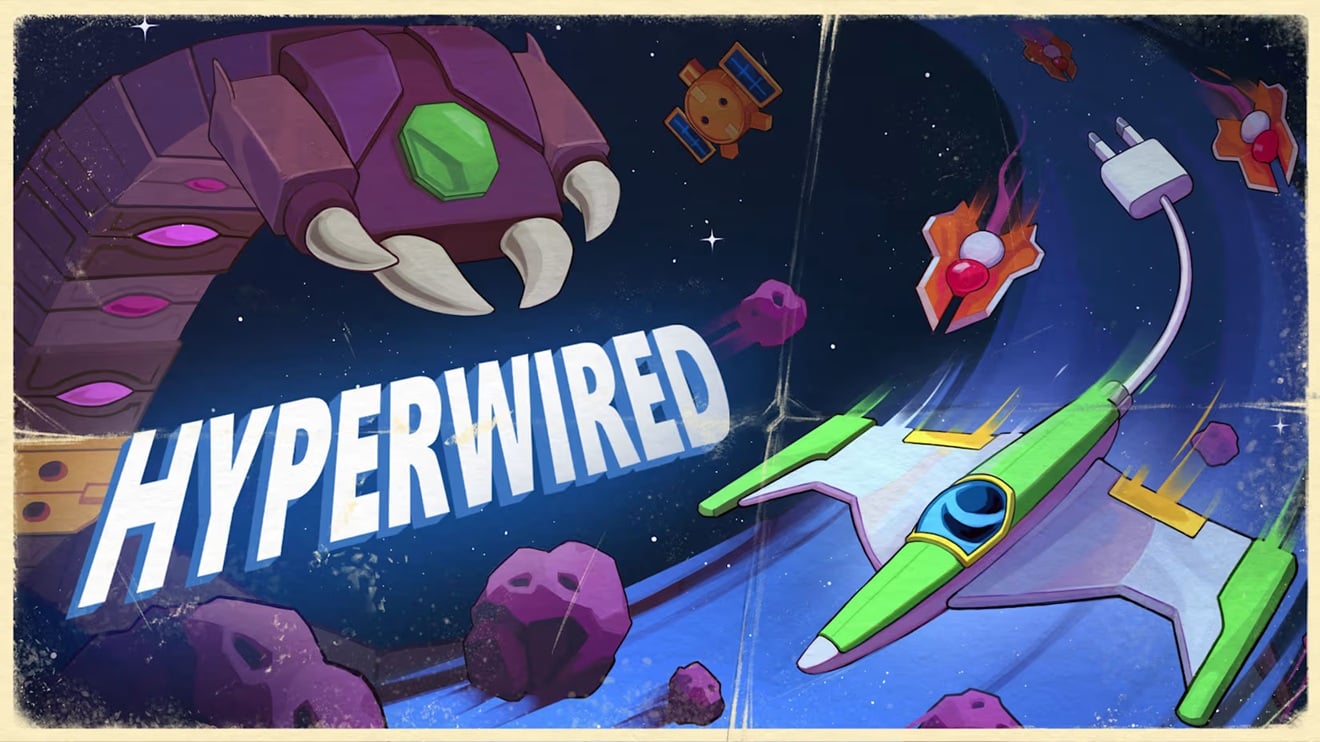
Hyperwired has arrived on Nintendo Switch, bringing an energetic mixture of top-down shooting, roguelike progression and resource management to the Nintendo eShop. Developed by SidralGames and published by SelectaPlay and Entalto Publishing, the pixel art space shooter launched digitally on July 2, 2026. A launch trailer now offers a closer look at its frantic battles, unusual movement restrictions, upgrade systems and galaxy-spanning boss encounters.
The defining feature is the power cable hanging from the player’s spacecraft. Pilots must connect to space sockets to recharge energy, but plugging in also limits movement to the length of the cable. That simple idea changes the rhythm of combat. Charging is essential, yet remaining tethered while enemies fill the screen with projectiles can quickly turn a quiet pit stop into a cosmic panic attack.
Players can choose from more than 10 ships, rescue stranded allies and create a small fleet that fights beside them. A rechargeable slow-motion system provides another defensive option, while batteries unlock more than 250 bullet modifier combinations. Temporary chips and over 40 ship upgrades offer further opportunities to improve firepower, charging speed, cable length and other capabilities.
Procedurally generated stages, destructible environments and challenging bosses are designed to keep each journey unpredictable. With its distinctive plug-based mechanic and broad selection of upgrades, Hyperwired gives the familiar arcade shooter formula a playful electrical twist.
Hyperwired Launches on Nintendo Switch With a New Trailer
Hyperwired is now available for Nintendo Switch as a digital download, and its launch trailer gives players a lively introduction to the dangers waiting beyond the stars. Developed by SidralGames and published by SelectaPlay and Entalto Publishing, the game was released worldwide on July 2, 2026. It presents itself as a fresh spin on the classic top-down shooter, combining fast arcade action with procedural stages and the unpredictable progression associated with roguelikes. The result is a space adventure where quick reflexes matter, but thoughtful resource management can be just as important as a well-aimed laser blast.
The trailer highlights crowded battlefields, narrow corridors, large enemy formations and imposing bosses. Bright pixel art effects cut through the darkness as ships exchange fire, environments break apart and rescued allies join the fight. Yet the most noticeable detail is not a weapon or an enemy. It is the electrical plug dangling behind the player’s ship. That cable is more than a visual joke. It forms the heart of the experience and turns a familiar shooting format into something much less predictable.
A Top-Down Space Shooter Built Around a Power Cable
Most space shooters encourage players to keep moving, weaving between projectiles while firing continuously. Hyperwired adds a wonderfully inconvenient complication: the ship needs to plug into sockets to recharge. Connecting restores energy and helps manage essential resources, but it also restricts movement. Once tethered, the ship can travel only as far as its cable allows. Imagine trying to dodge a meteor shower while your spaceship is attached to the galaxy’s shortest extension cord. That is the sort of pressure Hyperwired places at the centre of its battles.
This system creates a constant push and pull between safety and necessity. Staying mobile helps players avoid incoming fire, but refusing to recharge can leave the ship without the energy needed to continue effectively. Plugging in solves one problem while immediately creating another. Players must therefore study the room, identify threats and decide when it is safe to connect. A socket can feel like a sanctuary during one encounter and a carefully baited trap during the next.
Staying Connected Changes How Every Battle Unfolds
The cable system influences movement, positioning and the timing of attacks. Charging cannot be treated as a passive action performed after every enemy has disappeared. Some encounters may require players to remain connected while hostile ships continue to attack, forcing them to circle the socket within a limited radius. Cable length becomes a real tactical consideration because every additional bit of reach creates more space for evasive manoeuvres. When bullets begin covering the screen, a few extra pixels of freedom can feel surprisingly precious.
That limitation also prevents combat from becoming a simple routine of holding the fire button and drifting around the edges of a room. Players need to balance aggression with preparation. Should you connect immediately and risk becoming an easy target, or eliminate several enemies before attempting to recharge? Is the nearest socket worth using, or would another position provide more room? These choices give each arena a puzzle-like quality without slowing the pace of the shooting action.
Activating Space Sockets Opens the Route Forward
Space has been plunged into darkness, and the player’s broader objective involves activating the sockets scattered through each stage. Powering these locations clears the current level and opens the way to the next sector. This gives every battlefield a purpose beyond simply destroying everything that moves, although blasting hostile ships remains a very persuasive part of the plan. Players must push into dangerous areas, locate the necessary sockets and survive long enough to bring them online.
The mechanic ties navigation, survival and progression together. A socket is simultaneously a recharging point, an objective and a location where movement may become restricted. That combination ensures the central idea remains relevant throughout a run rather than appearing as a small gimmick during isolated moments. Progress depends on learning how to use the cable effectively, judging the available space and recognising when the surrounding enemy formation is about to turn an ordinary recharge into an interstellar disaster.
More Than 10 Ships Offer Different Ways to Survive
Hyperwired includes more than 10 playable ships, each offering a different gameplay style. This selection gives players reasons to adjust their tactics rather than approaching every run in exactly the same way. One ship may suit aggressive pilots who prefer heavy firepower, while another may reward careful positioning, mobility or a different relationship with the available resources. Finding a suitable vessel can make the difference between a confident expedition and a very short voyage followed by an awkward return to the hangar.
Ship variety is especially important in a roguelike because repeated attempts form a major part of the experience. Starting another run feels more inviting when players can choose a different craft and explore how its strengths interact with the available upgrades. A build that works brilliantly for one ship may be much less effective for another. This encourages experimentation and gives failure a useful purpose, since each unsuccessful attempt can reveal a new combination, strategy or route worth trying next time.
Rescued Ships Can Become a Small Battle Fleet
Players do not have to face the darkness entirely alone. Stranded ships can be rescued during a run, after which they join the player and fight as allied vessels. Collecting several survivors gradually creates a small fleet that adds firepower and makes the player’s presence on screen feel increasingly formidable. There is something deeply satisfying about entering a hostile room with a trail of rescued ships behind you, particularly after beginning the journey as one relatively vulnerable craft.
These companions introduce another layer of progression within each attempt. Rescuing a ship is not merely a side activity or decorative gesture. Every ally can contribute to the battles ahead, helping clear enemies and adding to the sense that the player’s strength is growing. Of course, larger formations may also make already busy encounters look even more chaotic. Lasers, bullets, explosions and friendly ships can fill the screen rapidly, but that controlled chaos appears to be part of Hyperwired’s arcade appeal.
Slow Motion Gives Pilots Room to Escape Trouble
Enemy projectiles, narrow hallways and crowded arenas can leave very little room for error, so every ship is equipped with a futuristic slow-motion system. Players can activate it during most situations to reduce the speed of the surrounding action and gain valuable time to react. It is particularly useful when a seemingly safe route suddenly becomes blocked by bullets or when the limited reach of a connected cable makes normal evasive movement difficult. Sometimes a fraction of a second is all a pilot needs to turn certain destruction into an elegant escape.
The system is not an unlimited panic button. Its energy is replenished by collecting power from defeated enemies, linking defensive survival to offensive play. Destroying opponents provides the resources needed to slow time again, which encourages players to remain active rather than hiding indefinitely. Using the ability at the right moment becomes another meaningful decision. Trigger it too early and it may not be ready when a boss unleashes something truly unpleasant. Save it too long and the ship may become a decorative cloud of pixel art debris.
Batteries, Chips and Permanent Upgrades Shape Every Run
Progression in Hyperwired comes from several types of collectible improvements. Batteries unlock bullet modifiers, chips provide temporary benefits after enemies are destroyed and players can select from more than 40 upgrades for their ship. These improvements affect practical features such as charging speed, weapon strength and cable length. Some abilities are more unusual, including the option to become invisible to enemies. Together, these systems let players shape their spacecraft around the challenges and rewards encountered during a run.
The variety should help prevent two journeys from developing in identical ways. One attempt might produce a high-powered offensive build capable of clearing rooms quickly, while another could focus on safer charging, greater mobility and defensive tricks. Roguelikes are often at their best when players must improvise rather than follow one fixed recipe, and Hyperwired appears to embrace that philosophy. You may begin with a clear plan, only for an unexpected battery or chip to tempt you toward a completely different strategy.
More Than 250 Bullet Modifier Combinations Encourage Experimentation
Batteries can produce more than 250 combinations of bullet modifiers, giving players a broad range of possibilities for changing how their weapons behave. That number suggests the shooting system is designed around discovery rather than a small set of predictable upgrades. Different modifiers can potentially transform the feel of a weapon, allowing a familiar ship to perform differently depending on what has been collected. Testing new combinations becomes part of the reward, especially when two ordinary effects unexpectedly work together to create something much more powerful.
This abundance of possibilities also supports replay value. Players may discover a favourite setup, but obtaining that exact collection during every run is unlikely to be guaranteed. Adapting to the available batteries is therefore essential. A modifier that appears unimpressive in isolation might become valuable when paired with a complementary upgrade, while an apparently powerful option may not suit the current ship or stage. The most entertaining builds may be the strange ones that look questionable at first and then fill the screen with glorious, enemy-erasing nonsense.
Procedural Stages Lead to Dangerous Galaxy Bosses
Hyperwired uses procedurally generated levels to keep its sectors unpredictable. Instead of memorising one fixed route, players must react to changing layouts, enemy placements and opportunities. Destructible stages add further energy to the action, allowing environments to break apart as lasers and projectiles tear through the area. Combined with the cable mechanic, these changing spaces can dramatically affect how an encounter unfolds. A roomy arena provides freedom, while a narrow passage can turn tethered movement into a delicate exercise in avoiding both walls and enemy fire.
At the end of each galaxy, players encounter a dangerous boss designed to test the skills and upgrades gathered along the way. These battles bring together the major systems: movement, charging, slow motion, weapon modifiers and fleet support. A powerful build can certainly help, but surviving a boss still requires awareness and timing. Large attack patterns leave little room for careless decisions, especially when connecting to a socket reduces the available escape routes. The bosses act as final exams, except the examiner is enormous, heavily armed and not especially interested in partial credit.
Hyperwired Is Available as a Digital Nintendo Switch Download
Hyperwired was released for Nintendo Switch on July 2, 2026, and is distributed digitally through the Nintendo eShop. The game supports television, tabletop and handheld play, making its brief battles and repeatable runs suitable for several play styles. A portable session could be used to test a new ship or chase another upgrade combination, while playing on a larger screen may make its colourful projectiles, detailed pixel art and crowded enemy formations easier to appreciate.
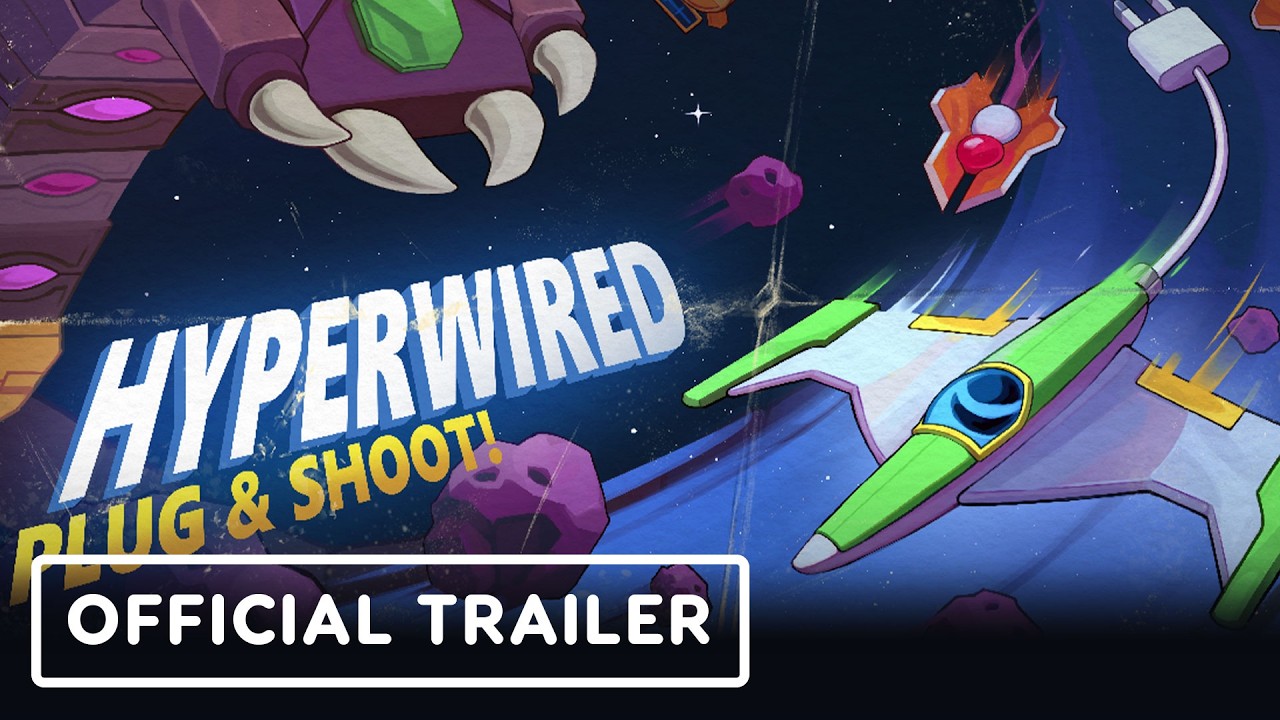
The launch trailer provides a useful overview of what players can expect, including its plug-based resource system, different ships, rescued allies, slow-motion ability and large bosses. For anyone who enjoys top-down shooters but wants a mechanic that changes the familiar rhythm, the electrical cable could be the strongest hook. It forces players to think about movement in an unusual way without abandoning the speed and spectacle associated with arcade space combat.
Conclusion
Hyperwired takes a recognisable roguelike shooter foundation and energises it with a clever central restriction. Recharging is necessary, but plugging into a socket limits movement and creates immediate danger. That tension gives the game its identity, turning resource management into something players can see and feel during every battle. More than 10 ships, rescued allies, procedural stages and a rechargeable slow-motion system provide additional ways to approach its challenges.
Its upgrade selection is equally promising, with over 40 ship improvements and more than 250 bullet modifier combinations available through collectible batteries. Those systems should give repeated runs plenty of room to develop in unexpected directions. Hyperwired is now available digitally for Nintendo Switch, and its launch trailer shows a lively space shooter where staying powered up is easy. Staying alive while attached to the wall is another matter entirely.
FAQs
- When was Hyperwired released for Nintendo Switch?
- Hyperwired was released digitally for Nintendo Switch on July 2, 2026.
- What type of game is Hyperwired?
- Hyperwired is a 2D pixel art roguelike space shooter with top-down combat, procedural levels, resource management and boss battles.
- How does the power cable mechanic work?
- Players must plug their ship into space sockets to recharge energy and activate objectives. While connected, movement is restricted by the length of the cable.
- How many ships and upgrades are included?
- The game features more than 10 ships, over 40 ship upgrades and more than 250 possible bullet modifier combinations.
- Does Hyperwired have a physical Nintendo Switch edition?
- The announced Nintendo Switch release is distributed as a digital download through the Nintendo eShop.
Sources
- HYPERWIRED for Nintendo Switch, Nintendo, July 2, 2026
- HYPERWIRED ¡Ya está disponible!, SelectaVisión, July 2, 2026
- Hyperwired Launch Trailer – Space Shooter Hits Nintendo Switch, Nintendo Everything, July 3, 2026
- Hyperwired Secures Nintendo Switch Release Date, New Trailer, Nintendo Everything, June 2, 2026
- Roguelike Space Shooter HYPERWIRED Out on Nintendo Switch This Week, Nintendo Insider, June 27, 2026