














Summary:
Kami 2 is making its way to Nintendo Switch on July 15, 2026, bringing the calming color-based puzzle series back to a Nintendo platform more than a decade after the original Kami appeared on Nintendo 3DS. Developed by State of Play Games, the sequel challenges players to transform every section of a puzzle into a single color while using as few moves as possible. The basic idea sounds simple, but anyone familiar with the series knows that simplicity can be wonderfully deceptive.
The Nintendo Switch release includes more than 100 hand-crafted puzzles built around logic, planning and careful observation. Players who complete a stage using the ideal number of moves can earn a Perfect sticker, adding an extra layer of challenge for those who refuse to settle for merely reaching the solution. New tricks and cleverly arranged color patterns promise to keep the familiar formula from becoming predictable.
Kami 2 also reaches beyond its main puzzle collection through a global Daily Challenge, winning streaks and score comparisons. Thousands of user-generated puzzles provide even more challenges, while the included Puzzle Builder allows players to create their own colorful designs and share them with friends or the wider community. With its soothing paper-inspired presentation, large selection of puzzles and modest $4.99 price, Kami 2 looks ready to offer Nintendo Switch owners a relaxing experience that can still tie their brains into surprisingly elaborate knots.
Kami 2 Brings Its Colorful Logic Puzzles to Nintendo Switch
Kami 2 will launch digitally for Nintendo Switch on July 15, 2026, according to its official Nintendo eShop listing. The sequel combines a minimalist visual style with logic puzzles based on changing connected areas into matching colors. It is the sort of premise you can understand within moments, yet mastering it may take considerably longer. Think of it as tidying a room where every object changes the color of everything touching it. One careless decision and the entire arrangement suddenly becomes much messier than it looked a few seconds earlier. The Nintendo Switch version includes more than 100 hand-crafted stages, online challenges, community puzzles and creative tools, giving the sequel considerably more to offer than a straightforward collection of predetermined boards.

A Long-Awaited Return for the Relaxing Puzzle Series
The arrival of Kami 2 on Nintendo Switch feels particularly notable because the original Kami previously found a home on Nintendo 3DS. More than a decade has passed since Nintendo players were first introduced to its unusual mixture of paper-inspired artwork and tightly constructed logic challenges. That original release quietly earned a reputation as a hidden gem, especially among players who enjoy puzzle games that value thoughtful decisions over quick reflexes. Kami 2 retains the recognizable identity of its predecessor while introducing a larger collection of puzzles and online features. It is not trying to fill the screen with explosions or send players racing against a ticking clock. Instead, it creates a quiet space where a single color change can feel like a tiny triumph or a spectacularly elegant mistake.
How the Color-Flooding Puzzles Work
Every Kami 2 puzzle presents a design divided into connected sections of different colors. The objective is to flood the entire design with one color by changing individual areas and gradually joining matching sections together. Each move affects the structure of the board, so players must consider how one change will influence the options that remain. A move that appears helpful may leave an isolated patch trapped behind several other colors, forcing additional changes later. Success therefore depends on reading the complete design rather than focusing only on the most obvious area. The rules remain approachable enough for newcomers, but the underlying logic gives experienced puzzle fans plenty to chew on. It resembles folding a sheet of paper along invisible lines, where every crease determines what becomes possible next.
Chasing Perfect Solutions Across More Than 100 Puzzles
Completing a puzzle is only part of the challenge in Kami 2. Every stage also has an ideal solution that uses a specific number of moves, and matching that target awards a Perfect sticker. This system encourages players to revisit completed puzzles and search for a cleaner route. You might solve a board after several experiments, only to discover that the game expects you to do it with two fewer moves. Suddenly, a finished challenge becomes an unanswered question once again. Where did those unnecessary moves creep in? Could two regions have been merged earlier? This emphasis on efficiency gives the main collection greater replay value while ensuring that perfection remains optional. Players can progress after finding a workable solution, while dedicated problem-solvers can continue until every movement feels deliberate.
Subtle Tricks Add Greater Complexity to the Sequel
The sequel does not rely solely on larger or more colorful arrangements to increase the difficulty. Its official description warns of subtle new tricks and fiendish surprises hidden throughout the puzzle collection. These additions should encourage players to abandon comfortable habits and examine each board on its own terms. A familiar-looking pattern may behave differently once its connections become clear, while a seemingly harmless patch of color could determine the entire order of the solution. Good puzzle design often works like a magician’s trick. Everything needed to understand the answer sits directly in front of you, yet your attention is gently pulled toward the wrong detail. Kami 2 appears eager to create those satisfying moments when confusion suddenly gives way to clarity and the whole design clicks into place.
Daily Challenges Introduce a Competitive Element
Kami 2 may look peaceful, but its global Daily Challenge adds a competitive spark to the experience. Players can attempt a newly featured puzzle, work toward a winning streak and compare their results with scores achieved by others. This format gives people a reason to return regularly without transforming the game into an exhausting commitment. One challenge can become a pleasant part of a morning routine, a lunch-break distraction or a final brain teaser before bed. Score comparisons also change the way a solution is viewed. Finishing the puzzle may feel satisfying, but discovering that another player completed it more efficiently can inspire another attempt. That friendly pressure should suit the game well, providing motivation without undermining the quiet and thoughtful atmosphere at the heart of the series.
Winning Streaks Reward Consistent Puzzle Solving
The winning streak system gives Daily Challenges a sense of continuity. Instead of treating each puzzle as an isolated event, players can build a record of successful solutions across multiple days. Maintaining that streak may become surprisingly compelling, particularly when a difficult design threatens to bring a strong run to an end. There is a gentle tension in knowing that one stubborn board stands between you and another victory. Thankfully, this competition is based on logic rather than reflexes, so success depends on patience and careful planning. Players do not need lightning-fast fingers or years of multiplayer experience. They simply need to study the board, test possible routes and resist the urge to make the first move that looks vaguely sensible. Easier said than done, of course.
Thousands of Community Creations Expand the Experience
Once the main collection has been completed, Kami 2 offers access to thousands of user-generated puzzles. New designs can be uploaded regularly, creating a potentially enormous supply of additional challenges beyond the stages made by the development team. Community puzzles can be especially valuable in a logic game because different creators naturally approach the same rules in different ways. Some may build intricate visual patterns, while others may concentrate on brutally efficient solutions that require a very precise sequence of moves. There will probably be a few mischievous creations designed specifically to make players question every decision they have ever made. The variety provided by community submissions should help Kami 2 remain engaging long after its handcrafted campaign has been cleared and perfected.
Player-Made Puzzles Can Offer Unexpected Ideas
Official stages usually introduce mechanics through a carefully controlled difficulty curve, but user-generated challenges are less predictable. That unpredictability can lead to surprising arrangements and solutions that would not necessarily appear in the main collection. One creator may emphasize symmetrical artwork, while another may deliberately construct a board that appears impossible until one unusual opening move reveals the path forward. Community creations also allow highly experienced players to seek out more demanding designs after mastering the standard challenges. Naturally, the quality and difficulty of individual submissions may vary, but that is part of the appeal. Browsing player-made puzzles can feel like opening a box of assorted sweets. Some are immediately inviting, some are oddly shaped and one of them may leave you staring into the distance for twenty minutes.
Puzzle Builder Lets Players Design and Share Challenges
Kami 2 does not limit players to solving other people’s work. Its Puzzle Builder provides tools for creating original Kami designs, testing them and sharing them with friends or the wider community. Designing a satisfying logic puzzle requires a different mindset from solving one. Creators must consider the visual arrangement, the sequence of color changes and the number of moves needed to reach the intended result. A puzzle should be challenging without feeling arbitrary, and its solution should ideally produce that delightful moment when everything makes sense. The builder therefore becomes a puzzle of its own, asking players to understand the mechanics well enough to construct clever problems for somebody else. Sharing a difficult creation with a friend also introduces the timeless pleasure of watching someone walk directly into a trap you placed with great care.
Sharing Creations Encourages Friendly Competition
Created puzzles can be sent to friends and shared with other players, allowing designers to challenge the community to match or beat their intended scores. This gives each custom board a life beyond the initial creative process. A design may begin as a colorful experiment and eventually become a fiercely contested challenge as players discover increasingly efficient solutions. Friends can trade puzzles, compare their results and attempt to outsmart one another through clever layouts. The feature also creates a rewarding loop between solving and building. Encountering an inventive community puzzle may inspire a player to experiment with a similar idea, while constructing a board can reveal new strategies that are useful elsewhere. Kami 2 consequently becomes more than a fixed sequence of levels. It becomes a shared workshop for colorful logic problems.
A Calm Presentation Hides a Demanding Puzzle Game
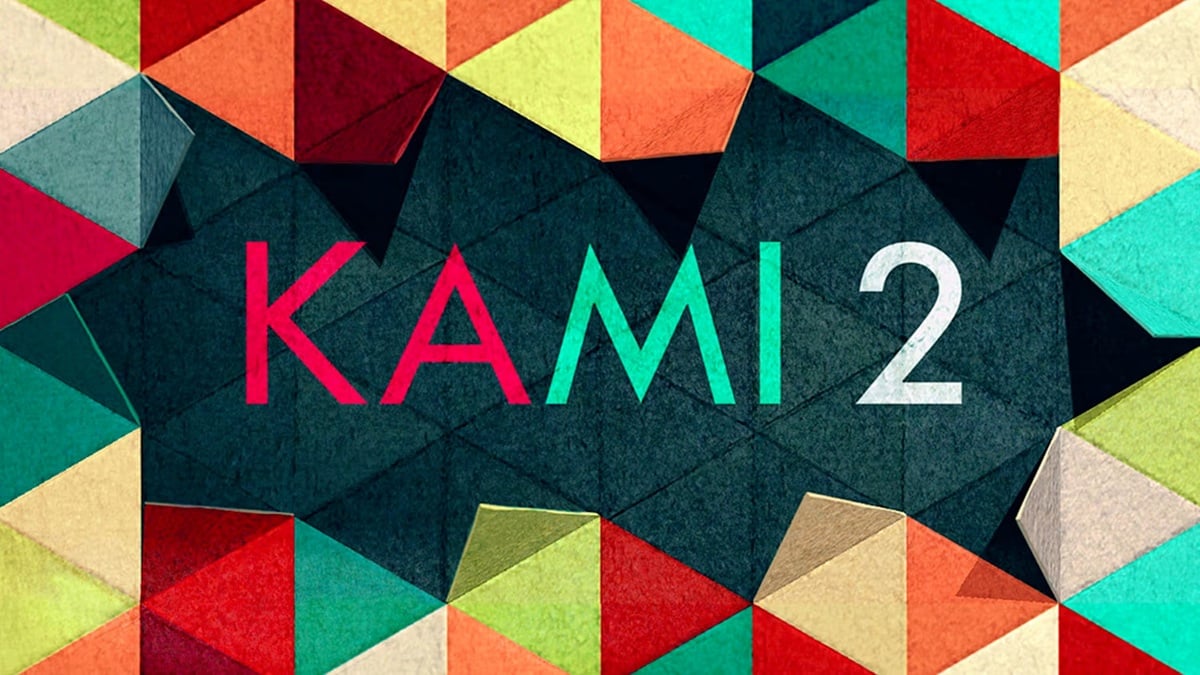
Kami 2 presents its challenges through a clean, paper-inspired style that makes every transformation feel tactile. Colors appear to unfold and spread across the design, giving the impression that the puzzle is being physically rearranged rather than simply updated on a screen. This visual approach complements the measured pace of the gameplay and keeps the focus on the board. There are no unnecessary distractions competing for attention while players consider their next choice. However, the soothing presentation should not be mistaken for an absence of difficulty. Kami 2 is calm in the same way that a chessboard is calm. Nothing moves until you make a decision, but that decision may create a problem you will still be regretting several turns later. The contrast between peaceful visuals and demanding logic is a major part of its charm.
A Natural Match for Portable Nintendo Switch Play
The structure of Kami 2 appears well suited to the flexible nature of Nintendo Switch. Individual puzzles can provide a quick burst of problem-solving during a spare moment, while longer sessions allow players to work through several stages or explore community creations. The system’s portable format means a difficult puzzle can be carried from the television to the sofa, the garden or anywhere else that might produce a sudden flash of inspiration. Sometimes the solution only becomes obvious after looking away for a while. Returning to a puzzle with fresh eyes can make an impossible pattern seem almost embarrassingly simple. Nintendo’s official listing also confirms support for the Nintendo Switch Pro Controller, giving players another option when playing on a television or in tabletop mode.
Language Options Make the Release Widely Accessible
The European Nintendo listing indicates that Kami 2 supports a broad selection of languages, including English, Japanese, Spanish, French, German, Italian, Dutch, Portuguese, Russian, Korean and Chinese. This range should make the instructions, menus and online features accessible to players across many regions. Puzzle games often communicate much of their logic visually, but clear explanations still matter when introducing scoring rules, creation tools and community functions. The listing also gives the game a PEGI 3 rating in Europe, reflecting its family-friendly presentation. There is no need to worry about frightening imagery or complicated narratives here. The only monster waiting inside is the stubborn patch of color that refuses to merge without ruining an otherwise perfect solution.
Kami 2 Offers a Budget-Friendly Nintendo eShop Release
Kami 2 will be sold for $4.99 through the North American Nintendo eShop, while the Dutch Nintendo store lists it for €4.99. That modest price places it among the more affordable digital puzzle releases available on Nintendo Switch. The package includes over 100 hand-crafted challenges, a Daily Challenge, score comparisons, user-generated puzzles and the Puzzle Builder, providing several ways to keep playing after the main stages are complete. Its European download size is listed at 385 MB, so it should not consume a large portion of the system’s storage. For players who enjoy thoughtful games that can be played in short or long sessions, Kami 2 looks like an easy addition to the digital library. It costs less than many lunches and is significantly less likely to disappear before you get home.
What Nintendo Players Can Expect on July 15
When Kami 2 arrives on July 15, Nintendo Switch owners can expect a puzzle experience built around simplicity, efficiency and creative experimentation. Newcomers should be able to understand its central color-changing rule quickly, while experienced players can pursue Perfect stickers and compete for stronger Daily Challenge results. The main collection provides a structured series of hand-crafted puzzles, and the community features extend the experience with shared designs and original creations. Most importantly, the sequel appears to preserve the qualities that helped the original stand out. It is visually calm, mechanically clear and capable of becoming much more challenging than its welcoming appearance suggests. That balance could make Kami 2 an appealing choice for anyone searching for a relaxing game that still expects the brain to report for duty.
Conclusion
Kami 2 brings State of Play Games’ elegant color-flooding formula back to Nintendo players with a larger selection of puzzles and several features designed for long-term play. More than 100 hand-crafted stages form the foundation, while Perfect stickers encourage players to search for the most efficient solutions. Daily Challenges, winning streaks and score comparisons add friendly competition without disrupting the game’s thoughtful pace. User-generated puzzles and the Puzzle Builder then open the door to an ongoing stream of new ideas from the community. Launching on Nintendo Switch on July 15, 2026, for $4.99, the sequel offers a low-cost combination of calm presentation and demanding logic. It may look like a peaceful arrangement of colored paper, but those innocent shapes are probably already planning to ruin your perfect score.
FAQs
- When will Kami 2 be released for Nintendo Switch?
- Kami 2 is scheduled to launch digitally for Nintendo Switch on July 15, 2026.
- How much will Kami 2 cost on Nintendo Switch?
- The North American Nintendo eShop lists Kami 2 for $4.99, while the Dutch Nintendo store lists a price of €4.99.
- How many puzzles are included in Kami 2?
- The game includes more than 100 hand-crafted puzzles, along with access to thousands of puzzles created by other players.
- Does Kami 2 include online features?
- Yes. Players can participate in a global Daily Challenge, build winning streaks, compare scores and access user-generated puzzles. Nintendo Switch Online may be required for supported online functions.
- Can players create their own puzzles in Kami 2?
- Yes. The Puzzle Builder allows players to create original Kami designs, share them with friends and challenge other players to beat their scores.
Sources
- KAMI 2 for Nintendo Switch, Nintendo, July 15, 2026
- KAMI 2, Nintendo Nederland, July 15, 2026
- Kami 2 on the Way to Nintendo Switch, More Than 10 Years After the Original on 3DS, Nintendo Everything, June 20, 2026
- KAMI 2, Noodlecake Studios, June 20, 2026
- KAMI 2 on Steam, Steam, July 15, 2026