














Summary:
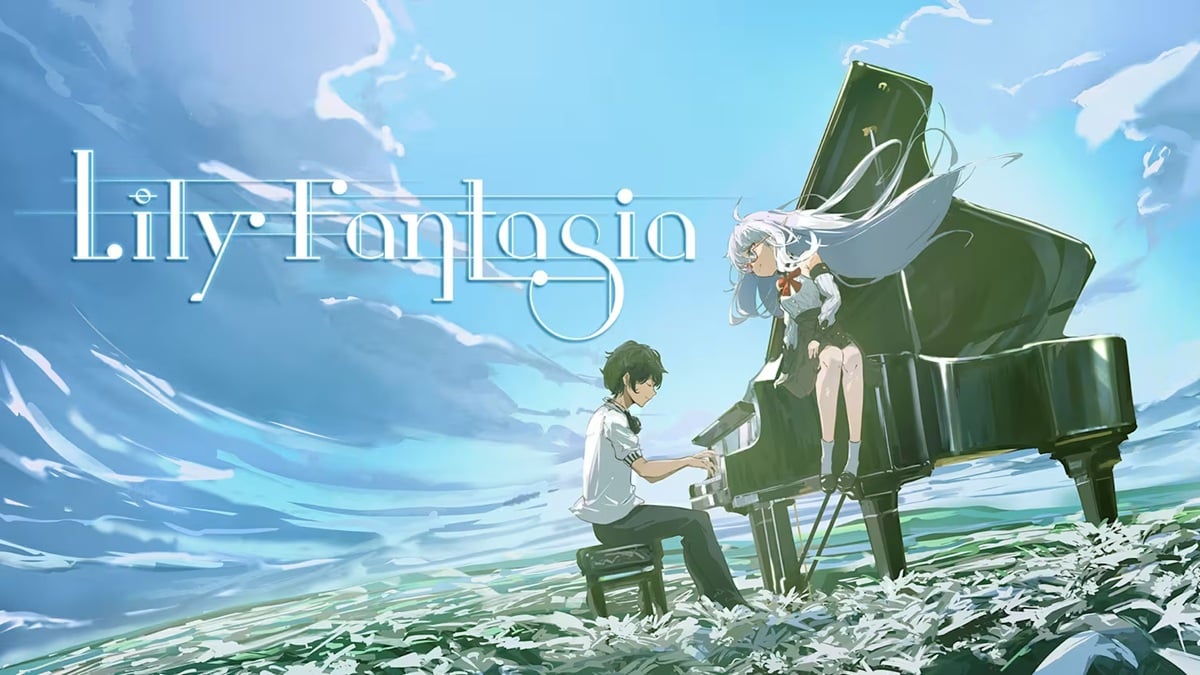
Lily Fantasia is preparing to turn the Nintendo Switch into a magical concert hall when it launches digitally in late July 2026. Developed by Wiseye Studio and published by Justdan International, the game combines rhythm-based challenges with fantasy storytelling and dramatic musical combat. Rather than simply asking players to tap notes as they scroll across the screen, Lily Fantasia turns every performance into a duel. Attacks must be parried to the rhythm, counterattacks land on the beat, and the piano becomes a weapon capable of changing fate itself.
The story follows Hiano Kenji, a gifted pianist who has stepped away from his musical ambitions to care for his gravely ill mother. His life changes after meeting Lily, a mysterious vampire girl whose arrival draws him into a world of magic, danger and unanswered questions. Their journey revolves around the search for a way to save his mother, giving the musical battles an emotional purpose beyond chasing scores and perfect note streaks.
Players can expect multiple original tracks, adjustable difficulty levels and global leaderboards for comparing their performances with others. Lily’s Practice Room also allows songs to be selected more freely, while accumulated Lily Power helps unlock additional music and advance the story. The Nintendo Switch version is listed for July 30, 2026 in Europe, while the Steam release is dated July 29 and North American reporting lists the Switch version for that date as well. The digital release has been announced at $14.99 in North America, with regional Nintendo eShop pricing varying by territory.
Lily Fantasia Brings Magical Rhythm Battles to Nintendo Switch
Lily Fantasia is heading to Nintendo Switch with an unusual mixture of musical precision, fantasy drama and action-focused duels. Developed by Wiseye Studio and published by Justdan International, it presents a world where a piano is far more than an elegant instrument sitting quietly in the corner. Here, music has power. Every note can block an incoming strike, open a path through danger or push the story toward its next emotional turning point. It is a concept that sounds wonderfully theatrical, almost as though a concert recital and a fantasy boss battle accidentally booked the same stage and decided to carry on together. The result is a rhythm-action experience built around timing, performance and a deeply personal mission. Players will guide pianist Hiano Kenji after an encounter with the vampire Lily changes the direction of his life, drawing him into a race to find salvation for his critically ill mother.

A Nintendo Switch Release With Regional Timing Differences
Lily Fantasia is scheduled to arrive at the end of July 2026, although the exact date displayed depends on the platform and region being checked. The Steam store lists July 29, 2026, and North American reporting has also identified July 29 as the Nintendo Switch release date. Nintendo’s official European listings instead show July 30, 2026. This kind of one-day difference can occur when digital storefronts use regional release schedules and time zones, so players should check the date displayed by their local Nintendo eShop before planning a late-night launch session. European Switch owners can currently expect the game on July 30, while players in territories using the earlier schedule may see it become available on July 29. Either way, the wait falls within the same narrow window, and the digital-only format means there will be no need to hunt through several shops for a physical copy that has mysteriously vanished from every shelf.
Music Becomes a Weapon in Rhythm-Based Combat
The central idea behind Lily Fantasia is easy to grasp but offers plenty of room for skill: battles are fought through rhythm. Players must react to attacks, parry at the correct moment and answer with strikes that follow the beat. That transforms each confrontation into something resembling a playable musical performance rather than a traditional exchange of sword swings or spells. Success depends on listening as much as watching. A strong sense of timing should help players recognise patterns, anticipate incoming threats and maintain the flow of a song without allowing an enemy to break their concentration. It is a clever way to connect the soundtrack directly to the action. The music is not merely playing beneath the battle as pleasant decoration. It controls the shape and pace of the encounter, turning every beat into a signal and every missed input into a potentially painful wrong note.
Hiano Kenji Faces a Desperate Mission to Save His Mother
At the centre of the story is Hiano Kenji, a talented pianist whose abilities have not earned him the recognition he might once have imagined. His circumstances have pushed musical ambition into the background because his mother is seriously ill and needs his care. That premise gives the journey an immediate emotional weight. Hiano is not setting out because an old prophecy told him he was the chosen hero, nor is he looking for fame, treasure or an impressive hat with mysterious powers. He is trying to protect the person who matters most to him. His devotion makes the fantasy conflict more personal, while his experience as a pianist provides a natural connection to the game’s musical mechanics. Every challenge he faces can therefore feel like part of the same struggle, combining the talent he once set aside with the desperate hope that music may now help him accomplish something far more important than earning applause.
Lily Rewrites the Pianist’s Fate
Hiano’s path changes when he meets Lily, a mysterious vampire girl linked to the magical events unfolding around him. The encounter quietly rewrites his fate and opens the door to a world where rhythm, combat and supernatural forces are inseparable. Lily is more than an unusual travelling companion placed beside the hero for visual flair. Her presence is central to the mystery, and the game’s wider premise suggests that uncovering her role will be an important part of understanding Hiano’s journey. The contrast between the two characters also creates plenty of storytelling potential. Hiano begins as a pianist burdened by responsibility and fear for his mother, while Lily brings him into a realm where seemingly impossible solutions may exist. Of course, mysterious vampires rarely arrive with simple paperwork and a perfectly sensible explanation, so players can reasonably expect the path forward to contain danger, secrets and more than a few dramatic performances.
Magical Piano Battles Reward Timing and Precision
Lily Fantasia describes its battles as spectacular musical performances, but reaching that level of spectacle will require more than enthusiastically pressing every button and hoping the piano appreciates the confidence. Players must follow rhythmic patterns, identify the right moment to defend and respond without losing the flow of the track. Accurate parries are especially important because they turn an enemy’s aggression into an opportunity. A well-timed defence can lead directly into a counterattack, making the combat feel like a conversation conducted through music. The opponent makes a statement, the player answers, and the song keeps both sides moving. This structure should give encounters a strong sense of momentum. Instead of separating defensive and offensive phases into slow, disconnected actions, the rhythm keeps everything linked. When a sequence works, the player is not only surviving a fight but actively performing it, creating the satisfying sensation that the battle and soundtrack are one coordinated event.
Original Music Gives Every Encounter Its Own Identity
A rhythm game lives or stumbles by its music, and Lily Fantasia is being built around a collection of original tracks rather than relying on a single musical style. Announced contributors include composers such as muyu, TKAIO, ShiBa, Sakuzyo, Cansol and DDD-Dice. Their involvement points toward a varied soundtrack capable of giving different encounters their own pace, mood and mechanical identity. A gentle composition may encourage measured inputs and careful listening, while a faster piece can transform the screen into a storm of attacks demanding sharper reactions. Variety matters because repeated rhythmic structures can quickly become predictable, even when the presentation looks lovely. Different composers and genres can prevent that feeling by introducing fresh arrangements, unusual transitions and patterns that challenge players in new ways. It also gives the fantasy world a broader musical personality, allowing its locations, characters and conflicts to be remembered not only by how they look, but also by how they sound and feel beneath the player’s fingers.
Multiple Difficulty Levels Welcome Different Players
Lily Fantasia will feature several difficulty levels, allowing players to choose a challenge that better matches their experience with rhythm games. That flexibility is especially valuable for a release that also places importance on its characters and story. Someone who mainly wants to follow Hiano and Lily’s journey should not need the reflexes of a concert pianist who has secretly been training inside an arcade for twenty years. At the same time, experienced rhythm players need patterns demanding enough to test their precision and reward repeated practice. Multiple settings can serve both groups without forcing either to accept an experience that feels unsatisfying. Easier options may help players learn how attacks align with the soundtrack, while harder settings can increase the density or complexity of the musical sequences. This creates a natural progression from simply surviving a performance to mastering every phrase, improving scores and chasing the sort of clean run that makes you briefly feel capable of conducting an orchestra with one hand.
Global Leaderboards Add a Competitive Encore
Global leaderboards will give score-focused players a reason to return after completing songs and story encounters. Rhythm games naturally encourage improvement because the difference between a respectable performance and an exceptional one is immediately visible. A missed note, mistimed parry or broken sequence becomes an invitation to try again. Leaderboards turn that personal challenge into a wider competition by showing how each performance compares with those of players elsewhere. They can also reveal just how high the skill ceiling reaches, which is inspiring until someone posts a nearly flawless score five minutes after launch and leaves everyone else wondering whether they have eight fingers on each hand. Even without aiming for the top position, players can use rankings to track steady progress, compete with friends or set manageable goals. Climbing a few places after learning a difficult pattern can be just as rewarding as finishing the story, especially when the improvement comes from genuine familiarity with the music.
Lily’s Practice Room Supports Progress and Song Selection
Lily’s Practice Room provides an alternative space where players can choose from available song collections more freely. This mode should be useful for practising specific tracks, becoming familiar with difficult sections or simply replaying favourite compositions without waiting for the story to return to them. Practice modes often become the quiet backbone of rhythm games because repetition is where awkward patterns begin to make sense. A sequence that initially looks like a flock of notes escaping across the screen can gradually become predictable once its rhythm is understood. Lily Fantasia adds progression to this process through Lily Power, which can be earned in the Practice Room and used to unlock additional songs and move the main story forward. That connection means practice is not detached from the larger adventure. Time spent improving a performance also contributes to discovery, rewarding players with more music and further developments in Hiano and Lily’s journey.
A Fantasy Rhythm Adventure Built for Portable Play
The Nintendo Switch is a natural home for a rhythm game built around repeatable songs and score improvement. Handheld play makes it easy to revisit a track for a few attempts without committing to a lengthy session, while TV mode can give the dramatic fantasy battles more room to shine. Nintendo’s European listing confirms support for handheld, tabletop and TV modes, along with compatibility with the Nintendo Switch Pro Controller. That range of options lets players choose the setup that feels most comfortable for precise inputs. Some may prefer playing close to the screen with the system in their hands, while others may want a controller and a larger display for reading incoming patterns. The game is also listed with Nintendo Switch Online functionality associated with its online features, which fits the inclusion of global leaderboards. Save-data cloud support is listed as well, providing eligible subscribers with another layer of convenience when protecting their progress.
Languages, Download Size and Age Rating
Nintendo’s European product information lists support for English, Japanese, Korean and Chinese, making Lily Fantasia accessible across several major language markets. The download size is shown as approximately 1,008 MB, although storage requirements can change with updates and may differ slightly between regions. That relatively modest size should make it easier to fit onto a Nintendo Switch without performing the familiar storage-management ritual of deciding which old game must be temporarily banished. In Germany, the game has received a USK 12 rating with a descriptor referring to its dark atmosphere. Regional classifications elsewhere may use different labels, so local storefront information remains the best reference for age guidance. The European listing categorises the game under music and RPG, a fitting description for something that combines performance-focused mechanics with a character-driven fantasy journey. Those two genres sit side by side here rather than competing for attention, with story progress and musical skill supporting one another.
Digital Price and Nintendo eShop Details
Lily Fantasia is planned as a digital download for Nintendo Switch. The announced North American price is $14.99, while European Nintendo eShop pricing varies according to country and local taxes. For example, Nintendo’s German listing shows a price of €15.49. Players should therefore expect the final amount to depend on the regional setting attached to their Nintendo Account. The game is published by Justdan International, with development handled by Wiseye Studio. No physical Nintendo Switch edition has been announced in the available release information, so the Nintendo eShop will be the primary destination for console players. A digital launch suits the game’s replay-focused design, since having it ready on the system makes it easy to return for another song whenever the mood strikes. There is no cartridge to swap, no box to misplace and no suspiciously empty case caused by someone returning the wrong game to the shelf.
Why Lily Fantasia Stands Apart From Familiar Rhythm Games
Many rhythm games focus on abstract note charts, colourful stages or collections of licensed songs. Lily Fantasia takes another route by connecting its mechanics to a continuous fantasy narrative. Hiano’s abilities are not simply a convenient excuse for musical inputs. His identity as a pianist, his abandoned ambitions and his desire to save his mother all feed into the way the game is played. Lily’s supernatural influence then pushes those familiar musical skills into a world of magical combat. That unity between character, story and interaction may be the game’s most appealing quality. Players are not tapping notes because a meter needs filling. They are using rhythm to defend themselves, defeat enemies and pursue a cure. It gives every performance a purpose within the fiction, while still retaining familiar features such as selectable difficulties, practice options and online rankings. The ingredients are recognisable, but their arrangement promises a distinctly theatrical flavour.
What Players Can Expect From the Emotional Story
The search for a way to save Hiano’s mother places urgency behind the adventure from its opening premise. It also creates an emotional question that can carry players through the individual battles: how much can music truly change? In ordinary life, a performance can comfort, inspire or bring people together. Lily Fantasia turns that idea into literal fantasy power, allowing rhythm to counter enemies and potentially reshape the characters’ futures. The mysterious nature of Lily adds another layer because her motives, history and connection to the magical world are not immediately explained. Hiano must place some degree of trust in someone he has only just met while carrying the fear that time is running out. That is fertile ground for emotional scenes, difficult choices and revelations. The brightest music often becomes more memorable when it plays against sadness or uncertainty, and this story appears ready to use that contrast rather than treating its songs as isolated challenges.
Conclusion
Lily Fantasia is shaping up to be an intriguing addition to the Nintendo Switch rhythm library. Its combination of magical piano combat, original music, adjustable difficulty levels and global leaderboards gives it the mechanical foundations needed for repeated play, while Hiano Kenji’s mission to save his mother provides a clear emotional reason to keep moving forward. Lily’s arrival draws the pianist into a supernatural world where every battle unfolds like a performance and every successful parry lands as part of the song. The European Nintendo eShop lists the Switch release for July 30, 2026, while Steam and North American reporting use July 29. The North American digital price has been announced at $14.99, with regional eShop prices varying. For players who enjoy rhythm challenges but also want characters, mystery and fantasy drama between performances, Lily Fantasia may offer a memorable melody when it takes the stage in late July.
FAQs
- When will Lily Fantasia be released for Nintendo Switch?
- Lily Fantasia is listed for July 30, 2026 on Nintendo’s European storefronts. Steam lists July 29, 2026, and North American reporting has also given July 29 for the Nintendo Switch version, indicating a regional timing difference.
- How much will Lily Fantasia cost on Nintendo Switch?
- The announced North American digital price is $14.99. Pricing varies by Nintendo eShop region, with the German store currently listing the game at €15.49.
- What type of game is Lily Fantasia?
- It is a fantasy rhythm-action game with RPG and narrative elements. Players parry enemy attacks and counter to the beat while progressing through the story of Hiano Kenji and the vampire Lily.
- Does Lily Fantasia have online features?
- Yes. The game includes global leaderboards where players can compare scores and performances. Nintendo’s European listing also identifies Nintendo Switch Online functionality.
- Will Lily Fantasia receive a physical Nintendo Switch release?
- No physical edition has been announced in the available release information. The game is currently presented as a digital download through the Nintendo eShop.
Sources
- Lily Fantasia, Nintendo UK, July 2026
- Lily Fantasia, Nintendo Germany, July 2026
- Lily Fantasia on Steam, Steam, July 2026
- Lily Fantasia Takes the Stage at Steam Next Fest, Justdan International, February 23, 2026
- Lily Fantasia Coming to Nintendo Switch, Nintendo Everything, July 4, 2026