














Summary:
Team Artichoke is bringing Mythmatch to Nintendo Switch on July 7, 2026, giving console players the chance to experience its unusual blend of Match-3 puzzles, town building, resource management, and Greek mythology. The story follows Artemis, an aspiring goddess who expects to earn her rightful place on Mount Olympus. Instead, elitist gatekeeping and the casual cruelty of her powerful family leave her rejected and sent to the mortal realm. What initially feels like a humiliating punishment gradually becomes an opportunity to discover something Olympus cannot offer: a genuine community.
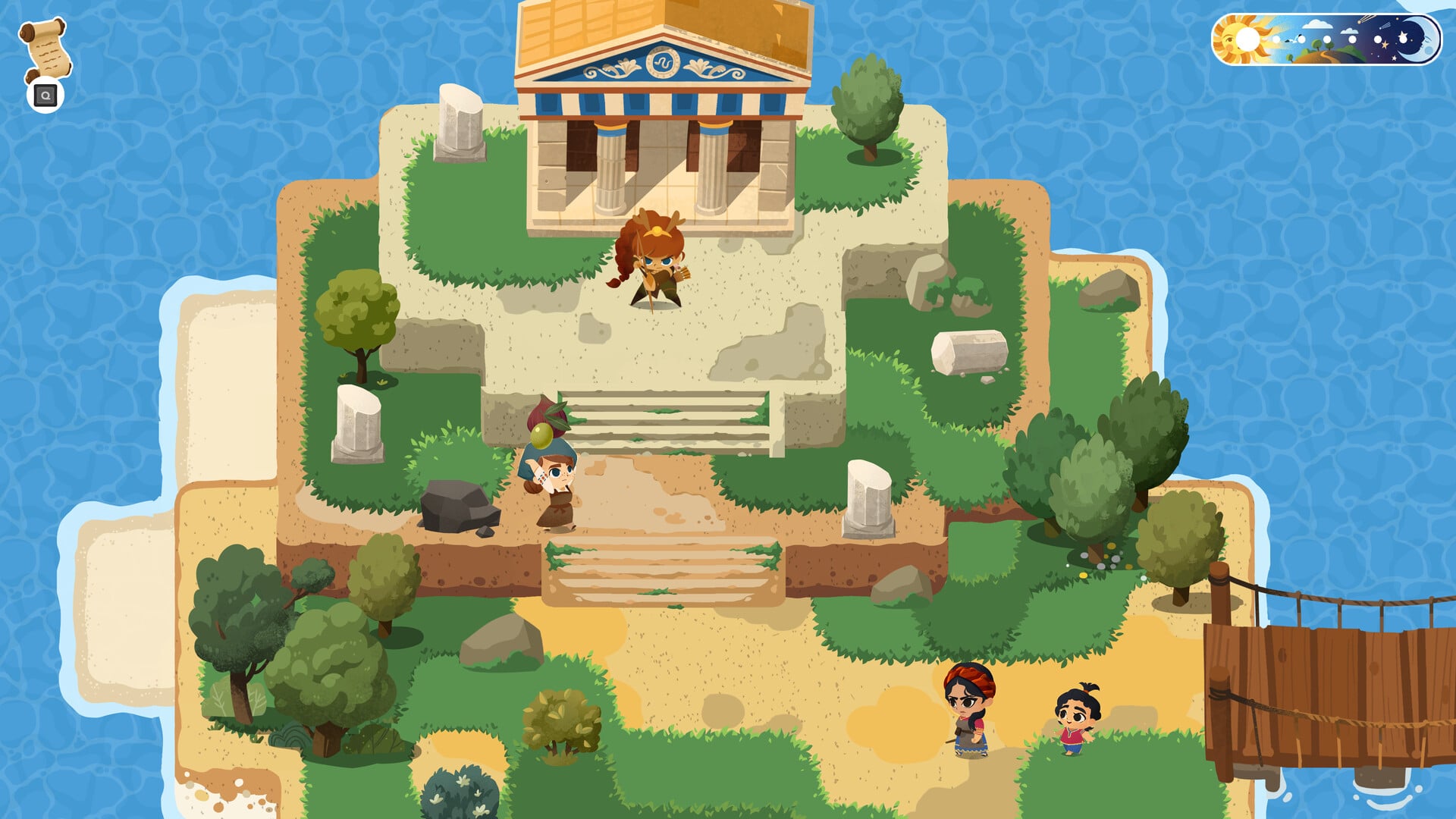
In Ithaca, Artemis works alongside the town’s women while its men remain conspicuously absent following the Trojan War. Players collect resources, place matching items together, create increasingly useful materials, complete quests, repair buildings, and help the settlement grow. The familiar satisfaction of merging objects is tied directly to the lives of the villagers, making every plank, tool, meal, and repaired structure feel like part of a larger shared effort.
Artemis can also return to Olympus to confront four gods through replayable challenges that reinterpret the central merging mechanics in different ways. Strong performances earn divine favour and useful advantages for life in the mortal realm. Alongside its solo adventure, the Nintendo Switch version includes an Arcade Mode for two players. With its colourful presentation, heartfelt focus on belonging, and playful criticism of privilege and authority, Mythmatch offers a distinctive alternative to the usual mythology-inspired adventure.
Mythmatch launches for Nintendo Switch on July 7
Mythmatch will make its Nintendo Switch debut on July 7, 2026, following its earlier release for PC. The new version brings Team Artichoke’s narrative-driven merge game to a system that feels naturally suited to short puzzle sessions, relaxed town management, and handheld play. Rather than treating Match-3 mechanics as a collection of disconnected levels, Mythmatch builds an entire community around them. Every successful combination contributes to a quest, a construction project, or a relationship within the town of Ithaca. That makes the gameplay loop feel less like clearing a checklist and more like helping a neighbourhood get back on its feet. The game will be distributed digitally through the Nintendo eShop, allowing Switch owners to follow Artemis between the demanding halls of Olympus and the warmer, considerably less self-important mortal realm. Nintendo’s listing also confirms support for both the original Nintendo Switch and Nintendo Switch 2 through backward compatibility.

Team Artichoke brings its mythological merge game to a new audience
Mythmatch comes from Team Artichoke, an independent studio led by creative director Moo Yu. His previous credits include work on Knights and Bikes, Ratchet and Clank, and LittleBigPlanet, a background that helps explain the new game’s playful movement, tactile interactions, and strong character-driven focus. Team Artichoke describes its project as a Greek myth merge game about community overcoming authority, which is a fairly accurate summary of its mechanical and narrative priorities. The development team includes specialists in writing, art, animation, music, user experience, sound, visual effects, and game design. That collaborative structure feels appropriate for a game that repeatedly questions what happens when too much power sits with a handful of people. Mythmatch may place one aspiring goddess at the centre of the story, but its real interest lies in what a group can accomplish when its members listen to one another, share resources, and stop waiting for Olympus to solve their problems.
Artemis searches for belonging beyond Mount Olympus
Players take control of Artemis, who has spent her life expecting to become a recognised goddess. She possesses divine abilities, understands the traditions of Olympus, and believes she has earned a place among its celebrated pantheon. Unfortunately, Olympus operates less like a noble heavenly court and more like an exclusive company run by wealthy relatives who keep promoting their favourites. Artemis is overlooked, belittled, and ultimately cast down to the mortal realm. Her first instinct is to prove that the gods were wrong about her, but time in Ithaca begins to reshape that goal. She sees how the extravagance of her family affects ordinary people who must surrender resources while receiving little in return. The resulting journey is not simply about gaining power or winning approval. It asks whether Artemis truly wants admission to an unfair system, or whether she would be happier helping to build something kinder outside it.
Rejection becomes the beginning of a more meaningful life
Artemis arrives among the mortals believing she has lost everything that defines her. Olympus represented status, purpose, and the future she had been promised, so being thrown out understandably stings. Yet the mortal realm gives her something the gods never did: the freedom to become useful without constantly auditioning for approval. The people of Ithaca need houses repaired, goods produced, celebrations organised, and relationships restored. Their needs may appear modest beside the grand ambitions of Olympus, but they have visible consequences. A completed task can improve someone’s home, reunite friends, or provide the town with a resource it genuinely lacks. That direct connection between effort and human benefit steadily changes Artemis. Her supposed exile becomes a chance to understand privilege, responsibility, and belonging. Sometimes being rejected by the worst club in town is not a tragedy. It is simply the universe saving you the membership fee.
Match-3 mechanics help rebuild the community of Ithaca
The central mechanic in Mythmatch revolves around collecting and merging three matching objects. Players gather materials throughout Ithaca, arrange identical resources near one another, and transform them into something new. Three basic items might create a more valuable crafting material, while three of those upgraded objects can produce the next item in the chain. This creates a satisfying rhythm of discovery as players learn how humble resources eventually become tools, building supplies, food, decorations, and other useful creations. The system shares the immediate appeal of traditional Match-3 games, but it takes place within a navigable town rather than a static grid. You physically move Artemis around the environment, organise the materials at your disposal, and decide which requests deserve priority. The result is both puzzling and practical. You are not combining items merely because sparkling objects are pleasant, although they certainly are. You are doing it because someone in Ithaca is waiting for that final plank.
Town building turns simple resources into meaningful progress
Merging materials feeds directly into the restoration and expansion of Ithaca. The town needs more than cosmetic improvements, and players gradually help its residents create a stronger, more functional community. Buildings can be repaired, facilities can be established, and villagers can be supported through quests tied to their individual circumstances. Each improvement makes the settlement feel more active and capable, reinforcing the idea that progress comes from collective effort rather than divine charity. Resource management becomes increasingly important as the number of possible objects grows. Players need to consider which items should be merged immediately, which materials should be saved for a known recipe, and which request will unlock the most useful next step. Mythmatch avoids turning that planning into cold economic optimisation. The purpose is not to extract maximum profit from Ithaca. It is to ensure that people have what they need. That distinction gives the town-building elements a warmer and more personal identity.
Crafting chains reward experimentation and careful organisation
The joy of Mythmatch’s merging system comes partly from not knowing exactly where a sequence will lead. A basic item may appear unimportant until several rounds of matching transform it into a rare object needed for a major request. Players are encouraged to experiment, observe new recipes, and develop an organisational method that keeps the growing collection manageable. The process resembles tidying a busy workshop where every pile of clutter might secretly contain the beginnings of something brilliant. Putting three matching materials together can trigger a chain reaction, producing an upgraded item that immediately combines with two others nearby. These cascading moments make successful planning feel wonderfully efficient. At the same time, limited space encourages you to think before covering every available surface with speculative resources. Mythmatch therefore balances relaxed discovery with light strategic pressure. It remains approachable, but it gives attentive players plenty of opportunities to make their daily routine smoother.
Relationships give the mortal realm its emotional heart
Rebuilding Ithaca is not only a matter of repairing walls and producing supplies. Artemis also gets to know the people who live there, learning about their worries, ambitions, friendships, and disagreements. The women and children of the town have been left to maintain daily life while the men take an exceptionally long time returning from the Trojan War. That situation creates practical problems, but it also provides space for the remaining residents to reconsider how their community should function. Artemis helps individuals complete personal goals while becoming part of the town herself. Their trust gives her a form of acceptance that Olympus consistently withheld. The relationships prevent the resource system from feeling mechanical because requests are connected to recognisable people. You are not delivering an anonymous bundle of materials to make a number increase. You are helping someone prepare an event, repair a home, establish a service, or resolve a problem that matters to them.
The mortal realm challenges Artemis’ understanding of privilege
Artemis begins the story as someone who has experienced discrimination within Olympus but still benefits from being a goddess. She knows what it feels like to be dismissed, yet she has not fully recognised how the divine lifestyle affects the mortals supporting it. Life in Ithaca forces her to confront that contradiction. The gods enjoy luxury, influence, and endless opportunities while ordinary people sacrifice goods they could have used themselves. Artemis sees that her family’s comfort is built partly upon an unequal relationship with their worshippers. This gives the story more depth than a straightforward tale about proving cruel relatives wrong. Artemis must reconsider her own assumptions and decide what kind of power she wants to exercise. Helping the townspeople is not merely a clever strategy for earning divine recognition. It becomes a moral alternative to Olympus, showing her that leadership can mean participation and service rather than control.
Olympus offers faster challenges against four gods
Although much of Mythmatch focuses on the relaxed development of Ithaca, Artemis can return to Olympus for more demanding encounters. Four Olympian gods offer distinct, replayable challenges that reinterpret the game’s merging mechanics through different rule sets. Some ask players to clear a board efficiently, while others introduce ideas associated with turn-based auto-battlers and faster arcade games. These activities provide a sharper contrast to the measured pace of the mortal realm. In Ithaca, you can organise supplies and think through long crafting chains. On Olympus, quick decisions and familiarity with each challenge become more important. The contrast also supports the story. The gods treat accomplishment like a performance that must be judged, ranked, and rewarded, whereas the mortals care about whether Artemis’ work genuinely helps someone. Players can still pursue high scores and master the divine trials, but the game remains aware of how different that motivation feels.
Divine favour supports Artemis in the mortal realm
Performing well in the Olympian challenges earns favour from the gods. These rewards provide benefits that can make tasks in Ithaca more manageable, linking the arcade-style trials to the broader town-building loop. A successful visit to Olympus can therefore improve your options during the following day in the mortal realm. This structure creates a two-way relationship between the game’s main settings. Progress among the townspeople helps Artemis grow, while success in divine challenges gives her additional ways to support the community. Players who enjoy improving scores have a clear reason to revisit each minigame, but the trials are not presented as the only meaningful form of progress. Olympus may provide useful advantages, yet Ithaca remains the place where those advantages gain purpose. A blessing is impressive, of course, but it becomes far more valuable when it helps finish a building, fulfil a request, or make daily work a little easier for everyone.
Replayable trials introduce variety beyond town management
The four god challenges keep Mythmatch from relying on a single puzzle format throughout the entire adventure. Each minigame changes the player’s priorities, encouraging a different approach to matching, positioning, timing, and resource use. That variety is important because the main town-building loop is intentionally calm and methodical. A visit to Olympus can act as a brief burst of energy before you return to organising materials and assisting villagers. Replayability also means players can gradually learn the quirks of each divine opponent, improve their performance, and pursue stronger rewards. The challenges are not isolated extras tucked into a menu. They reflect Artemis’ ongoing connection to the family that rejected her and the lingering desire to demonstrate her abilities. Even as she becomes more comfortable in Ithaca, Olympus continues to pull at her. The player experiences that tension through the rhythm of alternating between two very different styles of play.
Arcade Mode adds local multiplayer competition
The Nintendo eShop listing confirms that Mythmatch supports one or two players, with a separate Arcade Mode allowing another person to join the divine challenges. This gives the Switch version an appealing social feature for households that enjoy local puzzle competition. The main narrative remains a solo experience centred on Artemis and the rebuilding of Ithaca, while Arcade Mode lets two players compete in minigames away from the story. It is a sensible division because the town-building campaign depends on personal decisions, exploration, and character conversations, whereas the Olympian trials already have the structure of short score-based contests. Sharing those challenges with a friend adds another layer of replay value. It also creates the amusing possibility of arguing over mythological merging tactics while sitting peacefully on the same sofa. The gods would probably approve of the rivalry, although the residents of Ithaca might suggest cooperating once in a while.
Mythmatch combines cozy play with anti-capitalist satire
Mythmatch openly presents itself as a town-building merge game with an anti-capitalist story. That description is not merely decorative marketing language. Its criticism of power is embedded in the relationship between Olympus and the mortal realm. The gods resemble an extraordinarily wealthy family whose influence protects them from the consequences of their behaviour. They control access to status, demand admiration, and treat mortal hardship as a distant inconvenience. Ithaca offers a different model based on mutual support, practical work, and shared improvement. The game communicates these ideas through colourful characters and playful humour rather than turning every conversation into a lecture. Its cozy presentation makes the sharper themes easier to approach, while the themes give the pleasant resource loop greater meaning. Combining three objects may seem like a tiny action, but in Mythmatch it contributes to a wider rejection of wasteful power and the belief that communities exist solely to serve those above them.
The story asks whether authority deserves loyalty
Artemis initially assumes that joining the pantheon is the natural conclusion of her journey. She has trained for that role, and her identity has been shaped around receiving recognition from Olympus. The mortal realm gradually gives her a reason to question that ambition. Why seek validation from people who repeatedly diminish you? Why preserve a hierarchy that harms those with the least influence? These questions sit beneath the quests and puzzles without removing the warmth from the adventure. Mythmatch recognises that leaving an unhealthy system is rarely simple, particularly when family, status, and personal dreams are tangled together. Artemis’ anger can motivate her to challenge the gods, but her relationships in Ithaca offer something more sustainable than spite. They show her a version of belonging that is not conditional upon impressing a powerful gatekeeper. That emotional shift gives the story relevance well beyond its mythological setting.
Nintendo Switch features and eShop availability
Mythmatch will be available as a digital download from the Nintendo eShop. Nintendo’s Australian store listing estimates a file size of approximately 500 MB on Nintendo Switch and 491 MB when stored on Nintendo Switch 2, though final storage requirements can vary. The game supports handheld, tabletop, and television play, along with touchscreen functionality. Save Data Cloud support is also listed for Nintendo Switch Online members. English is currently the supported language shown on the store page. The Nintendo version retains the full narrative adventure, the town-building merge mechanics, four Olympian minigames, and the two-player Arcade Mode. Its modest installation size should make it easy to keep available for quick sessions, whether you want to complete a villager’s request, organise a stubborn pile of resources, or make another attempt at impressing a god who almost certainly takes himself too seriously.
Conclusion
Mythmatch brings together several familiar ideas and arranges them into something with a character of its own. Match-3 combinations create resources, resources rebuild Ithaca, and the town’s recovery gives Artemis a reason to reconsider everything she once wanted from Olympus. The contrast between divine competition and mortal cooperation supports both the gameplay and the story, while the four god challenges provide energetic breaks from the calmer work of community building. Local two-player support in Arcade Mode adds another reason to revisit those trials after progressing through the solo campaign. When Mythmatch reaches Nintendo Switch on July 7, 2026, it will offer players a colourful Greek myth adventure where the greatest victory may not be earning a seat beside the gods. It may be realising that the people rebuilding a town together have already created something Olympus cannot provide.
FAQs
- When will Mythmatch be released for Nintendo Switch?
- Mythmatch is scheduled to launch digitally for Nintendo Switch on July 7, 2026.
- What type of game is Mythmatch?
- Mythmatch is a narrative town-building merge game combining Match-3 puzzles, resource management, quests, character relationships, and arcade-style minigames.
- Who is the main character in Mythmatch?
- Players control Artemis, an aspiring goddess who is rejected by Olympus and sent to the mortal realm, where she helps the people of Ithaca rebuild their community.
- Does Mythmatch support multiplayer on Nintendo Switch?
- Yes. The main story is designed for one player, while Arcade Mode supports local competition for up to two players.
- Where can Mythmatch be purchased?
- The Nintendo Switch version will be available as a digital download through the Nintendo eShop.
Sources
- Mythmatch coming to Nintendo Switch, Nintendo Everything, June 23, 2026
- Mythmatch, Nintendo, June 2026
- Team Artichoke, Team Artichoke, 2026
- Mythmatch on Steam, Steam, March 13, 2026
- Mythmatch review – a match-three game made in heaven, The Guardian, March 17, 2026