














Summary:
Neosphere of The Deep-blue Sky: Legacy has been announced for Nintendo Switch and PC, giving Kogado Studio’s unusual city-building simulation another opportunity to find its audience. The remaster is currently scheduled to launch in Japan in spring 2027, with support planned for English, Japanese, Traditional Chinese, and Simplified Chinese. That language selection immediately makes the announcement more interesting for players outside Japan, especially those who may have missed the original release more than two decades ago.
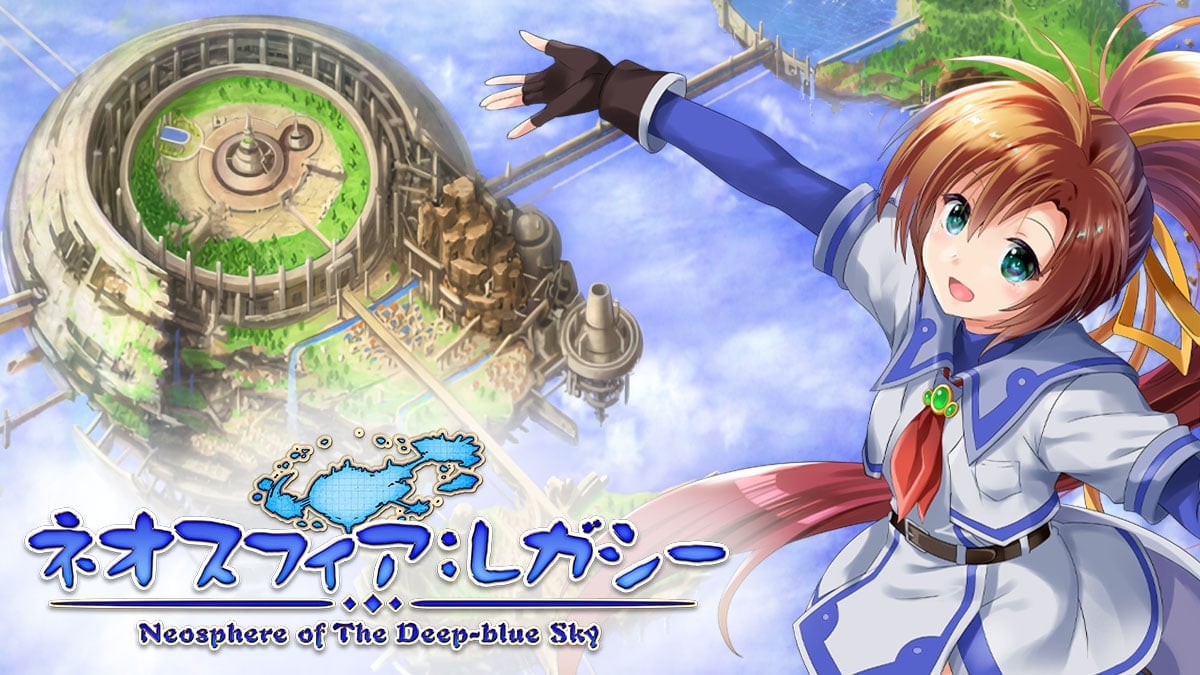
The original Neosphere of The Deep-blue Sky arrived for PC in Japan in 2005 before receiving ports for PlayStation 2 and PSP. Its story moves away from the seaside location of Tristia and heads upward to Neosphere, a floating kingdom in desperate need of restoration. Players join novice inventor Nanoca Flanca and use a collection of imaginative, occasionally ridiculous inventions to help rebuild the troubled kingdom. It is a setup that mixes practical city development with the cheerful unpredictability of a fantasy workshop.
Kogado Studio says the remaster will preserve the world and characters that defined the original while introducing updated graphics and systems adjusted for modern gameplay. Precise details about those changes have not yet been shared, but the project appears designed to retain the game’s personality rather than replace it. As the second remastered title in the Aoi series following Tristia: Legacy, Neosphere of The Deep-blue Sky: Legacy may also signal a broader effort to keep these distinctive simulation games available on current hardware.
Neosphere of The Deep-blue Sky: Legacy Heads to Nintendo Switch
Kogado Studio is bringing Neosphere of The Deep-blue Sky: Legacy to Nintendo Switch, reviving a simulation game that has spent most of its history outside Nintendo’s ecosystem. The announcement is notable because the original game was released for PC and later appeared on Sony hardware, leaving Nintendo players without an opportunity to experience Nanoca Flanca’s skybound adventure. The remaster changes that. Instead of requiring older hardware, imported software, or a heroic amount of menu translation, players will be able to explore Neosphere on a modern platform with official English support.
The game is built around a charming idea: rebuilding a struggling kingdom through invention. Rather than marching into battle with a legendary sword and a tragic family history, Nanoca relies on tools, machinery, creativity, and a willingness to build things that might raise a few eyebrows at the local engineering department. That focus helps Neosphere stand apart from more traditional fantasy releases. It may feature a kingdom in danger, but the solution involves workshops and planning instead of simply finding the largest available dragon.
The Remaster Is Scheduled to Launch in Spring 2027
Neosphere of The Deep-blue Sky: Legacy is scheduled to launch in Japan during spring 2027. Kogado Studio has not announced a specific release date, so the current window remains fairly broad. Development updates, pricing information, physical edition details, and possible regional publishing arrangements have also not been confirmed. For now, spring 2027 is the key period to remember, although release plans can naturally change while development continues.
The relatively distant launch window gives Kogado Studio time to refine the graphical upgrades and gameplay adjustments promised for the remaster. Older simulation games can require more than a simple resolution increase when moving to current hardware. Interfaces designed for computers or earlier handheld systems may need clearer menus, more readable text, improved navigation, and sensible controller shortcuts. Those changes sound small on paper, but they often determine whether an older simulation feels comfortably nostalgic or as welcoming as a locked workshop door.
Nintendo Switch and PC Versions Have Been Confirmed
The remaster has been announced for Nintendo Switch and PC, with the computer release planned for Steam and Windows. No PlayStation version has been revealed, despite the original eventually reaching PlayStation 2 and PSP. That does not guarantee that additional platforms will never be considered, but players should treat Nintendo Switch and PC as the only confirmed versions unless Kogado Studio shares different information.
Switch is an especially natural home for a game built around management, invention, and steady progress. Simulation games often work well in shorter handheld sessions, allowing you to complete a few tasks, check the state of a town, or plan the next project without committing an entire evening. Of course, the familiar danger remains: you start with one quick invention before bed and suddenly the sun is coming up. Neosphere’s structure could benefit from that portable rhythm, provided the menus and text are comfortable to use on the smaller screen.
Neosphere Returns More Than Two Decades After Its PC Debut
Neosphere of The Deep-blue Sky first launched for PC in Japan in 2005. Its return in 2027 means more than 20 years will have passed between the original release and the remaster. That long gap makes Legacy more than an ordinary rerelease. For many players, it will effectively be their first introduction to the game, its characters, and the wider Aoi series. Even dedicated simulation fans may know the name without ever having had a practical way to play it.
Games from that period can be difficult to preserve and revisit. Hardware ages, operating systems change, physical copies become scarce, and language barriers can keep interesting releases trapped within a narrow audience. A properly updated version can solve several of those problems at once. It provides a legal and convenient route to the original experience while allowing the developer to improve elements that have become awkward over time. Preservation may sound like a dusty museum word, but in practice it means letting people enjoy the game without wrestling a 20-year-old computer into cooperation.
Earlier PlayStation Releases Helped the Original Reach New Players
After its initial PC debut, Neosphere of The Deep-blue Sky was ported to PlayStation 2 and PSP. Those versions expanded its platform history, although they did not give it the broad international reach that many modern releases enjoy. The PSP edition also suited the game’s slower, management-focused design, demonstrating that Nanoca’s inventive routine could work well on a portable system long before the Nintendo Switch entered the picture.
Those older releases provide useful context for Legacy. Kogado Studio is not adapting the game to consoles for the first time, but it is introducing it to a modern Nintendo audience and preparing a version designed around current expectations. Players are now accustomed to responsive interfaces, quick saving, readable text, clearer tutorials, and streamlined navigation. A remaster does not need to remove every old-fashioned idea, but it does need to make the journey into its sky kingdom feel deliberate rather than accidentally difficult.
The Remaster Introduces the Series to a Nintendo Audience
Neosphere of The Deep-blue Sky: Legacy represents a fresh opportunity for Nintendo players to discover the Aoi series. The original Neosphere did not receive a Nintendo release, making the Switch version a meaningful expansion rather than another repeat appearance. It also arrives at a time when Nintendo platforms have become welcoming homes for Japanese simulation games, visual novels, role-playing experiences, and smaller projects that once struggled to reach international players.
That environment could suit Neosphere well. Its blend of character interaction, city restoration, and invention offers something different from farming simulations and large-scale strategy games. It appears more personal than commanding an empire and more structured than simply decorating a peaceful village. You are helping a kingdom recover, but your relationship with its residents and Nanoca’s creations should give that larger objective a human scale. The buildings may shape the skyline, yet the characters give the kingdom its heartbeat.
Nanoca Flanca Must Rebuild a Kingdom in the Sky
Neosphere shifts the setting away from Tristia’s seaside city and moves the action to a floating kingdom. Players accompany novice inventor Nanoca Flanca as she works to restore Neosphere through a series of unusual inventions. The premise immediately creates a strong sense of place. Instead of rebuilding an ordinary town surrounded by fields and roads, you are repairing a kingdom suspended high above the world, where clouds drift beneath streets and every structure feels as though it belongs in a storybook.
Nanoca’s role is equally important. She is not presented as an experienced ruler who already knows how every problem should be solved. She is a developing inventor, which leaves room for uncertainty, experimentation, and character growth. That makes her a fitting companion for the player. Both Nanoca and the person holding the controller are learning how the kingdom works, what its residents need, and which inventions can push Neosphere toward recovery. Mistakes and surprises are likely part of the charm because invention without mishaps would just be paperwork with extra gears.
Inventing Unusual Machines Is Central to the Adventure
Invention requests form a major part of Neosphere’s identity. Players create distinctive and sometimes outlandish machines while working toward the broader goal of rebuilding the kingdom. This gives the simulation a playful tone. Progress is not represented solely by filling meters or increasing abstract statistics. New creations become part of the kingdom’s recovery, tying Nanoca’s personal abilities to changes in the surrounding world.
That relationship between invention and development could make each successful project feel meaningful. A machine may solve a local problem, open a new opportunity, or alter how residents respond to Nanoca’s efforts. The exact systems in the remaster have not been fully explained, so it is best not to assume specific mechanics. However, the announced description makes it clear that invention is more than decorative flavor. It is the engine driving the experience, rattling away like a handmade contraption that probably needs one more bolt but somehow works anyway.
Neosphere Combines City Development With Character-Driven Storytelling
Neosphere of The Deep-blue Sky is described as a city-building simulation, but its appeal extends beyond placing structures and managing numbers. The world, characters, and story surrounding Nanoca are central to the experience. Rebuilding the kingdom gives players a clear practical objective, while interactions with its residents provide emotional context for that work. A repaired district matters more when you understand who lives there and why its recovery could change their lives.
This balance separates character-focused simulation games from colder management experiences. There is satisfaction in watching numbers improve, but personality gives those numbers meaning. A thriving shop is not merely a more efficient resource generator when its owner has a history, worries, and hopes tied to the kingdom. Neosphere appears to use its cast to make development feel personal, turning reconstruction into a chain of small stories rather than a spreadsheet wearing a fantasy hat.
The approach could also help the game appeal to players who enjoy visual novels or narrative adventures but feel intimidated by complicated strategy systems. Neosphere’s premise suggests a gentler bridge between storytelling and management. You are still expected to make decisions and build useful creations, yet those actions are framed through relationships and a colorful setting. The result is potentially less about mastering an economic machine and more about helping a community rediscover its future.
Updated Graphics Will Preserve the Original Visual Identity
Kogado Studio says Neosphere of The Deep-blue Sky: Legacy will feature updated graphics while preserving the original world’s appeal and the charm of its characters. That wording suggests a respectful visual refresh rather than a complete artistic reinvention. The goal appears to be making the game look cleaner on modern screens without erasing the style that existing fans remember. For a character-driven release, that restraint can be crucial because familiar designs often carry as much nostalgia as the gameplay itself.
Updating a game from 2005 presents several visual challenges. Original artwork may need to be prepared for higher resolutions, interface elements may require reconstruction, and text boxes must remain readable across televisions and handheld screens. Backgrounds and character illustrations also need to feel consistent, even if their source materials were created under very different technical limitations. A successful remaster should make everything appear as players remember it, not necessarily as it literally looked on an older display.
Modernized Systems Should Make the Experience More Accessible
The developer has also promised systems optimized for modern gameplay. No detailed list of adjustments has been published, leaving the exact meaning open for now. Likely areas for improvement could include interface navigation, control responsiveness, tutorials, saving, text presentation, or the speed of repetitive actions, but none of those features should be treated as confirmed until Kogado Studio shares more information.
Even without specifics, the commitment is encouraging. Simulation design has changed considerably since 2005, especially in how games explain interconnected systems. Modern players expect important information to be visible when they need it, rather than hidden several menus below a mysterious icon. Good quality-of-life changes do not make a game shallow. They remove unnecessary friction so players can spend more time making decisions and less time wondering which button closes a window that has somehow taken control of the entire screen.
The Remaster Must Balance Convenience With the Original Design
Modernization works best when it respects the purpose of the original systems. Neosphere should feel smoother and clearer, but it should not lose the deliberate pace that gives rebuilding and invention their value. If every task becomes instantaneous or every decision becomes obvious, the kingdom’s recovery may feel less rewarding. On the other hand, preserving outdated frustrations purely for authenticity can make a remaster feel unnecessarily stubborn.
The ideal balance lies between those extremes. Faster navigation, clearer explanations, and reduced repetition can coexist with meaningful planning and progression. Think of it like restoring an old workshop. You replace unsafe wiring and clean the windows, but you do not throw away every tool simply because it has a few scratches. Kogado Studio’s challenge is to retain the machinery that made Neosphere distinctive while ensuring players no longer need an instruction manual thick enough to support a wobbly table.
Modern Features Could Help the Kingdom Feel Welcoming
More information about the remaster’s features will be needed before players can judge how far the modernization goes. Useful additions might include adjustable text speed, clearer objective tracking, flexible saving options, controller-friendly menus, and settings designed for modern displays. These are possibilities rather than confirmed features, but they illustrate the types of improvements that could make a considerable difference to an older simulation.
Accessibility also involves helping newcomers understand why their decisions matter. Clear feedback can show how an invention affects the kingdom, which requests deserve attention, and what resources are needed next. When players understand the connection between action and result, the simulation becomes satisfying rather than confusing. Neosphere already has an inviting premise and a colorful heroine. Thoughtful modern features could ensure the interface extends the same warm welcome instead of greeting newcomers with a maze of tiny buttons.
Multiple Language Options Could Help Neosphere Reach a Wider Audience
Neosphere of The Deep-blue Sky: Legacy is planned to support English, Japanese, Traditional Chinese, and Simplified Chinese. The inclusion of English is particularly important because it gives a much larger group of players access to the story without relying on unofficial translations. For a game built around character conversations, requests, descriptions, and management information, strong language support is not a minor bonus. It is essential to understanding both the emotional and mechanical sides of the experience.
The announced languages also show that Kogado Studio is considering players beyond the original Japanese audience. Although the game is currently described as launching in Japan, multilingual support may make importing or purchasing a digital version more practical if separate Western releases are not immediately available. Regional availability has not been fully detailed, so players should wait for confirmation before making assumptions about specific Nintendo eShop listings.
Translation quality will matter as much as language availability. Nanoca’s personality, the humor surrounding her inventions, and the tone of the residents must feel natural in English. Simulation terminology also needs to remain clear and consistent. A poetic line can survive a little ambiguity, but a crafting requirement cannot. Nobody wants to discover that the missing component was mistranslated after spending an hour producing seventeen decorative springs.
Neosphere Legacy Continues Kogado Studio’s Aoi Remaster Project
Neosphere of The Deep-blue Sky: Legacy is the second remastered title in Kogado Studio’s Aoi series project, following Tristia: Legacy. That connection provides useful context for the new announcement. Rather than returning to Neosphere as an isolated experiment, the studio appears to be gradually reviving games from the series for current platforms. This approach can help establish a consistent presentation while allowing each setting and cast to maintain its own identity.
For longtime fans, the project offers renewed access to games that might otherwise become increasingly difficult to play. For newcomers, it creates a clearer entry point into a series with a distinctive mixture of invention, community development, and character storytelling. Neosphere does not require familiarity with every older release to make its premise appealing. A floating kingdom is broken, a novice inventor wants to help, and a collection of strange machines stands between decline and recovery. Sometimes that is all the invitation you need.
The announcement also raises the possibility that Kogado Studio may continue revisiting its back catalogue, although no additional remasters have been confirmed. Neosphere’s performance could influence how the broader project develops. A positive reception would show that there is an audience for smaller Japanese simulation games with strong personalities and unconventional settings. In an industry packed with enormous maps and endless battles, a game about fixing a kingdom one peculiar invention at a time feels refreshingly focused.
Conclusion
Neosphere of The Deep-blue Sky: Legacy will bring Kogado Studio’s 2005 city-building simulation to Nintendo Switch and PC in spring 2027. The remaster follows inventor Nanoca Flanca as she uses unusual creations to restore the floating kingdom of Neosphere. Updated graphics, modernized systems, and support for four languages should make the game easier to discover and enjoy without sacrificing the qualities that shaped the original.
Many details remain unannounced, including the exact release date, price, regional distribution, and full list of gameplay improvements. Even so, the project already has a strong identity. It is not simply another fantasy adventure about saving a kingdom through combat. Neosphere asks you to repair one through imagination, planning, and machinery that may look as though it was assembled during a particularly energetic lunch break. For Nintendo players who enjoy character-driven simulations and unusual Japanese games, this skybound restoration project is worth watching.
FAQs
- When will Neosphere of The Deep-blue Sky: Legacy be released?
- The remaster is currently scheduled to launch in Japan during spring 2027. A specific release date has not been announced.
- Which platforms will receive Neosphere of The Deep-blue Sky: Legacy?
- Kogado Studio has confirmed versions for Nintendo Switch and PC through Steam and Windows. No PlayStation version has been announced.
- Will Neosphere of The Deep-blue Sky: Legacy support English?
- Yes. The announced language options are English, Japanese, Traditional Chinese, and Simplified Chinese.
- What type of game is Neosphere of The Deep-blue Sky?
- It is a city-building simulation featuring character-driven storytelling, invention requests, and the restoration of a floating kingdom.
- Is Neosphere of The Deep-blue Sky: Legacy a new game?
- No. It is a remastered version of a game that first launched for PC in Japan in 2005 before receiving PlayStation 2 and PSP ports.
Sources
- Neosphere of The Deep-blue Sky: Legacy Official Teaser Website, Kogado Studio, July 2026
- Neosphere of The Deep-blue Sky: Legacy Announced for Switch, PC, Gematsu, July 19, 2026
- Neosphere of The Deep-blue Sky: Legacy Coming to Nintendo Switch, Nintendo Everything, July 20, 2026
- Neosphere of the Deep-blue Sky: Legacy Announced for Switch and PC, Noisy Pixel, July 20, 2026
- Kogado Studio Announces Remaster of Neosphere of The Deep-blue Sky for Switch and PC, GamerBraves, July 21, 2026