














Summary:
Persona may now stand alongside the biggest names in Japanese RPGs, but the series once came surprisingly close to disappearing. Persona general producer Kazuhisa Wada has revealed that following Persona 2, there was an extended period in which Atlus had no plans for Persona 3. With the future of the franchise uncertain, the team eventually reached a point where bringing Persona back required more than simply creating another game in the same mold. Persona 3 needed to change what players expected from the series and introduce Persona to an audience beyond the dedicated fans Atlus had traditionally served.
That pressure helped produce many of the features now closely associated with modern Persona games. Persona 3 introduced its Social Link system, adopted a distinctive visual identity, and presented its menus and interface with an unusually strong sense of style. Wada explained that Atlus was looking at the Tales of series as one example of an RPG franchise capable of appealing to a broader audience. Tales general producer Yusuke Tomizawa, meanwhile, remembered being struck by just how polished and cohesive Persona 3 appeared when it arrived. The gamble worked. Persona 3 became a turning point for Atlus, and its influence can still be felt throughout the franchise. Nintendo players can now revisit that turning point through Persona 3 Portable on Nintendo Switch and the modern Persona 3 Reload remake on Nintendo Switch 2.
Persona 3 Was Created When the Future of the Series Was Uncertain
Looking at Persona today, it’s difficult to imagine a time when Atlus wasn’t sure whether the series had a future. Persona has grown into an internationally recognized RPG franchise with games, merchandise, concerts, adaptations, collaborations, and characters that are instantly recognizable to millions of players. After Persona 2, however, that future was anything but guaranteed. Kazuhisa Wada explained during a conversation with Tales of series general producer Yusuke Tomizawa that there was a lengthy period in which no third Persona game was planned. From Wada’s perspective, that created the very real possibility that Persona could simply disappear. Bringing it back wasn’t treated as routine sequel development. Atlus had to decide what Persona needed to become if it was going to survive.
That context makes Persona 3’s dramatic differences from its predecessors much easier to understand. Atlus wasn’t tinkering around the edges. The developers were trying to give the series a new foundation. Persona 3 would retain the supernatural themes, demons, Personas, and psychological ideas associated with previous games, but the way players interacted with those ingredients changed significantly. School life became central to the experience, relationships became part of character progression, and presentation became almost as important as the mechanics themselves. It was a risky shift, especially for players who already loved the earlier games, but playing it safe could have been the greater danger.
Atlus Realized Persona Needed to Reach Beyond Its Existing Audience
Wada described Atlus as a company that had developed a reputation for concentrating heavily on its core audience. Games such as Shin Megami Tensei and Persona already had passionate followers, and those players could be intensely enthusiastic about what Atlus made. The problem was that enthusiasm existed within a relatively limited circle. Atlus recognized that Persona needed to become more approachable if the company wanted the franchise to grow rather than remain something enjoyed primarily by an established group of dedicated RPG fans.
Persona 3 therefore wasn’t simply designed to satisfy people who had played Persona and Persona 2. Atlus wanted someone unfamiliar with the earlier games to look at Persona 3 and feel curious rather than intimidated. That’s a delicate balancing act. Change too little and you may never attract anybody new. Change too much and the people who helped build the series might wonder where their favorite game went. Persona 3 found its answer by preserving the darker supernatural DNA of Persona while surrounding it with a structure that was easier to understand and connect with. Going to school, making friends, spending afternoons around town, studying, working on personal qualities, and deciding how to use limited free time gave the game an everyday rhythm that contrasted sharply with its battles against Shadows.
The Tales of Series Became an Important Reference Point for Persona 3
One of the more fascinating details from Wada’s discussion with Tomizawa is that Atlus looked toward the Tales of series while considering Persona’s future. Wada said Tales was among the intellectual properties the Persona team had in mind when work on Persona 3 began in earnest. The goal wasn’t to simply imitate another RPG. Instead, Atlus could look at how another established series presented itself, built an audience, and made players care about its characters while still maintaining an identity of its own.
There is a certain irony to what happened next. Atlus may have been watching Tales, but Tomizawa remembers Persona 3 becoming something that made the Tales team pay attention in return. He described the change beginning with Persona 3 as striking, particularly because the RPG had become easier for a wider range of players to approach. The relationship between competing creators isn’t always a matter of one side copying the other. It can work more like two runners pushing one another to move faster. One studio sees what another has achieved, responds with something different, and suddenly the original source of inspiration is the one feeling pressure to keep up.
Persona 3’s UI Helped Give the RPG an Identity of Its Own
Tomizawa singled out Persona 3’s user interface as one of the aspects that surprised him most. That’s understandable. Menus are usually treated as functional parts of a game, the digital equivalent of drawers where everything needs to be stored neatly. Persona 3 treated those drawers as part of the room. Its visual presentation wasn’t merely placed on top of the game. Menus, typography, character artwork, transitions, colors, and interface elements contributed to the personality of the entire experience.
The result helped Persona 3 stand apart in an RPG market filled with games competing for players’ attention. Even the abbreviation “P3” contributed to the sense that Atlus had intentionally developed a recognizable identity around the game. Tomizawa recalled wondering how much debate must have taken place internally for something so stylistically controlled to emerge from a series that hadn’t previously moved in that direction. According to Wada, however, he had considerable freedom over the design direction and interface. That freedom arrived alongside enormous pressure, and the combination seems to have encouraged experimentation rather than caution.
Kazuhisa Wada Says Atlus Had Its Back Against the Wall
Wada’s description of Persona 3’s development gives its reinvention a very different flavor. The dramatic changes weren’t made because Atlus had the luxury of casually refreshing a successful formula. The team felt as though its back was against the wall. Wada characterized Persona 3 as a critical moment that could determine whether the series continued at all. When you’re facing that kind of situation, traditions suddenly become easier to question. Features aren’t automatically protected because they’ve always been there, and familiar design choices stop being untouchable.
That urgency gave the developers room to rethink what Persona could be. Instead of approaching every change with fear, Wada said the team could enjoy making parts of the game precisely because there wasn’t much reason to hesitate. It’s one of those strange creative situations where pressure can become liberating. If maintaining the status quo isn’t going to solve the problem, then bold ideas stop looking reckless and start looking necessary. Persona 3’s calendar, Social Links, interface, setting, pacing, and overall visual direction all benefited from a willingness to abandon assumptions about what a Persona sequel was supposed to look like.
Of course, reinvention alone doesn’t guarantee success. A game can change everything and still lose sight of why people cared in the first place. Persona 3’s achievement was connecting those new ideas to themes that remained compatible with the series. The story still explored unsettling supernatural events and psychological concepts. Players still summoned Personas and fought strange enemies. The tone could still become extremely dark. But those familiar elements now existed alongside school friendships, exams, club activities, everyday conversations, and the constant passage of time. Ordinary life made the extraordinary moments hit harder.
Shigenori Soejima’s Artwork Helped Unite Persona 3’s Visual Style
Persona 3’s identity wasn’t created by menus alone. Tomizawa also pointed to Shigenori Soejima’s character illustrations and specifically the way shading gave otherwise flat artwork a surprising sense of texture. More importantly, the characters, interface, and overall flavor of the game felt like parts of the same visual language. Nothing seemed to be fighting for attention in isolation. The art supported the menus, the menus supported the atmosphere, and the atmosphere supported the game’s themes.
That kind of consistency can be deceptively difficult to achieve. A game contains thousands of visual decisions, from tiny icons to character portraits and full environments. If each component pulls in a different direction, the result can feel like a box filled with pieces from several different puzzles. Persona 3 instead created the impression that nearly everything had been considered as part of one larger identity. Tomizawa remembered the result making him think that the Tales team was in trouble if Atlus was putting that much thought into its work. That’s quite a compliment considering Tales had initially been one of the franchises Atlus itself was observing.
Persona 3 Established Ideas That Would Define the Series for Years
The importance of Persona 3 becomes even clearer when looking at the games that followed. Many elements introduced or firmly established by Persona 3 became fundamental to the modern identity of the franchise. The calendar structure continued. Building relationships remained crucial. School life stayed at the heart of the experience. Each major entry developed a distinctive visual theme that could be recognized almost immediately, whether through menus, colors, typography, promotional artwork, or animation.
Persona 4 pushed that philosophy in another direction, using a warmer and brighter visual identity. Persona 5 then took stylistic presentation even further, turning practically every menu interaction into something that felt animated and energetic. Those later games have their own identities rather than functioning as variations of Persona 3, but the willingness to treat presentation, daily life, relationships, and dungeon exploration as equally important parts of Persona can be traced directly back to the gamble Atlus made with the third numbered game.
Social Links were especially transformative because they gave players another reason to care about time. Spending an afternoon with somebody wasn’t simply a break between battles. Relationships had mechanical consequences while also providing personal stories that could make the wider world feel more believable. The system created tension without requiring a monster around every corner. Do you spend your evening studying, improving a personal quality, strengthening a relationship, or preparing for the next trip into danger? Those small decisions became part of Persona’s appeal, and the framework provided fertile ground for later entries to expand upon.
There’s also something fitting about Persona 3’s themes when viewed alongside its development history. The game is deeply concerned with mortality, limited time, and what people choose to do with the days available to them. Behind the scenes, Atlus was confronting a different kind of ending. Persona itself might not have continued. The developers responded by building a game in which time matters, choices matter, and moving forward matters. That parallel wasn’t necessarily deliberate, but knowing how uncertain the franchise’s future was gives Persona 3’s place in Atlus history an extra layer of meaning.
Nintendo Players Can Experience Two Different Versions of Persona 3
Nintendo players now have two notably different ways to experience the game that changed Persona’s trajectory. Persona 3 Portable is available on Nintendo Switch and is also compatible with Nintendo Switch 2. Originally developed for PSP, Portable adapts Persona 3 for a more streamlined presentation and includes the option to play as a female protagonist. That choice affects various Social Links and interactions, making Portable more than a straightforward conversion of the original Persona 3 experience. The modern Nintendo Switch release also includes improvements such as remastered graphics, adjustable difficulty, and quick saving.
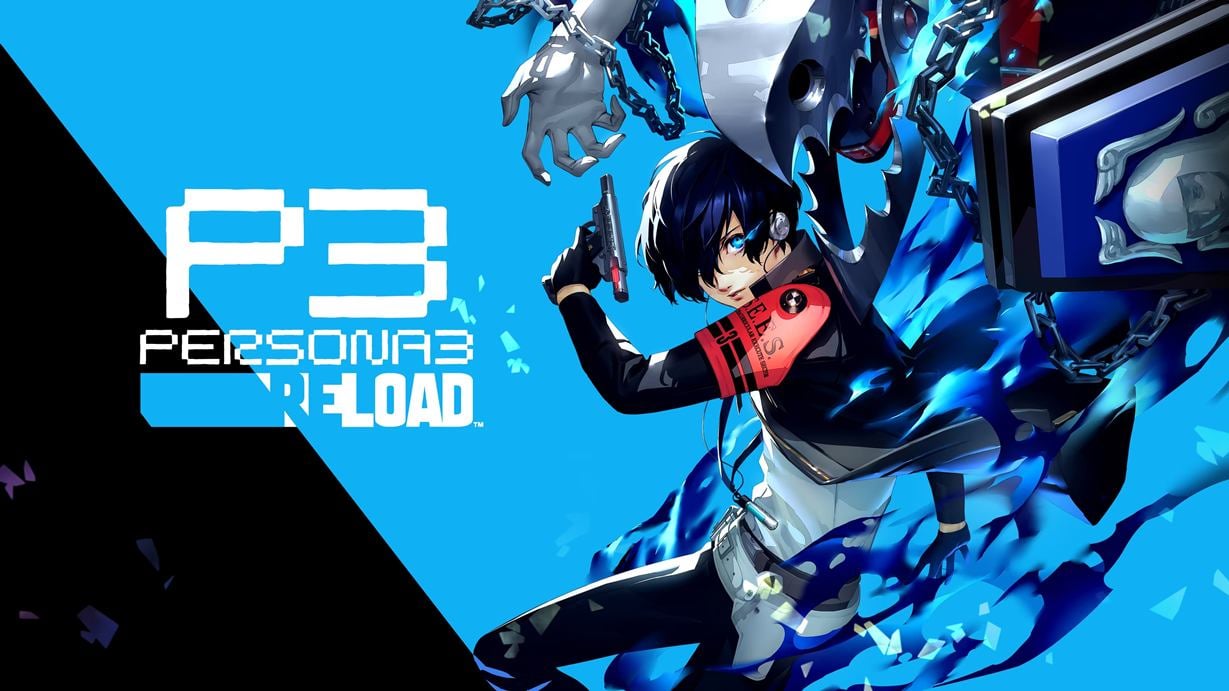
Persona 3 Reload offers another route on Nintendo Switch 2. Released for the system on October 23, 2025, Reload rebuilds Persona 3 with modern graphics, revised presentation, additional character interactions, more voice work, quality-of-life improvements, and a redesigned interface that carries forward the same obsession with visual style that helped distinguish the original game. It doesn’t erase Persona 3 Portable, either. The two versions offer sufficiently different approaches that players can reasonably find reasons to experience both.
That availability gives Nintendo players an interesting opportunity to see why Persona 3 matters beyond its reputation as a popular RPG. The game represents the point where Atlus reconsidered what Persona could be and made decisions that would influence the franchise for decades. When Social Links appear, when another day ticks off the calendar, or when a menu slides across the screen with more personality than some games manage in an entire cutscene, you’re seeing ideas born during a period when Persona’s continued existence wasn’t guaranteed.
Persona eventually grew far beyond the precarious position Wada described. What was once a franchise that Atlus feared could disappear became one of the company’s defining properties. That makes Persona 3 more than an influential sequel. It was a calculated reinvention created when continuing along the same path no longer seemed sufficient. Atlus needed Persona to reach more people, and the team responded by changing almost everything surrounding its core identity. The series survived, and the blueprint created during that difficult period helped turn Persona into the name players know today.
Conclusion
Persona 3 arrived at a moment when Atlus couldn’t take the future of the franchise for granted. Kazuhisa Wada’s comments make clear that the team wasn’t simply looking for a fresh gimmick after Persona 2. Persona needed a reason to continue, and Atlus believed reaching beyond its existing core audience was essential. That pressure encouraged the developers to embrace sweeping changes, from Social Links and school-life systems to an unmistakable interface and visual identity. The Tales of series offered one useful reference point, but Persona 3 ultimately emerged with a style strong enough to impress and worry Tales producer Yusuke Tomizawa in return. Years later, the gamble looks enormously important. Persona 3 helped establish the framework behind the franchise’s modern identity, while Persona 3 Portable on Nintendo Switch and Persona 3 Reload on Nintendo Switch 2 ensure players can still experience the game that helped prevent Persona from fading away.
FAQs
- Was the Persona series really at risk of ending after Persona 2?
- Yes. Persona general producer Kazuhisa Wada said there was a long period after Persona 2 when no third game was planned, creating a genuine possibility that the series could disappear. Persona 3 therefore became a crucial project for the future of the franchise.
- Why did Atlus change Persona so much with Persona 3?
- Atlus felt it had become too closely associated with games aimed primarily at dedicated core fans. The Persona 3 team wanted the series to appeal to a broader audience, which encouraged major changes to its structure, presentation, relationships, and overall accessibility.
- Did the Tales of series influence Persona 3?
- Kazuhisa Wada said Tales was one of the RPG properties Atlus looked toward when thinking about the direction Persona needed to take. Persona 3 still developed its own distinctive identity, particularly through its interface, characters, Social Links, and combination of school life with supernatural RPG elements.
- Can you play Persona 3 on Nintendo Switch?
- Yes. Persona 3 Portable was released for Nintendo Switch on January 19, 2023. Nintendo also lists the game as compatible with Nintendo Switch 2, giving owners of either system access to this version of Persona 3.
- Is Persona 3 Reload available on Nintendo Switch 2?
- Yes. Persona 3 Reload was released for Nintendo Switch 2 on October 23, 2025. It is a modern remake featuring updated graphics, a redesigned interface, additional character interactions, more voice work, and various quality-of-life improvements.
Sources
- 『テイルズ オブ』×『ペルソナ』30周年対談。富澤P「キャラクターの深掘りを突き詰めるスタイルは真似できない」、和田P「“旅”を通して作品に熱を乗せるのがうまい」互いの歴史と展望を語り合う, Famitsu, July 8, 2026
- Atlus on how Persona could have ended after Persona 2, Persona 3 “was the critical moment of whether the series would continue or not”, Nintendo Everything, August 22, 2026
- Persona 3 Portable, Nintendo UK, January 19, 2023
- Persona 3 Reload, Nintendo UK, October 23, 2025