














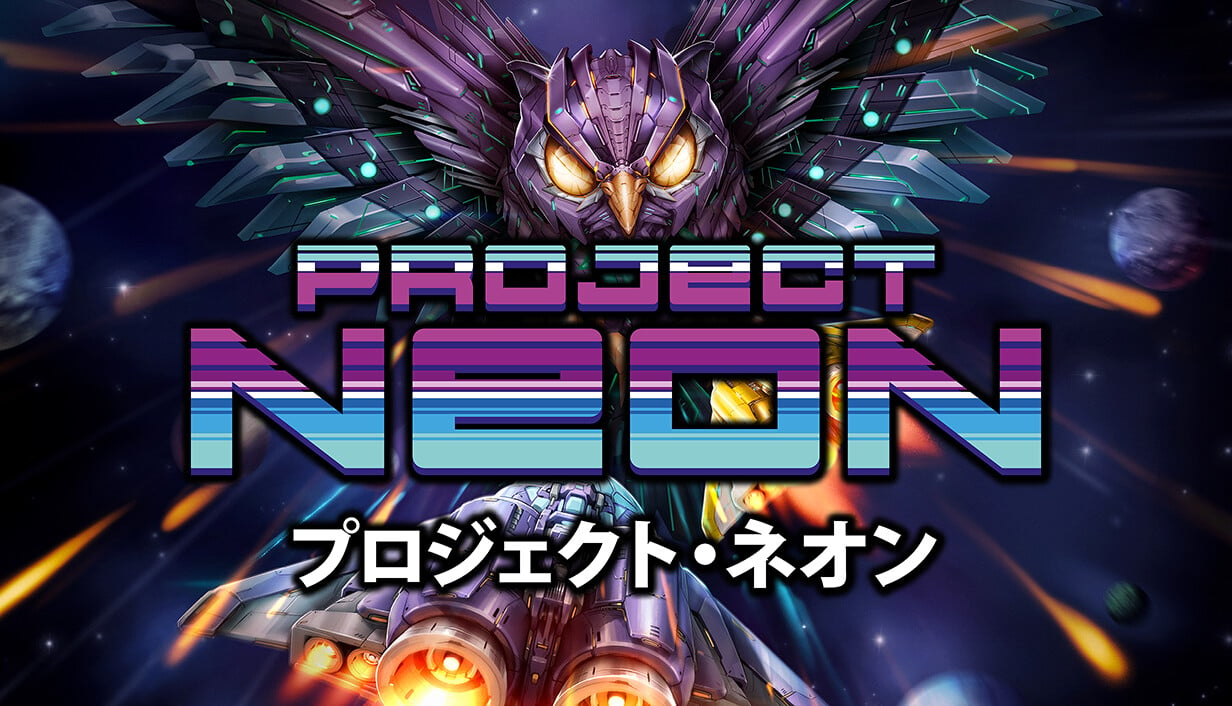
Summary:
FULLSET is bringing Project Neon to Nintendo Switch on August 13, 2026, giving Nintendo players access to a shoot ’em up that has particularly unusual roots in genuine Neo Geo development. Rather than simply imitating the visual language of 1990s arcade games, Project Neon was originally developed for the Neo Geo MVS and AES platforms, with FULLSET describing it as a vertical, TATE-style shooter designed around traditional shoot ’em up foundations and newer gameplay ideas. The Nintendo Switch version forms part of a much wider expansion that is taking the game beyond its original hardware and onto modern platforms. :contentReference[oaicite:6]{index=6}
The adventure takes players to a bleak version of 2042 in which Earth is approaching ecological collapse. Humanity’s potential salvation lies on Mars, but reaching it requires penetrating an enormous planetary defense system. Four neighboring planets help maintain a shield around Mars, forcing players to fight through enemies and bosses as they dismantle the network piece by piece. That premise gives the familiar structure of an arcade shooter a clear narrative purpose: every stage brings the player another step closer to Mars and another step closer to securing Earth’s chance of survival.
Project Neon’s arrival on Nintendo Switch should be particularly interesting for dedicated shoot ’em up fans because of its vertical presentation and authentic Neo Geo heritage. FULLSET has even referenced vertical Switch accessories when promoting the release, reinforcing the suitability of Nintendo’s portable hardware for the game’s TATE-style approach. :contentReference[oaicite:7]{index=7} With its August 13 release date now set, Project Neon is preparing to make the leap from specialized retro hardware to a far broader Nintendo audience.
Project Neon launches on Nintendo Switch on August 13, 2026
Project Neon is making the jump to Nintendo Switch on August 13, 2026, opening the door for a much wider audience to experience FULLSET’s vertically scrolling shoot ’em up. FULLSET has publicly confirmed the Nintendo Switch date as part of its rollout for modern versions of the game, putting the Nintendo release firmly on the calendar. That announcement carries more weight than the arrival of another retro-styled shooter might initially suggest. Project Neon wasn’t simply designed to resemble a game from the Neo Geo era. It was created for the actual Neo Geo MVS and AES platforms, giving its old-school identity an unusually authentic foundation.
For Nintendo Switch owners, that means the August release represents a bridge between two very different periods of gaming hardware. One side of that bridge belongs to cartridge-heavy arcade technology and the fiercely focused shooters that thrived there. The other belongs to a hybrid Nintendo system where a game can move from the television to handheld play in seconds. Project Neon sits comfortably between those worlds. Its pixel-art presentation, vertically structured action, enemy patterns, bosses, and high-pressure shooting evoke the arcade traditions that helped shape the genre, yet the Switch provides a far more accessible way to experience them.
The timing also gives shoot ’em up enthusiasts another reason to keep an eye on Nintendo’s digital lineup in August. The genre has found a particularly welcoming audience on Switch over the years because shorter arcade-style sessions work beautifully on portable hardware. You can chase a better run from the couch, squeeze in another attempt while travelling, or settle in for a longer score-focused session on a television. That flexibility suits a game built around repeated attempts and steadily improving mastery.
Project Neon brings an unusually dramatic premise along for the ride as well. Its mission isn’t simply about eliminating an anonymous alien armada. Earth is facing environmental catastrophe in 2042, and humanity’s potential salvation lies behind a fortified Martian defense network. The player must tear that network apart without destroying the very person they ultimately need to recover. It’s an arcade setup with a surprisingly specific objective, giving every barrage of bullets and every defeated guardian a place within a larger interplanetary mission.
That mixture of genuine retro engineering, science-fiction stakes, and modern availability makes the Switch release notable. There is something wonderfully circular about software born for one of gaming’s most celebrated arcade platforms finding a second life on Nintendo hardware decades later. The technology changes, the controllers change, and the screen in front of us changes, but the fundamental appeal remains familiar: survive the patterns, defeat the bosses, and keep pushing forward.

FULLSET brings its Neo Geo shooter to a modern Nintendo platform
Project Neon’s path to Nintendo Switch is unusual because FULLSET approached the game from the opposite direction of most modern retro releases. Plenty of contemporary developers create pixel-art games that imitate 16-bit or arcade hardware while benefiting from modern engines and effectively unlimited resources compared with machines from the 1990s. Project Neon instead began life as software built for Neo Geo MVS and AES hardware. FULLSET describes the game as a new vertical, TATE-style shoot ’em up developed for the original Neo Geo platform, complete with one-to-two-player support and familiar genre conventions mixed with newer concepts.
That distinction matters because hardware limitations influence creative decisions. When developers work within the boundaries of an older machine, choices surrounding animation, audio, sprites, memory, enemy behavior, and presentation become part of the game’s identity. Project Neon’s development history demonstrates how real those technical considerations were. FULLSET has previously detailed the challenges involved in completing its sound driver, including ensuring that its audio technology worked on genuine hardware as well as software emulators and FPGA implementations. This wasn’t a case of adding a filter to make a modern game appear older. The underlying development process had to contend with the machine itself.
Now the situation is reversing. Instead of squeezing a modern vision into retro hardware, FULLSET is taking the resulting game and making it available on newer systems. Nintendo Switch is part of that expansion, alongside a much broader range of console, computer, and mobile platforms promoted by the developer. The result is a fascinating migration. A game designed around the strengths and limitations of Neo Geo can reach players who may never have owned an AES console, played an MVS cabinet, or considered collecting specialized retro hardware.
That accessibility could prove especially valuable. Original Neo Geo hardware occupies a very different space from a mass-market console such as Nintendo Switch. Even enthusiastic retro players may know the system primarily through emulation, compilations, or re-released classics. Project Neon gives them the opportunity to encounter a newly developed game carrying the design fingerprints of that hardware without requiring the original machine.
The Nintendo version therefore isn’t merely another platform checkbox. It changes who can realistically play Project Neon. A specialist release becomes something a far broader audience can discover alongside contemporary Nintendo games. If you’ve ever wondered what a genuinely new Neo Geo shoot ’em up might feel like when transplanted onto modern hardware, this release provides a particularly intriguing answer.
Nintendo Switch becomes part of Project Neon’s wider expansion
Nintendo Switch is only one destination in FULLSET’s ambitious effort to carry Project Neon beyond its original Neo Geo home. The developer has announced modern versions across numerous platforms, turning what started as an enthusiast-focused Neo Geo project into a release capable of reaching players through contemporary consoles, computers, mobile devices, and additional retro hardware. FULLSET’s announcement trailer specifically names Switch among the platforms included in this expansion. That breadth is striking because porting a game rooted in specialized arcade hardware to such a varied collection of systems is very different from launching a conventional multiplatform release.
The Switch version has a clear role within that strategy. Nintendo’s console combines a sizable audience with characteristics that happen to fit arcade shooters particularly well. Its handheld screen encourages brief sessions. Its detachable controllers support flexible play arrangements. The system can also be docked when players want a larger display and a more traditional setup. Project Neon can therefore move between quick score attempts and dedicated living-room sessions without asking the player to change platforms.
FULLSET has drawn attention to the vertical possibilities of the Switch version too. When announcing that Project Neon would arrive on Nintendo Switch on August 13, the developer specifically referenced the Flip Grip, an accessory designed around using the Switch screen in a vertical orientation. That doesn’t make an accessory necessary to appreciate a vertical shooter, but it tells us something important about the intended audience. FULLSET clearly knows that TATE enthusiasts care about screen orientation and sees the portable Nintendo hardware as a meaningful part of the experience.
The wider platform expansion should also help Project Neon escape one of the natural limitations of releasing software for vintage hardware: availability. A newly produced Neo Geo game is inherently specialized. Manufacturing physical cartridges and boards for decades-old systems serves collectors remarkably well, but it can never match the convenience of obtaining software through a current platform. A Switch release turns that equation around. The distinctive Neo Geo origins remain part of the game’s identity while the barrier to actually playing it becomes much lower.
That is perhaps the most interesting aspect of Project Neon’s new chapter. FULLSET doesn’t need to abandon the game’s retro identity to reach modern players. Instead, the expansion preserves the concept while changing the doorway through which players enter. The neon-lit battlefield may have been engineered for yesterday’s hardware, but Nintendo Switch gives it a very practical route toward tomorrow’s audience.
What is Project Neon?
Project Neon is a vertically oriented shoot ’em up built around the fast reactions, projectile patterns, enemy waves, and boss encounters traditionally associated with arcade shooters. FULLSET describes it as a TATE-style shmup originally developed for the Neo Geo MVS and AES platforms. The developer also says the game contains both the recognizable features players expect from a classic shoot ’em up and newer concepts intended to give the formula its own identity. That description immediately places Project Neon within a very specific tradition: this is a game designed for players who enjoy reading movement patterns under pressure and gradually transforming intimidating encounters into familiar routines.
The term TATE is particularly relevant here. Vertical shoot ’em ups traditionally benefit from displays that emphasize height rather than width, echoing the vertically mounted screens found in many arcade cabinets. Project Neon embraces that style rather than stretching its action across a conventional widescreen battlefield. Visually, the result is a play space where threats arrive from ahead while the player’s movement and positioning become crucial tools for survival.
There’s a simple pleasure to this format. At first, the screen can resemble controlled chaos. Enemies rush into view, shots overlap, movement windows shrink, and a boss may seem to occupy half the available space. Spend enough time with a well-designed shooter, though, and that chaos starts becoming readable. A wall of projectiles becomes a pattern. A dangerous enemy wave becomes a memorized opportunity. The stage that once felt impossible becomes something you can navigate almost rhythmically.
Project Neon’s science-fiction setting provides the framework connecting those encounters. Players are not travelling through space merely because galaxies make attractive backgrounds for laser fire. The entire journey is tied to a desperate effort to overcome a planetary defense system around Mars. Four neighboring worlds play a role in keeping that shield active, giving the progression a destination and purpose.
Perhaps most importantly, Project Neon approaches retro design through authenticity rather than nostalgia alone. The Neo Geo wasn’t selected merely as visual inspiration. It was the development target. FULLSET’s own documentation describes technical work undertaken specifically to support actual hardware. That origin gives Project Neon a character that is difficult to fake. It isn’t asking what a modern interpretation of a Neo Geo shooter might look like. It began by answering a much stranger question: what if someone simply made a new one?
A vertical shoot ’em up built around classic arcade principles
Project Neon’s basic language should feel immediately recognizable to anyone who has spent time with vertical arcade shooters. The player faces waves of enemies, avoids incoming fire, attacks aggressively, and eventually confronts imposing bosses guarding the road ahead. FULLSET characterizes the game as containing the expected features of a classic shoot ’em up while adding modern and unique mechanical ideas. That balance is important. A retro shooter needs enough familiarity to satisfy players who love the genre’s fundamentals, but mere imitation rarely leaves a lasting impression.
Vertical shooters thrive on the relationship between movement and information. The player’s craft may technically be able to move almost anywhere within the available play field, yet every bullet pattern quietly limits those options. A boss firing broad arcs encourages one response. Narrow streams of projectiles encourage another. Enemies appearing from multiple directions force the player to think ahead rather than simply react. The screen becomes a moving puzzle that happens to be travelling at arcade speed.
This is why successful shoot ’em ups tend to become more satisfying with repetition rather than less. A first attempt teaches. The next attempt tests whether you’ve learned. Another run lets you refine positioning and recognize where unnecessary risks crept in. Eventually, sections that once demanded frantic reactions can feel almost choreographed. It’s a little like learning a difficult piece of music: the notes haven’t changed, but your relationship with them has.
Project Neon’s planetary structure naturally lends itself to that pattern of learning. Each defended world can provide its own collection of enemies and challenges before culminating in a boss tied to the shield protecting Mars. That gives the action a clear sense of escalation. You’re not firing endlessly into an abstract scoreboard; you’re dismantling parts of a larger defensive system.
The old-fashioned structure also fits Nintendo Switch particularly well. Arcade shooters don’t require sprawling sessions to feel rewarding. Ten focused minutes can be enough to improve a route, practice a difficult pattern, or chase a better performance. Yet these games also reward long evenings of concentration when the player wants to pursue mastery. Switch accommodates both approaches naturally. Project Neon can therefore preserve its arcade-minded design without asking modern players to reorganize how they play around it.
Authentic Neo Geo origins distinguish Project Neon from retro-inspired releases
Project Neon’s Neo Geo connection may be its most distinctive characteristic because it changes the meaning of the phrase “retro shooter.” Many excellent modern games deliberately recreate the appearance of older hardware. They use chunky sprites, limited palettes, scanline effects, chiptune-inspired soundtracks, or low-resolution interfaces because those aesthetic choices evoke a beloved period. Project Neon comes from a different direction. FULLSET developed it for the original Neo Geo MVS and AES ecosystem, meaning the relationship with retro hardware exists at a technical level rather than solely as an artistic influence.
The Neo Geo occupies an unusual place in gaming history. Its arcade MVS and home AES formats were closely connected, creating the dream of bringing remarkably faithful arcade experiences into the home. Developing new software for that platform decades later requires more than nostalgia. The hardware imposes real restrictions and demands solutions compatible with technology that was never designed with today’s development conveniences in mind.
FULLSET’s history with Project Neon illustrates that reality. In one development update, the company detailed substantial work on the game’s sound driver and highlighted compatibility with genuine hardware, software emulators, and FPGA reimplementations. Even without diving into every technical detail, that tells us something valuable about the project’s foundation. The team wasn’t simply mimicking how old hardware sounded. It was solving the problems required to make the software operate within that environment.
Those origins should influence the feel of the Nintendo Switch release even though players will be running it on vastly more capable hardware. The pacing, visual priorities, sprite design, and broader structure were all conceived in dialogue with the Neo Geo. Porting the finished concept does not erase those decisions. In the same way that an old arcade game retains its personality when emulated on a new platform, Project Neon’s DNA travels with it.
That makes the Switch version especially interesting for players fascinated by modern homebrew and independent retro development. It’s one thing to revisit a game preserved from the 1990s. It’s another to play something newer that deliberately entered the creative constraints of that era and emerged as its own release. Project Neon effectively brings a piece of alternate gaming history to Nintendo Switch: a Neo Geo shooter that didn’t exist during the system’s commercial heyday but was built as though the hardware still had something new to say.
Project Neon’s story sends players across a threatened solar system
Project Neon frames its arcade action with a science-fiction scenario set in 2042, when Earth is suffering from severe ecological decline. Humanity’s potential solution is tied to a visionary who previously abandoned Earth and established himself on Mars. Reaching him isn’t a simple matter of plotting a course and knocking on the door. Mars has been sealed behind a formidable defensive shield supported through installations on four neighboring planets, turning a rescue mission into an interplanetary assault.
The catch gives the premise more personality: the objective isn’t to destroy the person waiting on Mars. He represents humanity’s hope, so the player must fight through the defenses protecting him while ultimately preserving the target of the entire operation. That creates a slightly unusual contradiction at the heart of the story. You’re arriving with enough firepower to dismantle a planetary security system, yet the final purpose is recovery rather than annihilation.
For an arcade shooter, that is more narrative context than strictly necessary, but it helps give shape to the stages. Each planet isn’t simply a differently colored backdrop selected because the game needs another level. The worlds are parts of a functioning security network. Enemies are barriers protecting that infrastructure. Bosses become guardians standing between humanity and another broken link in the chain.
The ecological theme also gives the stakes an immediacy beyond the usual galactic invasion. Earth isn’t threatened by a mysterious force arriving from somewhere beyond the stars. Humanity’s own failures have helped create the crisis, while the person who may have the knowledge or capability to change the situation has removed himself from the planet. There’s an irony there that works surprisingly well for a high-speed shooter. The player is blasting through space because persuasion alone is apparently no longer an option.
Of course, Project Neon remains an arcade-focused shoot ’em up rather than a slow philosophical drama. The narrative exists to propel the action rather than stop it. That’s arguably the right approach. A strong arcade premise should be clear enough to motivate the journey without constantly interrupting the player’s concentration. Earth needs saving. Mars holds the answer. Four planetary defenses stand in the way. Sometimes a mission briefing really can be that satisfyingly straightforward.
Earth faces ecological collapse in the year 2042
Setting Project Neon in 2042 gives its science-fiction premise a near-future edge. Rather than pushing humanity’s problems centuries into an almost unrecognizable civilization, the scenario imagines environmental collapse looming only a relatively short distance beyond the present day. That choice makes the background more grounded than a traditional distant-space-war setup. Earth remains recognizably our Earth, but the consequences of unchecked climate problems have escalated dramatically.
The threatened planet serves an important narrative purpose because it establishes why the mission is worth attempting in the first place. Breaking through defenses on multiple worlds would be an extraordinary undertaking under normal circumstances. Here, normal circumstances are already gone. Earth is approaching a point where desperate action becomes the only remaining action, and the person who might offer a solution has placed millions of kilometres and an enormous shield between himself and the people who need him.
There is also an intentionally bitter human element behind that departure. The Martian recluse did not merely embark on an optimistic scientific expedition. He left after becoming disillusioned with humanity and after experiencing betrayal surrounding his ventures. Mars is therefore more than a location. It’s a fortress created by someone who has effectively decided that Earth and its inhabitants have exhausted his patience.
That makes Project Neon’s mission more interesting than a conventional rescue. The person at its center hasn’t been kidnapped. He doesn’t appear to be waiting eagerly for assistance. Humanity needs something from someone who deliberately walked away. The player is consequently tasked with forcing open the path to a man who took considerable measures to ensure that path remained closed.
It’s an effective background for a genre where escalation is everything. A shoot ’em up naturally asks why increasingly absurd amounts of firepower are standing between the player and the final destination. Project Neon has an answer: someone powerful wanted Mars isolated badly enough to create an interplanetary defense network. If you want to reach him, you’ll have to prove that even planets aren’t enough to keep you out. It’s excessive in exactly the way an arcade shooter should be.
A fortified Mars stands between humanity and its last hope
Mars is effectively the locked door at the end of Project Neon’s journey. The planet is protected by a shield that cannot simply be breached through direct force, requiring the player to attack the network sustaining it instead. Four neighboring planets serve as critical pieces of that defense system. The result is a classic game progression structure wrapped in a clear science-fiction explanation: visit each defensive location, destroy what is maintaining the barrier, and steadily make Mars accessible.
This kind of structure is particularly effective in a shoot ’em up because it provides both short-term and long-term objectives. At any given moment, the player’s immediate problem is straightforward. Avoid that projectile. Destroy that enemy. Survive the next wave. Learn what the boss is about to do. Behind those second-to-second decisions sits the larger mission of breaking another component of Mars’ protection.
The contrast helps the game maintain momentum. Shooters often communicate progression visually through increasingly dangerous environments and enemies, but a planetary network offers an additional layer. Each successful stage materially weakens the barrier separating the player from the ultimate destination. The mission is literally being dismantled piece by piece.
Mars also works effectively as a goal because it’s familiar enough to require little explanation. We instantly understand the distance and isolation it represents. Science fiction has spent generations turning Mars into humanity’s hypothetical second home, frontier settlement, mystery, refuge, and rival civilization. Project Neon taps into those associations while adding its own twist: Mars has become a deliberate sanctuary from Earth rather than simply the next chapter of Earth’s expansion.
The question driving the journey is therefore more complicated than whether the player can physically reach the planet. What happens when humanity’s last hope is a person who doesn’t want to return? The supplied premise establishes that he must be brought back without harm, making the destination a retrieval operation rather than the usual final-act destruction. Before any of that can matter, however, the shield has to fall. In true shoot ’em up fashion, diplomacy starts only after an enormous amount of shooting.
Four planetary defenses form the heart of the mission
The four planets connected to Mars’ protective shield provide Project Neon with a natural framework for its campaign. Each location is guarded by enemies and major bosses that contribute to the defensive network, meaning the player must progressively dismantle the system before the final objective can be reached. It is an elegant way to align story and level structure. Instead of completing disconnected shooting stages simply because the game needs a sequence of levels, the player is systematically attacking a larger machine.
That structure also creates an immediate sense of anticipation around each planet. What kind of defensive forces protect it? What visual identity does the environment have? How do its enemy formations differ from those encountered elsewhere? Most importantly for shoot ’em up enthusiasts, what will its boss demand from the player? Those questions are the fuel that drives progression in an arcade shooter.
Boss encounters carry particular importance because they act like exams at the end of each lesson. Everything before the boss teaches the player how quickly they need to react and what kind of spatial awareness the stage demands. The boss then compresses that pressure into a concentrated encounter where mistakes become much harder to recover from. A well-designed boss can turn a few minutes of gameplay into something players remember for years.
Project Neon’s shield premise naturally elevates those guardians beyond being large sprites placed at convenient endpoints. They are functional components of Mars’ protection. Defeating them has narrative consequences. Every victory means something important has stopped working, and every broken defense brings the mission closer to its target.
It is a simple setup, but simplicity is often a strength in action-heavy games. The player shouldn’t need to consult a flowchart between enemy waves to understand why they’re travelling to another planet. Project Neon gives us an objective that can be explained in seconds and then lets the shooting do the talking. Four defenses stand between Earth and its last hope. Take them apart. Sometimes the strongest motivation is also the easiest one to remember.
Enemies and bosses protect the interplanetary shield
Enemies and bosses in Project Neon aren’t just obstacles filling the screen; within the premise, they are active defenders of the infrastructure shielding Mars. That makes every encounter part of the same larger objective. Destroying smaller enemies creates a path through each planet’s defenses, while major confrontations represent more substantial barriers that must fall before the network can be disabled.
This is fertile territory for a shoot ’em up because enemies are the genre’s vocabulary. A small opponent diving rapidly toward the player communicates urgency. A slower armored target occupying valuable screen space communicates pressure. Turrets and stationary threats alter movement routes. Formations encourage prioritization. Bosses combine these lessons and typically add patterns that force the player to understand safe spaces rather than merely search for them in panic.
The best moments often happen when the player stops reacting instinctively and starts predicting. See an enemy formation once and it might catch you off guard. See it again and you’ll begin moving earlier. After enough attempts, you may destroy the entire formation before its most dangerous attack even begins. What initially seemed overwhelming becomes a controlled sequence because knowledge has replaced surprise.
That learning curve is one of the reasons traditional shooters retain such dedicated audiences. Progress isn’t always represented by an experience bar or stronger equipment. Sometimes the upgrade happens inside the player’s head. You become better at recognizing danger. Your movement gets calmer. You discover that wildly sweeping across the screen was causing more problems than the bullets themselves. The game hasn’t become easier; you’ve become more capable.
Project Neon’s boss-centered planetary defenses fit that philosophy neatly. Every guardian represents another obstacle to study, overcome, and eventually master. The story says you’re breaking a shield. The gameplay is likely to make that progress feel much more personal. A boss that destroys your run repeatedly can become its own miniature rivalry, and finally defeating it offers the kind of satisfaction no automatic checkpoint can manufacture. That feeling has powered arcade shooters for decades, and Project Neon is clearly built within that tradition.
Progress means dismantling the network one planet at a time
Project Neon’s planet-by-planet progression gives the campaign a satisfying sense of mechanical purpose. Mars cannot simply be approached immediately because the shield protecting it depends on defenses stationed elsewhere. The player therefore has to work around the problem, attacking the supporting structure before confronting the central objective. It’s essentially an interplanetary version of pulling the plugs from an enormous machine until the entire system goes dark.
This setup gives each completed location visible narrative meaning. One planet cleared means one less part of the network functioning at full strength. Another victory brings Mars closer. The structure encourages players to think of progress not merely as reaching the next stage but as actively dismantling something that once seemed impenetrable.
For a shooter, that can create a strong sense of escalation. Early encounters introduce the language of the game. Later encounters can demand greater precision, faster recognition, and stronger route knowledge. By the time the final defenses are falling, the player should ideally feel substantially more capable than during the opening stage even if their on-screen craft hasn’t fundamentally changed.
This type of progression also lends itself to repeat play. Once you’ve completed a campaign, individual stages stop being unknown destinations and become opportunities for refinement. Which sections caused unnecessary damage? Where could an enemy formation be eliminated more efficiently? Which boss pattern cost the most resources? A first run is exploration. Later runs become optimization.
That’s where Project Neon’s arcade roots matter most. The destination may be Mars, but reaching Mars once doesn’t have to be the end of the experience. Shooters are built around the idea that execution can always become cleaner. A successful run can become a better run, and a better run can become the run where everything finally clicks. The four-planet defense structure provides the road. Player mastery determines how elegantly you travel it.
Project Neon draws heavily from classic Japanese shoot ’em ups
FULLSET presents Project Neon as a shooter inspired by the spirit of classic Japanese arcade shoot ’em ups, and its Neo Geo foundation naturally reinforces that identity. Its vertical orientation, high-intensity action, bosses, and emphasis on traditional shmup mechanics place it firmly within a design lineage built around concentration rather than sprawling complexity. FULLSET itself describes the project as a vertical TATE-style shooter containing recognizable classic genre features along with modern concepts.
Classic arcade shooters tend to be easy to understand and difficult to master. Movement is immediate. Shooting is immediate. Danger is visible. What separates a beginner from an expert isn’t usually whether they understand the basic controls; it’s whether they understand the battlefield. That accessibility is deceptive. A game can teach you everything necessary to play within moments and still require countless attempts before its hardest patterns feel manageable.
Project Neon’s appeal seems closely tied to that philosophy. The 16-bit aesthetic isn’t merely decoration wrapped around an unrelated modern structure. The underlying project was born from hardware associated with arcade play, where clarity and responsiveness matter because the player must process enormous amounts of visual information in very little time.
There’s also a particular kind of confidence required to make this style of game today. Modern releases frequently rely on huge worlds, persistent progression systems, or endless streams of unlockable rewards. A traditional shooter asks players to find satisfaction somewhere simpler: in the act of improving. That may sound modest, but it can be incredibly compelling. One missed bullet can become the reason you start another run immediately.
Project Neon doesn’t need to reinvent every principle of the genre to justify itself. Its most intriguing quality may be how directly it embraces them while carrying an unusually authentic technological history. The challenge is familiar, but the route from Neo Geo development to Nintendo Switch is anything but ordinary.
Vertical action places precision and positioning at the center
Vertical shooters create a distinctive relationship between the player and the battlefield because danger generally advances from the upper portion of the screen while the player’s craft operates below it. That orientation sounds like a simple visual choice, but it influences almost every encounter. Players are constantly evaluating how incoming threats intersect with limited movement space, and a small positional mistake can transform an open escape route into a trap.
Precision becomes more important than speed alone. New players often respond to heavy projectile patterns by moving continuously, almost as if more movement automatically means more safety. Experienced players learn the opposite lesson. Sometimes the safest movement is a tiny adjustment. A few pixels can be the difference between slipping cleanly through a pattern and colliding with the next wave because you’ve travelled too far.
That measured approach gives vertical shooters an almost meditative quality once the player becomes comfortable with them. Yes, the screen may be full of explosions and projectiles. Yes, the soundtrack may be pushing the pace forward. Yet the player’s best response can be calm, deliberate movement. Controlled chaos is still controlled.
Project Neon’s TATE-style presentation should appeal directly to players who enjoy experiencing this format with a vertically oriented display. FULLSET explicitly identifies the game as TATE-style in its official product information, and the developer has mentioned the Flip Grip while promoting the Switch release. That connection is particularly interesting because Switch hardware can physically be used in orientations that traditional televisions cannot easily reproduce.
Whether players choose a conventional screen layout or a vertical setup, the fundamental attraction remains the same. The battlefield is a corridor of pressure. Enemies try to take space away. Projectiles carve temporary walls through that space. The player’s job is to recognize the gaps before they disappear. When everything comes together, navigating a difficult barrage can feel less like dodging and more like threading a needle while the needle is travelling through space at several hundred kilometres per hour.
Modern ideas accompany its old-school arcade foundations
FULLSET has never positioned Project Neon as a purely conservative recreation of an existing 1990s formula. Its official description emphasizes that the game combines classic shoot ’em up expectations with modern and distinctive mechanics. That distinction matters because authenticity doesn’t require stagnation. A game can respect the structures of older arcade shooters without pretending that decades of design evolution never happened.
The strongest retro-inspired releases understand why older mechanics worked before deciding what should remain untouched. Responsiveness, readable enemy behavior, deliberate stage construction, and a satisfying relationship between risk and reward aren’t outdated ideas. They’re foundations. Modern developers can build on top of those foundations while introducing new ways for players to interact with them.
Project Neon’s unusual development path makes that balancing act particularly interesting. Its mechanics had to coexist with the realities of Neo Geo hardware, yet the designers were still working from a modern perspective. They had decades of shoot ’em up history to study. That makes Project Neon fundamentally different from a lost arcade game suddenly rediscovered in a warehouse. It may run within old constraints, but it was created with knowledge the original developers of that era couldn’t possibly have possessed.
The Nintendo Switch release then adds yet another layer. Players encountering Project Neon in 2026 will approach it alongside modern expectations surrounding responsiveness, accessibility, display options, and portable play. FULLSET’s challenge is therefore not simply preserving an old game. It’s delivering a new game built for old hardware to players using new hardware. That sentence alone captures why the project is so unusual.
Ultimately, the combination should allow Project Neon to appeal to two audiences at once. Long-time shmup enthusiasts can appreciate the authentic hardware roots and familiar arcade discipline. Newer players can approach it as a modern release without needing historical attachment to the Neo Geo. If those perspectives meet successfully, Project Neon won’t feel like a museum exhibit. It will feel like proof that a strong arcade formula doesn’t expire simply because the hardware underneath it has changed.
The Nintendo Switch is a natural home for Project Neon’s vertical gameplay
Nintendo Switch has characteristics that make it particularly well suited to traditional shooters, and Project Neon’s vertical structure adds another reason the pairing makes sense. FULLSET’s announcement of the August 13 release even referenced the Flip Grip, highlighting the possibility of using Switch hardware with vertically oriented games. For enthusiasts who enjoy TATE shooters, that flexibility can bring portable play considerably closer to the proportions associated with vertical arcade cabinets.
The appeal extends beyond screen orientation. Shoot ’em ups tend to work exceptionally well in short sessions because meaningful progress can happen quickly. A player doesn’t necessarily need an hour to accomplish something. One stage attempt can teach a new pattern. One boss fight can expose a mistake. One improved run can become a new personal benchmark. Switch is built around precisely that kind of flexibility.
Then there’s the convenience of moving between handheld and television play. An intense arcade shooter can feel very different depending on the environment. Handheld mode creates an intimate experience where the entire battlefield sits directly in front of the player. Docked play can offer a larger canvas and a traditional controller setup. Neither approach needs to replace the other.
Project Neon also arrives on a platform where retro re-releases and arcade-oriented games have long been accessible beside contemporary releases. That context can help a specialized shooter find players who might never shop for newly manufactured Neo Geo software. The barrier separating curiosity from actually playing becomes dramatically smaller.
Most importantly, Switch doesn’t demand that Project Neon change what it is. The game can remain focused, vertical, challenging, and proudly old-school while benefiting from modern convenience. That’s an ideal porting scenario. The platform doesn’t need to redefine the experience; it simply gives more people a practical way to reach it.
Portable play complements the game’s arcade structure
Portable play and arcade shooters are an unusually natural pairing because both encourage sessions that can be satisfying without being enormous. Project Neon is built around immediate action rather than lengthy preparation, meaning the interesting part starts quickly. For someone playing Switch away from the television, that matters. You can potentially spend your available time actually confronting enemy formations and boss patterns rather than waiting for the game to get moving.
Short sessions don’t mean shallow sessions either. Shoot ’em ups compress decision-making into very small windows. A ten-minute attempt can contain more moment-to-moment choices than a much longer stretch of a slower-paced game. Where should you position yourself? Which threat needs to disappear first? Is moving toward an item worth entering a dangerous part of the screen? Should you stay aggressive or prioritize survival? These tiny calculations happen constantly.
Portable hardware makes repeating those sessions extremely convenient. A difficult section that would once have required sitting at an arcade cabinet or keeping a home console connected to a television can travel with you. That lowers the psychological hurdle of starting another attempt. One more run really can mean one more run.
There is also something appealingly appropriate about playing a Neo Geo-rooted project on a compact device. Original arcade hardware was enormous by comparison, while an AES setup was firmly tied to a television. Decades later, comparable game logic can sit in your hands. The contrast shows how dramatically hardware has evolved while simultaneously demonstrating how little a good action concept depends on technological scale.
Project Neon doesn’t need an enormous open world or cinematic spectacle to benefit from portability. Its advantages are more practical. The game asks for concentration, pattern recognition, and repeated practice. Switch allows those things to happen almost anywhere. For a genre built around the irresistible temptation to try again after one tiny mistake, that convenience may be one of the most meaningful upgrades the Nintendo port can offer.
TATE-style play gives enthusiasts another way to experience the shooter
TATE play is one of those shoot ’em up traditions that can sound strangely technical until you’ve experienced a vertical game on a vertically positioned display. The idea is straightforward: rotate the screen so the available physical display better matches the tall play field used by the game. Instead of fitting a vertical battlefield into the center of a widescreen image, more of the screen itself can be devoted to the action.
Project Neon is officially described by FULLSET as a vertical, TATE-style shoot ’em up, making this feature part of the game’s identity rather than an incidental characteristic. The developer’s Switch announcement also directly name-checked the Flip Grip, a clear wink toward players interested in using Nintendo’s hardware vertically. It is difficult to imagine a more targeted message to dedicated shmup enthusiasts.
That doesn’t mean everyone needs specialized equipment. Plenty of players will simply experience Project Neon through a conventional Switch configuration, and vertical shooters have been adapted to horizontal displays for decades. TATE support matters because it provides another option rather than because it establishes one mandatory way to play.
For enthusiasts, however, vertical presentation can dramatically change the feel of the game. Sprites can occupy a more natural proportion of the visible area. Enemy formations feel less compressed into the middle of a landscape display. The play field begins to resemble the orientation for which this style of shooter was originally designed.
Switch is unusually accommodating in that regard because its screen isn’t permanently fixed to a television or handheld shell in the same manner as many other devices. That physical flexibility complements Project Neon’s design. A game born from arcade traditions can be played on modern hardware while preserving one of the genre’s most distinctive presentation choices. It’s a small example of how an old format and a newer machine can unexpectedly suit each other.
Project Neon’s August 13 release adds another retro shooter to Switch
Project Neon is scheduled to make its Nintendo Switch debut on August 13, 2026, marking the next major step in a journey that began with genuine Neo Geo development and is now expanding far beyond that original audience. FULLSET has confirmed the date through its platform rollout information and Nintendo Switch announcement. For players interested in shoot ’em ups, retro hardware, modern homebrew development, or simply fast arcade action, the release has several unusual qualities working in its favor.
The most obvious is authenticity. Project Neon doesn’t merely look backward toward the Neo Geo generation. It comes directly from development targeting Neo Geo MVS and AES hardware. That distinction gives the game a technical heritage most retro-styled releases can’t claim. The modern Switch edition is effectively bringing that work forward rather than manufacturing an approximation of it from scratch.
The gameplay concept is equally straightforward. Players enter a vertically oriented science-fiction shooter, cross planetary defenses, confront increasingly dangerous enemies and bosses, and work toward breaking the shield surrounding Mars. The fate of a collapsing Earth provides the motivation, but the heart of the experience remains arcade action.
Switch should be particularly welcoming territory for that structure. Portable sessions fit repeated runs, docked play provides a more traditional console environment, and enthusiasts interested in vertical presentation have hardware options that suit TATE-style games. FULLSET’s own reference to the Flip Grip demonstrates that the developer recognizes this audience.
Above all, Project Neon’s release is an appealing reminder that retro hardware can still inspire genuinely new work rather than surviving solely through preservation. The Neo Geo library isn’t changing historically, but developers can continue writing their own chapters around the machine decades after its commercial peak. Project Neon represents exactly that spirit. On August 13, Nintendo Switch owners get their turn to see what happens when a newly developed Neo Geo shooter escapes its original hardware and heads for a much larger battlefield.
Conclusion
Project Neon arrives on Nintendo Switch on August 13, 2026, carrying a history that immediately separates it from the average retro-styled release. FULLSET originally developed the vertical shooter for Neo Geo MVS and AES hardware, and the developer is now expanding the game across a much wider selection of platforms that includes Nintendo Switch. That unusual path gives Project Neon the best kind of retro credibility: its old-school qualities weren’t simply painted onto a modern foundation after the fact.
The game itself sends players through a desperate mission set in 2042 as Earth approaches ecological collapse. Humanity’s remaining hope lies on Mars, but reaching the planet means dismantling a shield maintained through defenses located across four neighboring worlds. Enemies and major bosses stand between the player and each critical piece of that network, turning the route to Mars into a sequence of high-pressure shoot ’em up confrontations.
Its vertical TATE-style design should also make the Switch version particularly appealing to genre enthusiasts. FULLSET officially identifies Project Neon as a vertical shooter and has specifically referenced the Flip Grip while promoting the Nintendo release. Combined with handheld play and the ability to move easily between portable and docked sessions, Nintendo’s hardware offers several practical ways to enjoy its arcade-focused structure.
Project Neon ultimately represents an unusual collision of gaming eras. Its roots belong to genuine Neo Geo development. Its design celebrates the demanding rhythm of classic shoot ’em ups. Its future now stretches across modern hardware, giving players who never owned an AES console or encountered an MVS cabinet a far easier way to join the mission. When August 13 arrives, Earth’s fictional future may be hanging by a thread, but Nintendo Switch players will at least have plenty of firepower with which to do something about it.
FAQs
- When does Project Neon release on Nintendo Switch?
Project Neon is scheduled to launch for Nintendo Switch on August 13, 2026. FULLSET has publicly confirmed August 13 as the Nintendo Switch release date in its modern-platform schedule and its dedicated Switch announcement. - What type of game is Project Neon?
Project Neon is a vertically oriented, TATE-style shoot ’em up. FULLSET describes it as a shmup containing familiar elements associated with classic shooters while also incorporating newer and distinctive gameplay concepts. - Was Project Neon originally made for Nintendo Switch?
No. Project Neon was originally developed for the Neo Geo MVS and AES platforms. The Nintendo Switch edition is part of FULLSET’s later effort to bring the game to a much broader collection of systems. - What is the story of Project Neon?
Project Neon takes place in 2042 as Earth faces ecological collapse. Humanity needs to reach a reclusive figure living on Mars, but the planet is protected by a shield connected to defenses on four neighboring worlds. Players must fight through those defenses and defeat their guardians to open the path to Mars. - Does Project Neon support vertical or TATE-style gameplay?
Yes. FULLSET officially describes Project Neon as a vertical, TATE-style shooter. The developer has also referenced the Flip Grip when discussing the Nintendo Switch release, highlighting the game’s suitability for players interested in a vertically oriented Switch setup.
Sources
- Project Neon is coming to Nintendo Switch on August 13th 2026, FULLSET, July 30, 2026
- Shoot ’em up game Project Neon planned for Nintendo Switch, Nintendo Everything, August 3, 2026
- Project Neon: Das 16-Bit Shoot ’em up erscheint diesen Monat für die Nintendo Switch, ntower, August 4, 2026
- The Neo Geo Shmup ‘Project Neon’ Is Coming To Modern Consoles, Starting Today With Xbox Platforms, Time Extension, July 31, 2026
- Project Neon: Platform Release Schedule, RetroRGB, August 9, 2026