














Summary:
Arc System Works and UnitePlus are preparing to unleash Qliphah in Providence’s Shadow on Nintendo Switch, PlayStation 5 and PC on September 24, 2026. Described as a tactical counter-timeline RPG, this supernatural adventure takes place in a devastated Tokyo where reality is steadily collapsing and nightmarish creatures called Aberrations stalk the streets. Players follow two protagonists whose uneasy partnership sits at the centre of a mystery involving forbidden narcotics, cursed markings and a secretive cult.
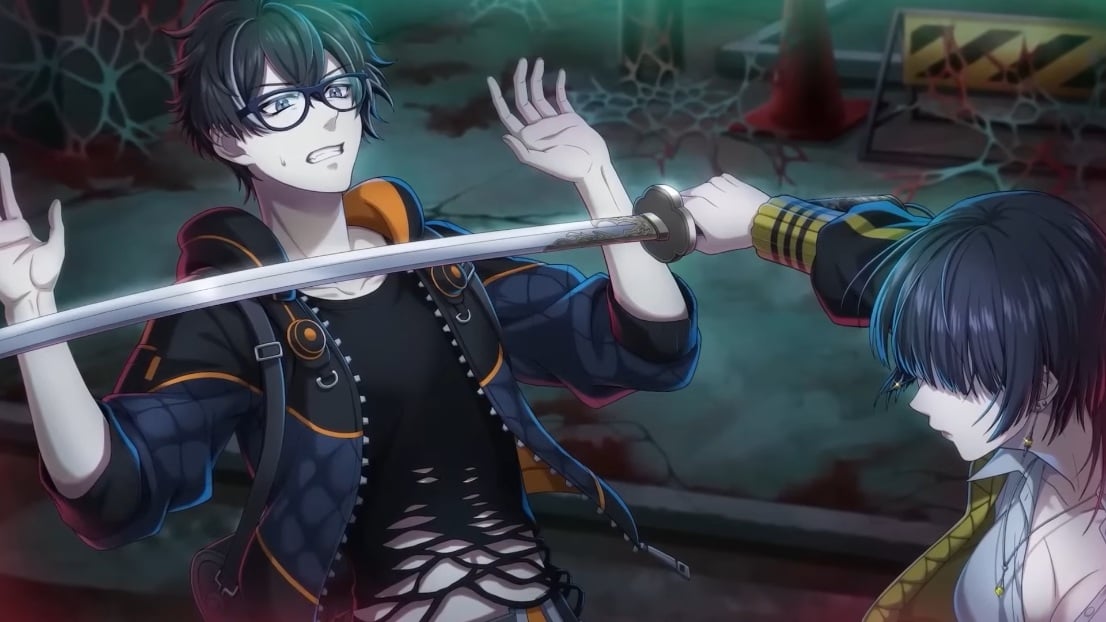
Souma Hoshigami begins the story as an ordinary delivery worker, but an attack by an Aberration leaves him trapped between humanity and monstrosity. His rescue hardly restores a sense of normality. Investigator Rena Hizuki takes him into custody as lost property, creating a rather chilly foundation for their working relationship. Together, they must investigate the forces poisoning what remains of the city while confronting the frightening consequences of Souma’s transformation.
The battle system gives Qliphah in Providence’s Shadow its most distinctive idea. A dynamic timeline displays incoming enemy actions, allowing players to arrange skills, interrupt attacks and counter threats before they unfold. Time can be slowed or paused for careful planning, but experienced players can maintain the normal speed and transform each encounter into something closer to a stylish action battle. Add fully voiced storytelling, vivid cel-shaded graphics, unsettling visual effects and energetic music, and this Nintendo Switch RPG is shaping up to offer a striking mixture of strategy, horror and high-speed spectacle.
Qliphah in Providence’s Shadow Targets a September Launch
Qliphah in Providence’s Shadow will launch worldwide for Nintendo Switch, PlayStation 5, Steam and the Epic Games Store on September 24, 2026. The project is being co-developed by Arc System Works and UnitePlus, with Arc System Works also serving as publisher. Rather than returning to one of the company’s established properties, the game introduces an original world, cast and battle system built around manipulating the flow of combat. That alone makes the announcement worth watching, especially for players who enjoy role-playing systems that refuse to sit neatly inside one familiar box. This is not presented as a traditional turn-based affair, nor is it simply an action RPG with a few menu commands sprinkled on top. Its central promise is that careful tactical planning and aggressive real-time execution can exist together. Nintendo Switch owners will therefore be able to experience the same unusual battle concept alongside the other announced platforms when the game arrives in September.

A Collapsed Tokyo Where Reality Is Falling Apart
The story unfolds in Tokyo after a catastrophic event known as the Collapse has left the city broken and vulnerable. Buildings may still stand in places, but the rules holding the world together are steadily eroding. Supernatural contamination has spread through the capital, allowing grotesque Aberrations to roam areas once filled with commuters, shoppers and ordinary neighbourhood life. That contrast gives the setting much of its unsettling character. A familiar city has not merely been abandoned or damaged. It has become a wound where reality itself can no longer be trusted. Players will investigate this ruined environment while attempting to understand what caused the disaster and why its influence continues to spread. The premise creates room for psychological horror, urban mystery and explosive confrontations without separating them into isolated ideas. Every strange creature and contaminated street appears to be another symptom of the same underlying crisis, making the city feel like an active threat rather than decorative scenery.
Souma Hoshigami Becomes Something More Than Human
Souma Hoshigami is working as a delivery boy when his ordinary routine is violently interrupted by an Aberration. The attack does not kill him, but survival comes at a frightening price. Souma is left in a Half-turned condition that combines human and monstrous characteristics, placing him somewhere between victim, potential weapon and possible danger. It is the sort of transformation that usually comes with heroic powers and a dramatic costume change, but Souma’s circumstances seem far less celebratory. He has lost control over the direction of his life and may no longer be recognised as fully human by the authorities around him. His condition also gives the wider disaster a personal face. The Collapse is no longer just something that happened to Tokyo. It now exists inside one of the protagonists. As Souma searches for answers, every discovery may reveal something disturbing about the Aberrations, the city and the unstable body he must continue to inhabit.
Rena Hizuki Treats Her New Partner as Lost Property
Rena Hizuki is an investigator attached to the Tokyo Metropolitan Police Department’s Public Safety Department, Foreign Affairs Fifth Division, an organisation commonly known as the Public Safety Mutation Response Division. Her responsibilities place her directly on the front line of supernatural incidents, and her treatment of Souma immediately demonstrates how cold this damaged society has become. She rescues him, but he is taken into custody as lost property rather than recognised as an injured citizen. That label is cruel, bureaucratic and darkly funny in the bleakest possible way. It also says plenty about the legal and moral uncertainty surrounding Half-turned individuals. Rena appears to understand the danger of the situation better than most, yet her professional instincts may prevent her from approaching Souma with easy warmth or trust. Their partnership should therefore be shaped by tension as much as cooperation. One is an investigator trained to contain mutations, while the other is becoming the very phenomenon she has been ordered to control.
Tiny True, Stigmas and a Cult Shape the Central Mystery
Souma and Rena will investigate several connected threats spreading through the remains of Tokyo. Tiny True is a demonic narcotic circulating through the streets, suggesting that someone is exploiting the supernatural crisis rather than merely trying to survive it. Stigmas add another disturbing layer to the mystery. These cursed glyphs are carved into human bodies and are reportedly infecting young people, turning a dangerous phenomenon into something that may be fashionable, addictive or socially contagious. Behind these problems sits a mysterious cult apparently manipulating events from the shadows. Each thread raises its own questions. Who produces Tiny True, and what does the drug do to its users? Why are young people accepting the Stigmas despite the obvious danger? Does the cult worship the Aberrations, control them or serve an even greater force? By linking street-level crimes with reality-breaking events, the story can move between personal tragedies and a larger conspiracy without losing sight of either scale.
Counter-Timeline Combat Turns Time Into a Weapon
Qliphah in Providence’s Shadow describes itself as a tactical counter-timeline RPG, and that label points directly to its defining battle system. Combat revolves around stacking and chaining skills across a visible timeline while reacting to enemy actions. Instead of selecting an attack and simply waiting for the result, players can study when opposing moves are scheduled to occur and position their own abilities accordingly. A well-placed skill may interrupt an attack, create room for a defensive effect or open an enemy to a damaging sequence. Time effectively becomes another battlefield resource. You are not only choosing what to do, but deciding precisely when it should happen. That difference could give familiar RPG abilities new tactical value. A modest attack placed at the perfect moment may be more useful than a devastating strike launched too late. The system encourages players to recognise patterns, plan several steps ahead and then enjoy the satisfying chaos when a carefully assembled combination tears through an enemy.
Reading Enemy Attacks Through the Dynamic Timeline
The battle interface uses a dynamic timeline gauge to reveal the timing and nature of incoming enemy actions. Rather than hiding every hostile intention until the moment an attack begins, the system provides information players can use to construct a response. The result resembles watching storm clouds gather while having just enough time to close the windows. You know trouble is approaching, but dealing with it still requires sound judgement. Players can insert their own skills into the timeline, target vulnerable openings and attempt to break an opponent’s offensive rhythm. Counters appear to be especially important, rewarding actions that meet an incoming strike at the correct moment. This visible forecasting should make combat feel tactical without relying solely on slow menu navigation. It also gives stronger enemies room to present complicated attack patterns that function like combat puzzles. The challenge will not simply be surviving raw damage. Players must understand the sequence, identify the weakest point and dismantle the assault before it reaches its conclusion.
Pausing and Slowing Battles Creates Tactical Freedom
Players can slow the flow of battle or pause the action entirely while examining tactical forecasts, skill cooldowns and incoming attacks. This flexibility should make the unusual system easier to understand without stripping away its complexity. Someone encountering a new boss can stop, inspect the timeline and consider several possible responses before committing to a plan. A more experienced player may only slow time briefly to adjust a skill or squeeze a helpful effect into a narrow opening. The mechanic creates space for different approaches instead of demanding lightning-fast reactions from everyone. It may also reduce frustration when the screen becomes crowded with abilities, enemies and visual effects. Tactical information is not especially useful when it flashes past faster than your brain can process it, after all. By letting players regulate the pace, Qliphah in Providence’s Shadow can preserve the excitement of real-time movement while still allowing thoughtful decisions to determine the outcome of difficult encounters.
Skilled Players Can Turn Strategy Into Fast Action
Although the timeline supports careful analysis, the developers say combat can become increasingly aggressive as players master its mechanics. Once enemy patterns, cooldowns and counter windows become familiar, there may be little need to pause every few seconds. Battles can then unfold at full speed, with skills chained together in rapid succession and enemy actions intercepted almost instinctively. This progression could give the system a rewarding learning curve. Early encounters may feel like tactical exercises where every movement is examined, while later fights become stylish performances built on knowledge earned through practice. Players can decide whether to remain methodical or push towards a faster, riskier rhythm. Neither approach needs to be treated as the incorrect one. Some will enjoy dissecting a boss like a complicated machine, carefully removing one moving part at a time. Others will want to attack with the enthusiasm of someone who has discovered that subtlety is optional. The timeline appears designed to support both personalities.
Cel-Shaded Visuals Give the Aberrations a Disturbing Form
The game uses a vibrant cel-shaded visual style, but its bright colours are paired with unsettling custom shaders created to emphasise the unnatural appearance of the Aberrations. That combination should prevent the ruined city from becoming a predictable collection of grey streets and brown rubble. Instead, Tokyo can remain visually energetic even while its inhabitants face body-altering contamination and supernatural terror. Cel shading also suits the exaggerated movements and sharp silhouettes needed for fast, readable combat. Skills can look spectacular without making every character disappear beneath a cloud of realistic smoke and sparks. The Aberrations provide an opportunity for the visual design to become far stranger. Their shapes, textures and movements can break the established rules of the surrounding world, making them look as though they do not belong inside the same reality as the protagonists. When the setting is literally falling apart, the artwork should feel a little uncomfortable. Here, beauty and horror appear ready to share the same screen.
Voice Acting and Music Support the Dark Story
Qliphah in Providence’s Shadow will feature a fully voiced narrative, helping its character-driven scenes carry the emotional weight of Souma’s transformation and Rena’s investigation. Voice performances should be particularly valuable for a partnership built on distrust, professional distance and reluctant cooperation. A brief pause or sharp change in tone can reveal more than another paragraph of exposition, especially when neither protagonist is willing to speak openly. Music will also play a prominent role. The game includes an opening theme and a selection of insert songs intended to heighten important moments and battles. Energetic tracks naturally suit a combat system built around counters and escalating combinations, but quieter themes may prove just as important when the story turns towards loss, fear or uncertainty. With the city collapsing and its remaining population surrounded by corruption, the soundtrack has plenty of emotional ground to cover. Ideally, it will make victories feel exhilarating without letting players forget the grim world waiting beyond each encounter.
Early Buyers Receive Skins and the Voidfall Battle
Early purchases will include additional character skins and an extra battle called Voidfall. Arc System Works has indicated that this material is planned to be sold separately at a later date, so it is not permanently restricted to early buyers. The official game page provides additional detail, stating that eligible packaged pre-orders and early digital purchases will unlock three extra skins for each playable character as well as access to the Voidfall material, which contains 16 high-difficulty battles. That makes the bonus more substantial than a single cosmetic colour swap or a brief optional encounter. The extra challenges could provide a demanding test for players who become comfortable with the counter-timeline system and want opponents capable of disrupting familiar strategies. Still, the main release remains the important attraction. Bonus battles are welcome, but Souma, Rena and a reality-devouring Tokyo already have enough trouble to keep most players occupied before anyone voluntarily walks into an additional combat nightmare.
Conclusion
Qliphah in Providence’s Shadow is shaping up to be one of the more unusual RPGs heading to Nintendo Switch in 2026. Its ruined Tokyo setting combines supernatural horror with criminal investigations, while the uneasy partnership between Souma and Rena gives the wider catastrophe a personal centre. The counter-timeline battle system is equally important, offering players the ability to predict attacks, pause the action and arrange carefully timed responses. Those who master its rules can keep the battle moving and pursue a faster style that resembles an action game without abandoning tactical decision-making. Much will depend on how naturally these systems work together across a full adventure, but the central ideas are easy to understand and difficult to ignore. Qliphah in Providence’s Shadow will arrive for Nintendo Switch, PlayStation 5, Steam and the Epic Games Store on September 24, 2026, giving players the chance to determine whether they can repair a broken timeline before Tokyo disappears completely.
FAQs
- When will Qliphah in Providence’s Shadow be released?
- Qliphah in Providence’s Shadow is scheduled to launch on September 24, 2026, for Nintendo Switch, PlayStation 5, Steam and the Epic Games Store.
- Who is developing Qliphah in Providence’s Shadow?
- The game is being co-developed by Arc System Works and UnitePlus. Arc System Works is also publishing the title.
- Is Qliphah in Providence’s Shadow turn-based?
- It uses a tactical timeline system rather than a strictly traditional turn-based structure. Players can pause or slow combat, arrange skills on the timeline and counter incoming enemy actions.
- Who are the main characters?
- The story follows Souma Hoshigami, a delivery worker left Half-turned after an Aberration attack, and Rena Hizuki, an investigator working for a specialised public safety division.
- What is included with an early purchase?
- Eligible early purchases include bonus skins for the playable characters and the Voidfall extra battle material. The bonus is planned to be offered separately later.
Sources
- Qliphah in Providence’s Shadow, Arc System Works, June 24, 2026
- Arc System Works Announces Qliphah in Providence’s Shadow for Nintendo Switch, Nintendo Everything, June 24, 2026
- Qliphah in Providence’s Shadow Releases Worldwide for Switch, PS5 and PC on September 24, RPG Site, June 25, 2026
- Arc System Works Announces Stylish Timeline JRPG Qliphah in Providence’s Shadow, Automaton, June 25, 2026
- Qliphah in Providence’s Shadow Announced for September, RPGamer, June 25, 2026