














Summary:
Quest Arrest brings an unusual kind of role-playing adventure to Nintendo Switch, placing players behind the badge rather than sending them off to rescue a kingdom or defeat an ancient monster. Developed by The Retro Room Games and published on consoles by Ratalaika Games, the retro-styled RPG follows Detective Allison Bennett as she attempts to restore order in Strange Meadows. The city has been shaken by a crime spree, and notorious gang leader Athena appears determined to tighten her grip on the community.
Cleaning up the streets is not as simple as following a glowing objective marker and collecting a reward. Players must decide what kind of officer Allison will become. Criminals can be arrested through proper police work, but more aggressive methods are also available. Those decisions influence how characters respond, how events unfold and which ending awaits at the conclusion of the investigation. In other words, the badge does not make the choices for you.
Quest Arrest combines traditional RPG mechanics with thousands of dialogue lines, branching decisions and multiple endings. Its Game Boy Color-inspired presentation gives the experience a distinctly nostalgic appearance, while its law enforcement theme offers a less familiar angle for the genre. The game launched digitally for Nintendo Switch on July 10, 2026, with a listed North American price of $4.99. For players who enjoy compact adventures with moral choices and replay value, Strange Meadows may be worth patrolling more than once.
Quest Arrest Brings Retro Police Work to Nintendo Switch
Quest Arrest takes a familiar role-playing structure and gives it a badge, a case file and a city full of trouble. Rather than casting players as a knight, wizard or conveniently amnesiac hero, the game places them in the role of a detective responsible for dealing with a sudden wave of crime. It is a simple change on paper, but it gives the adventure an identity that stands apart from the many fantasy RPGs available on Nintendo Switch. The streets of Strange Meadows become the equivalent of an overworld, while suspects, residents and gang members replace the usual collection of villagers and monsters.
The game was developed by The Retro Room Games, with Ratalaika Games handling its console publishing duties. It arrived as a digital Nintendo Switch release on July 10, 2026. Its modest scale and deliberately old-fashioned appearance suggest an experience focused less on cinematic spectacle and more on dialogue, decisions and classic mechanics. That is not necessarily a bad trade. Sometimes a small city packed with choices can feel more engaging than an enormous map scattered with icons. Quest Arrest appears designed around that principle, inviting players to learn about the community and determine how Detective Allison Bennett should respond to the chaos around her.
Detective Allison Bennett Faces a City in Crisis
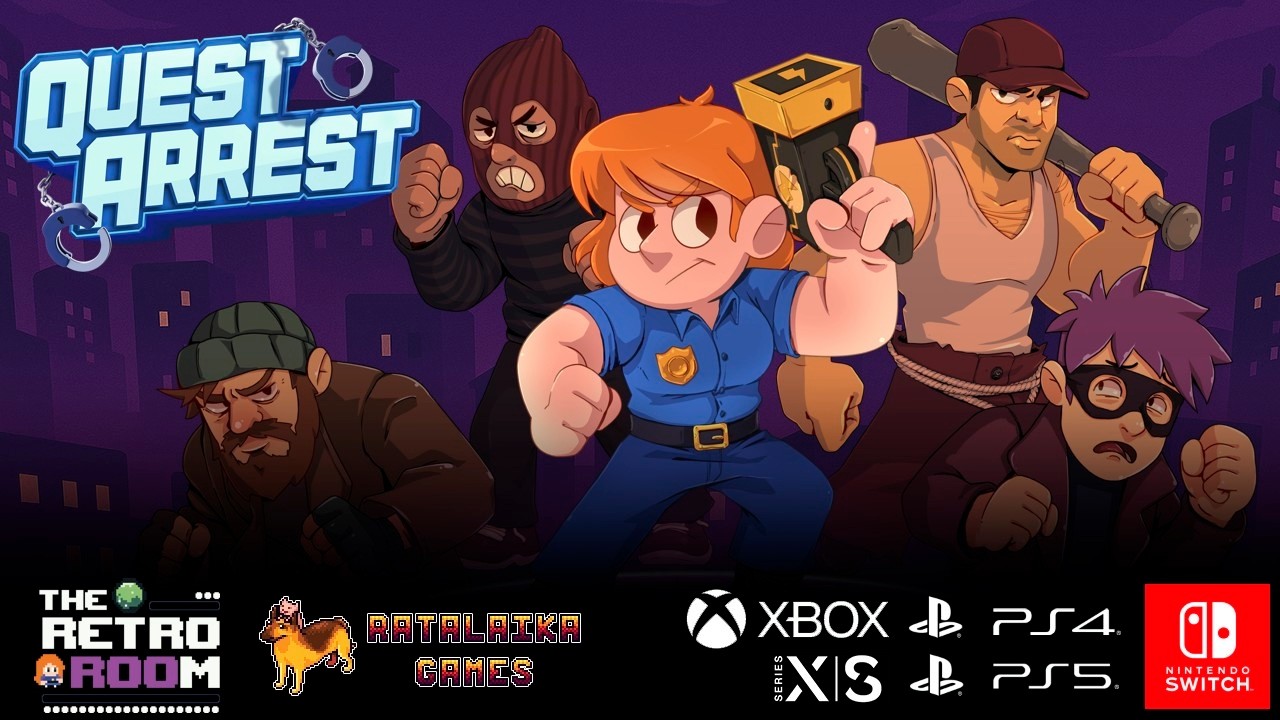
At the centre of Quest Arrest is Detective Allison Bennett, an officer tasked with cleaning up Strange Meadows after a recent crime spree throws the community into disorder. The premise immediately gives Allison a clear responsibility, but carrying it out is where the player enters the picture. Restoring peace requires more than simply walking from one confrontation to another. Allison must speak with residents, investigate events and make decisions that define how she approaches law enforcement. Is she patient and committed to procedure, or does frustration push her toward harsher tactics?
Strange Meadows is more than a backdrop for those choices. A city affected by organised crime naturally creates uncertainty among its residents. Some people may be frightened, others may be angry and a few could have their own reasons for withholding information. That makes dialogue especially important in a story built around police work. Every conversation has the potential to reveal a clue, expose a motive or change the way another character views Allison. A detective is only as effective as the information available to her, after all. Charging forward without listening might feel decisive, but it can also be the investigative equivalent of trying to assemble furniture after throwing away the instructions.
Athena’s Criminal Campaign Threatens Strange Meadows
The primary threat facing Strange Meadows is Athena, a notorious gang leader who has been terrorising local residents and intends to seize control of the city. Her ambitions give the investigation a central target while also raising the stakes for Allison. This is not a collection of unrelated petty crimes. The disorder appears connected to a broader campaign that could permanently change who holds power in the community. Stopping Athena therefore means dismantling more than a handful of criminal encounters. Allison must confront the influence and fear that the gang has spread throughout the city.
A strong antagonist can give a compact RPG a valuable sense of direction, and Athena fills that role by creating a threat players can understand immediately. Her presence hangs over Strange Meadows even when she is not standing directly in front of Allison. Residents affected by her actions help illustrate the damage being done, while gang activity gives the detective repeated opportunities to intervene. The resulting conflict is personal enough to remain focused but broad enough to affect an entire community. It also creates an interesting test for the player. Bringing down Athena may be the objective, but the methods used along the way can say just as much about Allison as the final confrontation itself.
Good Cop and Bad Cop Choices Shape the Story
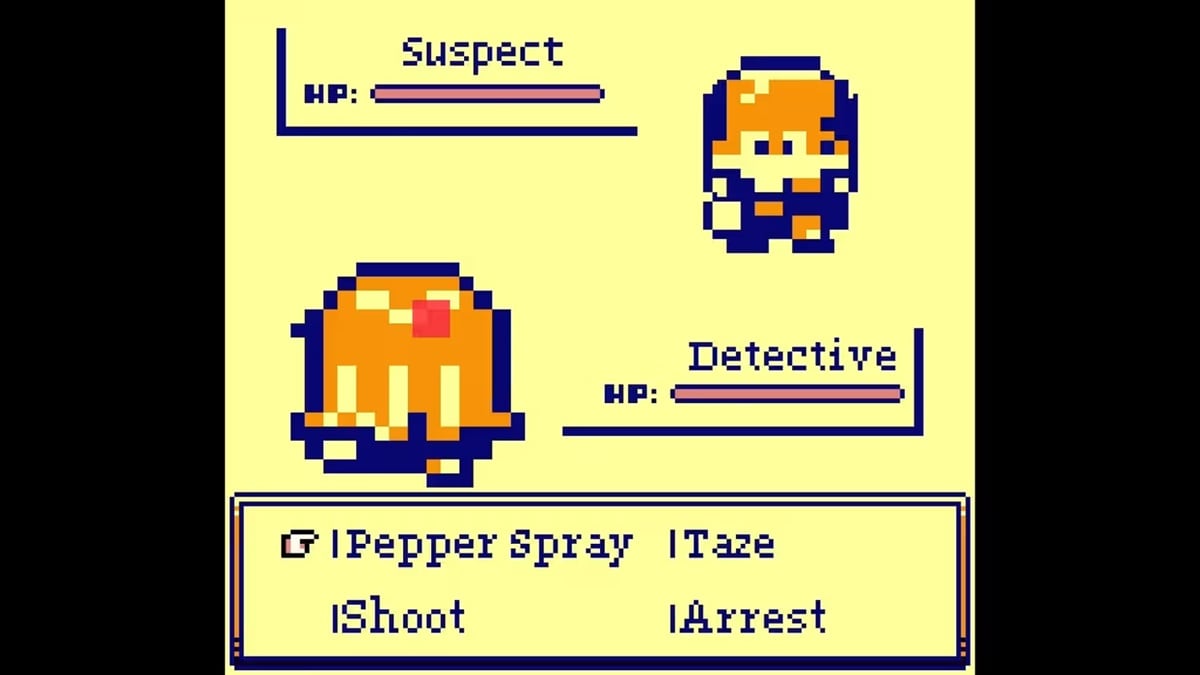
The defining idea behind Quest Arrest is that players can choose what kind of police officer Allison becomes. Criminals can be arrested, allowing her to follow a more restrained and procedural path, or they can be dealt with through lethal force. That distinction turns ordinary encounters into moral decisions. The easiest option in the moment may not produce the most desirable result later, and the game makes it clear that player choices matter. A badge may grant authority, but it does not automatically make every use of that authority correct.
This good cop or bad cop structure also creates room for role-playing beyond equipment and statistics. Some players will want Allison to behave like an ideal officer, taking suspects into custody and avoiding unnecessary violence. Others may choose a more ruthless interpretation, perhaps believing that Strange Meadows is too dangerous for restraint. There may also be players who fall somewhere between the two, judging every situation separately rather than following one fixed philosophy. That flexibility is valuable because believable decisions are rarely presented with giant signs reading “heroic option” and “terrible idea.” When consequences emerge naturally from how Allison treats people, the city can feel more responsive and the player’s version of the detective becomes more personal.
Arrests and Classic RPG Systems Drive the Adventure
Although its subject is unusual, Quest Arrest is built around classic RPG gameplay. Players explore, speak with characters, confront threats and make progress through a story shaped by their actions. Arresting criminals serves as one of its signature mechanics, connecting the law enforcement theme directly to play rather than leaving it as decorative window dressing. Allison is not merely called a detective while behaving like a traditional wandering warrior. Her responsibilities influence the options available during encounters and the way players are encouraged to think about victory.
The arrest system may be especially appealing to players who prefer alternatives to defeating every opponent through force. In many RPGs, conflict ends when an enemy’s health reaches zero, regardless of the story surrounding the battle. Quest Arrest offers a different goal by allowing suspects to be taken into custody. That small shift changes the tone of an encounter. The player is not always trying to destroy an obstacle, but to control a dangerous situation and enforce the law. Of course, a peaceful outcome does not necessarily mean an easy one. Making an arrest can demand patience and careful decision-making, which feels fitting for a detective trying to rebuild public trust in a city already pushed close to breaking point.
Thousands of Dialogue Lines Build a Reactive Mystery
Quest Arrest includes thousands of lines of dialogue, an important feature for a game driven by investigation and player choice. Conversations give Strange Meadows its personality and allow its residents to react to the unfolding crime spree. They also provide the space needed to explain motives, relationships and competing perspectives. A detective story without meaningful dialogue would be rather like a courtroom with no witnesses: technically possible, perhaps, but not especially useful.
The volume of dialogue also suggests that conversations are intended to do more than deliver basic instructions. Characters can respond to Allison’s behaviour, offer information and help show how her reputation changes over time. A law-abiding detective may inspire confidence among residents, while an aggressive officer could create fear or resentment. Those reactions make decisions feel visible even when they do not immediately trigger a dramatic event. Dialogue can also reward curiosity. Players who speak with everyone and pay attention to small details may develop a clearer picture of Strange Meadows than those who rush directly toward the next objective. In a story-rich RPG, the most revealing clue may not be a flashing object on the floor. It may be a nervous sentence from someone who knows more than they first admit.
Multiple Endings Give Every Decision More Weight
Quest Arrest features multiple endings, giving its branching choices a destination rather than treating them as temporary flavour. The way Allison handles criminals, interacts with residents and responds to Athena’s campaign can influence how her story concludes. This makes the journey through Strange Meadows feel less predetermined. Players are not simply filling in the same route with slightly different dialogue. Their decisions contribute to the outcome waiting at the end of the case.
Multiple endings also encourage replaying the adventure. After completing the game as a careful officer who prioritises arrests, a player may return and explore a far more aggressive approach. The contrast can reveal different conversations, consequences and interpretations of Allison’s character. It can also make earlier decisions more interesting in hindsight. A choice that seemed harmless during the first playthrough may turn out to have greater importance than expected. This kind of structure suits a smaller RPG particularly well because repeating the story does not require another hundred-hour commitment. Players can experiment, test different moral boundaries and discover how much Strange Meadows changes when the person wearing the badge follows a different code.
Game Boy Color-Style Visuals Define the Presentation
Quest Arrest uses a Game Boy Color-inspired aesthetic that immediately recalls portable RPGs from an earlier generation. Its pixel-based presentation suits the game’s compact design and gives Strange Meadows a nostalgic identity. Instead of chasing realism, the visuals rely on simplified environments, expressive character sprites and the distinctive limitations associated with retro handheld games. For players who grew up carrying a translucent purple console in a backpack, the style may produce a particularly warm flash of recognition.
That visual direction is more than a decorative filter. A carefully designed retro aesthetic can keep the player focused on dialogue, exploration and decision-making without burying the experience beneath elaborate effects. It also creates an interesting contrast with the subject matter. Police corruption, criminal violence and moral responsibility are serious themes, yet they are presented through colourful graphics reminiscent of classic portable adventures. The result can feel approachable without stripping the story of its stakes. Modern Nintendo Switch players are accustomed to seeing new games adopt older visual languages, but the best examples understand why those styles worked. Clear silhouettes, readable environments and memorable character designs can communicate plenty, even when every face consists of only a modest handful of pixels.
An Affordable Digital Release From Ratalaika Games
Quest Arrest launched digitally for Nintendo Switch on July 10, 2026, with a listed price of $4.99 in North America. That price positions it as a compact and accessible release rather than a large premium production. Players interested in its police theme, branching choices or retro presentation can investigate Strange Meadows without making a major purchase. The low entry price may also make its replay value more attractive, particularly for anyone who wants to pursue several endings and compare different approaches to the story.
Ratalaika Games has published many smaller console releases, often bringing independently developed projects to multiple platforms. Quest Arrest fits comfortably within that catalogue by offering a focused concept with an immediately recognisable visual identity. It does not need an enormous open world or dozens of interlocking systems to explain its appeal. The central question is easy to understand: what kind of officer will you become when a frightened city hands you authority? Everything else, from arrests and dialogue to Athena’s criminal ambitions, grows from that premise. For players who enjoy choice-driven RPGs and do not mind a little pixelated paperwork with their crime fighting, the game presents a curious alternative to the usual fantasy quest.
Conclusion
Quest Arrest gives Nintendo Switch players a different kind of role-playing assignment. Detective Allison Bennett must protect Strange Meadows from Athena and her gang, but the way she carries out that mission depends on the player. Arrests, aggressive actions and conversations all help define her reputation and determine how the story ends. That makes the game’s central conflict about more than defeating a villain. It also asks how power should be used when a community is afraid and desperate for order.
Its Game Boy Color-inspired graphics, classic RPG foundations, thousands of dialogue lines and multiple endings create a focused adventure built for experimentation. The $4.99 digital price further lowers the barrier for players curious about its unusual premise. Whether Allison becomes a principled defender, a feared enforcer or something less predictable is left in the player’s hands. Strange Meadows needs a detective, but it may not be prepared for the one you decide to create.
FAQs
- What is Quest Arrest?
- Quest Arrest is a story-driven law enforcement RPG in which players control Detective Allison Bennett as she investigates a crime spree in Strange Meadows. The game includes arrests, classic RPG gameplay, dialogue-driven choices and multiple endings.
- When was Quest Arrest released for Nintendo Switch?
- Quest Arrest was released digitally for Nintendo Switch on July 10, 2026.
- How much does Quest Arrest cost?
- The game launched with a listed North American Nintendo eShop price of $4.99. Regional pricing may vary between different Nintendo eShop territories.
- Do player choices affect the ending?
- Yes. Quest Arrest features meaningful decisions and multiple endings. Players can shape Allison’s conduct by choosing whether to arrest criminals or use more aggressive methods.
- What visual style does Quest Arrest use?
- Quest Arrest uses pixel art inspired by the Game Boy Color era, giving its detective story the appearance of a classic handheld RPG.
Sources
- Quest Arrest for Nintendo Switch, Nintendo, July 10, 2026
- Quest Arrest, Nintendo Netherlands, July 10, 2026
- Quest Arrest, a Law Enforcement-Themed RPG, to Release on Nintendo Switch, Nintendo Everything, July 6, 2026
- Quest Arrest, Nintendo Life, June 2026
- Quest Arrest, Nintendo World Report, July 10, 2026