














Summary:
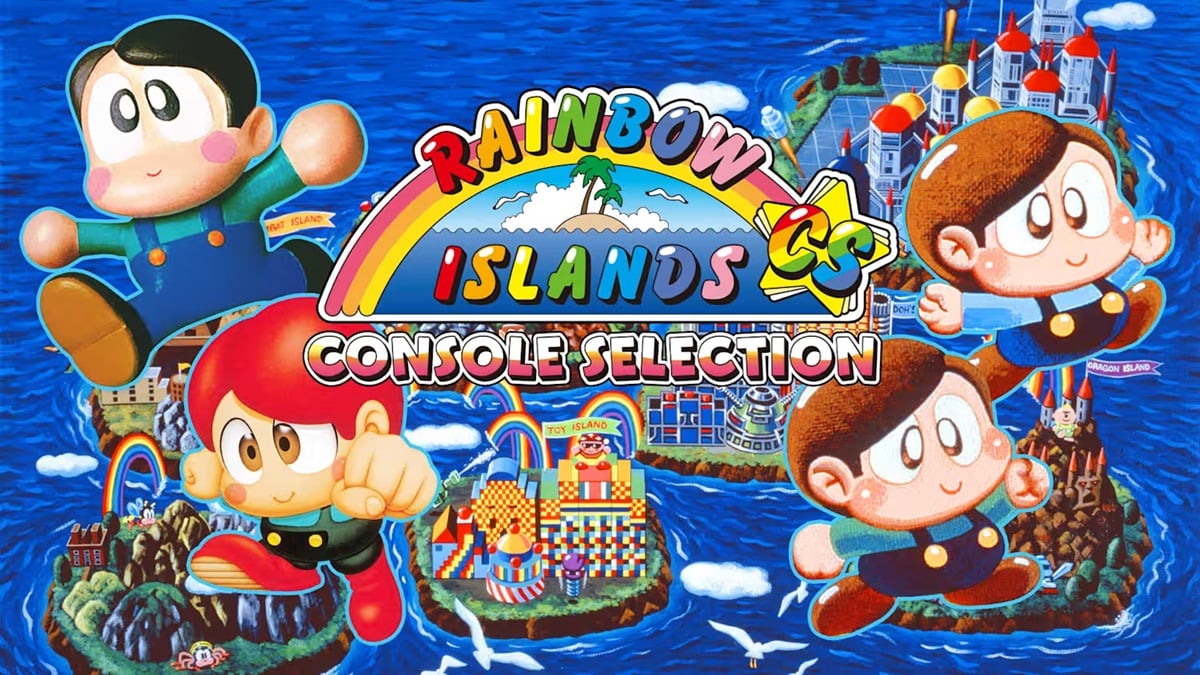
Taito is bringing another colourful piece of its arcade heritage back into the spotlight with Rainbow Islands Console Selection for Nintendo Switch. Scheduled to launch on October 8, 2026, the collection gathers six home-console interpretations of the beloved vertical platform game rather than simply offering another emulation of the original arcade release. Players will be able to explore the Family Computer, Nintendo Entertainment System, SEGA Master System and PC Engine CD-ROM² editions, alongside Japanese and western versions of Rainbow Islands Extra for the Mega Drive and Genesis. That range matters because these releases were not identical copies wearing different plastic shells. Each adaptation made its own visual, mechanical, structural or musical changes, giving fans a chance to compare how Rainbow Islands evolved across several generations of hardware.
The collection also adds practical features designed to take some of the sting out of these famously demanding games. Every included version supports 24 quick-save and quick-load slots, while optional diamond-location assistance can help players understand one of the game’s trickier systems. A powered-up starting option offers another way to reduce the early difficulty curve without rewriting the original mechanics. Rainbow Islands Console Selection will be sold digitally in western regions for $29.99, while Japan will also receive a physical release through the broader Rainbow Parasol Collection. With six interpretations of the same colourful adventure in one package, the release looks less like a simple rerelease and more like a playable record of how one arcade favourite changed as it travelled between consoles.
Rainbow Islands Console Selection brings six versions to Switch
Rainbow Islands Console Selection is scheduled to arrive on Nintendo Switch on October 8, 2026, bringing together six home adaptations of Taito’s colourful platform game. Instead of focusing on the original arcade edition, the collection examines how Rainbow Islands was translated for consoles with very different hardware, audiences and technical limits. The included lineup covers the Family Computer, Nintendo Entertainment System, SEGA Master System and PC Engine CD-ROM² versions. It also features two regional editions of Rainbow Islands Extra, namely the Japanese Mega Drive release and the western Genesis version. That makes the package particularly interesting for players who enjoy comparing old conversions rather than merely replaying a familiar arcade ROM. Think of it as opening six time capsules that all contain the same basic adventure, but with different artwork, sounds, stage details and design decisions tucked inside. For long-time fans, those distinctions are the main attraction. For newcomers, the collection provides several ways to discover why rainbow-building became such a memorable platforming mechanic.
The collection celebrates Rainbow Islands beyond the arcade
Rainbow Islands began life as a Taito arcade game in 1987, but its identity grew considerably through the many home adaptations that followed. Console ports often had to reinterpret arcade releases rather than reproduce them perfectly, especially when processors, storage formats and sound hardware varied so dramatically. Rainbow Islands Console Selection puts that history front and centre by concentrating on the home-console lineage. It shows how developers preserved the central idea of climbing vertically through bright stages while using rainbows as weapons, shields and temporary platforms. At the same time, each adaptation carries traces of the machine for which it was created. Colours might shift, layouts may be rearranged and audio can take on an entirely different personality. That variation is part of the charm. Playing several editions next to one another is a little like hearing different bands perform the same song. The melody remains recognisable, yet the instruments, tempo and mood can change enough to make each performance feel distinct.
Six home adaptations provide noticeably different experiences
The six included versions represent more than a list of old console names. They reflect a period when ports could differ substantially depending on their region and target platform. The Family Computer and Nintendo Entertainment System editions share a technological foundation, but regional differences and altered presentation give enthusiasts reasons to examine both. The SEGA Master System conversion offers another 8-bit interpretation, while the PC Engine CD-ROM² edition benefits from disc-based audio and its own presentation choices. Rainbow Islands Extra then moves the collection into 16-bit territory through its Japanese Mega Drive and western Genesis releases. Even players who know the arcade game by heart may encounter unfamiliar stage behaviour, music, pacing or story details as they move between these editions. The appeal lies in spotting those changes for yourself. One version might feel brisker, another may place more emphasis on its soundtrack, and another could surprise you with redesigned environments. Rather than declaring one edition the definitive choice, the collection invites players to appreciate how each developer solved the same conversion puzzle.
Rainbow Islands Extra receives rare dual-region representation
Rainbow Islands Extra is one of the collection’s most intriguing inclusions because both its Japanese Mega Drive form and western Genesis form are represented. The Extra variation is not simply the standard game with a decorative label attached. It rearranges enemies and bosses while adjusting the challenge, creating a more demanding remix for players who already understand the original structure. The Mega Drive and Genesis editions have also become less accessible than many modern retro rereleases, making their inclusion especially valuable from a preservation perspective. Taito notes that the collection includes a Mega Drive and Genesis version that was never released on cartridge, giving the package an additional point of interest for collectors and historians. Being able to compare Japanese and western builds without tracking down ageing hardware removes a considerable barrier. It also gives curious players the freedom to test whether small regional differences affect the rhythm of play. Retro enthusiasts love this sort of detail, even when it leads to friendly arguments that somehow last longer than an actual playthrough.
Modern assistance features make the classics easier to revisit
Older platform games can be wonderfully rewarding, but they rarely hesitate to knock players back down the mountain. Rainbow Islands is no exception. Its colourful presentation may look friendly, yet the game expects quick reactions, route planning and a solid understanding of how its rainbow mechanics interact with enemies and platforms. Rainbow Islands Console Selection addresses that challenge with several optional conveniences. Each of the six versions includes 24 quick-save and quick-load slots, allowing players to preserve progress at useful points rather than relying entirely on the original rules. A feature that displays diamond locations should also make one of the game’s more obscure systems easier to understand. Players can additionally begin in a powered-up state, reducing the time needed to obtain movement and rainbow upgrades. These options do not erase the character of the original releases. They simply offer a softer landing for anyone who wants to practise difficult areas, study level layouts or enjoy the experience without losing an evening’s progress to one poorly timed jump.
Quick-save slots support practice and experimentation
Providing 24 quick-save and quick-load slots for every version gives players far more flexibility than a single suspend point could offer. You might reserve one slot for the start of an island, another for a difficult boss and several more for testing alternate routes. That approach is useful because Rainbow Islands rewards experimentation. Rainbows can be placed in ways that alter how you climb, attack and collect items, so replaying a small stretch can reveal strategies that are easy to miss during a full run. Save slots also make comparisons between editions more practical. A player can reach similar locations in the NES, Master System and Mega Drive versions, then switch between them to examine how enemy placement or movement differs. Purists remain free to ignore the feature and play under the original conditions. Everyone else can treat it as a training net beneath a particularly slippery trapeze. The challenge is still waiting above, but falling no longer means repeating quite as much ground.
Diamond assistance explains an important hidden system
Diamonds are closely connected to progression and scoring in Rainbow Islands, but their behaviour is not always obvious to new players. The colour of a diamond can depend on where an enemy is defeated across the width of the screen, meaning that collecting the full range requires more planning than simply attacking everything in sight. A display feature that helps reveal diamond locations should make this system easier to follow. Instead of consulting old magazines, hand-drawn maps or half-remembered playground rumours, players can use the collection’s assistance tools to understand what the game expects. This is especially helpful for those aiming to uncover secret areas or achieve better outcomes. The feature also demonstrates how a modern rerelease can respect the original design while making its hidden rules more readable. Rainbow Islands was created during an era when discovery often came through repeated failure and shared secrets. That mystery remains appealing, but optional guidance can prevent confusion from becoming frustration.
Powered-up starts offer a friendlier route into each version
The option to begin in a powered-up state should be particularly useful for newcomers and returning players whose reflexes have collected a little dust. Power-ups can improve movement speed, increase the number of rainbows produced and alter how quickly those rainbows appear. Starting with those advantages allows players to experience the game’s movement and combat at a more capable level from the beginning. It can also help when comparing the six versions, since players will not need to rebuild their abilities from scratch every time they switch platforms. The feature is optional, so it does not replace the traditional progression loop or prevent anyone from experiencing the original difficulty. Instead, it works like choosing a comfortable pair of shoes before climbing a steep hill. The hill has not become flat, but the opening stretch feels less punishing. That balance between preservation and convenience appears central to the collection’s approach.
Rainbow magic remains both a weapon and a platform
The defining idea behind Rainbow Islands is wonderfully simple: rainbows are useful for almost everything. Bubby and Bobby can create them to attack enemies, block danger and form temporary platforms that help them climb towards the top of each vertically scrolling stage. Jumping on a rainbow can cause it to collapse, damaging enemies beneath it and creating opportunities to collect valuable items. Multiple rainbows can also interact in chain reactions, turning a carefully prepared route into a colourful cascade of destruction. This combination of offence and movement gives the game a distinctive rhythm. Players are not merely jumping between fixed ledges or firing projectiles across a flat screen. They are actively building the path ahead while deciding whether each rainbow should become a staircase, a trap or an immediate attack. The mechanic remains easy to understand but difficult to master, which is probably why it continues to feel inventive decades later. Few weapons can double as architecture without looking completely ridiculous, yet Rainbow Islands makes it seem perfectly natural.
Vertical stages create constant pressure to keep climbing
Unlike platform games built around left-to-right exploration, Rainbow Islands sends players upward. Each stage begins near the bottom and challenges Bubby or Bobby to reach the highest point while enemies and environmental hazards interfere. The vertical design changes how players read the screen because threats can arrive from above, below or across narrow platforms. Rainbows provide the tools needed to create new footholds, but careless placement can leave the player exposed or block an intended route. The game also discourages hesitation. Taking too long can trigger additional pressure, pushing players to move before they have fully planned the next sequence. That blend of improvisation and urgency gives each stage an energetic flow. You are always constructing a path while the game quietly reminds you that sightseeing is not part of the itinerary. Different console adaptations may adjust layouts and pacing, but the basic desire to climb remains the heart of every version included in the collection.
The story continues after the events of Bubble Bobble
Rainbow Islands follows the events of Bubble Bobble, where Bub and Bob rescued their loved ones and returned from their dragon forms to their human identities as Bubby and Bobby. Several years later, the pair travel back to their ancestral home in search of treasure. Naturally, a peaceful treasure hunt would make for a rather uneventful platform game, so their return becomes tangled in another plot involving the Boss of Shadow. Armed with rainbow magic given to them by their parents, Bubby and Bobby set out across the islands while confronting enemies that block their path. The exact story presentation differs slightly between the Family Computer, Nintendo Entertainment System, SEGA Master System, Mega Drive and PC Engine versions. Taito specifically notes that the collection’s general story description is based on the Mega Drive and PC Engine editions. These variations add another reason to explore multiple releases, particularly for players interested in how localisation and hardware constraints changed the way game stories were presented.
Regional differences extend beyond graphics and hardware
It is tempting to assume that regional editions of an old platform game differ only in language, packaging or title-screen logos. Rainbow Islands demonstrates why that assumption can be misleading. Story details, stage arrangements, music and gameplay systems can vary depending on the version being played. The Family Computer and Nintendo Entertainment System editions do not necessarily present every element in the same way as the Mega Drive or PC Engine releases. Rainbow Islands Extra introduces further changes by reshuffling enemies and bosses to create a modified challenge. Including both the Japanese Mega Drive edition and the western Genesis build therefore gives players an opportunity to look beyond cosmetic differences. These versions form part of the same family, but they are not identical twins. They are more like siblings who grew up in different regions and returned with slightly different stories. For retro fans, investigating those distinctions can be just as enjoyable as reaching the final stage.
The PC Engine edition carries a distinctive musical identity
The PC Engine CD-ROM² version stands out because its disc format allowed music to play a larger role in the presentation. According to Taito’s description, this edition is based on the NES version and includes a main theme arranged for FM sound by Yukiharu Urita. It also features an ending theme composed by Norihiro Furukawa. Both musicians are alumni of Zuntata, Taito’s in-house sound team, giving the port a meaningful connection to the company’s musical history. Soundtracks are often among the most noticeable differences when comparing old console conversions. A melody rendered through one machine’s sound hardware can feel playful and sharp, while another arrangement may sound fuller or more atmospheric. The PC Engine CD-ROM² release provides a particularly interesting example because its audio presentation carries qualities that cartridge-based versions could not easily reproduce. Players who enjoy retro game music may find themselves spending as much time comparing themes as they do comparing stage layouts.
The familiar main theme links several included editions
Taito indicates that the background music used for the Family Computer, Mega Drive and PC Engine CD-ROM² editions features a main theme based on the NES version. That shared musical foundation creates a thread between releases that otherwise differ in visual detail and technical presentation. Listening to the theme across several systems should reveal how arrangements change when interpreted through different sound chips and production methods. The melody remains familiar, but its texture and energy can shift dramatically. This is one reason collections containing multiple ports can be so rewarding. They preserve not only variations in gameplay but also the technical artistry of adapting music to specific hardware. Composers and sound designers often worked within strict limits, using a small number of channels to create tunes that remained memorable for decades. Rainbow Islands Console Selection gives those adaptations room to sit beside one another rather than forcing players to choose a single version as the only one worth remembering.
Digital and physical release plans differ between regions
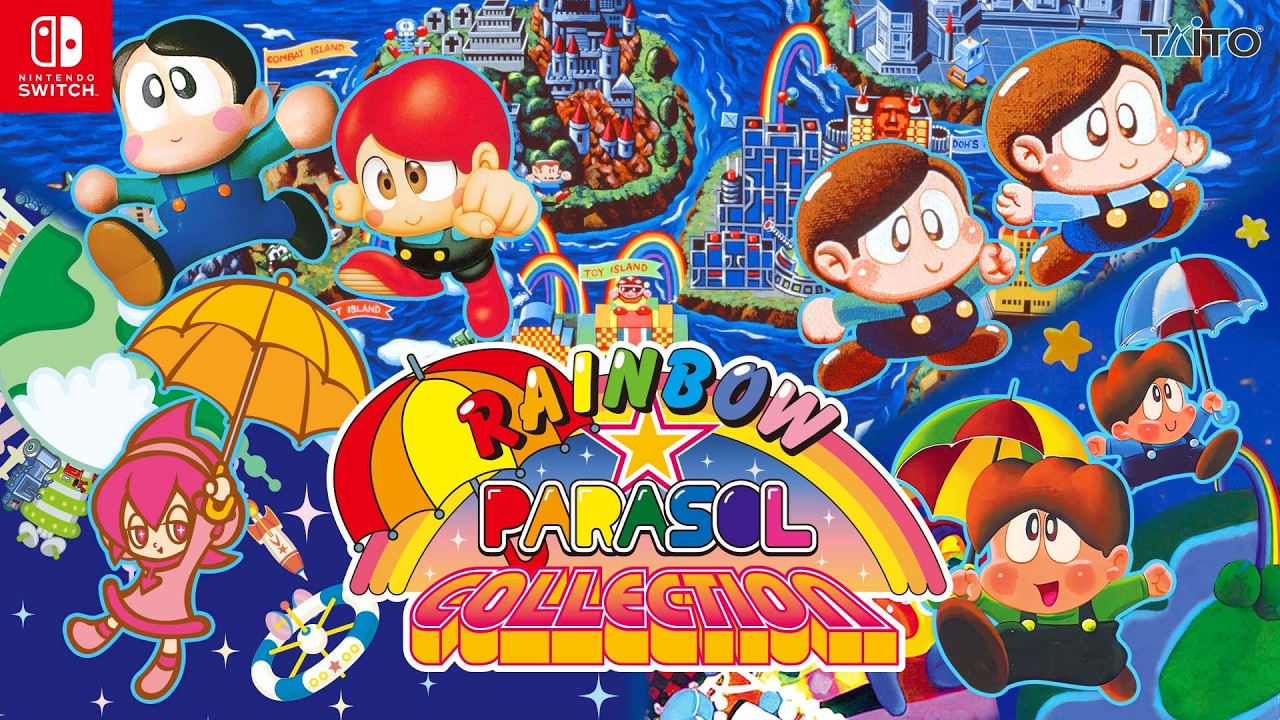
Rainbow Islands Console Selection will be available digitally in western regions for $29.99. Japan is also receiving a physical option, although the boxed release forms part of the larger Rainbow Parasol Collection. Taito’s Japanese package combines Rainbow Islands Console Selection with Parasol Stars and Spica Adventure, creating a broader collection of colourful action games. A special edition featuring an original T-shirt designed by EDITMODE has also been announced for the Japanese market. Western players currently have the standalone digital release as the confirmed option. Regional differences in physical availability are common for retro collections, but they can still leave collectors peering enviously across the ocean. Importing may become an option depending on language support and retailer availability, although buyers should verify those details before placing an order. For players primarily interested in accessing the six Rainbow Islands versions, the digital western edition provides the most straightforward route.
The Japanese package connects three Taito favourites
The Japanese Rainbow Parasol Collection places Rainbow Islands Console Selection alongside Parasol Stars and Spica Adventure. Parasol Stars is closely connected to Bubble Bobble and Rainbow Islands, while Spica Adventure represents another slice of Taito’s arcade history. Packaging the three together creates a wider celebration of the company’s colourful action-game catalogue. It also makes the Japanese physical edition noticeably different from the standalone western digital release. Collectors may value the boxed format, while players focused exclusively on Rainbow Islands may prefer the simpler digital option. Either way, the regional strategy shows that Taito is approaching the release from two angles. One version serves as a focused collection of Rainbow Islands console adaptations, while the other frames that collection as part of a larger family of arcade-style experiences. It is an unusual arrangement, but retro publishing has never been afraid of making collectors reach for spreadsheets.
The October release expands Taito’s retro presence on Switch
Nintendo Switch has become a welcoming home for Taito’s older games through individual Arcade Archives releases, dedicated collections and modern revivals. Rainbow Islands itself is already available in arcade form through Arcade Archives, but Rainbow Islands Console Selection serves a different purpose. Rather than duplicating that release, it preserves the console adaptations that emerged after the arcade original. This distinction is important because ports can contain unique material that disappears when preservation efforts focus only on original arcade code. By gathering six editions in one package, Taito is acknowledging that the history of Rainbow Islands includes the compromises, experiments and creative changes made for home hardware. The October 8, 2026 launch therefore complements the existing arcade release rather than replacing it. Players can experience the original arcade design through Arcade Archives, then explore how developers reconstructed that design across Nintendo, SEGA and NEC systems. Together, those releases offer a broader picture of the game’s journey.
Conclusion
Rainbow Islands Console Selection looks set to become a fascinating release for anyone interested in Taito’s history, classic platform games or the unpredictable world of home-console conversions. Its six included versions cover several hardware generations and preserve differences that might otherwise remain difficult to access. The Family Computer, NES, SEGA Master System and PC Engine CD-ROM² editions each offer their own interpretation, while the Japanese Mega Drive and western Genesis forms of Rainbow Islands Extra add a rarer 16-bit perspective. Modern features such as 24 save slots per version, diamond-location assistance and powered-up starts should make the collection more approachable without removing the option to play traditionally. With a digital western price of $29.99 and a Japanese physical package also planned, players will have different purchasing routes depending on their region. When October 8, 2026 arrives, Bubby and Bobby will once again be building colourful stairways towards the sky, and this time they are bringing six versions of the adventure with them.
FAQs
- When will Rainbow Islands Console Selection be released?
- Rainbow Islands Console Selection is scheduled to launch for Nintendo Switch on October 8, 2026.
- Which versions of Rainbow Islands are included?
- The collection includes the Family Computer, Nintendo Entertainment System, SEGA Master System and PC Engine CD-ROM² versions. It also includes the Japanese Mega Drive and western Genesis editions of Rainbow Islands Extra.
- Does the collection include the original arcade version?
- The announced lineup focuses on six home-console adaptations rather than the original arcade version. The arcade release is available separately on Nintendo Switch through Arcade Archives.
- What modern features are included?
- Each version supports 24 quick-save and quick-load slots. The collection also includes diamond-location assistance and an option that lets players begin in a powered-up state.
- Will Rainbow Islands Console Selection receive a physical release?
- A physical release has been announced for Japan as part of the Rainbow Parasol Collection. The western version is currently confirmed as a digital release priced at $29.99.
Sources
- Rainbow Parasol Collection Official Website, Taito Corporation, June 18, 2026
- Rainbow Parasol Collection Announced for October 8, 2026, Taito Corporation, June 18, 2026
- Rainbow Islands Console Selection Announced for Nintendo Switch, Nintendo Everything, June 18, 2026
- Arcade Archives Rainbow Islands, Hamster Corporation, January 25, 2024
- Rainbow Islands Console Selection for Nintendo Switch, GameFAQs, June 18, 2026