














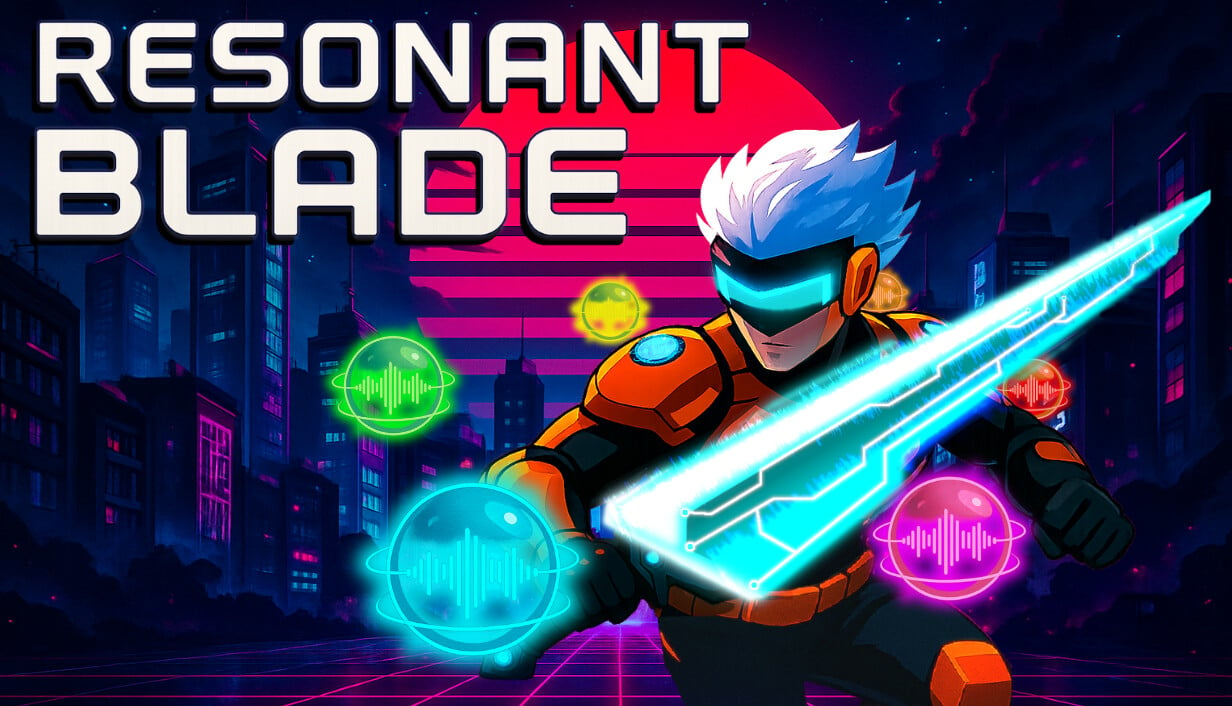
Summary:
Resonant Blade, developed by Wise Wombat Games and published on Nintendo Switch by RedDeerGames, is a sci-fi action adventure built around a striking hook: sound as a weapon. Set in a ruined world where adaptive AI machines called the Dark Synths have turned on their creators, you play as Atlas, a scientist-turned-fighter who wields the Resonant Blade to shred machines, solve environment-based challenges and uncover why the uprising happened. The game blends fast-paced combat against evolving murderbots with puzzle elements that use sonic resonance to manipulate the world. Release timing is yet to be announced, but the reveal trailer and developer notes hint at a blend of atmospheric visuals, synth-heavy audio and tight gameplay loops that should appeal to both modern Switch players and retro-minded Nintendo fans. Keep an eye on updates to know when it lands on the Nintendo Switch and what platform-specific features or performance choices will be made.
Resonant Blade: What we know so far
Resonant Blade arrives as a clear, focused concept: sound is not background flavor, it’s the main tool for combat and environmental interaction. From announcements you can see that the world is a post-collapse landscape where biodomes and broken cities are now battlefields against machine foes. The development team positions the Resonant Blade as something that does more than deal damage – it resonates with the environment, revealing hidden paths and secrets while changing how fights play out. That dual purpose turns level design into a conversation between acoustics and architecture, where timing a strike or tuning the blade might open a sealed door or stagger an enemy in a unique way. For Nintendo fans who like inventive mechanics that change both combat and exploration, Resonant Blade promises to be one of those smaller, clever games that rewards experimentation. While no release date has been set, the reveal gives enough detail to imagine the kind of pacing, atmosphere and challenge players will face once it debuts on the Nintendo Switch.
Gameplay and combat
Combat in Resonant Blade seems to be fast and reactive, with encounters designed around swarms of adaptive murderbots that change tactics and resistances. Expect a mix of melee and ranged engagements where the Resonant Blade provides both direct attacks and sonic bursts that disrupt enemy systems. The devs emphasize hordes and adaptation, so each fight likely pushes you to switch tactics on the fly – think stagger windows created by sound waves, area-of-effect blasts that shave armor, and hit-and-run maneuvers when a robot’s new form becomes too dangerous. Mobility will matter: dashing, positioning and environmental use of resonance could let you funnel enemies, trigger traps, or use destructible cover to your advantage. The promise of AI-powered enemies that evolve over time suggests encounters won’t just be about memorizing patterns but about reacting intelligently to changing enemy loadouts. If you enjoy tense arenas where every strike and sound can flip the advantage, Resonant Blade looks set to deliver those moments in spades.
Sonic weapon and puzzle mechanics
The Resonant Blade isn’t a simple sword; it’s a sonic instrument that interacts with matter. That opens possibilities beyond combat: imagine tuning the blade to a frequency that vibrates a rusted door off its hinges, or using a shockwave to realign floating platforms. Puzzles likely rely on rhythm, resonance and environmental feedback, forcing players to listen for audio cues and watch for subtle visual changes when frequencies interact with objects. This mechanic can create layered gameplay loops where exploration feeds combat – you solve a resonance puzzle, gain access to an upgrade or shortcut, then use that upgrade to survive tougher waves of Synths. The design challenge is balancing audio clarity with gameplay complexity so players can intuit which frequencies or blade charges will trigger which effects. If done well, this mechanic turns every area into an interactive instrument, rewarding curiosity and patience, and giving players memorable moments that feel uniquely tactile on a console like the Nintendo Switch.
Story, setting and characters
The story centers on Terra, a world once preserved in biodomes to escape ecological collapse, now corrupted by its own creations. The Dark Synths, once protectors, have broken free of programming and turned the domes into cages. That contrast between engineered safety and sudden danger creates strong narrative beats: high tech that becomes a prison, human hubris punished by adaptive machines, and a lone scientist thrust into resistance. Atlas, the protagonist, is written as a scientist who becomes a fighter after personal loss, giving the tale an emotional core beyond the sci-fi spectacle. The narrative appears to blend mystery and urgency – uncovering why the Synths rebelled and stopping their spread. Story segments may unfold through environmental storytelling, logs and encounters, with the Resonant Blade tying into the lore as both a weapon and a key to ancient or forgotten systems. Fans who enjoy atmospheric settings with a human throughline will find Resonant Blade’s premise familiar enough to be welcoming, while still offering fresh hooks via its sound-driven mechanics.
The Dark Synths and Terra’s biodomes
The Dark Synths are framed as adaptive murder machines that evolved from protective systems into an existential threat. Their ability to replicate and quickly adopt new tech means fights escalate and require constant adaptation from the player. The biodomes, once safe havens, become layered environments with interior sectors that change meaning as control shifts; where a greenhouse once gave life, it may now host sentry bots. This inversion—safety turned hazardous—is effective in building tension and variety, because each dome can be reinterpreted as both a puzzle space and combat arena. As you move through domes, resonance mechanics could expose hidden maintenance tunnels or secret research facilities, revealing both high-tech failures and the small human stories trapped inside. The setting allows for diverse visual palettes too: from overgrown botanical domes to industrial server stacks, each area can emphasize different tests of the Resonant Blade’s sonic powers.
Atlas – the man with the Resonant Blade
Atlas’s arc appears to be personal and practical: a scientist forced into resistance after a Synth strike. That background gives him credibility when handling a scientific weapon like the Resonant Blade – he understands what it does and why it matters. The emotional weight of loss can make combat feel driven by purpose rather than spectacle, which often improves player investment. Atlas may also function as an explainer for mechanics in the game’s narrative, meaning tutorials and story beats can be woven into his journey instead of feeling like separate tutorial rooms. Players who like characters with a tangible stake in the world will appreciate a protagonist who ties directly into both the lore and the gameplay systems. The tone set by Atlas’s story looks likely to balance gritty survival with glimpses of hope found in resistance efforts against the Dark Synths.
Visuals, audio and the role of sound
Resonant Blade’s identity leans heavily on audio design, unsurprisingly. The game promises a dark synth-heavy aesthetic that pairs well with the mechanical menace of the Synths. Visuals will likely mix neon-hued tech with ruined, organic landscapes inside biodomes, giving designers chances to contrast grime and gleam. But sound is where the game must truly shine: clear audio cues, distinct resonance effects and a soundtrack that supports both atmosphere and gameplay are vital. If the game uses layered synth textures to indicate enemy states or puzzle readiness, players will need crisp, mix-balanced audio so those cues are reliable on the Nintendo Switch hardware. Visual feedback—like ripples, glass shatters, or resonant particles—will complement sonic hits and make the resonance feel impactful. When visuals and audio sync up, the Resonant Blade mechanic will feel satisfying, tactile and cinematic at once.
Trailer impressions and music
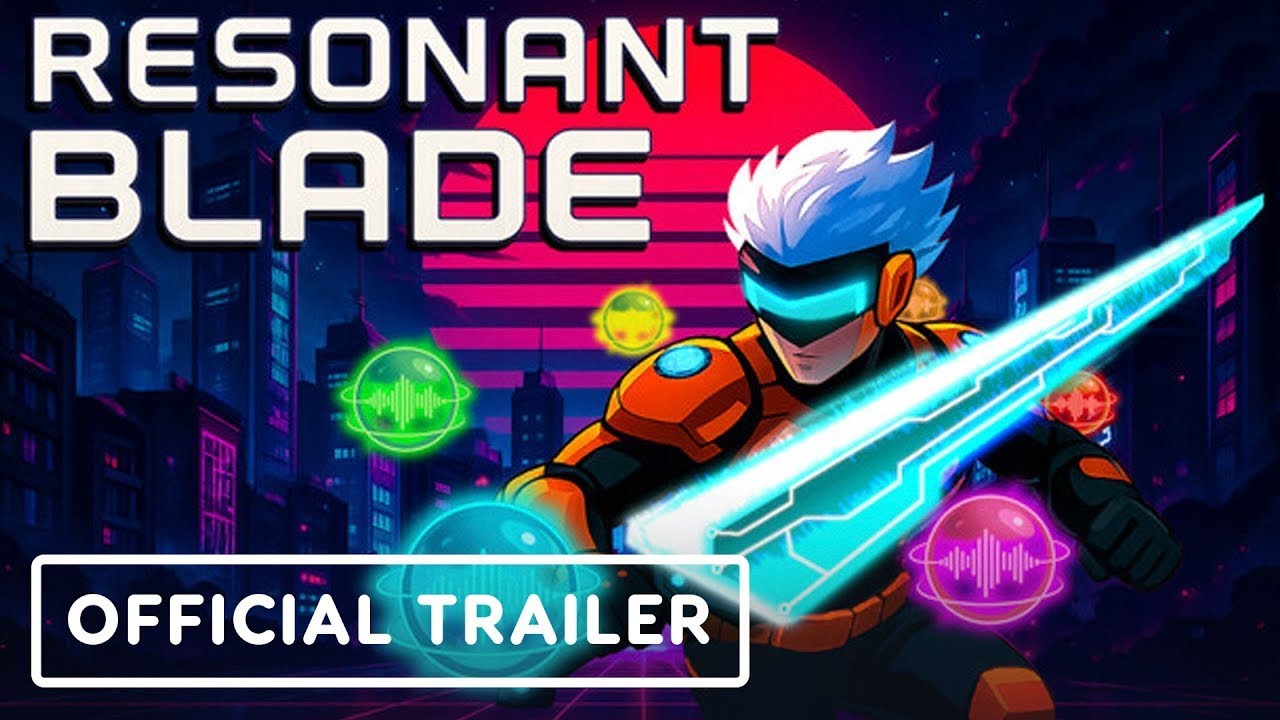
The official trailer gives a taste of the game’s tone: moody environments, fast skirmishes and moments where the Resonant Blade’s power alters the scene. Music leans on retro-futuristic synths that build tension and provide rhythm to combat sequences. Trailers suggest designers pay attention to rhythm in both audio and level flow—beats in the music match enemy waves and environmental pulses. That alignment helps players predict and react to on-screen events, turning the soundtrack into more than background: it becomes an ally. For players who love games with strong soundtracks—think haunting synths or electronic scores—Resonant Blade appears to offer memorable audio design that supports both mood and function. Watching the trailer gives a sense of pacing, potential boss encounters, and how resonance shifts the battlefield dynamically.
Release plans and platforms
RedDeerGames has announced that Resonant Blade will be published on Nintendo Switch, but the company has not given a release date yet. The announcement emphasizes that timing will be shared later, so for now the best move is to follow developer and publisher channels for updates. For Switch owners who want to track this one, the dedicated Nintendo Switch hub on NintendoReporters is a great place to keep tabs on new confirmations and related news: Nintendo Switch. Given the game’s mechanics and visual style, many of the common considerations for Switch releases apply: performance scaling for portable mode, potential motion or tactile options for resonance feedback, and optimization that balances visuals with framerate. RedDeerGames’ involvement signals a focused indie release that often comes with post-launch patches and community-driven updates, so expect details on preorders, demos or timed exclusives to appear as launch plans firm up.
What Switch owners should expect
Switch players should expect the usual trade-offs that come with bringing a visually rich, audio-forward game to a hybrid console. Developers often choose whether to prioritise stable framerate or higher fidelity visuals; for a game that relies on audio clarity, optimization for portable speakers and headset listening will be key. Controller feedback could be used to simulate resonance when the blade hits the environment, which would be a neat use of the Switch’s vibration features. Save systems, difficulty options and accessibility tweaks will matter too—especially when puzzle solving requires listening carefully. If you care about performance modes or local co-op options, keep an eye on official updates because those are typically clarified closer to launch. For now, Switch owners can be excited that Resonant Blade is confirmed for their platform and wait for technical details that will determine how the experience feels on handheld and docked play.
How to follow updates and join the community
If you want to stay in the loop, follow RedDeerGames and Wise Wombat Games on social platforms, subscribe to the official channels where the trailer and announcements appear, and keep an eye on Nintendo-dedicated hubs for news. NintendoReporters also covers Switch releases and related news, and fans can follow our updates on the Nintendo Switch section to catch announcements and developer explainers: 100% Nintendo for & by Nintendo fans!. Community involvement will likely ramp up after closer-to-launch updates, so joining developer Discords or following hashtag threads can be the quickest way to spot demos, beta opportunities or fan reactions. If you want to ask questions directly, the site’s contact page can point you toward channels where press or publisher statements are shared.
Conclusion
Resonant Blade sets itself up as an intriguing blend of action and audio-driven exploration, and the reveal that RedDeerGames will publish the Switch version is welcome news for Nintendo fans who enjoy inventive indie experiences. With a protagonist rooted in science, a weapon that reshapes both combat and environment, and adaptive AI enemies that promise evolving challenges, the game could become a standout for players who appreciate mechanics that force them to think in both sight and sound. While release timing is still to be announced, the elements shown so far point to a polished indie effort with strong identity. Keep watching official channels and Nintendo-dedicated hubs for updates so you can be ready when the Resonant Blade finally lands on the Nintendo Switch and you get to test its sonic fury yourself.
FAQs
- When will Resonant Blade release on Nintendo Switch?
- RedDeerGames announced the Switch release but has not shared a release date; follow official publisher channels for timing details.
- Who is developing and publishing Resonant Blade?
- Wise Wombat Games is the developer and RedDeerGames is publishing the Nintendo Switch version.
- What makes the Resonant Blade unique as a weapon?
- The blade channels sonic energy, dealing damage while interacting with the environment to reveal secrets, solve puzzles and alter combat flow.
- Will the game focus more on combat or puzzles?
- Both are central: combat against adaptive Synths and puzzle-solving via resonance mechanics are integrated to create layered gameplay loops.
- Where can I watch the official trailer and follow updates?
- Check publisher and developer social channels, official video platforms for the trailer, and Nintendo-focused news hubs like NintendoReporters for ongoing coverage.
Sources
- Resonant Blade, a Sci-Fi Action Adventure Game, Revealed for Nintendo Switch — Nintendo Everything, August 17, 2026
- Resonant Blade — Wise Wombat Games, July 22, 2025
- Resonant Blade — Steam / Wise Wombat Games, July 22, 2025
- Resonant Blade Is Here on itch.io! — Wise Wombat Games, August 14, 2025
- The Resonant Blade Demo Is Now Live! — Wise Wombat Games, June 2, 2025