














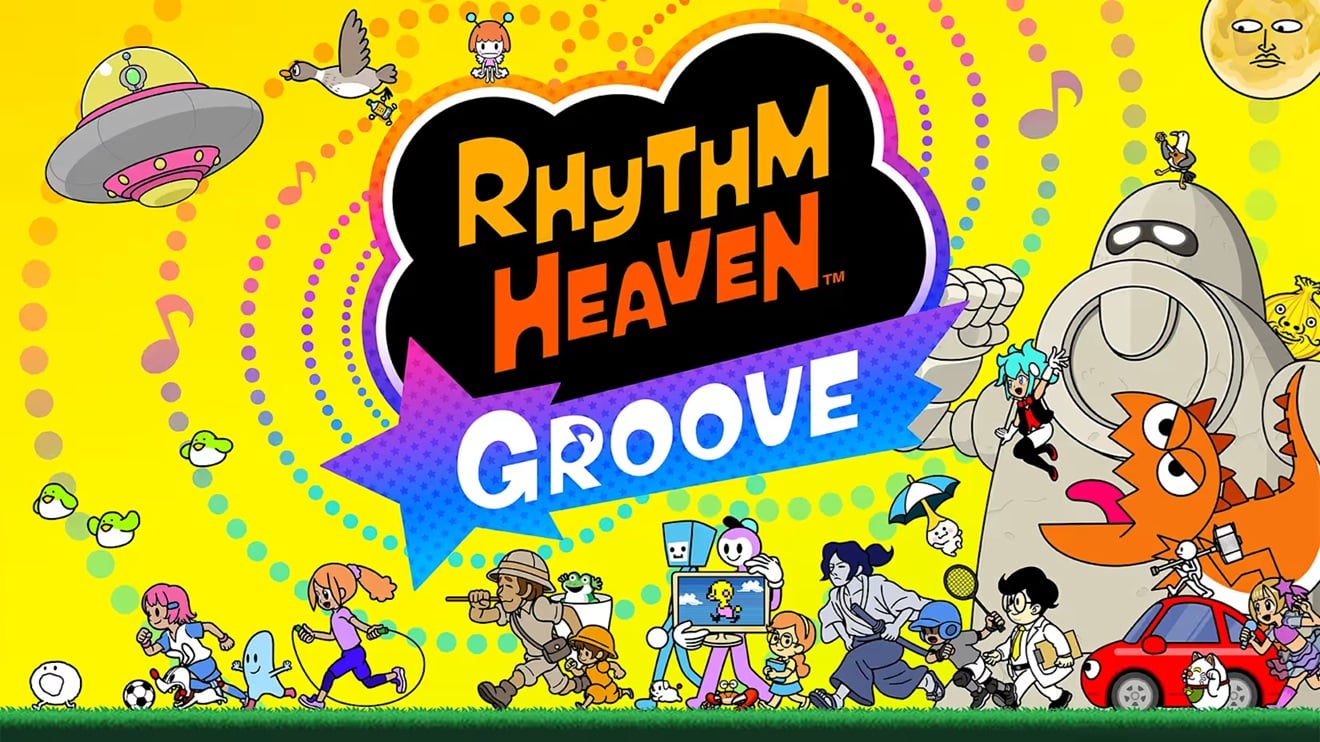
Summary:
Nintendo has released a free Starter Demo for Rhythm Heaven Groove, giving Nintendo Switch players an opportunity to sample its delightfully unusual rhythm challenges before the full game arrives on July 2, 2026. The demonstration includes a selection of activities built around listening carefully, recognising musical cues, and pressing buttons at precisely the right moment. Among the featured experiences are Hoop Trundling, a single-player challenge, and Rhythm Tweezers, which introduces the game’s multiplayer side.
As with earlier entries in the Rhythm Heaven series, the controls may appear simple, but the real challenge lies in developing a feel for the music. Visual signals can help, although players are encouraged to trust their ears and respond naturally to each beat. A mistimed press can turn an elegant performance into a tiny comedy of errors, which has always been part of the series’ charm.
Rhythm Heaven Groove combines catchy original music with strange activities that range from chopping airborne vegetables to bouncing fruit with impressively powerful biceps. Renowned Japanese musician Tsunku once again contributes to the musical identity of the experience, helping each challenge feel distinct and memorable. The demo provides both newcomers and returning fans with an early taste of the game’s playful presentation, accessible controls, and demanding sense of rhythm. It is available through Nintendo eShop on Nintendo Switch, while the complete game is also playable on Nintendo Switch 2 through backward compatibility.
Rhythm Heaven Groove demo brings the beat to Nintendo Switch
Nintendo Switch owners can now try Rhythm Heaven Groove through a free Starter Demo available from Nintendo eShop. Its arrival gives players a chance to experience the series’ distinctive blend of music, comedy, and deceptively demanding timing before the complete game launches on July 2, 2026. It is the sort of demonstration that wastes little time explaining why Rhythm Heaven has earned such a devoted following. You listen, watch, press a button, and hope your internal metronome is feeling cooperative. That sounds easy enough, doesn’t it? Give it a few rounds and the game may politely expose every fraction of a second separating a confident tap from a mistimed disaster. Rather than relying on elaborate controls, the experience places music at the centre of every interaction. This keeps it approachable for new players while preserving the precision that experienced fans expect. The demo therefore serves as more than a brief preview. It introduces the unusual design philosophy behind the series, where simplicity and challenge dance together without stepping on each other’s toes too often.
What players can expect from the Starter Demo
The Starter Demo contains a curated selection of rhythm games that represent both the single-player and multiplayer sides of Rhythm Heaven Groove. Nintendo has highlighted Hoop Trundling as one of the solo experiences, while Rhythm Tweezers demonstrates how the formula can be adapted for more than one participant. The selection lets players become familiar with the central rhythm of play without revealing every surprise waiting in the complete release. Each activity uses its own visual setting, musical pattern, and peculiar objective, but the underlying requirement remains consistent: listen carefully and respond on time. There are no sprawling control combinations to memorise and no inventory filled with seventeen slightly different rhythm sticks. Your ears, reactions, and sense of timing do most of the work. The limited selection also makes the demo easy to revisit. Players can repeat an activity, recognise where their timing slipped, and gradually turn an awkward first attempt into something that looks and sounds far more polished. That immediate improvement is one of the formula’s most satisfying qualities.
Hoop Trundling puts timing and concentration to the test
Hoop Trundling offers a single-player example of how Rhythm Heaven Groove turns a straightforward action into an absorbing test of concentration. The activity asks the player to follow its musical pattern and react when the correct cues arrive. Like many Rhythm Heaven challenges, its colourful presentation may initially make the task look more relaxed than it really is. The difficulty comes from maintaining the rhythm once the sequence begins to settle into your mind. A player may nail the opening beats, grow a little too confident, and then discover that the music has shifted just enough to punish an automatic response. It is the rhythmic equivalent of walking smoothly across a room before stepping on a squeaky floorboard. The challenge encourages active listening instead of simply watching for an obvious signal. Players who follow the sound are more likely to understand the intended timing, while those who depend entirely on animation may find themselves reacting a fraction too late. That difference is tiny on a clock but enormous when the beat is waiting.
Rhythm Tweezers introduces the multiplayer experience
Rhythm Tweezers gives the Starter Demo a social component by showing how Rhythm Heaven Groove approaches multiplayer play. The series’ precise timing already creates plenty of laughter when one person misses an obvious cue, so introducing additional players naturally increases the potential for friendly chaos. Everyone may understand what needs to happen, yet understanding the rhythm and performing it correctly are two very different things. Multiplayer activities can transform each mistake into a shared moment, whether that means celebrating a perfectly synchronised sequence or staring at one another after a spectacular collapse. The controls remain easy to understand, which helps friends or family members join without enduring a lengthy tutorial. Still, accessibility does not mean that victory arrives automatically. Players need to listen closely and resist the temptation to follow someone else’s button press. That can be difficult when several people are sitting together, because a neighbour’s movement may become more distracting than the visual action on screen. Rhythm Tweezers provides an entertaining reminder that sometimes the best strategy is simply to trust the music.
Simple controls leave nowhere for shaky timing to hide
Rhythm Heaven Groove continues the series’ preference for direct controls that allow the musical patterns to take centre stage. Most activities can be understood quickly because the challenge is not built around remembering complicated commands. Instead, success depends on pressing the appropriate button at the correct point in the music. That design makes each game inviting, but it also removes many of the excuses players usually keep in their back pocket. You cannot blame an overcrowded control scheme when only one or two inputs are required. The game knows it, you know it, and the cheerful character on screen probably knows it too. This simplicity creates a satisfying learning process. Players can immediately recognise that a mistake came from timing rather than confusion, making it easier to adjust on the next attempt. A slightly early press can become a perfect hit after hearing the pattern again. Because the rules are clear, improvement feels personal and earned. The controls open the door, while the music decides how confidently you walk through it.
Original music gives every challenge its personality
Music is not merely playing in the background of Rhythm Heaven Groove. It shapes the rules, pace, humour, and identity of every activity. Each rhythm game uses original music to communicate when a player should respond and how an upcoming sequence may change. Melodies can establish a comfortable pattern before a vocal cue, instrumental accent, or sudden pause asks the player to react differently. These changes keep seemingly simple challenges lively because the soundtrack is always doing meaningful work. Catchy music also encourages repetition. Missing a sequence rarely feels like a reason to stop when the song is already lodged firmly in your head and practically daring you to try again. The connection between sound and action gives successful performances a pleasing sense of flow. Button presses begin to feel like part of the composition rather than commands layered over it. When everything clicks, players are not merely following the music. They are participating in it. That relationship helps explain why Rhythm Heaven can make an activity involving vegetables, fruit, or tiny objects feel surprisingly musical and strangely rewarding.
Tsunku returns with his unmistakable musical influence
Renowned Japanese musician and producer Tsunku contributes music to Rhythm Heaven Groove, continuing a creative connection that has helped define the series. His involvement matters because Rhythm Heaven depends on songs that are both enjoyable to hear and clear enough to support precise interaction. A successful track needs personality, but it must also communicate rhythm in a way that players can understand intuitively. The best musical cues feel natural rather than instructional, allowing a change in melody or vocal delivery to signal what comes next. Tsunku’s influence supports the series’ combination of catchy pop sensibilities and playful experimentation. The result is music that can make a bizarre task feel completely logical while the song is playing. Of course you are chopping flying vegetables in time with a lively tune. What else would you be doing? The soundtrack’s memorable character also gives individual rhythm games an identity beyond their mechanics. Long after completing a challenge, players may remember its melody, vocal cues, and comic timing just as clearly as the actions they performed.
Strange activities preserve the series’ playful character
Rhythm Heaven has never needed realistic situations to create memorable challenges, and Groove happily continues that tradition. Nintendo describes activities involving vigorously chopping airborne vegetables and bouncing fruit from muscular biceps, which should immediately tell newcomers that ordinary logic has taken the afternoon off. These scenarios are not random decoration pasted over conventional rhythm exercises. Their exaggerated animations help reinforce the musical timing and make mistakes entertaining rather than frustrating. A perfectly timed action produces a satisfying visual response, while a missed beat often results in a reaction that is funny enough to soften the disappointment. This playful feedback encourages experimentation and repeated attempts. Players may return because they want a better result, but they may also return simply because the scene is enjoyable to watch. The unusual imagery gives each game its own flavour and prevents the overall experience from becoming a sterile sequence of timing tests. Rhythm Heaven Groove understands that rhythm can be demanding without becoming serious, and that a little absurdity can make practice feel much less like practice.
The demo offers a useful introduction for newcomers
Players who have never tried Rhythm Heaven may find the Starter Demo particularly helpful because the series can be difficult to explain through screenshots alone. Its appeal becomes much clearer once you hear a cue, respond to the beat, and immediately understand whether your timing was right. The demonstration allows newcomers to experience that feedback without purchasing the full game first. It also shows why musical experience is not necessarily required. Players do not need to read sheet music, recognise technical terminology, or own a cupboard full of percussion instruments. They simply need to listen and respond. Some people will discover that they possess a stronger sense of rhythm than expected. Others may learn that their internal metronome appears to be powered by an unreliable potato. Both outcomes can be entertaining. The gradual learning process helps players become comfortable with the formula, while the variety between activities demonstrates that the same basic controls can support very different ideas. By the end of the demo, newcomers should have a clear sense of whether the game’s musical challenges suit them.
Returning players can rediscover a familiar rhythm
For established fans, the demo provides an early opportunity to reconnect with the distinctive pacing and humour of Rhythm Heaven. The series asks players to approach rhythm differently from many music games. Rather than tracking long streams of symbols travelling toward a target, players often respond to character animations, spoken prompts, and patterns embedded directly within a scene. That familiar structure returns in Groove, but the new activities, music, and presentation prevent the experience from feeling like a simple replay of previous ideas. Returning players can use the Starter Demo to test how quickly their old instincts return. A veteran may recognise a rhythmic setup immediately, only to discover that knowing the trick does not guarantee perfect execution. Muscle memory is useful, but the ears still need to pay attention. The inclusion of both individual and multiplayer activities also gives fans a glimpse of the broader variety planned for the complete release. It is a small taste, but one designed to rekindle the feeling that made earlier entries so difficult to put down.
Rhythm Heaven Groove launches on July 2, 2026
The complete version of Rhythm Heaven Groove launches for Nintendo Switch on July 2, 2026. Nintendo has confirmed that it includes more than 80 rhythm games, giving players many more musical challenges beyond those available in the Starter Demo. The game supports single-player activities as well as local multiplayer for up to four players, expanding the formula from focused solo performances to lively group sessions. Although it is developed as a Nintendo Switch release, it can also be played on Nintendo Switch 2 through backward compatibility. That gives owners of either system a way to join the musical mayhem when the full game arrives. The Starter Demo is therefore well positioned as an introduction. It gives players enough time to become familiar with the controls, sample different styles of play, and decide whether their ears are ready for a much larger collection of challenges. July 2 may bring triumph, laughter, and a suspicious number of mistimed vegetable chops. With Rhythm Heaven, that sounds exactly right.
Conclusion
The Rhythm Heaven Groove Starter Demo gives Nintendo Switch players a lively introduction to the game before its July 2, 2026 release. Hoop Trundling demonstrates the concentration required during single-player challenges, while Rhythm Tweezers offers an early look at the multiplayer fun. Together, they show how the series can build demanding musical tests from simple controls and wonderfully strange ideas. The original soundtrack, including contributions from Tsunku, ensures that every cue carries personality as well as practical meaning. Newcomers can discover how the series works without committing to the complete release, and returning fans can check whether their rhythmic instincts remain intact. Most importantly, the demo understands what makes Rhythm Heaven special. It is easy to begin, difficult to master, and entertaining even when everything falls apart. A missed beat may ruin a score, but when the resulting animation makes everyone laugh, losing does not feel quite so painful. The Starter Demo is available through Nintendo eShop, making it easy to test your timing before the full collection begins.
FAQs
- Is the Rhythm Heaven Groove demo free?
- Yes. The Rhythm Heaven Groove Starter Demo can be downloaded for free from Nintendo eShop on Nintendo Switch.
- Which rhythm games are included in the demo?
- The demonstration features a selection of activities, including the single-player Hoop Trundling and the multiplayer Rhythm Tweezers.
- When does Rhythm Heaven Groove launch?
- Rhythm Heaven Groove launches for Nintendo Switch on July 2, 2026.
- Can Rhythm Heaven Groove be played on Nintendo Switch 2?
- Yes. Rhythm Heaven Groove is a Nintendo Switch game that can also be played on Nintendo Switch 2 through backward compatibility.
- Does the complete game include multiplayer activities?
- Yes. The complete release includes local multiplayer activities supporting up to four players, alongside its single-player rhythm games.
Sources
- Rhythm Heaven Groove for Nintendo Switch, Nintendo, June 9, 2026
- Get Ready to Use Your Ears in Rhythm Heaven Groove, Nintendo, April 9, 2026
- Rhythm Heaven Groove Bops Its Way Onto Nintendo Switch on 2 July, Nintendo, June 12, 2026
- Rhythm Heaven Groove Starter Demo Now Available, Gematsu, June 22, 2026
- Rhythm Heaven Groove Demo Just Released on Nintendo Switch, Nintendo Everything, June 22, 2026