














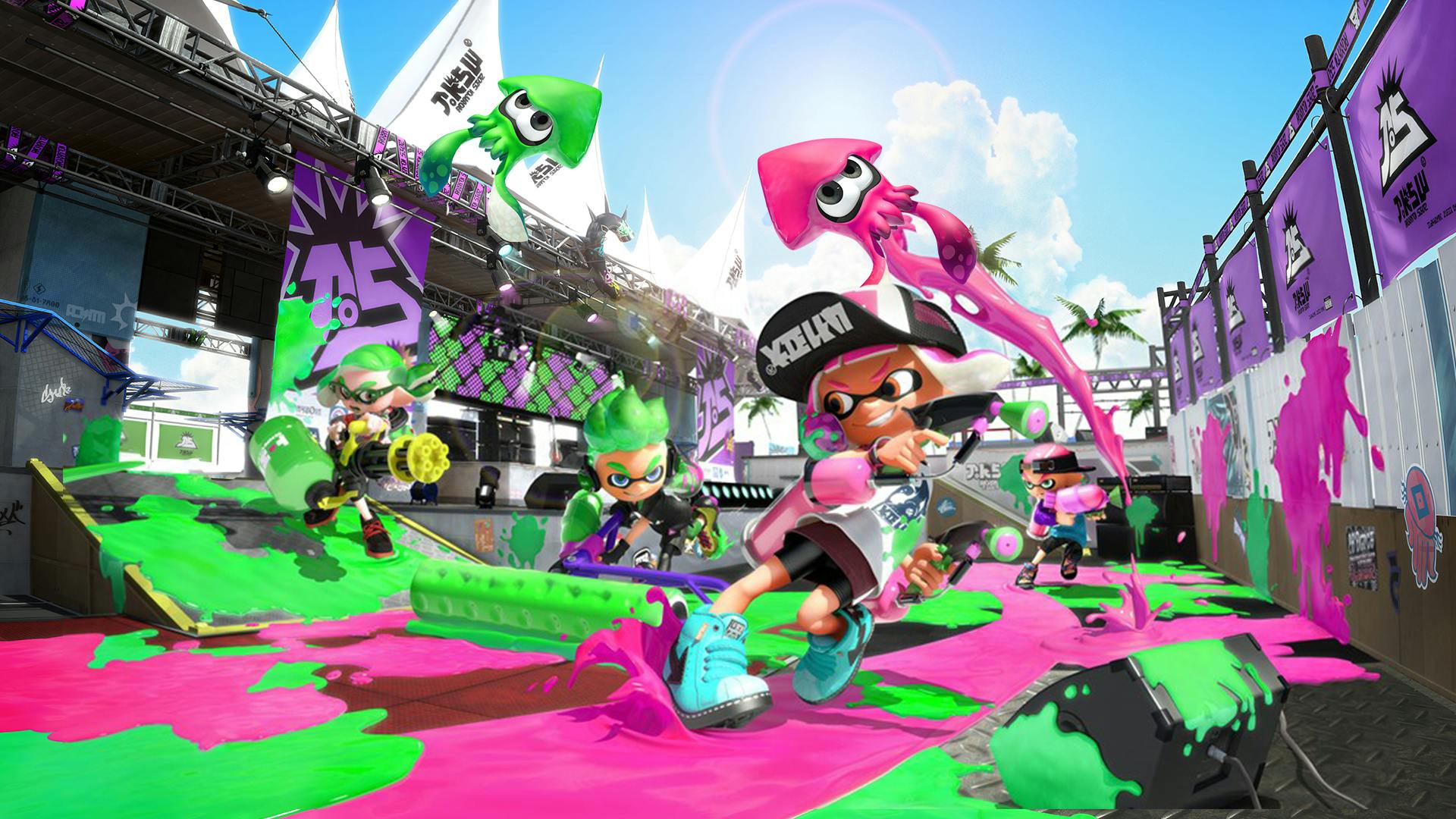
Summary:
A reported early build of Splatoon 2 from March 2017 has surfaced online, giving fans a rare look at Nintendo’s colorful shooter before it reached its final form on Nintendo Switch. The material currently making the rounds includes leaked music that has appeared on YouTube, along with an image said to come from the same build. The exact way this early version was obtained has not been confirmed, which makes caution important, but the timing alone has made the discovery especially interesting for longtime fans. March 2017 was a key period for Splatoon 2, landing close to the Global Testfire demo and several months before the full game launched on July 21, 2017. That means this build may offer a snapshot of the sequel while ideas were still being shaped, polished, rearranged, or replaced. For a series where music, visual identity, and playful details matter so much, even small prototype differences can feel like opening a dusty sketchbook from Nintendo’s studio floor. Fans are already comparing what has surfaced with the final release, especially the early music, to better understand how Splatoon 2’s signature sound may have changed before launch.
Splatoon 2 early March 2017 build reportedly appears online
A reported early March 2017 build of Splatoon 2 has appeared online, and it has quickly become a talking point among fans who love peeking behind the curtain of Nintendo development. The material is said to have circulated through private Discord servers before pieces of it began appearing more publicly, including music uploaded to YouTube and at least one image connected to the build. For now, the most careful way to describe the situation is that a prototype has seemingly surfaced, rather than treating every detail as officially confirmed. Nintendo has not publicly explained where this build came from, and the path from private servers to public uploads is still unclear. Even so, the discovery matters because Splatoon 2 arrived during the Nintendo Switch’s first year, when the console was still fresh and Nintendo was building momentum after The Legend of Zelda: Breath of the Wild. A development build from that window can show how quickly ideas were moving. It is a little like finding an early ink sketch under a finished painting – messy in places, but full of clues.
Why this reported prototype has caught the Splatoon community’s attention
Splatoon fans tend to notice the little things, and that is exactly why this reported build has caused such a buzz. The series has always had a strong identity, from its punky fashion and chaotic multiplayer to its strange, lovable music culture. When early material appears, fans do not just see unused files. They see possible alternate paths. What changed? What stayed? Which rough ideas later became familiar pieces of the final game? Those questions make a prototype fascinating, especially for a sequel as important as Splatoon 2. The game was not just another release on Nintendo Switch. It helped prove that the original Wii U hit could survive, evolve, and thrive on a much larger platform. Because of that, an early build from 2017 carries more weight than a random curiosity. It is a small window into a moment when Nintendo was still finding the exact rhythm of the sequel. For fans, that is the good stuff, the kind of discovery that makes community discussions light up like a Splatfest plaza at night.
The leaked music gives fans a rare listen to early Splatoon 2 ideas
The most discussed part of the reported leak so far is the music, which has appeared on YouTube in the form of early tracks and versions connected to the March 2017 build. That makes sense because music is one of Splatoon’s secret weapons. The series does not simply use songs as background noise. Its music feels like it belongs to the world, as if Inkling and Octoling bands are really out there performing messy, energetic, squid-brained hits for everyone in Inkopolis. When early tracks surface, fans can listen for signs of experimentation. Maybe a melody feels rougher. Maybe an arrangement has a different pulse. Maybe a track carries a mood that was toned down, sharpened, or saved for another purpose. These details can reveal how Nintendo shaped the final atmosphere of Splatoon 2. It is not just about hearing something unreleased. It is about hearing the game while it was still stretching, warming up, and deciding what kind of noise it wanted to make.
How prototype music can show the mood Nintendo was exploring
Prototype music can be especially revealing because it often captures the emotional temperature of a game before the final mix locks everything into place. In Splatoon 2’s case, that matters a lot. The finished game has a bright, energetic sound, but it also has moments that feel weird, edgy, and delightfully off-kilter. Early music can show whether Nintendo was leaning harder into certain moods before adjusting them for the final release. A track might sound more intense, more experimental, more chaotic, or even a little less polished. That does not make it better or worse. It makes it useful for understanding the creative process. Think of it like a band demo before the studio album. The demo might have a rough edge that fans love, while the final version has the cleaner structure that makes it work in context. Splatoon’s fictional bands already make the series feel like a music scene, so hearing early versions adds another layer of charm.
Why fans are comparing the tracks with the final soundtrack
Fans are naturally comparing the leaked tracks with the final Splatoon 2 soundtrack because that is where the interesting differences begin to show. A prototype track might have a familiar melody with different instruments, a changed tempo, or a mood that points toward an earlier design idea. Sometimes these comparisons lead to small discoveries, such as a piece of music that was reworked for another scene or a sound that survived in a different form. Other times, they simply help fans appreciate the final release more. Seeing what changed can make the finished game feel less inevitable and more crafted. Every polished detail had to be chosen. Every track had to fit a match, mode, trailer, menu, or story beat. For a game that moves as quickly as Splatoon 2, music has to hit instantly, like a paintball to the headphones. That is why even early versions can start long discussions among people who know the final soundtrack by heart.
The leaked image adds another piece to the puzzle
Alongside the music, an image connected to the reported Splatoon 2 build has also appeared online. A single image may not sound like much, but prototype screenshots can be surprisingly useful when fans and preservation communities are trying to understand an early version. They can show interface differences, test environments, unfinished assets, altered lighting, placeholder objects, or visual details that later changed before release. In some cases, an image also helps support claims about a build’s existence, although it does not answer every question by itself. The important thing is not to stretch one image further than the evidence allows. Without official context, it cannot tell the whole story. Still, it adds texture to the situation. It gives fans something visual to study alongside the leaked music. Splatoon is a series where style is practically part of the gameplay loop, so even tiny visual changes can feel meaningful. A screenshot can become a breadcrumb, and Splatoon fans are very good at following breadcrumbs through ink.
The March 2017 timing makes the build especially interesting
The reported March 2017 date is one of the biggest reasons this build has attracted attention. Splatoon 2 officially launched on Nintendo Switch on July 21, 2017, which places a March build roughly four months before release. That is close enough to the final game for many core ideas to be in place, but early enough for meaningful changes to still be happening. This was also a crucial period for Nintendo Switch itself. The console had just launched in March 2017, and Nintendo was preparing a lineup that would keep players engaged beyond launch day excitement. Splatoon 2 was a major part of that plan. A build from this period may sit at an interesting crossroads between public demo material, internal testing, and final polish. It can show features in motion before they were fully refined. For fans, that timing is golden. It is not ancient concept material from years earlier, and it is not simply the final game with a different file label. It is potentially a working snapshot from a busy stretch of development.
The build appears to sit close to the Global Testfire period
One reason March 2017 stands out is the Splatoon 2 Global Testfire. Nintendo made the demo available around that month, giving players scheduled chances to try the game before launch. That public test was important because it let Nintendo put the game’s online systems, weapons, maps, and match flow in front of real players. If the reported prototype is from late March 2017, it may sit very close to that demo period, which makes comparisons especially tempting. Fans will likely look for differences between what appeared in public testing, what exists in the final release, and what might be hidden in this early build. Those differences could help show what Nintendo was testing internally versus what it was ready to show publicly. Of course, not every difference has a dramatic explanation. Sometimes a build contains old files, test material, placeholders, or unfinished ideas simply because development is messy. Games are not built like neat glass boxes. They are more like busy workshops with ink on the floor.
Why that timing matters for understanding development changes
The timing matters because games can change a lot during the final months before release. March to July may sound short, but in development terms, that window can include balancing, asset cleanup, bug fixing, mode adjustments, audio changes, performance work, and user interface polish. Splatoon 2 was a competitive online shooter, so small tweaks could have a big impact on how matches felt. A weapon value, a map route, a music cue, or a mode rule might be adjusted after internal testing or public feedback. That is why a March 2017 build can be so valuable for historical comparison. It may show ideas before they were trimmed, tightened, or swapped out. The final game is the clean plate served to players, but a prototype lets fans peek into the kitchen. There may be half-finished ingredients and odd experiments, but that is part of the appeal. It reminds us that even Nintendo’s slickest releases pass through awkward, fascinating stages.
Small differences can say a lot about a game’s final shape
Small differences in a prototype can be surprisingly meaningful, especially in a series as detail-driven as Splatoon. A changed track, a slightly different asset, or a leftover test element might reveal how Nintendo approached tone, pacing, readability, or player feedback. These details rarely rewrite the whole history of a game, but they can add nuance. Maybe an early song suggests a mode once had a spookier feel. Maybe a visual difference shows that a stage or interface was still being adjusted. Maybe unused material simply proves that the team tried more ideas than players ever saw. That is normal, and it is part of why game preservation matters. Players often experience a finished game as if it appeared fully formed, but development is full of detours. Some are practical. Some are creative. Some are probably just somebody trying something wild on a Tuesday afternoon and realizing, wisely, that it should not ship.
What remains unknown about the reported Splatoon 2 build
There are still several unknowns around the reported Splatoon 2 build, and those gaps matter. The biggest question is how the build was acquired in the first place. Reports have pointed to private Discord servers, but that does not explain the original source. It is also unclear how much of the build is circulating, whether more assets will appear publicly, or how complete the available material really is. Fans should be careful with claims that go beyond what has been shown. A leaked music upload and an image can be exciting, but they do not automatically confirm every rumor attached to the build. Another unknown is how closely this version connects to public demo material from the Global Testfire or to other internal versions from the same period. Until more trusted preservation notes, technical breakdowns, or direct file comparisons are available, the safest approach is to treat the situation as a developing story. Curiosity is great. Overclaiming is where the ink starts to splatter in the wrong direction.
Why fans should treat early build leaks carefully
Early build leaks can be fascinating, but they also come with a few important cautions. First, leaked material is not official marketing, and it may not represent what developers wanted the public to see. Prototypes often include unfinished work, debug tools, placeholder material, abandoned ideas, and content that was never meant to be judged as part of the final experience. Second, the way a build appears online can be unclear, especially when private communities are involved. That makes it harder to verify context and easier for misinformation to spread. Third, music and images can be reposted without the details that explain what they actually are. Fans can still discuss, compare, and preserve information responsibly, but it helps to keep the tone measured. The best approach is to separate what is visible from what is assumed. In other words, enjoy the strange little window into Splatoon 2’s past, but do not jump through it headfirst without checking where you might land.
How this leak fits into Splatoon 2’s lasting appeal
The reason this reported build has people talking is simple: Splatoon 2 still matters. It was one of the Nintendo Switch’s defining early releases, and it helped turn Splatoon from a clever Wii U success into a broader Nintendo franchise with staying power. The sequel expanded the world, sharpened the multiplayer, introduced Salmon Run, and kept players returning for events, updates, and fierce ink-soaked matches. Because the final game became so familiar to fans, early material now feels like a glimpse of an alternate memory. It lets players imagine what could have been, while also appreciating what actually shipped. That is the magic of prototypes. They are not just scraps. They are echoes from the road not taken. For a series built on style, music, motion, and chaotic personality, those echoes are especially loud. Splatoon 2’s world has always felt alive, and this reported March 2017 build adds one more strange, colorful layer to its history.
Conclusion
The reported Splatoon 2 early March 2017 build leak has given fans a fresh reason to revisit one of Nintendo Switch’s most important early games. With music appearing on YouTube and an image connected to the build circulating online, the discovery offers a rare look at the sequel before it reached its final form. The most interesting part is the timing. March 2017 places the build close to the Global Testfire period and several months before the July 2017 launch, which makes it a potentially valuable snapshot of a game still being adjusted, polished, and shaped. There are still unanswered questions, especially around how the build was obtained and how much of it may surface publicly. For now, the smartest approach is to enjoy what has appeared while keeping claims grounded. Splatoon 2 already has a strong legacy, and this reported prototype adds another ink-splattered chapter to the story fans keep studying, sharing, and celebrating.
FAQs
- What is the reported Splatoon 2 March 2017 build?
- It is a seemingly leaked early development build of Splatoon 2 that has been described as coming from March 2017, several months before the game’s official July 21, 2017 launch on Nintendo Switch.
- What has leaked from the reported build so far?
- The material discussed publicly so far includes early music uploaded to YouTube and an image said to be connected to the same build.
- Has Nintendo confirmed the Splatoon 2 build leak?
- Nintendo has not publicly confirmed the origin of the reported build, so details about how it was obtained should be treated carefully.
- Why is the March 2017 date important?
- March 2017 is important because it sits close to the Splatoon 2 Global Testfire period and around four months before the final game launched, making it a potentially useful snapshot of late development.
- Could more material from the build appear online?
- More material may appear if people continue examining or sharing the build, but nothing should be treated as certain until it is publicly shown and properly verified.
Sources
- Splatoon 2 (early March 2017) build seemingly leaked online, My Nintendo News, May 9, 2026
- Proto:Splatoon 2/March 28, 2017, The Cutting Room Floor, May 11, 2026
- Splatoon 2 (Mar 28, 2017 prototype), Hidden Palace, March 28, 2017
- Splatoon 2 for Nintendo Switch, Nintendo Official Site, July 21, 2017
- Prepare for the Splatoon 2 Global Testfire – download the software now, Nintendo, March 16, 2017
- Introducing Salmon Run, a new co-op mode in Splatoon 2, Nintendo, April 26, 2017