














Summary:
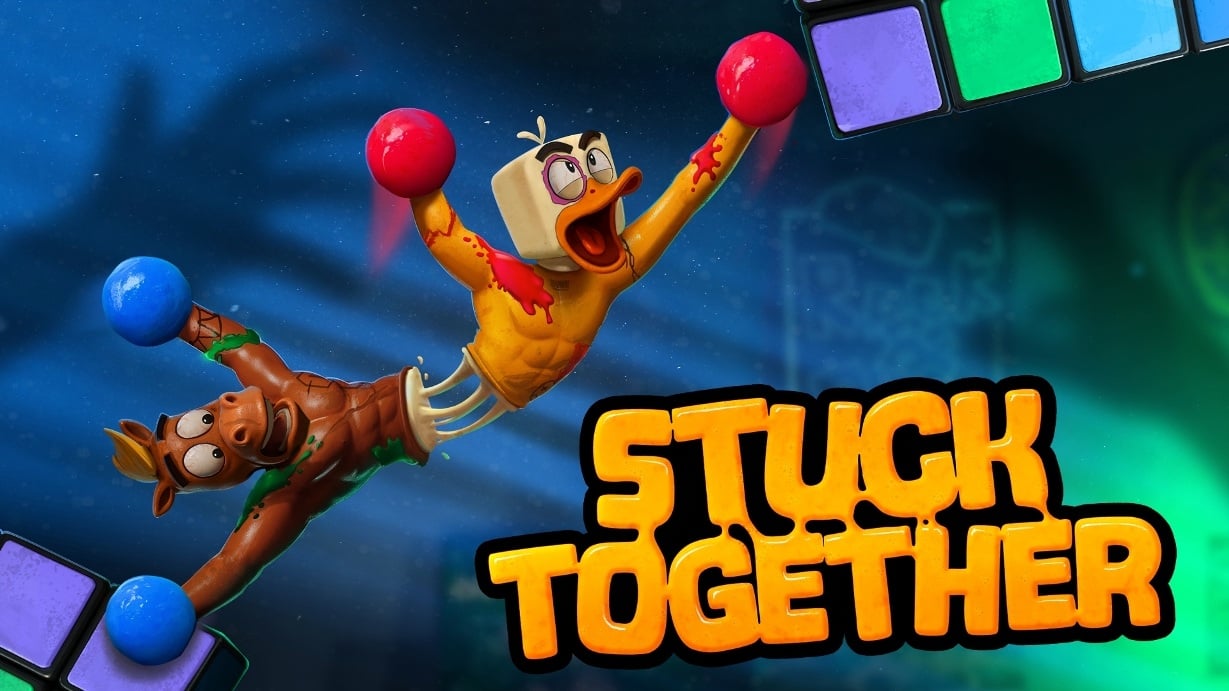
Stuck Together will launch digitally for Nintendo Switch on June 23, 2026, bringing Hugecalf Studios’ unusual physics-based climbing adventure to Nintendo’s hybrid console. Published on the platform by Perp Games, the game follows two toys that have been fused together and must escape from the oversized home of their deeply unpleasant owner. That sounds simple enough until gravity, momentum, awkward limbs, household hazards, and a deliberately demanding collection of obstacles enter the picture.
Players must grab surfaces, swing between objects, climb enormous furniture, and fling the connected characters towards safety. A routine jump can quickly become a spectacular tumble back to the floor, making coordination just as important as raw platforming skill. The full escape stretches across six rooms filled with interactive objects and environmental dangers. Everyday household items become towering structures when viewed from the perspective of two tiny toys, giving the adventure a playful sense of scale despite its slightly unsettling premise.
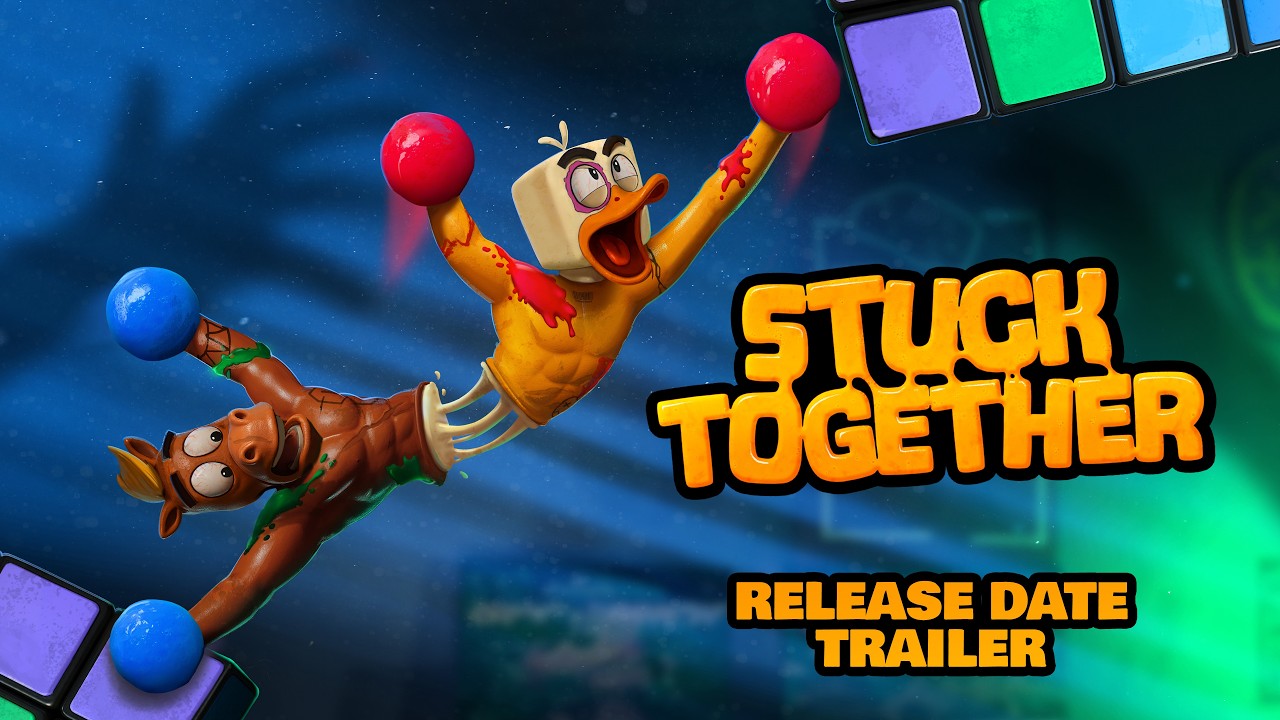
The Nintendo Switch release supports solo play alongside local and online co-op. Playing with a friend makes communication essential because both characters remain physically connected. One poorly timed movement can undo several minutes of careful climbing, so patience may prove more valuable than perfect reflexes. A newly released trailer offers a closer look at the unpredictable movement, enormous household environments, and chaotic failures players can expect when Stuck Together reaches Nintendo Switch.
Stuck Together launches on Nintendo Switch on June 23
Publisher Perp Games and developer Hugecalf Studios are bringing Stuck Together to Nintendo Switch on June 23, 2026. The release gives Nintendo players access to a physics-driven climbing adventure built around cooperation, awkward movement, and the constant possibility of losing every centimetre of hard-earned progress. Although an earlier report listed July 23, the official Nintendo and Perp Games listings identify June 23 as the confirmed release date. That distinction matters when you are preparing to test both your climbing ability and the patience of whichever friend agrees to join you.
Stuck Together originally arrived for PC in November 2025, where it introduced players to its unusual pair of connected protagonists. The Switch edition retains the central concept while placing the experience on a system that naturally lends itself to shared play. You can bring the console to a friend’s house, place it on a table, and discover how long it takes before a simple climb becomes a passionate debate about whose fault the latest fall was. In fairness, gravity will probably deserve some of the blame too.
Two unfortunate toys must escape a dangerous home
The story begins with two toys that have been physically joined together. Scattered and damaged playthings throughout the house suggest that their owner, an unhinged teenager, does not treat possessions with much care. Escaping is therefore more than a playful afternoon activity. The pair must work their way through a full-scale home before they become the next unfortunate additions to a growing collection of broken toys.
Viewing the property from such a tiny perspective changes familiar surroundings into an imposing world. Beds, shelves, desks, boxes, lamps, and other ordinary objects become enormous landmarks. A short distance across a room may require a carefully planned route involving multiple climbs, swings, and risky leaps. The setting consequently mixes childhood nostalgia with an uneasy atmosphere. Bright toys and recognisable household clutter surround the characters, but the evidence of their owner’s destructive behaviour keeps the danger close.
The fused protagonists also give the escape a distinctive physical identity. They cannot simply run independently towards the nearest exit. Every action affects both bodies, turning even basic movement into a shared problem. It is a little like trying to climb a ladder while another person hangs from your belt and offers strong opinions about where your hands should go. Progress depends on learning how the two toys influence one another rather than fighting against the connection at every opportunity.
Physics-based climbing makes every movement unpredictable
Stuck Together builds its challenges around grabbing, climbing, swinging, and throwing. Players must use momentum to move their connected characters through spaces that were never designed for tiny escapees. A secure grip can create the foundation for the next move, while a poorly judged release may send both toys spinning away from the intended destination. The controls are not simply a vehicle for reaching the next platform. Learning to manage them is one of the adventure’s central challenges.
Physics-driven movement gives each attempt an element of uncertainty. You may understand where you need to go without knowing exactly how the toys will behave once they are in motion. A swing that looked perfect in your head might lack the necessary force, while an improvised fling could somehow carry you past an obstacle that seemed impossible minutes earlier. These unexpected successes and failures help create the sort of stories that players continue discussing after a session ends.
Failure is designed to carry real consequences. Missing a ledge can send the pair tumbling to the floor, potentially erasing a significant amount of progress. That risk adds tension to every ambitious jump. Do you attempt the faster route and trust your timing, or move slowly while searching for safer handholds? Neither approach guarantees success, of course. Stuck Together appears perfectly willing to turn confidence into comedy without providing much warning.
Every grab, swing, and release demands careful timing
The basic actions may sound straightforward, but their interaction creates a demanding rhythm. Grabbing too early can limit a swing, while releasing too late can send the toys beneath or beyond their target. Players must consider direction, momentum, distance, and the position of both connected bodies before committing to a move. It is closer to controlling a flexible pendulum than directing a conventional platforming character.
Coordination becomes even more important during cooperative play. Both players need to understand the intended movement and react at approximately the right moment. One person may secure a grip while the other swings into position, creating a chain of controlled actions that carries the pair upwards. Alternatively, someone may panic, release the wrong hand, and transform a promising climb into an impressive demonstration of gravity. Those moments of chaos are not interruptions to the experience. They are a major part of its identity.
Six household rooms become enormous obstacle courses
The escape takes place across six rooms packed with interactive objects, hazards, and intentionally unforgiving level layouts. Each space transforms everyday surroundings into a large climbing course. Furniture becomes architecture, loose objects become platforms, and gaps that a human could cross in one step become dangerous chasms. This use of scale helps the house feel varied without abandoning its central domestic setting.
Moving between rooms should also create a meaningful sense of progress. Reaching a new area means the toys have survived another part of the house, but it also introduces unfamiliar objects and environmental arrangements. Players cannot rely on a single technique for every situation. A method that works on a collection of shelves may be less useful when navigating hanging objects, unstable surfaces, or wide gaps requiring carefully generated momentum.
The objects scattered throughout the environments are not merely decorative. They form part of the climbing routes and can influence how players approach each obstacle. Understanding which surfaces can be grabbed, which objects may move, and where a fall might leave the toys becomes essential. The house is effectively a giant playground designed by someone with a questionable understanding of safety regulations.
Interactive objects can help or ruin a promising climb
Interactive elements give the rooms a more dynamic quality than a collection of fixed platforms. Players may need to use household objects as improvised tools, anchor points, swinging surfaces, or temporary stepping stones. Because the movement system responds to physics, those objects can behave differently depending on how the toys strike, pull, or land on them. A useful shortcut during one attempt may become an unpredictable obstacle during the next.
This environmental flexibility should encourage experimentation. When the obvious path proves too difficult, players can inspect the room and consider whether another object provides a better angle. Discovering an unconventional solution can be especially satisfying because the result feels earned rather than scripted. The game provides the space and the physical rules, but players still need to determine how to use them.
Experimentation also carries risks. Pulling an object from the wrong direction could disturb a stable position, while an overly enthusiastic swing may carry both toys into a nearby hazard. Stuck Together does not appear interested in protecting players from their own ambitious ideas. Sometimes the clever plan works. Sometimes it ends with two toys lying on the floor while both players quietly reconsider their life choices.
Solo play offers an alternative way to attempt the escape
Despite its strong cooperative focus, Stuck Together can also be played alone. The solo option allows one person to manage the connected toys without relying on a second player. This makes the full adventure accessible when a suitable climbing partner is unavailable or when you simply prefer to keep every disastrous decision under your own control.
Solo play changes the nature of the challenge. Communication is no longer a concern because one player is responsible for the complete movement sequence. That does not necessarily make the escape easy. Managing both sides of the connected pair still requires concentration, coordination, and an understanding of how each movement affects the other body. Instead of negotiating a plan with a friend, you must mentally organise every action yourself.
The mode may also be useful for learning the underlying mechanics. Practising alone gives players time to study how momentum builds, how different grips affect swinging, and how the characters respond after a release. Those lessons can later improve cooperative sessions. Naturally, becoming competent alone does not guarantee smooth teamwork. A second human being has an impressive ability to introduce variables that no training session can fully prepare you for.
Local and online co-op put friendships under pressure
Cooperative play is where the game’s fused-character premise becomes especially mischievous. Stuck Together supports both local and online co-op, allowing two players to share responsibility for the escape regardless of whether they are sitting in the same room. The goal remains the same, but every movement becomes a negotiation between two people who may have very different ideas about what counts as a sensible jump.
Successful teams will need clear communication. Players must agree on when to grab, when to release, which direction to swing, and who should take the lead during difficult manoeuvres. Shouting “now” is only helpful when both people understand what is supposed to happen next. Without that shared plan, one player may release while the other is still preparing, leading to another long trip towards the floor.
The repeated cycle of planning, attempting, failing, and trying again should create plenty of memorable exchanges. Frustration is part of the design, but so is the satisfaction of finally overcoming an obstacle that stopped the team several times. When both players move in harmony, the connected characters can transform from an awkward burden into an effective climbing partnership. Reaching that point may require patience, laughter, and possibly a temporary ban on assigning blame.
Cooperation turns simple obstacles into social puzzles
Many challenges are physical puzzles and social puzzles at the same time. Players are not only determining how to cross an obstacle but also deciding how to divide responsibility. One person might provide a stable anchor while the other creates momentum, after which their roles reverse. Success depends on trusting that your partner will perform the expected action at the expected moment.
This structure creates tension even when the route itself is visible. Knowing what to do is different from performing it together. A narrow ledge may require both players to remain calm, while a long swing might demand a perfectly timed release. Small mistakes become shared problems because the toys cannot separate. The connection ensures that no player can race ahead and leave the other behind.
That dependence should make victories feel genuinely shared. When the pair reaches a difficult platform, both players contributed to the result. The same principle applies to failure, although convincing your partner of that fact may prove harder. Stuck Together understands that cooperative games are often funniest when teamwork is necessary but never guaranteed.
The Nintendo Switch version suits spontaneous multiplayer sessions
Nintendo Switch is a natural home for a game built around short bursts of cooperative chaos. Its portable design makes it easier to organise local sessions without requiring a permanent television setup. Players can bring the system to another location, use tabletop mode where appropriate, and continue an escape attempt without being tied to a desk or living-room console.
The platform also has an audience familiar with cooperative experiences that are easy to understand but difficult to master. Stuck Together fits that pattern neatly. The objective is immediately clear: move upwards, avoid falling, and escape the house. The challenge comes from executing that idea while controlling two connected characters through unpredictable physical environments.
Local co-op may be particularly appealing for groups that enjoy watching one another react to sudden failures. Being in the same room makes every disastrous fall more immediate, especially when both players realise exactly who released a grip too soon. Online support provides another useful option for friends who cannot meet in person, ensuring that distance does not protect anyone from the inevitable blame game.
The Switch release gives the PC adventure a new audience
Stuck Together first launched on PC on November 17, 2025. Its move to Nintendo Switch expands the potential audience and gives console players an opportunity to experience the game without a computer. The core premise remains well suited to viewers and participants alike because its successes and failures are easy to understand. Even someone unfamiliar with the controls can appreciate the tragedy of a carefully planned climb ending in a spectacular fall.
The existing PC release also means the Switch version is based on a game that has already been played publicly for several months. Hugecalf Studios added a dedicated single-player mode after the initial PC launch, broadening the experience beyond its original two-player emphasis. Nintendo players consequently receive a version designed for both cooperative and independent play.
Perp Games is handling publishing duties for the Nintendo Switch release. The publisher has worked with a range of independent developers and specialises in bringing distinctive games to console audiences. Pairing that publishing experience with Hugecalf Studios’ physics-based design gives Stuck Together a clear route towards players looking for something unusual in the Nintendo eShop.
The new trailer highlights the chaos awaiting players
The newly released Nintendo Switch trailer provides a closer look at the connected protagonists, oversized household spaces, and risky climbing mechanics. Players can see the toys grabbing surfaces, swinging through the environment, and launching themselves towards distant platforms. The footage establishes the central rhythm quickly: climb carefully, build momentum, take a chance, and prepare for the possibility that everything will go terribly wrong.
The trailer also communicates the contrast between the playful visual style and the demanding movement. The characters may look like harmless toys, but their surroundings offer little mercy. Long drops, awkward angles, and unstable routes ensure that progress never feels completely safe. A cheerful-looking room can become a stressful obstacle course as soon as the floor sits several metres beneath the characters.
Most importantly, the footage demonstrates why the cooperative structure matters. The two bodies pull against and support one another throughout each movement. They are not separate characters who happen to share a screen. Their physical connection defines the way players interact with the world, creating opportunities for clever teamwork and ridiculous accidents in equal measure.
Momentum is both the greatest tool and the biggest threat
Momentum sits at the heart of nearly every dramatic moment. Players need it to cross large gaps and reach distant handholds, but generating too much force can carry the toys beyond safety. The challenge lies in judging exactly how much movement is required and releasing at the right point. Hesitation can be just as dangerous as overconfidence.
This creates a satisfying relationship between risk and progress. Safe movements may protect a team’s position but offer limited reach. Larger swings open new routes while increasing the consequences of a mistake. Players are constantly balancing the desire to advance against the fear of returning to the floor. That tension gives even a short jump emotional weight, especially after a difficult climb.
The resulting failures should remain visually entertaining because the connected bodies can twist, swing, and tumble in unpredictable ways. Losing progress may sting, but watching the toys bounce through the room can soften the frustration. Perhaps not immediately, admittedly. Give it a minute.
What to expect from Hugecalf Studios and Perp Games
Hugecalf Studios developed Stuck Together around a simple but flexible concept: two connected toys must climb through a dangerous home. The studio has focused on turning that idea into a mixture of action, cooperation, comedy, and unsettling environmental storytelling. Rather than filling the experience with complicated systems, the game places most of its weight on movement, physics, and the relationship between players.
The developer previously created Turbo Golf Racing, another game that combines accessible controls with physics-driven competition. Stuck Together takes that interest in unpredictable movement in a different direction. Instead of racing vehicles across golf courses, players wrestle with two soft-bodied characters inside an oversized house. The shared emphasis on momentum and physical interaction remains visible, even though the setting and objectives are entirely different.
Perp Games brings the title to Nintendo Switch as its console publisher. Its involvement helps the release reach an audience that regularly looks to the Nintendo eShop for unusual cooperative games. With its clear premise and easily recognisable moments of chaos, Stuck Together has the kind of concept that can make sense within seconds of watching someone play.
Why Stuck Together could appeal to difficult platformer fans
Players who enjoy demanding platformers often value the process of improvement as much as reaching the destination. Stuck Together appears built around that same feeling. Every failed attempt provides information about timing, momentum, positioning, or communication. The next run may still end badly, but players gradually learn how to turn awkward movement into controlled progress.
The game should also appeal to fans of cooperative challenges where communication produces both success and comedy. Its mechanics create natural opportunities for misunderstandings, dramatic recoveries, and accidental sabotage. Because every movement affects both characters, players remain involved even when they are not leading the current manoeuvre. Nobody gets to stand safely on a platform while their partner struggles alone.
Its combination of difficult climbing, toy-sized exploration, local multiplayer, online cooperation, and solo play gives the Switch release several ways to attract attention. Some players will arrive for the challenge, while others will be more interested in the social chaos. Both groups are likely to spend a considerable amount of time looking upwards from the floor.
Conclusion
Stuck Together launches for Nintendo Switch on June 23, 2026, bringing Hugecalf Studios’ physics-based climbing adventure to a new platform. Players control two fused toys as they attempt to escape an enormous household filled with interactive objects, dangerous gaps, and six rooms of deliberately demanding obstacles. Progress requires careful grabbing, controlled swinging, well-timed releases, and a willingness to accept that even the best plan can end in a sudden fall.
Solo play allows one person to tackle the escape independently, while local and online co-op turn every obstacle into a test of communication and trust. The Nintendo Switch format should complement those multiplayer options particularly well, giving friends an accessible way to share the struggle. Stuck Together may test patience, coordination, and a few friendships, but finally reaching safety together could make every ridiculous failure worthwhile.
FAQs
- When is Stuck Together coming to Nintendo Switch?
- Stuck Together is scheduled to launch digitally for Nintendo Switch on June 23, 2026. Official listings from Nintendo and Perp Games confirm the June release date.
- Can Stuck Together be played alone?
- Yes. Stuck Together includes a solo mode that allows one player to control the connected toys and attempt the complete escape without a second participant.
- Does Stuck Together support local co-op on Nintendo Switch?
- Yes. The Nintendo Switch version supports local cooperative play for two players. Both participants control the connected toys and must coordinate their movements.
- Does Stuck Together have online multiplayer?
- Yes. Two players can cooperate online, allowing friends in different locations to climb, swing, and work through the household environments together.
- How many rooms are included in Stuck Together?
- The escape takes players through six rooms. Each area contains oversized household objects, physical hazards, interactive elements, and demanding climbing routes.
Sources
- Stuck Together, Perp Games, June 17, 2026
- Stuck Together, Nintendo UK, June 18, 2026
- Nintendo News and Updates, Nintendo Belgium, June 18, 2026
- Stuck Together, Hugecalf Studios, November 17, 2025
- Stuck Together on Steam, Steam, November 17, 2025