














Summary:
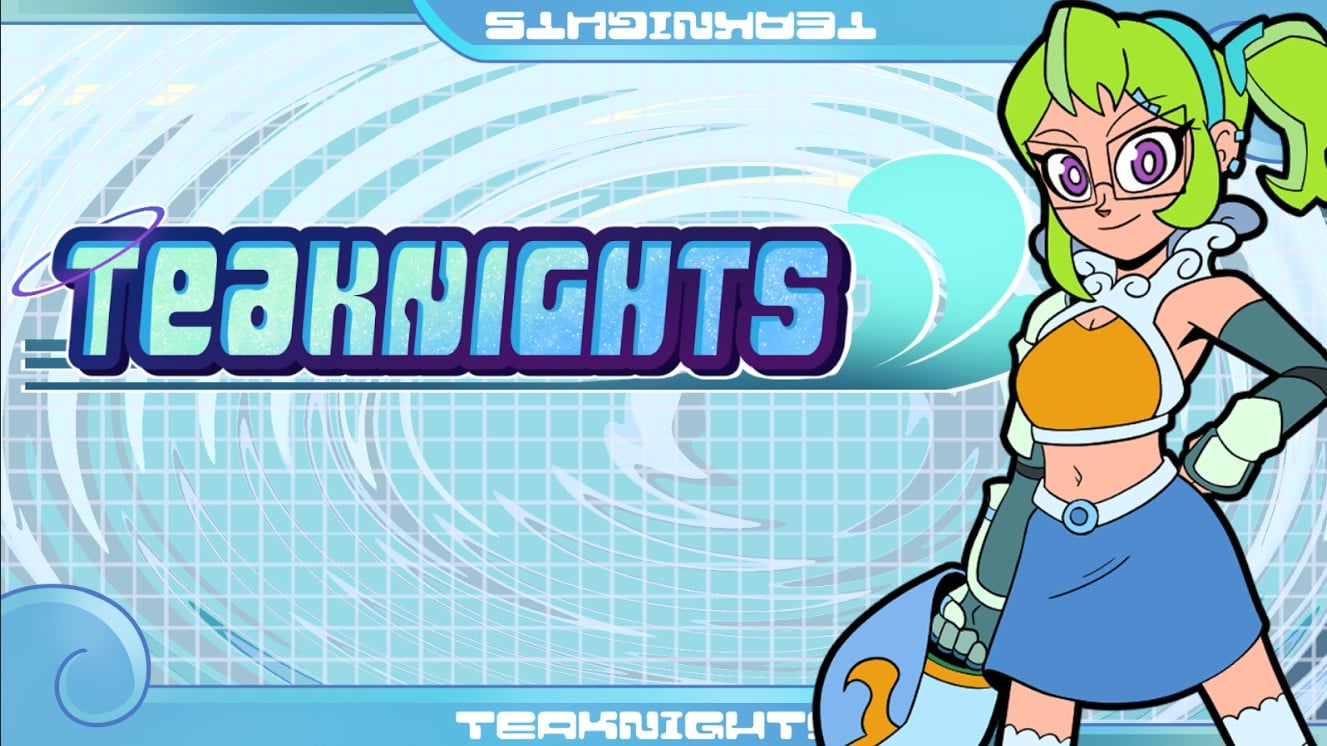
Funky Can Creative has announced that TeaKnights is in development for Nintendo Switch, introducing a colorful musical rail shooter shaped by low-poly 3D graphics, rapid arcade movement and a strong Y2K-inspired identity. The studio has not shared a release date or release window, which suggests that the project remains at an early stage. Even so, its first teaser establishes a clear creative direction and gives players a taste of the energetic audiovisual experience the team hopes to build.
TeaKnights represents a noticeable change of perspective for the creators of PopSlinger. While that series channels its musical personality through side-scrolling 2D action, the new project moves into a three-dimensional rail-shooter format. Players can expect forward-moving stages in which aiming, movement, dodging and visual rhythm work together, although detailed gameplay systems have not yet been explained. Funky Can Creative has openly described the project as its own take on a Sin & Punishment-style musical rail shooter, while Japanese coverage has also drawn comparisons with Star Fox 64.
The studio is supporting the announcement with a Patreon page that offers a closer look at production. Supporters can follow development notes, early creative materials, artwork and behind-the-scenes updates as TeaKnights evolves. That approach may be particularly appealing here because the game’s identity seems closely connected to experimentation. Rather than hiding every sketch until launch, Funky Can Creative is inviting interested players to watch its ideas take shape, complete with all the colorful sparks, unexpected turns and inevitable creative caffeine that come with independent game development.
TeaKnights brings musical rail-shooter action to Nintendo Switch
TeaKnights is officially heading to Nintendo Switch, giving the system another distinctive independent game to watch as development continues. Funky Can Creative describes its new project as a musical rail shooter, a phrase that immediately suggests more than simply aiming at enemies while the scenery moves forward. Music appears to influence the game’s broader personality, from its movement and pacing to its colorful presentation. The announcement teaser shows a project built around speed, visual energy and expressive low-poly environments rather than military realism or dark science fiction. That alone helps TeaKnights make a memorable first impression. It looks playful, bright and unapologetically strange, which is often where independent games find their strongest voice. A release window has not been announced, so players should view the teaser as an early introduction rather than a near-final demonstration. Still, its arrival on Nintendo Switch has been confirmed, establishing a clear destination for the project even while many practical details remain under wraps.

Funky Can Creative begins a new adventure after PopSlinger
TeaKnights marks a substantial creative step for Funky Can Creative following its work on PopSlinger. The studio’s earlier games established a fondness for vivid colors, music-driven atmosphere and expressive characters, but TeaKnights carries those qualities into a different kind of space. Instead of presenting action across a flat side-scrolling plane, the team is now working with low-poly 3D environments and the controlled forward momentum associated with rail shooters. That change may sound straightforward, yet it affects almost every part of development. Camera movement becomes part of the level design, enemy placement must account for a constantly shifting viewpoint, and visual effects need to remain readable even when the screen becomes busy. It is a little like moving a concert from a small club to a parade float. The same musical attitude can remain, but suddenly everything must move, sparkle and communicate from several angles. Funky Can Creative is not abandoning the expressive spirit of PopSlinger. It is rebuilding that spirit around a faster and more spatial form of action.
Rail-shooter mechanics meet an expressive musical identity
The central appeal of TeaKnights comes from the way it combines rail-shooter action with a music-focused identity. Traditional rail shooters guide the player along a predetermined route, leaving them to concentrate on aiming, avoiding hazards and reacting to rapidly changing situations. That structure can create an immediate arcade rhythm because every stage controls the pace of the encounter. Enemies enter at specific moments, obstacles arrive in carefully planned sequences and dramatic scenes can unfold without requiring the player to navigate an open environment. TeaKnights appears to use that foundation as a stage for its own audiovisual personality. Music is not being treated as background wallpaper. It helps define the project’s energy and presentation, even though the studio has not yet explained whether attacks, enemy patterns or scoring systems will directly synchronize with a beat. Until those mechanics are demonstrated, it is safest to describe TeaKnights as music-themed rather than a traditional rhythm game. Even so, the mixture has obvious potential. When sound, movement and color work together, a simple encounter can feel like an interactive music video that has misplaced its safety rails.
Low-poly graphics give TeaKnights its distinctive personality
TeaKnights uses low-poly 3D graphics as a deliberate artistic choice rather than an attempt to imitate modern realism. The angular models and simplified geometry recall an earlier period of three-dimensional game design, when developers had to communicate characters, movement and entire worlds with relatively modest polygon counts. Funky Can Creative takes that visual language and pushes it through a brighter, more stylized filter. The result is recognizably retro without looking like a plain reconstruction of a Nintendo 64 or original PlayStation game. Strong silhouettes, bold colors and exaggerated effects can also serve a practical purpose in a fast rail shooter. When enemies and hazards appear for only a few seconds, players need to understand what they are seeing almost immediately. Clean shapes can help create that clarity. Of course, simplicity does not mean emptiness. Low-poly artwork can carry enormous personality when animation, framing and color are handled with confidence. TeaKnights seems eager to prove that a few sharp edges can say just as much as a million carefully rendered pores.
Y2K influences stretch beyond simple 1990s nostalgia
Although TeaKnights draws from older arcade and console traditions, Funky Can Creative is positioning the game around a broader Y2K identity rather than limiting it to straightforward 1990s nostalgia. That distinction matters because the late 1990s and early 2000s produced a particularly lively mixture of digital culture, music, animation and game design. Technology was becoming more connected, websites were louder than good taste could reasonably defend, and pop culture often presented the future as something glossy, colorful and slightly chaotic. TeaKnights appears to borrow from that atmosphere. Its low-poly visuals are paired with retro-pop colors, fast movement and a playful digital attitude that feels interested in the past without becoming trapped by it. The project is not simply trying to reproduce how an older game looked on a curved television. It is using familiar visual ingredients to create something new. That is an important difference. Nostalgia works best as seasoning, not the entire meal, and Funky Can Creative seems determined to add its own flavors rather than serving a reheated plate of references.
Sin & Punishment and Star Fox 64 provide familiar reference points
Funky Can Creative has described TeaKnights as its own Sin & Punishment-style musical rail shooter, giving Nintendo fans a useful point of comparison. Treasure’s Sin & Punishment is remembered for combining guided movement, precise shooting and intense enemy encounters within highly cinematic stages. Japanese outlet Game*Spark also highlighted Star Fox 64 when discussing TeaKnights, another reference that helps communicate the project’s likely pace and structure. These comparisons should not be mistaken for confirmation that TeaKnights will copy specific control systems, scoring rules or mission designs. They indicate a shared tradition rather than an identical blueprint. Both reference points are known for keeping players in motion and presenting threats from carefully choreographed angles, which appears compatible with Funky Can Creative’s stated direction. The musical emphasis and Y2K visual identity may help TeaKnights establish its own place within that tradition. After all, inspiration is a launchpad, not a parking space. The real question is how the studio will translate those influences into characters, stages and mechanics that could not have come from anyone else.
The early response gives the project an encouraging start
TeaKnights attracted notable attention shortly after its initial reveal, with Funky Can Creative reporting thousands of likes on the announcement during its first day. Coverage from Game*Spark also introduced the project to a Japanese audience, an encouraging development for a game openly inspired by Japanese arcade and console design. Early enthusiasm does not guarantee commercial success, of course, and social media attention can disappear faster than snacks at a launch party. Still, a strong first response can be valuable for a small studio. It confirms that the basic idea, visual direction and teaser were interesting enough to stop people from scrolling. That matters when a project is still building awareness and may have a long development road ahead. The reaction also gives Funky Can Creative an opportunity to learn which elements immediately connect with players. Some may be drawn to the rail-shooter structure, while others may respond more strongly to the low-poly style, musical presentation or PopSlinger connection. TeaKnights already has several clear hooks, and its challenge will be turning that curiosity into lasting interest.
Patreon opens a window into the development process
Alongside the TeaKnights announcement, Funky Can Creative has directed fans toward its Patreon page, where supporters can follow the studio’s work in greater detail. The page is intended to provide development notes, early creative materials, artwork and behind-the-scenes looks that go beyond public trailers and screenshots. This approach fits a project whose identity appears likely to evolve through visual experimentation. Character designs may change, stage concepts may be rearranged and musical ideas may shift as the team tests what works in motion. For interested players, seeing that process can make development feel less like a sealed box and more like a workshop with the door slightly open. It also gives the studio a place to discuss choices that would be difficult to communicate in a brief promotional trailer. Why was a certain palette selected? How does a level move with its soundtrack? Which ideas looked brilliant on paper but behaved like a shopping trolley with one broken wheel during testing? Those are the details that can make behind-the-scenes access worthwhile.
Supporters can follow ideas before they reach public trailers
The Patreon initiative allows supporters to see parts of TeaKnights before they are polished into major public announcements. Early sketches, development observations and creative experiments can reveal how the game’s final identity is assembled piece by piece. That does not necessarily mean every unfinished concept will appear in the finished release. Development is full of abandoned ideas, revised mechanics and temporary assets, and that uncertainty is part of what makes the process interesting. A strange enemy design might evolve into a memorable boss, while an ambitious stage concept could be discarded because it simply is not enjoyable to play. By sharing selected materials, Funky Can Creative can give its audience a better understanding of the decisions behind TeaKnights without pretending that every idea is permanent. The model also creates a closer relationship between the studio and its most enthusiastic followers. Public trailers show what a team is ready to present. Development notes can show the questions it is still trying to answer, which is often where the most fascinating creative work takes place.
Important details remain unannounced
TeaKnights has been confirmed for Nintendo Switch, but many of the details players naturally want to know have not yet been revealed. There is no release date or release window, and the studio has not announced a price, publishing arrangement or physical edition. Detailed information about playable characters, stage structure, difficulty options, scoring, controls and additional modes is also unavailable. The teaser introduces the project’s visual and musical direction, but it should not be treated as a complete explanation of the final experience. This is normal for an early announcement, especially when a smaller team wants to establish its idea before every system is ready for inspection. It also means expectations should remain flexible. TeaKnights may change considerably as production advances. Features can be added, revised or removed in response to testing and available resources. For now, the confirmed facts are straightforward: Funky Can Creative is developing a musical low-poly rail shooter, Nintendo Switch is among its intended platforms, and further updates will be shared as work progresses.
Why TeaKnights could stand out on Nintendo Switch
Nintendo Switch has no shortage of colorful independent releases, so visual charm alone is rarely enough to guarantee attention. TeaKnights may stand out because its individual influences support one another rather than feeling randomly assembled. The rail-shooter format provides immediate arcade momentum. The musical identity gives that momentum a recognizable pulse. Low-poly graphics reinforce the Y2K atmosphere while also offering the visual clarity needed for fast action. Funky Can Creative’s previous work on PopSlinger gives the studio experience with stylized worlds and music-driven presentation, even as it moves into a more technically demanding 3D format. The concept also occupies a space that is not overcrowded. Platform games, farming simulations and roguelikes appear on Nintendo Switch with impressive regularity, but original rail shooters remain comparatively uncommon. TeaKnights therefore has an opportunity to offer something familiar to fans of classic arcade action without feeling interchangeable with dozens of nearby releases. Its success will depend on execution, but the ingredients already point toward a game with a clear identity.
A focused arcade structure could suit portable play
The rail-shooter format could prove especially suitable for Nintendo Switch because guided, action-focused stages often work well in shorter play sessions. That does not confirm anything about the length or structure of TeaKnights, but the genre naturally lends itself to replayable levels, score chasing and concentrated bursts of action. Players can learn enemy positions, improve their reactions and return to previous stages to refine their performance. On a portable system, that kind of structure can be convenient because it does not always require a long uninterrupted evening. A stage can deliver a complete arc of tension and spectacle in a relatively focused period. TeaKnights could also benefit from the immediacy of aiming and dodging with familiar controller inputs, although Funky Can Creative has not confirmed whether the Switch version will support motion controls or other platform-specific features. Those details will be worth watching. For now, the combination of arcade pacing and portable hardware feels promising, even if the precise shape of that relationship remains to be revealed.
Its strongest asset may be its confidence
Perhaps the most encouraging thing about TeaKnights is how quickly its personality comes across. The project does not appear embarrassed by its bright colors, angular models or musical influences. It embraces them. That confidence is useful because stylized games often succeed when every creative choice feels connected to the same central vision. A soundtrack can influence animation, animation can influence enemy timing, and enemy timing can shape how a stage is colored and framed. When those parts pull in the same direction, players feel the result even if they never stop to identify each individual decision. Funky Can Creative still has plenty to prove, particularly because moving from 2D action into a 3D rail shooter introduces new design and technical challenges. Yet the studio is beginning with a concept that is easy to recognize and difficult to confuse with something else. In a crowded release calendar, that is no small advantage. Sometimes the first victory is simply making people ask, “What on earth was that?” and immediately replay the trailer.
Conclusion
TeaKnights is shaping up to be one of the more visually distinctive independent games announced for Nintendo Switch. Funky Can Creative is carrying the expressive musical spirit associated with PopSlinger into a low-poly 3D rail shooter influenced by the fast, carefully choreographed action of games such as Sin & Punishment and Star Fox 64. Its Y2K-inspired presentation adds another layer of personality, combining angular graphics with vivid colors and an energetic digital attitude. Important questions remain unanswered, including when the game will launch and how its musical themes will affect its mechanics. That uncertainty is expected at this stage, and the studio’s Patreon offers interested followers a way to observe the project as it develops. TeaKnights is still early in its journey, but its first impression is clear: this is a fast, colorful and deliberately expressive experiment that wants arcade action to feel like music in motion. Nintendo Switch players now have another unusual project to keep on their radar.
FAQs
- Is TeaKnights coming to Nintendo Switch?
- Yes. Funky Can Creative has confirmed that TeaKnights is in development for Nintendo Switch. Other potential platforms have not been detailed in the current announcement.
- Does TeaKnights have a release date?
- No release date or release window has been announced. The project appears to be at an early stage, and further information will be shared as development progresses.
- What kind of game is TeaKnights?
- TeaKnights is a musical rail shooter featuring low-poly 3D graphics, fast arcade-style action and a colorful identity influenced by Y2K games, animation and music culture.
- Is TeaKnights a rhythm game?
- Funky Can Creative describes it as a musical rail shooter. Music is central to its identity, but the studio has not yet confirmed whether shooting, movement or scoring must be performed directly in time with a beat.
- Where can players follow TeaKnights development?
- Players can follow Funky Can Creative’s public social accounts, watch the official teaser trailer and visit the studio’s Patreon for selected development notes, early materials and behind-the-scenes updates.
Sources
- TeaKnights Announced for Nintendo Switch, Nintendo Everything, June 17, 2026
- TeaKnights Teaser Trailer, Funky Can Creative, June 15, 2026
- Low-Poly 3D Rail Shooter Inspired by Sin & Punishment and Star Fox, Game*Spark, June 16, 2026
- Funky Can Creative Patreon, Funky Can Creative, June 15, 2026
- We’re Making a Brand-New Title, Funky Can Creative, June 15, 2026