














Summary:
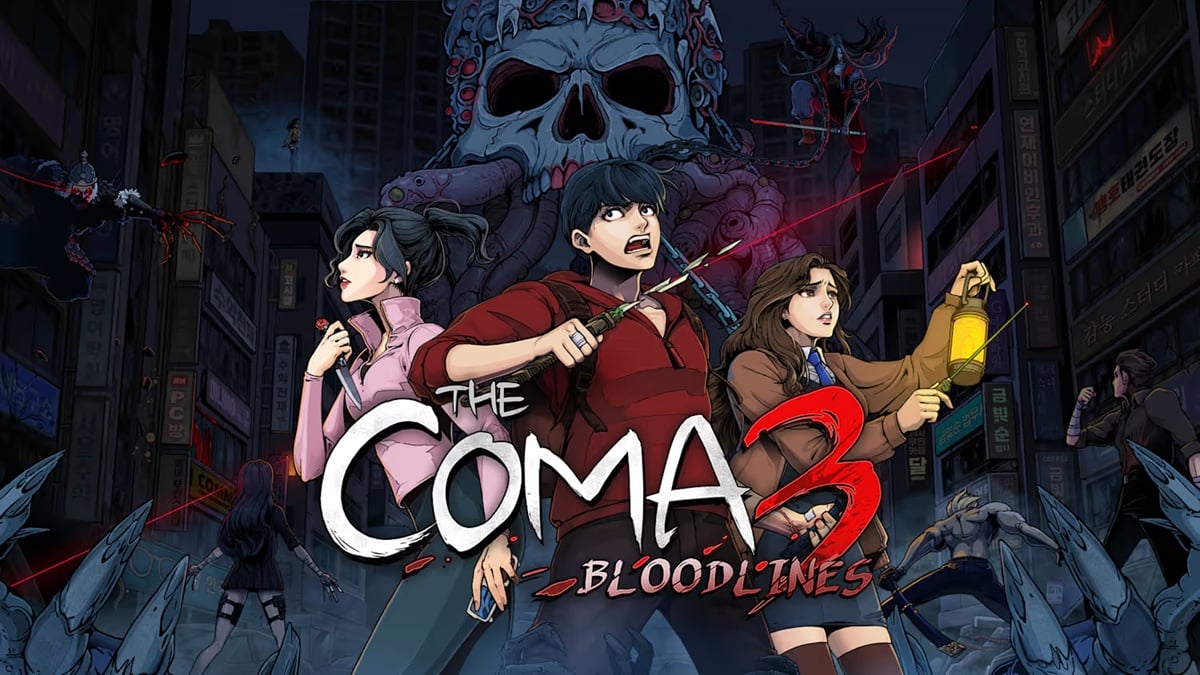
The Coma 3: Bloodlines has arrived on Nintendo Switch, giving horror fans another reason to keep one eye on the hallway and the other on the nearest hiding spot. Published by Headup Games, this 2D run-and-hide horror adventure follows three main characters who are pulled into a dangerous mystery involving shadow monsters, threatening puppets, cursed history, and the nightmare dimension known as the Coma. The game is set around Sehwa Private High School in Seoul, South Korea, a location with deep roots in the series and a nasty habit of turning rumors, urban legends, and hidden history into very real danger. Instead of handing players a weapon and saying “good luck,” The Coma 3: Bloodlines leans into vulnerability. You run. You hide. You wait for the right moment. You survive because you pay attention, not because you overpower whatever is chasing you. That gives the whole experience a tense, breath-held rhythm that fits the series well. With three playable characters, four new bosses tied to cursed history, compact area design, and a storyline meant to wrap up secrets from earlier entries, this Switch release looks built for players who enjoy horror with mystery, atmosphere, and a proper sense of dread.
The Coma 3: Bloodlines brings South Korean survival horror to Nintendo Switch
The Coma 3: Bloodlines is now available on Nintendo Switch, and it brings the series back with the kind of horror that does not need a giant arsenal to get under your skin. Instead, it leans on tension, pursuit, clues, puzzles, and that awful little feeling that something may be waiting just beyond the edge of the screen. Published by Headup Games, the Switch version puts players inside a 2D run-and-hide horror adventure where survival depends on reading danger quickly and knowing when to move. That sounds simple enough until a shadow monster starts closing in and every safe corner suddenly feels about as reliable as a paper umbrella in a thunderstorm.
What makes this release interesting is how strongly it sticks to the identity of The Coma series. The focus is not on fighting back with brute force. The focus is on escaping hostile spaces, solving problems under pressure, and slowly untangling a mystery that has wrapped itself around Sehwa Private High School and the nightmare dimension known as the Coma. For Nintendo Switch owners who enjoy horror with an occult edge, this is the sort of release that can feel right at home in handheld mode late at night. Maybe with the lights on. No judgment there.
A nightmare rooted in Sehwa High School and the Coma dimension
The story centers on Sehwa Private High School, a long-standing institution in Seoul, South Korea, with far more going on behind its walls than a normal school should ever have to explain. Beneath its public image sits the Sehwa Foundation, a group connected to the study and management of the cursed underworld of history. Their focus is the Coma, a nightmare dimension that mirrors reality while twisting it into something far more dangerous. In other words, this is not just a spooky school with creaky floors and bad lighting. This is a place where hidden history, supernatural danger, and human curiosity have all mixed together into one very unstable pot.
The Coma dimension is where rumors and urban legends take on teeth. If a living intruder dies there, their spirit can be severed from their body, leaving them unable to wake again. That detail gives the setting real stakes. It is not only about escaping a monster in the moment. It is about avoiding a fate that feels final, cold, and deeply unsettling. The game also brings the Ghost Vigilantes into focus, wraiths from the past who have crossed into this time period as the once-quiet Coma dimension turns back into a nightmare. The result is a setup where every clue feels like it could explain a piece of the larger curse, but every step forward may also invite something worse to notice you.
Run-and-hide gameplay keeps every hallway dangerous
The core loop of The Coma 3: Bloodlines is built around escape rather than combat. You cannot simply stand your ground and knock the monsters aside. When puppets and shadows hunt you, the smarter answer is to hide, wait, and move only when the timing feels right. That design choice gives the game its nervous heartbeat. Players are not asked to be action heroes. They are asked to be alert survivors, the kind who listen for danger, scan rooms for options, and know that panic is usually the fastest route to disaster.
This run-and-hide structure also makes the environment matter. A hallway is not just a path from one objective to another. It is a risk. A room is not just decoration. It might be a temporary refuge, a clue location, or a trap that becomes painful if you step inside at the wrong moment. The best horror often comes from making ordinary spaces feel unsafe, and The Coma 3: Bloodlines uses that idea well. A school, a neighborhood, or a tight interior becomes more than a backdrop when survival depends on how well you understand its layout. Every door becomes a question. Every pause feels loaded. Is it safe to move now, or is something waiting for you to make that exact mistake?
Three playable characters add fresh survival angles
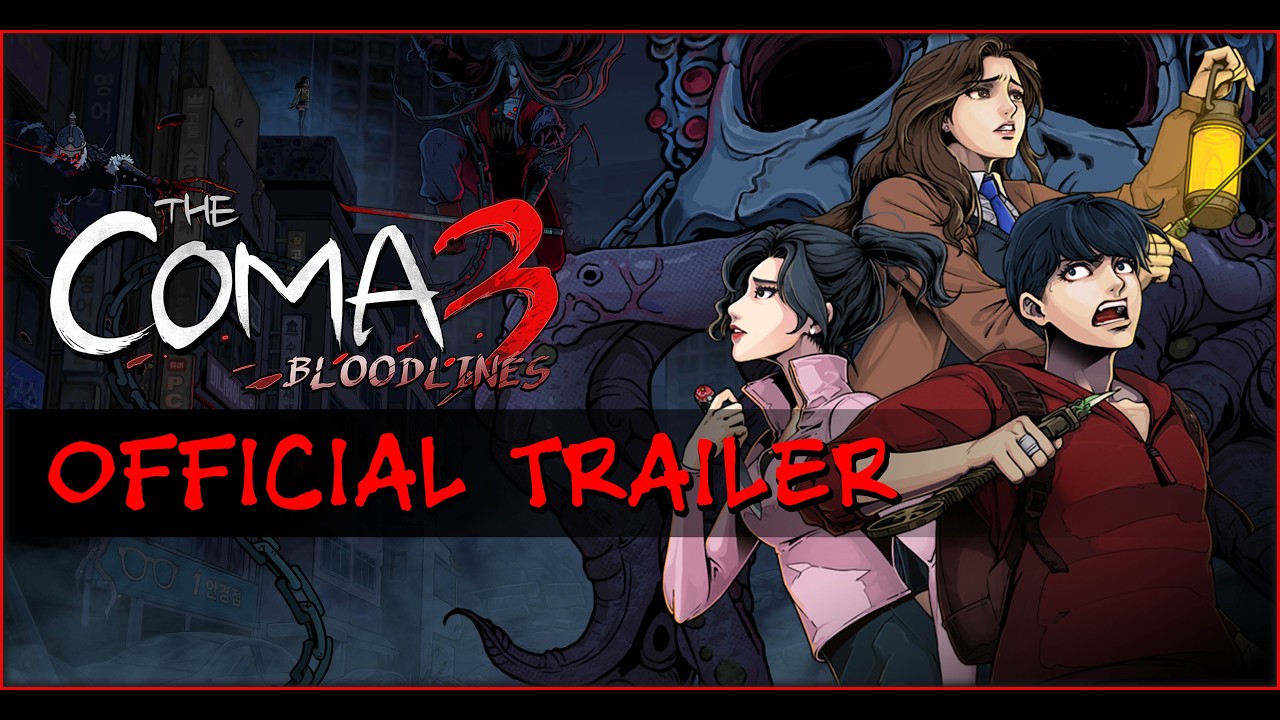
The Coma 3: Bloodlines features three playable characters, and that gives the experience more room to shift its pressure from one perspective to another. Each character has different strengths and weaknesses, which means players are not simply repeating the same survival routine with a new portrait attached. A change in character can alter how a situation feels, what risks seem worth taking, and how the story reveals its next piece of the puzzle. For returning fans, the characters are also described as familiar faces, so there is an added layer of recognition built into the structure.
Multiple playable characters can be especially effective in horror because they make the player see the nightmare from different angles. One character might feel more capable in certain moments, while another may make every chase feel like a cruel joke being played by the universe. That variety helps keep the tension from settling into a predictable rhythm. It also fits the larger mystery, since the chaos around the Coma is not limited to one person’s experience. When three characters are pulled into the same dark current, the story can show how the nightmare spreads, overlaps, and corners people in different ways. It is like watching three candles flicker in the same haunted room, and wondering which one the darkness will reach first.
Compact areas make the horror feel tighter and meaner
One of the notable additions in The Coma 3: Bloodlines is its compact area design. That may sound like a dry design note at first, but in a run-and-hide horror game, tighter spaces can change everything. Large areas can give players breathing room. Compact spaces can make every pursuit feel immediate, messy, and personal. When there is less distance between you and whatever is chasing you, the pressure rises quickly. Suddenly, choosing the wrong route is not a minor inconvenience. It is a very loud problem with footsteps.
This kind of design can also make exploration more intense. In an enclosed space, players often have to think faster and commit harder. You may not have endless options, which makes every hiding spot, shortcut, and timing window more valuable. It also helps the game keep its atmosphere dense. Instead of stretching the horror thin across huge spaces, compact environments can concentrate it, like a scary little espresso shot for your nerves. That approach suits The Coma 3: Bloodlines because the series has always worked best when players feel hunted, watched, and slightly too close to danger for comfort.
Cursed history bosses change how players survive
The Coma 3: Bloodlines introduces four bosses from the Cursed History, each with different attack patterns and survival approaches. That matters because bosses in a game like this are not just bigger enemies with more health. Since players cannot rely on traditional combat, boss encounters need to test observation, timing, patience, and movement. A boss with a unique attack pattern can turn a familiar survival rhythm upside down, forcing players to learn quickly while the atmosphere is doing its best to rattle their nerves like loose change in a washing machine.
The phrase “Cursed History” also gives these bosses narrative weight. They are not random monsters dropped into the game for a quick scare. They appear tied to the larger mythology, the school’s history, and the secrets that have been building across the series. That connection can make each encounter feel more meaningful. You are not only escaping something ugly. You may also be facing a living piece of the curse, a symbol of whatever has been buried, denied, or twisted inside the Coma. For players who enjoy horror where the monsters feel connected to the world rather than pasted on top of it, this is an important detail.
South Korean occult mystery gives the setting its own flavor
The Coma 3: Bloodlines continues the series’ focus on South Korean culture, atmosphere, and supernatural mystery. Its setting is not just a visual skin. The game draws on local history, occult ideas, curses, sorcery, and urban legend to build a world that feels distinct from more familiar Western horror settings. That helps it stand apart. Instead of another haunted mansion or abandoned laboratory, players step into a nightmare shaped by Seoul, Sehwa Private High School, and the eerie mirror reality of the Coma. It is horror with a cultural texture, which can make the unknown feel even sharper.
That mystery-driven tone is important because the game is about more than staying alive. Players gather clues, solve problems, and try to understand why the main characters have been thrown into chaos. The question of trust also sits at the heart of the experience. Who can you rely on? Who should you avoid? Who is helping, and who is guiding you toward a worse fate with a friendly smile? Horror becomes more effective when the player is not only afraid of monsters but also uncertain about people, motives, and the truth itself. The Coma 3: Bloodlines seems to understand that. Sometimes the scariest thing in the room is not the creature chasing you. Sometimes it is the clue that tells you why it is chasing you.
The story aims to close the long-running Sehwa arc
The Coma 3: Bloodlines is positioned as the conclusion to the story surrounding Sehwa High School that began with the first The Coma. That gives this release a different kind of importance for returning fans. It is not merely another chapter that adds fresh scares and then vanishes into the fog. It is designed to answer long-running questions, unravel secrets from earlier games, and bring closure to a storyline that has stretched across multiple entries. For a horror series built on mystery, that promise matters. Players want dread, yes, but they also want payoff.
Closure can be tricky in horror. Explain too little and fans feel left outside in the rain. Explain too much and the monster starts looking like a rubber mask under bright lights. The Coma 3: Bloodlines has to walk that narrow path, giving enough answers to satisfy players while keeping the setting strange and unsettling. The return to Sehwa High School helps anchor that effort. This is where the nightmare has roots, and this is where the buried truth seems ready to claw its way back up. For fans who have followed the series through its earlier Switch releases, the promise of resolution may be one of the biggest reasons to step back into the dark.
Price, release details, and Switch features
The Nintendo eShop lists The Coma 3: Bloodlines for Nintendo Switch with a June 16, 2026 release date in Europe, while Deku Deals lists the Switch version with a $14.99 MSRP. The European Nintendo page also lists a download size of 803 MB, PEGI 12 rating details, and support for TV, tabletop, and handheld play. That makes it an easy fit for Switch players who like smaller horror releases that can be played in shorter sessions, although whether playing a pursuit-heavy horror game in bed is wise depends entirely on how much you enjoy hearing imaginary noises afterward.
The game is listed as a single-player experience, with language support including Japanese, English, French, German, Russian, Korean, Chinese, and Thai on the European Nintendo page. The eShop description also highlights puzzle and adventure elements, which lines up with the game’s focus on clue gathering, problem solving, and survival movement. It is worth noting that The Coma 3: Bloodlines also launched on other platforms before its Switch release, but the Nintendo version gives the series another home on a platform where horror adventures often thrive through portability. Sometimes a smaller screen makes things feel less scary. Sometimes it makes the darkness feel like it is sitting right in your hands.
Why this Switch release should interest horror fans
The Coma 3: Bloodlines should appeal most to players who enjoy horror built on pressure, mystery, and atmosphere rather than combat-heavy spectacle. Its 2D structure gives the scares a different flavor, one where movement and timing carry real weight. You are not walking into the Coma as an unstoppable force. You are stepping into a place where the rules are stacked against the living, and survival depends on staying calm when the game clearly wants you to do the opposite. That is a strong hook for anyone who prefers horror that whispers, stalks, and suddenly slams the door behind you.
The series connection also gives this release a stronger identity than a standalone scare machine. With the Sehwa High School storyline reaching its conclusion, The Coma 3: Bloodlines has a built-in emotional and narrative pull for existing fans. New players may still be drawn in by the premise, but those who know the earlier entries will likely get more from the returning characters, unresolved secrets, and final answers. Add the South Korean occult angle, the three playable characters, compact area design, and boss encounters tied to cursed history, and the result is a Switch horror release with plenty of sharp little hooks. The kind that catch on your sleeve, and maybe your nerves too.
Conclusion
The Coma 3: Bloodlines brings the series back to Nintendo Switch with a tense mix of run-and-hide survival, occult mystery, South Korean atmosphere, and long-awaited story closure. With three playable characters, four cursed history bosses, compact environments, and a return to the secrets surrounding Sehwa High School, it gives fans a clear reason to revisit the Coma dimension. The game’s $14.99 price point and 803 MB download size make it a compact release, but its horror ideas are anything but small. For players who prefer hiding over fighting, clues over chaos, and supernatural mystery over cheap noise, this one looks like a fitting final step through Sehwa’s haunted mirror.
FAQs
- What is The Coma 3: Bloodlines?
- The Coma 3: Bloodlines is a 2D run-and-hide horror adventure where players escape puppets and shadow monsters while gathering clues, solving problems, and uncovering the mystery surrounding three main characters trapped in chaos.
- When did The Coma 3: Bloodlines release on Nintendo Switch?
- The Nintendo eShop lists The Coma 3: Bloodlines for Nintendo Switch with a June 16, 2026 release date in Europe.
- How much does The Coma 3: Bloodlines cost on Switch?
- Deku Deals lists the Switch version with a $14.99 MSRP, while the European Nintendo eShop lists it at €14.99 in the Netherlands.
- Can you fight enemies in The Coma 3: Bloodlines?
- The game focuses on running and hiding rather than direct combat. Players need to avoid danger, use hiding opportunities, and move at the right moment to survive.
- Does The Coma 3: Bloodlines continue the earlier games?
- Yes. The game is described as the conclusion to the story surrounding Sehwa High School that began with The Coma 1, with secrets from previous games being unraveled.
Sources
- The Coma 3: Bloodlines, Nintendo, June 16, 2026
- The Coma 3: Bloodlines on PC, Headup Games, 2026
- The Coma 3: Bloodlines, Steam, April 30, 2026
- The Coma 3: Bloodlines, GOG, April 30, 2026
- The Coma 3: Bloodlines, Deku Deals, June 16, 2026
- Third Entry in ‘The Coma’ Series Announced for 2026 in ‘The Coma 3: Bloodlines’ [Trailer], Bloody Disgusting, September 5, 2025