














Summary:
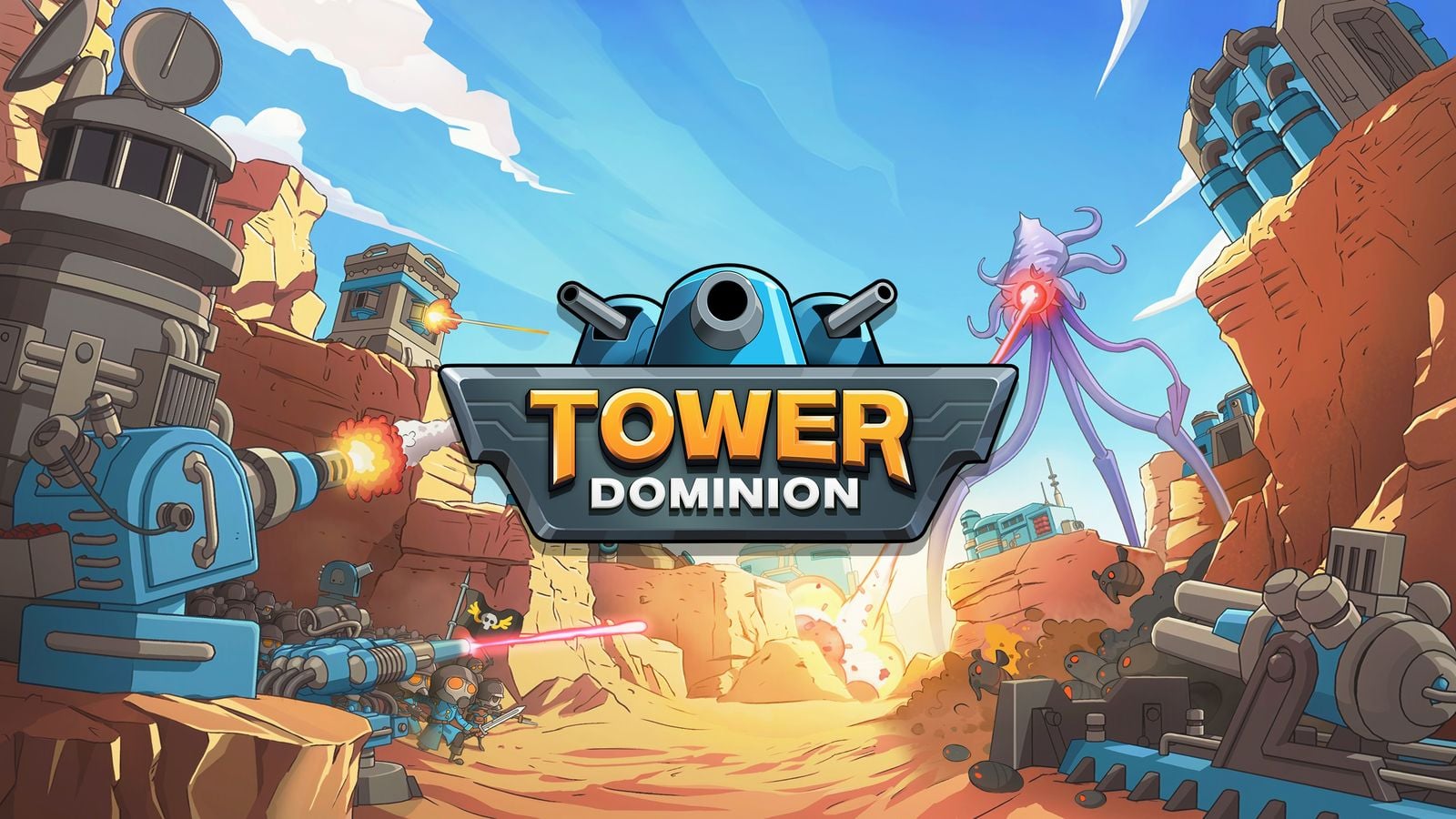
Tower Dominion is preparing to establish a new defensive position on Nintendo Switch, with Forever Entertainment confirming that the roguelike tower defense game will arrive on the system on July 9, 2026. PlayStation and Xbox versions are scheduled to follow on July 10. Originally released for PC in May 2025, the strategy title gives players considerably more control over the battlefield than a traditional tower defense game. Rather than merely placing structures along a predetermined road, players can expand and reshape partially generated maps through a modular construction system.
That freedom sits at the heart of the experience. Players must construct terrain, position buildings, select weapons and develop a defensive network capable of stopping an advancing alien invasion. Three playable factions offer different strategic styles, while 30 heroes introduce individual perks and useful synergies. The available arsenal includes more than 70 buildings, 50 weapons and over 180 doctrines, creating plenty of room for experimentation. With so many possible combinations, a plan that works beautifully during one campaign may become a smoking crater during the next.
Five difficulty levels provide a gradual route toward tougher endgame challenges, while Extended Mode lets experienced commanders continue testing powerful builds beyond the standard campaign length. A Pits system adds extra modifiers and variation, helping each run develop its own rhythm. Together, these systems make Tower Dominion an intriguing addition to the Nintendo Switch strategy library for players who enjoy careful planning, unpredictable challenges and the occasional moment of panic when an alien wave finds the one gap they forgot to reinforce.
Tower Dominion Prepares to Defend Nintendo Switch
Tower Dominion is moving from PC to consoles, giving Nintendo Switch players an opportunity to command its highly customizable battlefields. Developed by Parallel 45 Games and published on consoles by Forever Entertainment, the game blends traditional tower defense principles with roguelike progression and terrain construction. The basic objective sounds familiar: build defenses, protect the stronghold and survive increasingly dangerous waves of enemies. However, the ability to reshape the map gives the formula a noticeably different character. You are not simply reacting to a road designed by someone else. You are effectively helping to draw that road yourself, hopefully without accidentally creating an alien express lane straight to your base. Every placement can affect enemy movement, defensive coverage and the overall efficiency of the structures surrounding it.
The PC version originally launched in May 2025, providing the foundation for the upcoming console editions. Its arrival on Nintendo Switch introduces another strategy-focused release to a system already well suited to games built around shorter sessions, repeated campaigns and portable experimentation. One run may focus on tightly controlled choke points, while another could encourage a broader network of specialized towers. That variety is important because Tower Dominion is designed around adaptation rather than the discovery of one flawless solution. Players must read the map, consider the available upgrades and build around whatever opportunities appear during that particular attempt.

The Confirmed Nintendo Switch Release Date
Tower Dominion will launch for Nintendo Switch on July 9, 2026, according to the announcement published by Forever Entertainment. The PlayStation and Xbox editions are scheduled for July 10, one day after the Nintendo version. Some early reporting listed July 10 for every console, but the publisher’s announcement and promotional messages identify July 9 as the Nintendo Switch release date. That distinction matters for players planning to pick it up as soon as the defensive lines open for business.
The console release gives Tower Dominion a chance to reach players who may have missed its original PC debut. Strategy games can sometimes appear intimidating from a distance, especially when screenshots contain enough towers, menus and projectiles to resemble a particularly stressful spreadsheet. Tower Dominion counters that potential barrier by connecting its complexity to a clear and familiar goal. Enemies are approaching, the stronghold must survive and every available tool contributes to that task. The deeper systems gradually emerge through different factions, unlockable options and repeated campaigns, allowing players to develop their understanding one defensive disaster at a time.
Building the Battlefield Instead of Accepting It
The defining feature of Tower Dominion is its approach to battlefield construction. Each campaign begins with a partially generated layout, but the initial map is not a fixed puzzle that must be solved exactly as presented. Players can expand and customize it through modular terrain pieces, changing how enemies approach the stronghold and where defensive structures can operate most effectively. This creates a strategic relationship between the road and the towers guarding it. A powerful weapon is useful, of course, but its value depends heavily on where enemies travel, how long they remain within range and whether other buildings can support it.
Shaping the battlefield also means accepting responsibility when a design goes wrong. Extending a route can buy towers more time to attack, but a poorly considered connection might weaken an otherwise secure position. Tight corners can concentrate enemies within a deadly firing zone, while open sections may provide flexibility for larger defensive networks. The system encourages players to think like both an architect and a commander. One moment involves calmly arranging terrain pieces like a tactical puzzle. The next involves watching an alien wave test every assumption behind that arrangement. Nothing exposes questionable city planning quite like an army of extraterrestrials charging through it.
Modular Terrain Makes Every Defensive Plan Different
The modular map system gives each run a distinct starting point and prevents players from relying on exactly the same opening sequence every time. Partially generated layouts can alter the available space, the direction of enemy advances and the locations that make sense for important structures. Players must examine what the map offers before deciding how to expand it. A narrow area might become a natural choke point, while a larger open section could support several towers with complementary effects. The terrain is not decorative scenery. It is one of the most influential tools in the entire defensive arsenal.
This structure strengthens the roguelike side of Tower Dominion because adaptation begins before the first major wave arrives. You may have a preferred strategy, but the map can push that strategy in an unexpected direction. Perhaps a familiar tower combination lacks the room it needs, or an unusual layout suddenly makes an overlooked weapon far more attractive. These situations encourage experimentation without making every decision feel random. The player still controls the construction process, but that control must work within the possibilities offered by the current campaign. It is a conversation between planning and improvisation, although the aliens are rather rude and tend to interrupt it.
Pits Introduce Further Risks and Tactical Opportunities
The Pits system adds another variable to the battlefield by introducing modifiers that can affect how a run develops. These additions help ensure that repeated campaigns do not become routine, even after players understand the core rules. A modifier can change the value of certain choices, encourage a different build or create an extra complication that must be considered alongside the normal pressure of incoming enemies. The result is a battlefield that remains flexible and slightly unpredictable instead of settling into a familiar pattern.
That uncertainty is especially valuable in a game with a large number of buildings, weapons and doctrines. Without changing conditions, players might eventually identify a comfortable combination and use it repeatedly. Pits can disrupt that comfort, nudging commanders toward tools they might otherwise ignore. Sometimes that leads to a clever new strategy. Sometimes it leads to a spectacular collapse followed by the realization that the experimental tower probably should not have been placed beside the main entrance. Either result supports the same goal: making the next campaign feel like another tactical problem rather than a repeat of the previous one.
Roguelike Progression Keeps Each Campaign Unpredictable
Tower Dominion uses roguelike systems to make repeated campaigns a central part of the experience. Each playthrough presents a new combination of terrain, available upgrades, strategic decisions and escalating enemy waves. Progress does not rely on memorizing a single map from beginning to end. Instead, players learn how individual systems interact and use that knowledge to respond more effectively when conditions change. Defeat may end a particular defensive effort, but it also reveals weaknesses that can inform the next attempt.
This style of progression rewards flexible thinking. A commander who only understands one build may struggle when the required components fail to appear at the right moment. Someone familiar with several weapons, factions and doctrines has more ways to rescue a difficult run. That does not mean every unusual combination will become a secret masterpiece. Some experiments are destined to produce little more than sparks and regret. Even so, failed ideas remain useful because they clarify which systems complement each other and which combinations should perhaps never be allowed to share the same battlefield again.
Buildings, Weapons and Doctrines Shape Every Strategy
The game includes more than 70 buildings and 50 weapons, offering a broad selection of tools for constructing defensive networks. Buildings can serve different purposes within a strategy, from dealing direct damage to supporting other parts of the stronghold. Weapons further define how those structures respond to enemy groups, armored targets or dangerous late-wave units. Selecting an option is only the beginning. Placement, range, route design and synergy determine whether it becomes a vital part of the defense or an expensive monument to poor judgement.
More than 180 doctrines add another layer of customization. These doctrines allow players to develop particular strengths, pursue unusual combinations and adjust their approach as a campaign continues. The large selection supports experimentation because individual decisions can steer a run toward a very different outcome. One doctrine may reinforce an existing advantage, while another could make a previously modest building central to the entire defense. This creates the appealing possibility of discovering a combination that initially looks ridiculous but somehow works. In roguelike games, few moments are more satisfying than watching a questionable plan transform into a beautifully efficient machine.
Three Factions Create Distinct Approaches to Survival
Tower Dominion features three playable factions, each designed around a different gameplay style. Factions are more than visual alternatives because they influence how players build, expand and react to pressure. A strategy that feels natural with one faction may require significant adjustment when commanding another. This gives players an immediate reason to reconsider familiar habits and explore different parts of the available arsenal. Rather than providing one universal route through the game, the factions act as separate strategic foundations.
Distinct faction identities also strengthen replayability. After learning how one group handles the alien invasion, moving to another can make familiar enemy waves feel fresh again. Building priorities may shift, preferred upgrades can change and previously secondary mechanics may become much more important. This variety gives players room to find a faction that suits their instincts while still offering alternatives when they want a different challenge. Some commanders prefer precise control and carefully planned defenses. Others enjoy aggressive firepower and believe every tactical problem can be solved by adding another cannon. Tower Dominion leaves room for both personalities.
Thirty Heroes Expand the Available Tactical Combinations
Thirty heroes add individual perks and synergies to the faction system. Choosing a hero can influence the direction of a run from its earliest stages, encouraging players to prioritize particular buildings, weapons or upgrade paths. A useful perk may strengthen a familiar tactic, while an unusual synergy could support an entirely different style of play. With several heroes connected to each faction, selecting a faction does not lock every campaign into the same structure.
Heroes also give players clear reasons to revisit factions they already understand. Changing the hero can alter the value of certain decisions and produce a different rhythm even when the broader faction mechanics remain familiar. This makes hero selection part of the strategic planning rather than a purely cosmetic choice. The ideal option may depend on personal preference, the desired difficulty or the type of experiment a player wants to attempt. Thirty choices provide a substantial number of combinations, particularly once their perks begin interacting with the game’s many doctrines and defensive structures.
Alien Enemies Demand Constant Adaptation
The invading force includes 22 enemy types, with particularly powerful units appearing during later waves. Different threats can challenge different parts of a defensive layout, making variety essential. A network designed to destroy large groups of weaker creatures may struggle against a durable target, while a collection of heavy weapons could become inefficient when faster enemies arrive in greater numbers. Successful defenses need enough flexibility to handle the changing composition of each assault.
The enemy variety also tests the map itself. A long route is only beneficial when towers can use that extra time effectively. Choke points are valuable until a particular threat exposes their limitations. Late-wave units place increasing pressure on every decision made earlier in the campaign, turning small weaknesses into potentially fatal breaches. This escalation creates the familiar tower defense tension of watching an apparently secure position begin to bend under a stronger assault. The walls are holding, the weapons are firing and everything seems fine. Then one alien slips through, followed by several of its closest friends, and suddenly the whole operation resembles a badly organized evacuation.
Difficulty Levels and Extended Mode Raise the Stakes
Five difficulty levels allow players to adjust the challenge as they become more comfortable with the game’s systems. The lower settings offer space to learn how terrain construction, weapons, buildings and doctrines interact, while higher levels introduce stronger tests for experienced commanders. Additional endgame challenges extend that progression beyond simply completing a standard campaign. Moving through the difficulties can reveal whether a successful strategy is genuinely reliable or merely survived because the opposition was feeling unusually polite.
Extended Mode lets players continue testing builds beyond the normal run length. This option is valuable for anyone who enjoys seeing how far a carefully constructed defensive network can be pushed. A build that dominates regular waves may eventually encounter an enemy combination capable of exposing its weakest point. Extended play therefore becomes both a challenge and an experiment. Players can observe how different systems scale, refine their layouts and discover whether their strongest combinations remain effective under prolonged pressure. It also gives particularly powerful builds more time to shine instead of ending just as every part finally comes together.
Why Tower Dominion Fits the Nintendo Switch Library
Tower Dominion appears well suited to Nintendo Switch because its repeated campaigns and flexible strategies can work across both portable and television play. A player can develop a defensive plan during a relaxed session at home, then continue experimenting elsewhere without changing platforms. Tower defense games also benefit from clearly structured waves and natural pauses between major decisions, although the later stages may not feel especially relaxing when the stronghold is surrounded by angry aliens.
The Switch library contains many roguelikes and strategy releases, but Tower Dominion distinguishes itself through direct control over the terrain. Its combination of map construction, faction selection, hero perks and doctrine-based development gives players several levels of decision-making without abandoning the immediate satisfaction of watching a defensive network operate. The large selection of buildings and weapons should appeal to players who enjoy discovering useful combinations, while the difficulty settings provide room for gradual improvement. Its long-term appeal will depend on how comfortably the interface and controls translate to the console, but the underlying campaign structure is a natural match for repeated portable play.
Conclusion
Tower Dominion will bring its modular battlefields and roguelike tower defense systems to Nintendo Switch on July 9, 2026. By allowing players to reshape partially generated maps, the game turns terrain into an active part of every strategy. Three factions, 30 heroes, 22 enemy types, more than 70 buildings, 50 weapons and over 180 doctrines create a sizable collection of tactical possibilities. Five difficulty levels and Extended Mode provide further challenges once the basic defenses have been mastered.
The most interesting element is the freedom to construct both the defense and the route it protects. Every tile, tower and upgrade contributes to a plan that may become wonderfully efficient or collapse in a shower of alien-assisted embarrassment. For Nintendo Switch players who enjoy tower defense games, roguelike progression and systems that reward experimentation, Tower Dominion could provide plenty of reasons to build, defend, fail and immediately start planning the next attempt.
FAQs
- When will Tower Dominion be released for Nintendo Switch?
- Tower Dominion is scheduled to launch for Nintendo Switch on July 9, 2026. The PlayStation and Xbox editions are planned for July 10, 2026.
- What type of game is Tower Dominion?
- Tower Dominion is a roguelike tower defense game in which players build terrain, place defensive structures and protect a stronghold from waves of alien enemies.
- Can players change the maps in Tower Dominion?
- Yes. Each campaign begins with a partially generated map that can be expanded and customized through a modular building system.
- How many factions and heroes are available?
- The game features three playable factions with distinct styles and 30 heroes offering different perks and synergies.
- Does Tower Dominion include an endless mode?
- The console overview lists Extended Mode, which allows players to test their builds beyond the standard length of a run and face prolonged challenges.
Sources
- Tower Dominion Is Launching on Consoles!, Forever Entertainment, June 24, 2026
- Tower Dominion Making the Jump to Nintendo Switch, Nintendo Everything, June 24, 2026
- Tower Dominion, Parallel 45 Games, May 8, 2025
- Tower Dominion on Steam, Valve, May 8, 2025
- Tower Dominion Launches Today on PC!, Games Press, May 8, 2025