














Summary:
An unannounced game titled Metroid Ravenous has reportedly appeared in an official Brazilian age-classification record, potentially revealing Nintendo’s next project starring Samus Aran. The listing was reportedly published through Brazil’s Diário Oficial da União before being removed, but screenshots and details had already begun circulating online. Nintendo of America was identified as both the producer and distributor, while the production year was listed as 2026.
The classification assigned Metroid Ravenous a rating of 12 and cited violence as its primary descriptor. Additional information shared after the discovery claimed that Brazilian authorities reviewed approximately 41 minutes of material supplied through an online link by Nintendo of America. The footage was reportedly presented as one chapter and included weapons, blood and death. That amount of prepared material could suggest the project has progressed beyond its earliest stages, although it does not confirm that development is complete or that a release announcement is imminent.
Nintendo has not officially announced Metroid Ravenous, confirmed its target platform or identified the studio developing it. The timing and title have nevertheless encouraged speculation that it could be a side-scrolling successor to Metroid Dread rather than another first-person Metroid Prime adventure. MercurySteam would be a natural candidate because of its work on Metroid: Samus Returns and Metroid Dread, but no reliable evidence currently links the Spanish developer to this reported project. Until Nintendo speaks publicly, Metroid Ravenous should be treated as a credible but unconfirmed listing rather than a formally revealed game.
Metroid Ravenous Appears in a Removed Brazilian Rating
A Brazilian age-classification record may have revealed the existence of Metroid Ravenous, an otherwise unannounced game associated with Nintendo of America. The record reportedly appeared in the July 2026 edition of Brazil’s Diário Oficial da União, the country’s official government gazette. It was filed beneath the department responsible for content-rating policies in the digital environment, giving the discovery a more substantial foundation than the average anonymous message-board rumor. This was not simply someone posting a mysterious logo and asking everyone to squint at it. The reported information followed the format used for official classification decisions and included a process number, production details, age recommendations and a content descriptor. However, the relevant entry was removed before it could remain available for wider independent examination. Screenshots preserved by those who found it have therefore become the main evidence supporting the report.
What the Metroid Ravenous Classification Revealed
The reported classification identified the Brazilian and original title as Metroid Ravenous. It listed the United States as the country of origin, gave 2026 as the production year and named Nintendo of America as both producer or creator and distributor. The proposed age rating was 10, while the final assigned rating was 12. Violence was listed as the content descriptor, no interactive elements were identified and the filing carried process number 08017.001246/2026-7. Those details are unusually specific, which is one reason the discovery has attracted attention so quickly. A fabricated leak can invent a convincing title, but recreating the language and administrative structure of a government classification document requires considerably more effort. Even so, specificity is not the same as official confirmation. Nintendo has not publicly acknowledged the record, and the original page is no longer readily available for readers to inspect themselves.
Why the Assigned 12+ Rating Is Significant
Brazilian officials reportedly assigned Metroid Ravenous a rating indicating that it is not recommended for children under 12. That decision was based primarily on violent material, with later information describing the presence of weapons, blood and death. Such elements would fit naturally within the Metroid universe, where Samus regularly explores hostile planets, battles mutated creatures and uncovers the remains of unpleasant scientific experiments. Cheery picnics have never been the Galactic Federation’s strongest department. The difference between the proposed rating of 10 and the assigned rating of 12 also suggests that the reviewed material contained enough intensity to move the game into a higher category. This does not necessarily mean Metroid Ravenous will be unusually graphic. Metroid Dread also used threatening imagery, frightening enemies and tense encounters without abandoning Nintendo’s broad audience. The classification provides a glimpse of tone, but it does not reveal the game’s genre, perspective or intended platform.
Rating Materials Reportedly Included 41 Minutes of Footage
Further details shared by Universo Nintendo editor Necrolipe claimed that the classification review was conducted through an internet link supplied by Nintendo of America. The submitted material reportedly consisted of one chapter and lasted approximately 41 minutes. That is far more substantial than a single teaser or a few disconnected screenshots, although it may still have been a specially prepared compilation rather than one uninterrupted gameplay sequence. Publishers commonly provide classification authorities with footage designed to show the strongest relevant material, allowing reviewers to evaluate violence, language, sexual themes and other potentially sensitive elements without playing an entire game. In other words, 41 minutes does not automatically translate into 41 minutes from the opening of Metroid Ravenous. It could have combined cutscenes, combat encounters and selected moments from several areas, even if the submission itself described the material as a chapter.
What the Submitted Footage May Indicate About Development
A prepared classification submission usually means that a publisher has enough representative material to demonstrate a game’s tone and potentially sensitive scenes. That makes it reasonable to believe Metroid Ravenous, assuming the record is authentic, has moved beyond loose concepts and early prototypes. Nintendo of America would need identifiable footage, contextual information and a reasonably settled presentation before seeking an age classification. Still, the filing cannot tell us precisely how close the game is to release. Ratings are sometimes requested months before launch, and schedules can shift after a classification has been issued. Development teams may still be polishing performance, fixing bugs, adjusting environments or completing localisation while regulatory processes move ahead. The submission is therefore a sign of meaningful progress rather than a countdown clock. It makes an eventual announcement feel more plausible, but it does not guarantee that Nintendo is preparing to reveal or release the game within a particular number of weeks.
Metroid Ravenous Has Not Been Officially Announced
The most important detail surrounding Metroid Ravenous is also the easiest to overlook amid the excitement: Nintendo has not announced it. There is currently no official trailer, product page, release date, development studio or platform confirmation from the company. The Brazilian record reportedly connects the title to Nintendo of America, but it does not give fans a complete picture of what the project actually is. It could be a traditional side-scrolling game, a smaller experimental release, an expansion, a project with a temporary title or something else entirely. Classification records have revealed unannounced games before, but they can also contain incomplete information that lacks the context supplied during a formal reveal. Treating the name as credible is reasonable given the reported government source. Treating every theory built around that name as established fact would be racing several laps ahead of the evidence, probably without remembering to pick up the Energy Tank on the way.
Could Metroid Ravenous Follow Metroid Dread?
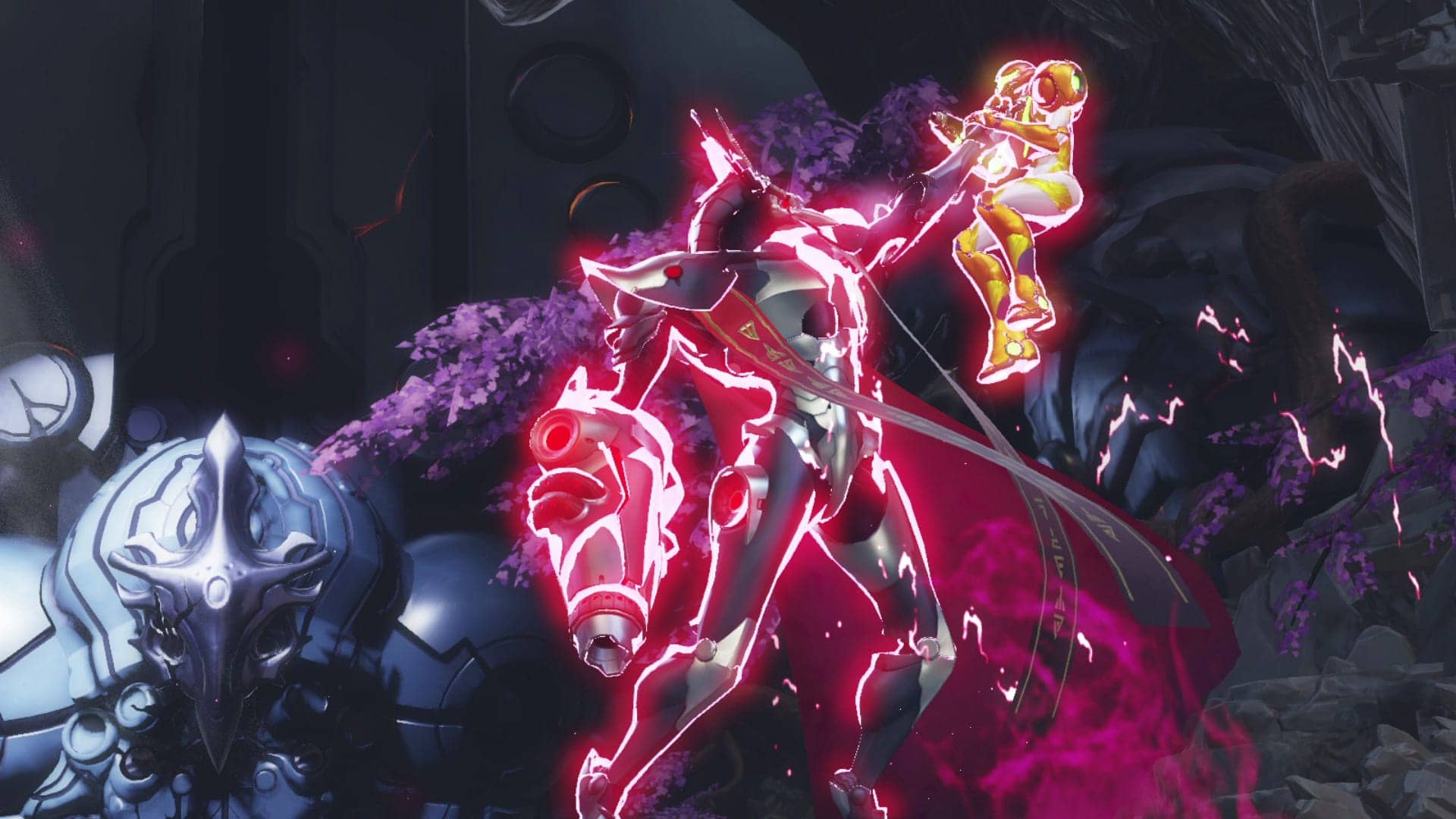
The strongest theory is that Metroid Ravenous could be a new side-scrolling adventure following Metroid Dread. Released for Nintendo Switch in 2021, Metroid Dread continued the main storyline after Metroid Fusion and placed Samus in a dangerous confrontation with the E.M.M.I. robots, the X parasites and Raven Beak. Its conclusion also transformed Samus in ways that could provide fertile ground for another chapter. The word Ravenous immediately brings hunger, consumption and uncontrolled appetite to mind, all of which could connect to the Metroid DNA within her. That thematic link is intriguing, but it remains interpretation rather than confirmation. Nintendo could just as easily use the subtitle for a new enemy, planet, biological threat or completely different premise. The five-year gap since Metroid Dread makes another project plausible, yet the title alone cannot establish its gameplay style or place within the chronology.
MercurySteam Remains an Obvious but Unconfirmed Candidate
MercurySteam will naturally be one of the first names mentioned whenever a new two-dimensional Metroid is discussed. The Spanish studio developed Metroid: Samus Returns for Nintendo 3DS and later worked with Nintendo on Metroid Dread. Its understanding of fast movement, counterattacks, atmospheric environments and cinematic boss encounters helped give modern side-scrolling Metroid games a distinct identity. Reports that MercurySteam had another unannounced project in development have added fuel to the theory, especially after its fantasy action game Blades of Fire accounted for one of the studio’s known projects. None of this proves that MercurySteam is developing Metroid Ravenous. Nintendo frequently keeps partner projects quiet until it is ready to present them, and another internal or external team could be involved. For now, MercurySteam is a logical possibility based on its history with the series, not a confirmed name that should be placed on an imaginary box cover.
The Name Ravenous Could Hint at Samus Aran’s Abilities
Metroid titles often use their subtitles to reflect an important threat, emotional theme or gameplay concept. Metroid Fusion referred to both the merging of biological material and Samus’s altered physiology, while Metroid Dread captured the fear generated by relentless machines and a hostile world. Ravenous carries similarly evocative possibilities. Samus’s Metroid abilities could become more central, perhaps allowing her to absorb energy, drain enemies or struggle with instincts she cannot completely control. The name might also describe a creature consuming ecosystems, a parasitic outbreak spreading between worlds or an antagonist driven by endless hunger. It could even refer to something more abstract, such as a government or military force hungry for Metroid power. There are plenty of delicious theories on the table, but Nintendo has not handed us the menu. The title invites speculation precisely because it sounds thematically suited to unresolved elements from Metroid Dread’s ending.
A Nintendo Switch 2 Release Remains Possible
Reports surrounding the discovery have associated Metroid Ravenous with Nintendo Switch 2, but the classification details shared publicly do not appear to provide enough independent information to treat the platform as firmly confirmed. A new Metroid project produced in 2026 would naturally be expected to target Nintendo’s current hardware, particularly if it is designed as a major first-party release. Switch 2 could provide sharper visuals, faster loading, richer environments and more elaborate enemy behaviour without forcing the series to abandon the responsive movement that made Metroid Dread so satisfying. Cross-generation support could also be possible depending on the game’s technical scope and development history. Until Nintendo identifies the supported hardware, however, platform claims should remain carefully worded. The strongest conclusion is that Switch 2 would be the obvious destination for a newly produced Metroid game, not that the removed rating record has conclusively settled every release detail.
When Nintendo Could Reveal Metroid Ravenous
An age classification can appear close to an announcement, but it is not a dependable calendar. Nintendo chooses reveal dates around its broader release schedule, marketing plans and presentation strategy rather than around the moment a regulatory entry becomes public. If Metroid Ravenous is real and substantially developed, the company could introduce it during a future Nintendo Direct, through a dedicated trailer or as part of a broader Switch 2 software presentation. The listing’s 2026 production year and the reported existence of lengthy review footage make an announcement seem possible in the relatively near future, but that remains an inference. Nintendo could also hold the project until it has a clear launch window or until another major release has completed its promotional cycle. Fans should therefore watch official Nintendo channels for confirmation rather than treating social-media predictions as scheduled broadcasts. Samus is patient enough to explore every hidden tunnel, and we may need a little of that patience too.
Why the Removed Listing Still Requires Caution
The removal of the record is suspicious in the most interesting sense, but it is not proof by itself. Government pages can be corrected or withdrawn for administrative reasons, and screenshots are more difficult to authenticate than a continuously available primary record. Multiple gaming outlets have reported the same classification details, while Necrolipe shared additional information about the submitted footage. This gives the story greater credibility than a lone unattributed claim. However, the absence of a Nintendo announcement leaves several basic questions unanswered. We do not know whether Metroid Ravenous is the final title, whether the reviewed project will reach the market in its current form or whether every reported detail was recorded accurately before the page disappeared. The responsible position sits between instant dismissal and total certainty. There is enough evidence to take the listing seriously, but not enough to describe the game as officially confirmed or to attach an assured release window.
Conclusion
Metroid Ravenous appears to be one of the more credible unannounced Nintendo projects to surface through a classification record. The reported Brazilian filing names Nintendo of America, lists a 2026 production year, assigns a 12+ rating for violence and includes a specific administrative process number. Additional claims that officials reviewed approximately 41 minutes of footage suggest that meaningful material exists, potentially placing the project beyond its earliest development stages. Even so, Nintendo has not confirmed the title, platform, developer or release plans. The possibility of a Metroid Dread successor is compelling, particularly because the Ravenous subtitle could connect naturally to Samus’s evolving Metroid powers. MercurySteam would also be a sensible development candidate, but both ideas remain theories. Until Nintendo makes an announcement, Metroid Ravenous is best described as a reportedly rated and potentially genuine project whose most exciting secrets are still locked behind a suspiciously breakable wall.
FAQs
- Has Nintendo officially announced Metroid Ravenous?
- No. Nintendo has not officially announced Metroid Ravenous or published a trailer, release date, product page or development credit for the game.
- What age rating did Metroid Ravenous reportedly receive?
- The Brazilian record reportedly assigned it a rating of 12, with violence listed as the main content descriptor. The proposed rating had initially been 10.
- Is Metroid Ravenous a sequel to Metroid Dread?
- That has not been confirmed. Its title and timing have led to speculation about a side-scrolling successor, but the reported classification does not identify its genre or story.
- Is MercurySteam developing Metroid Ravenous?
- No developer has been confirmed. MercurySteam is viewed as a possible candidate because it developed Metroid: Samus Returns and co-developed Metroid Dread with Nintendo.
- Does the rating confirm that Metroid Ravenous is nearly finished?
- No. The reported submission of approximately 41 minutes of footage suggests that substantial representative material exists, but classifications can be completed while development and polishing continue.
Sources
- Metroid Ravenous, potencial jogo para o Switch 2, aparece em classificação indicativa no Brasil, Universo Nintendo, July 1, 2026
- Unannounced Metroid Ravenous Rated in Brazil, Gematsu, July 1, 2026
- A Rating for Metroid Ravenous Has Reportedly Been Spotted Before Quickly Being Removed, Video Games Chronicle, July 1, 2026
- Metroid Ravenous Listing Sparks Speculation About Nintendo’s Next Game, GameSpot, July 2, 2026
- Metroid Ravenous Could Be a New Switch 2 Sequel to Dread After Latest Ratings Leak, Kotaku, July 1, 2026