














Summary:
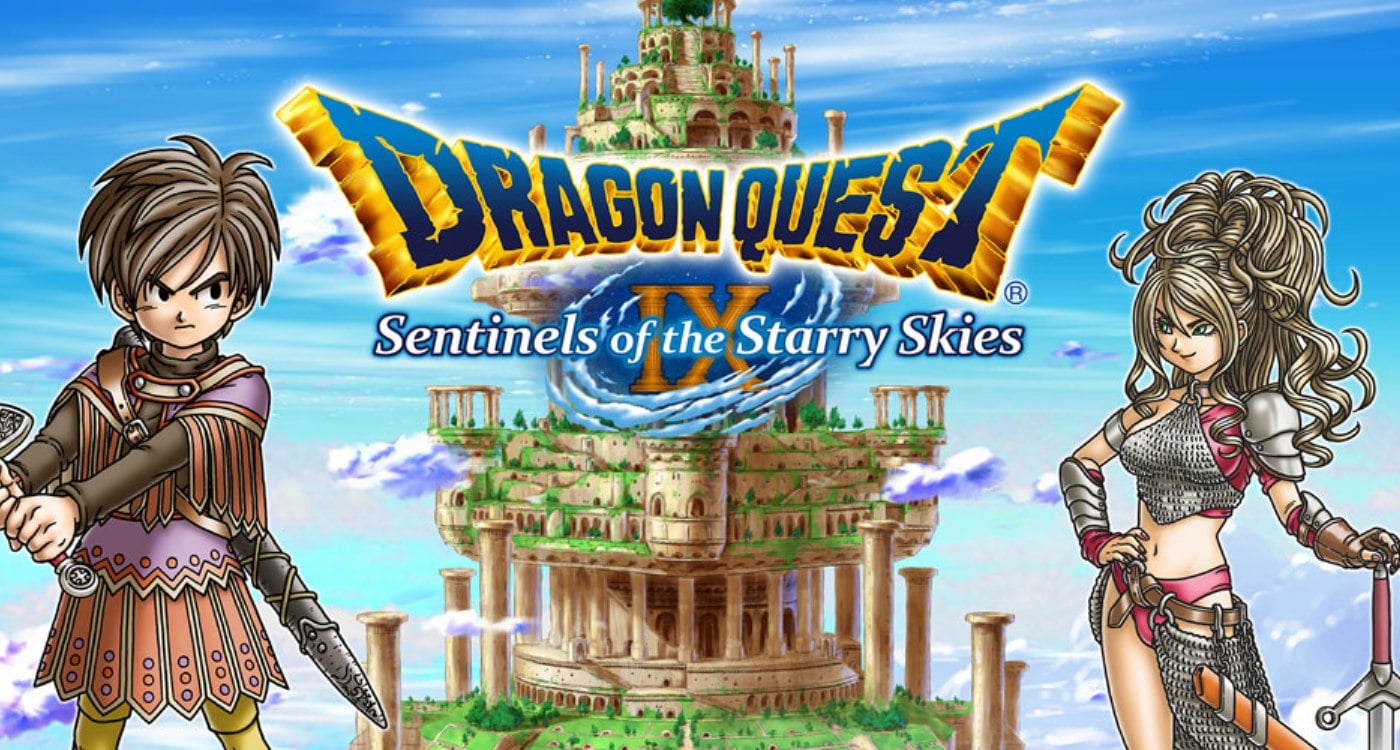
Dragon Quest creator Yuji Horii has reflected on one of the most surprising platform decisions in the history of Square Enix’s long-running RPG series: releasing Dragon Quest 9: Sentinels of the Starry Skies exclusively for Nintendo DS. Following Dragon Quest 8 on PlayStation 2, which brought the series into a richly presented 3D world, many fans naturally expected the next numbered entry to continue pushing forward on a home console. Instead, Square Enix and Level-5 took Dragon Quest in a completely different direction.
Horii explained that the Nintendo DS offered something the development team found far more interesting than simply improving graphics. Its local communication capabilities made it remarkably easy for nearby players to connect, giving the team an opportunity to build Dragon Quest around shared adventures, downloadable quests and multiplayer interaction. Dragon Quest 9 eventually supported local multiplayer for up to four players, turning a traditionally solitary RPG experience into something that could be enjoyed together.
The announcement did not receive the enthusiastic reaction Horii expected. Some fans were disappointed that the sequel to Dragon Quest 8 was moving from a powerful home console to Nintendo’s handheld, leaving the development team somewhat discouraged by the criticism. History would ultimately treat the decision much more kindly. Dragon Quest 9 became closely associated with the social nature of Nintendo DS play in Japan, while its multiplayer and Tag Mode features helped create a distinctly communal Dragon Quest experience. More than 15 years after its original Japanese release, however, Dragon Quest 9 remains available only on Nintendo DS, making it an increasingly obvious candidate for Square Enix’s continuing interest in revisiting older entries.
Yuji Horii Reflects on Dragon Quest 9’s Surprising Nintendo DS Exclusivity
Dragon Quest creator Yuji Horii has looked back on the decision to make Dragon Quest 9: Sentinels of the Starry Skies a Nintendo DS exclusive, revealing why the team was willing to break with one of the series’ most familiar traditions. Numbered Dragon Quest releases had long been associated with home consoles, so moving the ninth mainline adventure to a portable system represented much more than choosing different hardware. It fundamentally changed where and how players could experience Dragon Quest. Horii explained in a recent Famitsu interview that the Nintendo DS stood out because players could quickly connect with one another through local communication. That capability gave the development team an opportunity to create something that simply wasn’t as practical on other hardware at the time. Rather than treating the DS as a compromise, Horii saw its connectivity as the foundation for a different kind of Dragon Quest. It was a bold choice, although fans initially weren’t nearly as enthusiastic about it as the team had hoped.
Dragon Quest 8 Made the Move to Nintendo DS Feel Even More Unexpected
Understanding the initial reaction to Dragon Quest 9 means remembering what had immediately preceded it. Dragon Quest 8: Journey of the Cursed King launched for PlayStation 2 in Japan in 2004 and represented a dramatic visual evolution for the series. Its large 3D environments, expressive characters and cel-shaded presentation gave players a version of Dragon Quest that felt broader and more visually ambitious than previous numbered entries. After seeing the series make that leap, it was easy to assume the next game would continue along the same path on newer home-console hardware. Instead, Square Enix announced Dragon Quest 9 for Nintendo DS. The contrast was impossible to miss. Nintendo’s dual-screen handheld was enormously popular, but it didn’t offer the graphical power people might have expected from the successor to Dragon Quest 8. For fans imagining increasingly elaborate 3D worlds, the announcement could feel like someone had suddenly changed lanes halfway through the journey. Horii and the team, however, were looking at a different measure of progress.
Nintendo DS Local Communication Became the Driving Force Behind Dragon Quest 9
For Horii, one of the most compelling features of Nintendo DS was how easily nearby systems could communicate. Local multiplayer wasn’t a new idea, but the DS made wireless connections between players remarkably accessible. Horii recalled that similar networking features could be difficult to implement elsewhere at the time, while Nintendo’s handheld allowed users to switch on their systems and quickly connect. That simplicity inspired the team. Dragon Quest had always encouraged conversation between players, whether people were discussing where to find an item, comparing progress or swapping stories about difficult encounters. Nintendo DS offered a way to bring some of that social interaction directly into the game itself. Instead of simply creating another visually larger Dragon Quest, the developers could experiment with making the adventure more connected. That distinction explains why graphics alone didn’t determine the platform choice. The hardware offered a particular style of interaction, and Horii believed Dragon Quest could do something genuinely interesting with it.
Four-Player Adventures Offered a Different Kind of Dragon Quest Experience
That philosophy became particularly visible through Dragon Quest 9’s multiplayer features. Up to four players could participate in a local multiplayer session, allowing the host and three guests to explore together rather than simply comparing progress from separate adventures. Players could fight monsters, collect rewards and travel through the world alongside their friends, introducing a social rhythm that previous numbered Dragon Quest games had never offered in quite the same way. The experience wasn’t trying to turn Dragon Quest into a traditional online RPG. Instead, it preserved the familiar structure of the series while giving nearby players a reason to bring their Nintendo DS systems together. Other communication features strengthened that idea, including the game’s famous Tag Mode and its treasure-map exchanges. What initially looked like a move to less capable hardware eventually became an opportunity to emphasize portability and communication. Dragon Quest 9 wasn’t merely Dragon Quest 8 squeezed onto a smaller screen. Its handheld identity shaped some of its defining ideas.
Dragon Quest Fans Initially Reacted Harshly to the Nintendo DS Announcement
The development team may have been enthusiastic about those possibilities, but Horii remembers the public announcement very differently. He expected players to be surprised by what Dragon Quest 9 could do, yet much of the early conversation instead focused on the choice of Nintendo DS itself. For some fans, the question wasn’t what new gameplay the handheld could enable. It was why the next numbered Dragon Quest wasn’t appearing on a home console. That distinction mattered. Dragon Quest 8 had established expectations about how the series might evolve visually, and suddenly those expectations were being replaced by portability and multiplayer. Contemporary coverage of the 2006 announcement reflected just how remarkable the decision seemed. Dragon Quest was one of Japan’s most important RPG franchises, and putting a numbered installment exclusively on a handheld immediately became major industry news. Four-player communication was part of the reveal, but for many people the words “Nintendo DS” understandably overshadowed almost everything else.
Yuji Horii and the Team Were Disheartened by the Early Criticism
Horii has now admitted that the response was difficult for the team. They had imagined players being excited by a new way to experience Dragon Quest, only to encounter criticism centered on the platform change. He described the developers as being somewhat disheartened by the reaction. It’s easy to understand why. From their perspective, the Nintendo DS decision wasn’t about making Dragon Quest smaller or less ambitious. They were chasing an idea they thought could make the series more fun when played with other people. From the perspective of disappointed fans, though, Dragon Quest 8 had seemingly opened the door to increasingly impressive home-console adventures, and Dragon Quest 9 appeared to close that door immediately afterward. Both reactions make sense when viewed from their respective sides. The developers were thinking about interaction, while many players were thinking about presentation and technological progression. The resulting mismatch created one of those fascinating moments where a creative decision can seem questionable at announcement but far more logical once people actually experience the finished game.
Akihiro Hino Helped Convince Yuji Horii That Nintendo DS Was the Right Platform
Horii’s latest comments might make it sound as though he immediately championed Nintendo DS from the beginning, but the development history appears to have been more complicated. Level-5 CEO Akihiro Hino, whose studio worked on both Dragon Quest 8 and Dragon Quest 9, has previously been credited with advocating for Nintendo’s handheld while the team considered where the next numbered entry should go. Horii reportedly had reservations about placing a mainline Dragon Quest on a portable system before ultimately embracing the idea. That context makes the final decision even more interesting. Horii wasn’t simply committed to Nintendo DS regardless of the alternatives. The platform needed to demonstrate why it could support a worthwhile evolution of Dragon Quest. Its enormous popularity certainly made it attractive, but the communication features helped provide the creative justification. Once the possibilities of portable multiplayer became clear, the unusual platform choice started to offer something a conventional home-console sequel couldn’t easily replicate in the same way.
Dragon Quest 9 Ultimately Showed Why the Nintendo DS Concept Could Work
The years following Dragon Quest 9’s release gave Horii’s reasoning far more credibility than its announcement initially received. In Japan particularly, the game’s communication features became part of a remarkable social phenomenon. Players gathered in busy public locations with their Nintendo DS systems, using the game’s passive communication features to exchange information and obtain treasure maps from strangers passing nearby. Akihabara became one of the locations associated with large groups of Dragon Quest 9 players meeting and exchanging data, turning a traditionally single-player RPG into something that spilled beyond the screen and into physical spaces. That wouldn’t have happened in quite the same fashion if Dragon Quest 9 had simply followed its predecessor onto another television-bound platform. The handheld design allowed people to carry their adventures around with them. In hindsight, the very qualities that caused some fans to question the game before launch helped give Dragon Quest 9 an identity that remains distinct within the series. Sometimes the strange decision is precisely what makes a game memorable.
Dragon Quest 9 Remains Trapped on Nintendo DS Despite Square Enix’s Remake Push
One particularly curious part of Dragon Quest 9’s legacy is that its original Nintendo DS release remains the only official way to play it. The game launched in Japan on July 11, 2009, followed by North America on July 11, 2010 and Europe on July 23, 2010. Despite the passage of more than 15 years and Square Enix repeatedly revisiting older Dragon Quest adventures, Sentinels of the Starry Skies has yet to receive a modern port or remake. That makes it increasingly unusual within the broader series. Bringing Dragon Quest 9 forward would admittedly raise questions that don’t exist for a straightforward single-player remaster. Its identity is closely tied to Nintendo DS communication features, local multiplayer, Tag Mode and the culture that developed around treasure-map exchanges. Recreating those ideas for current hardware would require thoughtful changes rather than simply increasing the resolution. Still, the underlying adventure remains one of the franchise’s most distinctive numbered installments, and its continued absence from modern platforms only makes demand for a return easier to understand.
Conclusion
Dragon Quest 9’s Nintendo DS exclusivity once looked like a startling detour after the visual leap made by Dragon Quest 8, but Yuji Horii’s explanation shows that the decision was driven by a clear creative goal. Nintendo DS allowed the development team to make local communication simple, immediate and central to the experience. Four-player adventures, portable play and data exchanges offered a form of progression that couldn’t be measured purely by graphical horsepower. Fans didn’t immediately see things that way, and Horii remembers the team being discouraged by the criticism that followed the announcement. Yet Dragon Quest 9 eventually demonstrated why its unusual platform choice mattered, particularly as players gathered together to exchange maps and make use of its social features. The irony is that a game designed around accessibility and connecting people is now among the hardest mainline Dragon Quest entries to access on current hardware. Whether Square Enix eventually changes that remains unknown, but Dragon Quest 9’s history gives any potential return plenty of fascinating ideas to preserve.
FAQs
- Why was Dragon Quest 9 made exclusively for Nintendo DS?
- Yuji Horii has explained that Nintendo DS made local wireless communication quick and convenient. The development team wanted to use that functionality to create new ways for Dragon Quest players to connect and adventure together.
- How many players can play Dragon Quest 9 together?
- Dragon Quest 9 supports local multiplayer for up to four players. One player hosts the session, while as many as three additional Nintendo DS players can join the adventure.
- Why were fans unhappy when Dragon Quest 9 was announced for Nintendo DS?
- Dragon Quest 8 had delivered a richly presented 3D RPG on PlayStation 2, leading many fans to expect another home-console release with further graphical improvements. Moving the next numbered entry to Nintendo DS challenged those expectations.
- Did Yuji Horii always want Dragon Quest 9 on Nintendo DS?
- Not entirely. Previous accounts of the game’s development indicate that Level-5 CEO Akihiro Hino advocated for Nintendo DS and helped convince Horii of the platform’s potential for a mainline Dragon Quest game.
- Can you play Dragon Quest 9 on Nintendo Switch or modern consoles?
- No official modern version has been released. Dragon Quest 9: Sentinels of the Starry Skies remains a Nintendo DS release, despite numerous other Dragon Quest games being remade, remastered or brought to newer platforms.
Sources
- 堀井雄二氏『ドラクエ』の40年を語るスペシャルインタビュー。, Famitsu, August 9, 2026
- Dragon Quest creator comments on why DQ9 was a Nintendo DS exclusive, team was “a little disheartened” by the fan reaction, Nintendo Everything, August 15, 2026
- Dragon Quest 9 on… Nintendo DS!, Wired, December 12, 2006
- Why Tokyo Crowds Can’t Stop Playing Dragon Quest IX, Wired, September 25, 2009
- Dragon Quest IX: Sentinels of the Starry Skies Review, Nintendo Life, July 10, 2010