














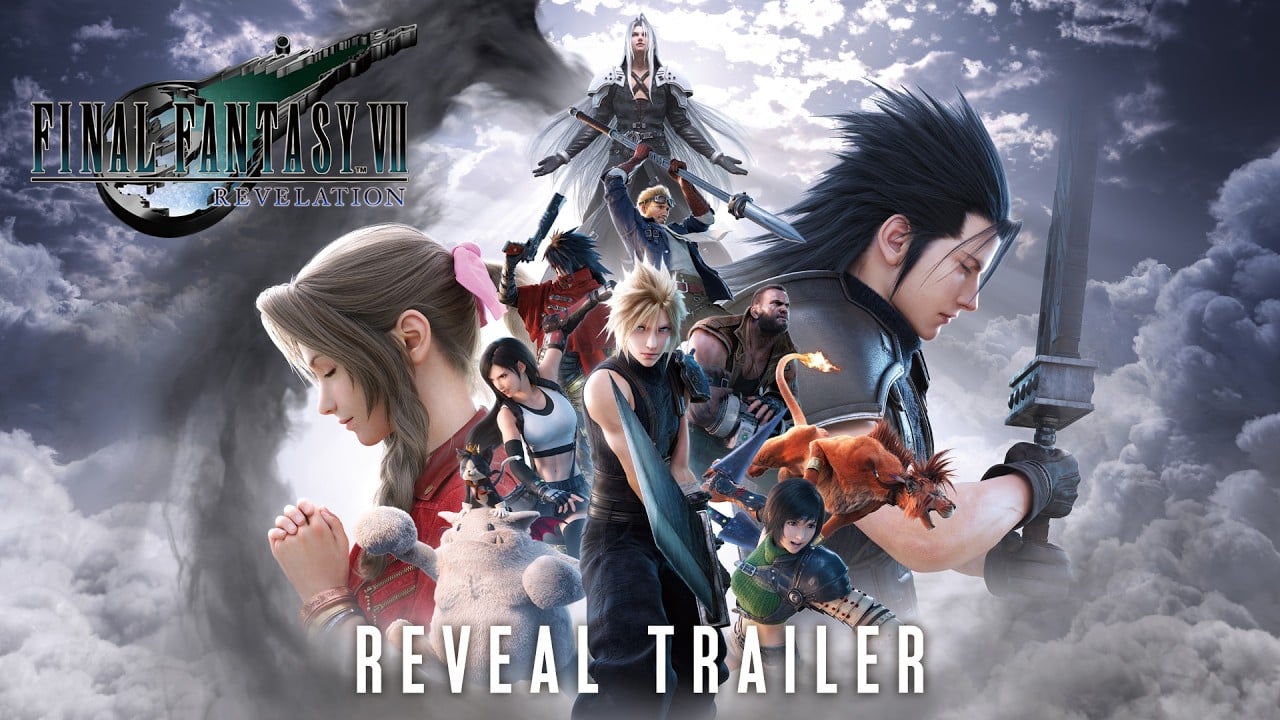
Summary:
Final Fantasy VII Revelation is now officially positioned as the third and final part of Square Enix’s Final Fantasy VII remake trilogy, and it sounds like the studio is aiming for a finale with real scale behind it. Planned for Spring 2027, the game is set to launch simultaneously on Nintendo Switch 2, PlayStation 5, Xbox Series X|S, and PC through Steam, Epic Games Store, and Xbox PC. That alone makes this a major shift for the remake project, as the closing chapter is being prepared for a broad audience from day one rather than following the staggered platform path of earlier entries. The story brings Cloud Strife and his companions back into a world under terrifying pressure, with Meteor hanging above, Sephiroth nearing godhood, war spreading, and the planet’s own Weapons awakening as monstrous guardians. The Highwind airship also takes center stage, allowing players to explore a seamless open world from the sky and drop into locations by parachute. Add in new regions like Mideel and Wutai, playable Vincent Valentine and Cid Highwind, plus the new FITS system built around outfit-based combat styles, and Revelation looks designed to make the final stretch feel bigger, stranger, and more flexible than anything the remake trilogy has attempted so far.
Final Fantasy VII Revelation brings the remake trilogy toward its final battle
Square Enix has announced Final Fantasy VII Revelation as the third and final game in the Final Fantasy VII remake trilogy, bringing Cloud Strife’s modern reimagined journey toward its long-awaited conclusion. The title alone carries a heavy sense of finality, but the details make the stakes feel even sharper. This is not simply another stop on the road after Remake and Rebirth. This is where the journey climbs aboard the Highwind, looks down at the whole planet, and asks whether Cloud and his companions can still pull everything back from the brink. No pressure, right? Just the fate of the world, Sephiroth, Meteor, planetary guardians, and enough emotional baggage to fill an entire cargo hold.

Spring 2027 release plans bring the finale to every major platform at once
Final Fantasy VII Revelation is currently planned for a Spring 2027 release across PlayStation 5, Nintendo Switch 2, Xbox Series X|S, and PC through Steam, Epic Games Store, and Xbox PC. That simultaneous launch window is one of the biggest practical details in the announcement, especially for players who followed the remake trilogy across shifting platform availability. Instead of making some audiences wait on the sidelines with their noses pressed against the glass, Square Enix is preparing the finale for all major current platforms at the same time. For a trilogy closer, that matters. The final chapter works best when the full fanbase can experience the conversation together, from story theories to combat discoveries to the inevitable emotional damage that Final Fantasy VII has been politely threatening for decades.
The 30th anniversary timing gives the finale extra weight
The planned Spring 2027 launch also lines up with the 30th anniversary year of the original Final Fantasy VII, which first released in 1997. That timing gives Revelation an extra layer of meaning. Final Fantasy VII has never really left the gaming conversation, but the remake trilogy has turned that legacy into something active, unpredictable, and constantly discussed. For players who discovered Cloud, Aerith, Tifa, Barret, and Sephiroth in the original, this finale arrives as a strange mirror held up across three decades. For newer players, it is the closing act of a modern RPG trilogy that has blended nostalgia with new twists. Either way, the timing feels deliberate, like Square Enix is placing the final piece of the remake project right where the spotlight is brightest.
The Highwind changes the shape of exploration across the planet
The Highwind is more than fan-service machinery with propellers and attitude. In Final Fantasy VII Revelation, it becomes the heart of world exploration. Square Enix describes a seamlessly connected open world where Cloud and his companions can travel by airship, fly across the planet, and drop into areas by parachute. That detail immediately changes how the finale feels compared with earlier entries. Remake focused tightly on Midgar, while Rebirth broadened the experience into large explorable regions. Revelation appears to push that idea further by letting the entire planet function as the stage. In other words, the world is no longer just a map to cross. It becomes a living space to survey from above, choose from the sky, and descend into when curiosity wins.
Air travel makes the planet feel like one connected adventure
A fully explorable planet sounds exciting because it gives the final journey a sense of momentum and freedom. The Highwind has always been one of the most iconic symbols of Final Fantasy VII, partly because it represents the moment the party stops reacting and starts moving with purpose. Revelation seems to understand that emotional weight. Flying over the world while Meteor threatens everything is a dramatic image, but it is also a practical gameplay promise. Players can chart their own direction, look for new destinations, and move between sky and land without the experience feeling chopped into tiny pieces. If Rebirth made the world feel broad, Revelation seems ready to make it feel whole.
Parachute drops add a stylish twist to discovery
The ability to drop from the Highwind by parachute gives exploration a playful edge. It is the kind of feature that instantly invites experimentation. See a suspicious patch of rainforest? Drop in. Spot a strange structure below? Time to make a dramatic entrance. Notice a quiet corner of the map that looks like it has treasure, danger, or both? Well, down we go. This mechanic could make traversal feel more active than simply landing at fixed points. It also fits the tone of a finale where everything is bigger and more urgent. The planet is in chaos, the sky is scarred, and the heroes are literally leaping into danger. Subtle? Not exactly. Fun? Very likely.
Mideel and Wutai add fresh scenery to the journey
Final Fantasy VII Revelation will include newly introduced regions alongside areas familiar from earlier parts of the remake trilogy. Two highlighted locations are the Mideel Region and the Wutai Region, both of which bring very different visual moods to the adventure. Mideel is described as a lush tropical rainforest marked by sweltering humidity, while Wutai is home to descendants of ninja and features beautiful architecture with vermilion-painted wooden structures and tiled roofs. That contrast is important because the final game needs the planet to feel varied, not just large. A bigger world only matters if its places have texture, identity, and atmosphere. Otherwise, it is just a very pretty checklist.
Mideel brings humid rainforest energy to the finale
The Mideel Region sounds like it will lean into dense greenery, heat, and a more tropical kind of tension. A rainforest setting can do a lot for Final Fantasy VII’s tone, especially in a story where the planet itself is under threat. Thick foliage, damp air, hidden paths, and sudden danger all fit nicely with the idea of a world that is both beautiful and wounded. There is also a nice contrast between Mideel’s natural atmosphere and the industrial scars that have defined so much of Final Fantasy VII. After years of mako reactors, metal walkways, and Shinra machinery, a humid rainforest can feel like the planet taking a deep breath – or perhaps coughing dramatically because Meteor is still a bit of a problem.
Wutai brings history, culture, and visual identity back into focus
Wutai is one of the locations many fans have been eager to see in the remake trilogy’s modern style. Its description points toward a town shaped by ninja heritage, vermilion-painted wood, and tiled roofs, giving the region a strong visual identity before players even set foot there. Wutai also carries political and personal weight within Final Fantasy VII’s world, especially because of its history and its connection to Yuffie. In Revelation, the region has the potential to be more than a scenic stop. It can become a place where culture, conflict, character history, and the larger global crisis all meet. That is exactly the kind of layered location a final chapter needs.
Cloud and his allies face a world pushed to the edge
The story setup for Final Fantasy VII Revelation does not tiptoe around disaster. Meteor scars the sky, monstrous planetary guardians wreak havoc, war spreads across the globe, and Sephiroth moves closer to godhood. Cloud Strife and his companions take to the skies aboard the Highwind as the fate of the planet hangs in the balance. That is classic Final Fantasy escalation: start with personal trauma and corporate oppression, then slowly reveal that the entire world is on fire and the villain may be rewriting destiny with a very sharp sword. The remake trilogy has always balanced intimate character moments with massive spectacle, and Revelation’s premise suggests both sides will be pushed hard in the final stretch.
Sephiroth remains the shadow over everything
Sephiroth’s presence has shaped the remake trilogy from the beginning, often appearing like a nightmare that refuses to stay politely in the past. In Revelation, that threat becomes more direct as he nears godhood and the final battle approaches. The interesting part is not just that Sephiroth is powerful. Final Fantasy VII has always made him dangerous because he attacks identity, memory, and trust as much as he attacks with a blade. Cloud’s struggle is personal, psychological, and cosmic all at once. That combination is why the finale carries so much emotional weight. The fight is not only about defeating a villain. It is about whether Cloud and the people around him can hold themselves together while the world falls apart.
Vincent Valentine and Cid Highwind join the playable lineup
Final Fantasy VII Revelation adds Vincent Valentine and Cid Highwind as new playable party members, finally bringing the iconic ensemble together in combat. Vincent is voiced in English by Matt Mercer and is described as a deft gunslinger with fast gunplay and ferocious bestial transformations. Cid Highwind is voiced in English by J. Michael Tatum and fights as an ace pilot who can close distance for strong single-target lance strikes or unleash wider area-of-effect attacks. Their addition matters because the remake trilogy’s combat thrives on character identity. Every party member feels different in motion, and adding Vincent and Cid should open up new rhythms, new strategies, and, let’s be honest, new favorite party combinations that players will defend online with alarming passion.
Vincent Valentine brings guns, transformations, and gothic flair
Vincent Valentine is one of those Final Fantasy VII characters who can enter a scene and immediately make the lighting feel more dramatic. His combat description fits that reputation perfectly. Lightning-fast gunplay gives him ranged pressure, while bestial transformations suggest explosive shifts in power and style. In the original game, Vincent’s transformations were a defining part of his identity, but the remake trilogy’s modern combat system gives Square Enix room to make those abilities feel far more immediate and theatrical. He has the potential to become a high-impact fighter with a dark, unpredictable edge. Basically, he is the party member who looks like he slept in a coffin and still somehow arrived overdressed in the best way.
Cid Highwind brings lance attacks and airship captain energy
Cid Highwind’s playable role sounds built around aggression, mobility, and control. His ability to close distance quickly for powerful lance attacks should make him feel direct and punchy, while sweeping area attacks can help him manage groups of enemies. That fits Cid’s personality nicely. He is not exactly the type to stand quietly at the back of the battlefield and ask whether everyone has read the manual. He is the kind of character who flies the airship, yells at danger, and then jumps into it with a spear. Having him fully playable also gives the Highwind’s role in the story a stronger character anchor, since the airship is not just a vehicle. It is Cid’s domain.
The fully assembled party could make combat more flexible than ever
With Vincent and Cid joining the lineup, Revelation can offer the broadest party-building options in the remake trilogy. That matters because the combat system is built around switching characters, issuing commands in Tactical Mode, using abilities, and combining strengths through synergy. More playable characters means more ways to solve problems. Some players may favor magic-heavy builds, others may want fast pressure, defensive control, ranged damage, or pure physical aggression. The joy of this system is that it can make every battle feel like a small puzzle wrapped in spectacle. Add enough party members, and suddenly the puzzle box has more moving parts, more sparks, and probably more reasons to pause the game and rethink your materia setup.
The FITS system adds job-like combat variety through outfits
Final Fantasy VII Revelation introduces FITS, a new combat system that lets characters change fighting styles by equipping different outfits. Each outfit unlocks unique abilities and expands strategic options, while weapons and materia still support broader build customization. Square Enix has highlighted examples such as The Warrior, which enhances offensive capabilities for aggressive playstyles, and The Black Mage, which specializes in offensive magic. The idea clearly echoes classic Final Fantasy jobs, but it filters that tradition through the remake trilogy’s action-command hybrid combat. It is a smart fit for the finale because it gives familiar characters fresh mechanical roles without replacing what already makes them distinct.
Outfits are not just cosmetic in Revelation
The key detail about FITS is that outfits affect combat style. That means they are not merely there for screenshots, although screenshots will absolutely happen. Instead, outfits can change how characters fight, which abilities they bring into battle, and how players shape their team before facing major threats. This could make preparation feel more meaningful, especially if certain enemies reward specific approaches. A Warrior-style setup might help players lean into physical pressure, while a Black Mage outfit could turn a character into a spell-focused powerhouse. When combined with weapons and materia, FITS may add another strategic layer that lets players tune their party like a musical instrument, except the instrument is hitting Sephiroth very hard.
Classic Final Fantasy jobs get a modern remake twist
The Warrior and Black Mage examples are important because they connect Revelation to the wider Final Fantasy tradition. Job systems have been part of the franchise’s identity for decades, and Revelation seems to borrow that spirit without turning the remake trilogy into a traditional job-based RPG. That balance could work well. Players still get the cinematic action, character switching, Tactical Mode, and synergy attacks that define the modern remake combat, but now there is room for job-like experimentation. It is a little like giving each character a new lens rather than a whole new personality. Cloud can still feel like Cloud, but his role in battle may shift depending on the outfit and strategy behind it.
Weapons bring colossal danger to the planet’s last stand
Weapons are confirmed as major enemies in Final Fantasy VII Revelation, and their role is exactly as intimidating as fans would expect. These monstrous guardians are awakened by the planet to defend against Meteor, the ultimate destructive magic. The problem, naturally, is that their destruction is indiscriminate, meaning Cloud and his companions must stand against them as well. That creates a fascinating kind of conflict. The Weapons are not simply villains in the usual sense. They are the planet’s defense mechanisms, terrifying and catastrophic, acting in response to an existential threat. It is like the world has developed an immune response, except the antibodies are enormous monsters that can flatten cities. Nature is healing, but nature is also furious.
The Weapons make the planet feel alive and dangerous
The presence of Weapons helps reinforce one of Final Fantasy VII’s central ideas: the planet is not just scenery. It reacts, suffers, fights back, and sometimes lashes out in ways that endanger everyone. In Revelation, these creatures can turn the environmental crisis into something players confront directly. Meteor is the looming disaster above, Sephiroth is the calculating force behind the chaos, and the Weapons are the planet’s raw panic made physical. That gives the finale a sense of scale that ordinary enemies cannot provide. Fighting them should feel less like clearing a boss encounter and more like surviving a natural disaster with health bars, attack patterns, and probably a soundtrack that makes your shoulders tense.
Why these battles could define the finale
Weapon battles have the potential to become some of Revelation’s most memorable moments because they combine spectacle, story, and mechanics in one towering package. These enemies can test everything the game has introduced: aerial exploration, party flexibility, FITS builds, materia setups, and the full playable roster. They also give the world crisis a physical form. It is one thing to say the planet is in danger. It is another thing to watch a colossal guardian rise up and decide that everything nearby is acceptable collateral damage. If Square Enix lands these encounters well, they could become the kind of battles players remember long after the credits roll.
Why this finale matters for longtime fans and new players
Final Fantasy VII Revelation matters because it is closing a remake trilogy that has never been a simple retelling. Remake narrowed the focus to Midgar and twisted expectations. Rebirth expanded the world and leaned into exploration, party bonding, and emotional uncertainty. Revelation now has to bring those threads together while honoring one of the most beloved RPGs ever made. That is a delicate balancing act, like juggling materia while riding a chocobo through a thunderstorm. Longtime fans want payoff, emotional truth, and respect for the original. Newer players want a finale that works on its own terms. The best version of Revelation will need to satisfy both without feeling trapped by either.
A simultaneous multiplatform launch could widen the conversation
Because Revelation is planned for Switch 2, PS5, Xbox Series X|S, and PC at launch, the finale is positioned to reach a much wider audience immediately. That gives the closing chapter a different kind of energy. Players across platforms can discover the Highwind, experiment with FITS, argue about party setups, and process the story together. For a narrative-heavy RPG, shared timing can make a big difference. Theories spread faster, surprises hit harder, and discussions feel more alive when fewer people are waiting for a later port. It also shows how Square Enix is treating the trilogy’s ending as a major multiplatform event rather than a platform-limited release.
Conclusion
Final Fantasy VII Revelation is shaping up to be a major closing chapter for Square Enix’s remake trilogy, with a Spring 2027 launch planned across Switch 2, PS5, Xbox Series X|S, and PC. The confirmed details point toward a finale built around scale, freedom, and strategic variety: the Highwind opens the planet from above, Mideel and Wutai add fresh regional identity, Vincent and Cid expand the playable roster, and the FITS system gives combat a job-like layer through outfit-based abilities. Most importantly, the story brings Cloud and his allies into the final struggle against Sephiroth while Meteor and the Weapons push the planet into chaos. For fans who have followed this reimagined journey from Midgar onward, everything now leads to the sky, the final battle, and one last question: can the party save the planet before the world breaks beneath them?
FAQs
- When will Final Fantasy VII Revelation be released?
- Final Fantasy VII Revelation is planned for Spring 2027. Square Enix has not announced a specific release day yet, so the current confirmed timing remains Spring 2027.
- Which platforms will Final Fantasy VII Revelation launch on?
- The game is planned for PlayStation 5, Nintendo Switch 2, Xbox Series X|S, and PC through Steam, Epic Games Store, and Xbox PC.
- Is Final Fantasy VII Revelation the final part of the remake trilogy?
- Yes. Square Enix has announced Revelation as the third and final entry in the Final Fantasy VII remake trilogy, following Final Fantasy VII Remake and Final Fantasy VII Rebirth.
- Will Vincent Valentine and Cid Highwind be playable?
- Yes. Vincent Valentine and Cid Highwind are confirmed as new playable party members, bringing new combat styles to the fully assembled group.
- What is the FITS system in Final Fantasy VII Revelation?
- FITS is a new system that lets characters equip different outfits to change combat styles and unlock unique abilities, with examples inspired by classic Final Fantasy jobs like Warrior and Black Mage.
Sources
- FINAL FANTASY VII REVELATION Announced – Experience The Journey’s End In Spring 2027, Square Enix Press Hub, June 5, 2026
- FINAL FANTASY VII REVELATION, Square Enix, June 5, 2026
- Final Fantasy VII Revelation announced for PS5, Xbox Series, Switch 2, and PC, Gematsu, June 5, 2026
- Final Fantasy VII’s remake trilogy will conclude with Revelation, The Verge, June 5, 2026
- FINAL FANTASY VII REVELATION – Reveal Trailer, Square Enix, June 5, 2026