














Summary:
French game developer Douze Dixièmes has reportedly closed its doors only months after releasing MIO: Memories in Orbit on Nintendo Switch, Nintendo Switch 2, PlayStation 5, Xbox Series X|S, and PC. The small studio was known for creating visually distinctive adventures, having previously introduced players to the dreamlike puzzle platformer Shady Part of Me in 2020. Its latest project, MIO: Memories in Orbit, arrived on January 20, 2026, and attracted positive attention for its painterly presentation, atmospheric world, demanding platforming, and interconnected Metroidvania design.
The reported closure was revealed as part of a wider examination of the difficulties facing the French video game industry. Although MIO received a favourable critical response, strong reviews do not automatically pay salaries, fund another project, or keep a small studio operating. That uncomfortable gap between artistic recognition and financial security appears to have become one of the defining problems facing modern developers.
Douze Dixièmes had been acquired by Focus Entertainment in 2021 after the two companies collaborated on Shady Part of Me. Reports indicate that the studio’s founding partners later regained control of the company before its closure. Neither the complete commercial performance of MIO nor the exact circumstances behind the decision have been publicly detailed, so conclusions about specific sales targets should be treated carefully.
For Nintendo players, the news means the loss of another team willing to create unusual worlds rather than follow predictable formulas. It also arrives while developers elsewhere face layoffs, restructuring, and uncertain futures, including reported difficulties surrounding South of Midnight developer Compulsion Games. Behind every studio name are artists, programmers, designers, writers, and producers whose livelihoods depend on an increasingly unstable business.
Douze Dixièmes reportedly closes after releasing MIO: Memories in Orbit
Douze Dixièmes, the French developer responsible for MIO: Memories in Orbit, has reportedly ceased operations. The news emerged through French reporting on the deteriorating conditions facing game developers across the country, placing the studio’s closure within a much larger industry problem rather than presenting it as an isolated event. It is a painful outcome for a team that released its most ambitious project only a few months earlier. MIO launched across Nintendo Switch, Nintendo Switch 2, PlayStation 5, Xbox Series X|S, and PC on January 20, 2026, giving the studio its broadest platform presence yet. From the outside, that should have represented the beginning of a promising chapter. Instead, it appears to have become the final major release carrying the Douze Dixièmes name. That contrast makes the situation especially difficult to absorb. Players often see a finished game arrive in stores and assume its creators have successfully crossed the finish line. In reality, launching is only one part of the race, and the financial consequences may not become clear until the applause has faded.
The closure follows the January 2026 launch of MIO
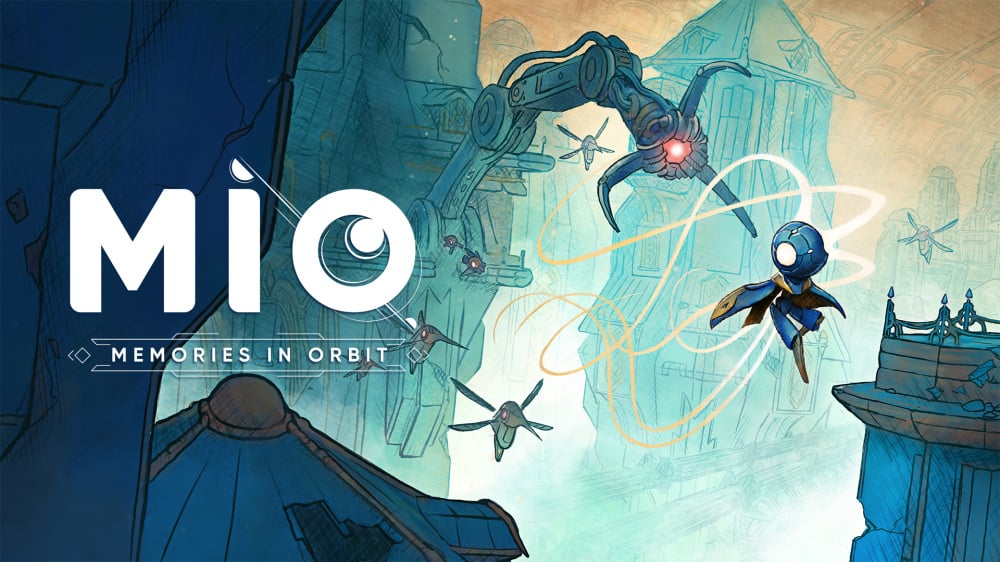
MIO: Memories in Orbit arrived with the kind of identity many smaller releases spend years trying to establish. It introduced players to MIO, an agile robot exploring the Vessel, a vast technological ark filled with overgrown environments, malfunctioning machines, fragmented memories, and hidden dangers. Its mixture of delicate artwork and mechanical ruins gave the adventure an immediately recognisable appearance. You could glance at a screenshot and know which game you were seeing, which is no small achievement in a crowded marketplace. The experience combined exploration, platforming, combat, upgrades, and ability-based progression within an interconnected world. Players gradually gained new ways to move through the Vessel, opening routes that had previously seemed impossible to reach. It was familiar Metroidvania territory, but Douze Dixièmes gave it a distinct personality. Unfortunately, a memorable identity and positive critical reception are not always enough to support a development team. A game can earn admiration, enthusiastic recommendations, and devoted fans while still falling short of the commercial results needed to finance whatever comes next.
Douze Dixièmes built its reputation through distinctive artistic games
Before MIO carried players into the decaying corridors of the Vessel, Douze Dixièmes introduced its creative voice through Shady Part of Me. Released in December 2020, the puzzle platformer followed a young girl and her shadow through surreal environments shaped by fear, loneliness, and personal growth. Its puzzles relied on the relationship between three-dimensional spaces and two-dimensional shadows, encouraging players to consider perspective in unusual ways. The result felt less like walking through a conventional level and more like turning the pages of an illustrated storybook that had developed a mind of its own. Shady Part of Me established several qualities that later returned in MIO, including expressive artwork, environmental storytelling, emotional themes, and carefully constructed spaces. The two games were mechanically different, yet they shared a recognisable creative fingerprint. That consistency is what makes the studio’s reported closure sting. Douze Dixièmes was not simply producing interchangeable projects. It was developing a particular voice, and voices like that are difficult to replace once they disappear.
Focus Entertainment acquired the French studio in 2021
Focus Entertainment acquired Douze Dixièmes in 2021 after working with the developer on Shady Part of Me. At the time, the acquisition appeared to offer the small team a stable foundation from which it could pursue more ambitious ideas. Focus praised the studio’s creative ability and described its employees as coming from both animation and video game backgrounds, a combination that helps explain the strong visual character of its work. Joining a larger publishing group can provide a developer with financing, production support, marketing resources, localisation, quality assurance, and access to international distribution. Those advantages matter enormously when a compact team attempts to build a game for several platforms at once. However, ownership by a publisher does not eliminate commercial pressure. Every project still exists within budgets, sales forecasts, schedules, and strategic decisions that players rarely see. The relationship ultimately produced MIO: Memories in Orbit, but reports surrounding the closure suggest that the studio’s place within the wider company changed after the game’s release.
Reports suggest the studio returned to its founders before closing
Reporting from France indicates that the founding partners of Douze Dixièmes regained control of the company from Focus Entertainment before the studio closed. Publicly available corporate information and subsequent reports point to Focus parent company Pullup Entertainment transferring its participation in Douze Dixièmes back to the studio’s founders. This detail matters because it suggests the closure was not simply a sudden disappearance ordered without any transition. Instead, the founders may have taken responsibility for handling the final stage of the company themselves. The full private discussions behind that decision have not been disclosed, so it would be irresponsible to invent motives or present assumptions as confirmed facts. What can be said is that the arrangement between the publisher and developer appears to have ended before operations stopped. For the people involved, that process would have meant far more than changing names on corporate paperwork. It would have involved careers, contracts, unfinished plans, company assets, and the difficult task of deciding what could still be preserved after years of collaborative work.
Critical recognition could not guarantee commercial security
MIO: Memories in Orbit received praise for its art direction, movement, exploration, atmosphere, and challenging design. Focus Entertainment highlighted the game’s strong critical reception shortly after launch, showing that the project had connected with reviewers and players who appreciated its careful construction. Yet acclaim and financial stability are two different currencies. Reviews can create visibility, but a studio ultimately needs enough revenue to cover development costs, wages, taxes, technology, office expenses, marketing commitments, and the early production of future projects. Those costs continue even after a game reaches store shelves. Small teams can sometimes appear inexpensive compared with blockbuster studios, but several years of specialised labour still represent a major investment. The market also presents a brutal discovery problem. Thousands of releases compete for attention, subscription services reshape buying habits, discounts arrive quickly, and players have more choices than hours in the day. A well-reviewed game can therefore become a critical success without generating the long-term income its developer requires. Talent helps create a great game, but talent alone cannot force crowded storefronts to cooperate.
Nintendo players are losing another distinctive creative team
Douze Dixièmes supported Nintendo systems with both of its major releases. Shady Part of Me launched on Nintendo Switch alongside other platforms, while MIO: Memories in Orbit appeared on Nintendo Switch and Nintendo Switch 2. The newer version gave early Switch 2 owners another atmospheric adventure to explore and demonstrated that smaller developers were prepared to support Nintendo’s latest hardware from the beginning. That makes the studio’s reported closure relevant beyond the people who already played MIO. Platform libraries become more interesting when developers of different sizes bring their own ideas, visual styles, and design philosophies to them. Nobody wants every release to feel as though it rolled off the same conveyor belt wearing a slightly different hat. Teams such as Douze Dixièmes provide contrast. They create the stranger, quieter, riskier experiences that sit beside major franchises and make a console library feel varied. Nintendo players can still buy and enjoy the studio’s existing work, but the possibility of seeing its artistic approach evolve through a third game now appears increasingly remote.
The closure reflects wider pressure across the French games industry
The report about Douze Dixièmes formed part of a broader examination of instability within France’s video game sector. Studios have faced cancelled projects, reduced investment, restructuring, layoffs, and closures as companies adjust after years of rapid expansion. Rising production costs have collided with cautious publishers and investors, making it harder for teams to secure the money needed to begin or finish projects. Smaller developers are particularly exposed because one underperforming release can leave little room to recover. They may not have several active franchises or large back catalogues generating steady revenue while a new project finds its audience. Imagine crossing a river using a single narrow bridge, only to discover halfway across that someone has started removing the planks. That is roughly how the current funding environment can feel for independent and mid-sized teams. France remains home to experienced developers, respected schools, major publishers, and internationally recognised studios, but creative talent cannot thrive indefinitely without sustainable financing and stable employment.
Compulsion Games reports add to concerns surrounding game development
The closure of Douze Dixièmes has arrived alongside alarming reports concerning other developers, including Compulsion Games. The Microsoft-owned studio is known for Contrast, We Happy Few, and South of Midnight, with the latter also reaching Nintendo Switch 2. Reports have suggested that Compulsion Games has faced layoffs and negotiations concerning its future as part of wider changes within Xbox. The situation has developed rapidly, and reports have not always agreed on whether closure, divestment, or another arrangement will ultimately take place. For that reason, Compulsion’s position should not be described as settled unless Microsoft or the studio provides definitive confirmation. Even so, employees publicly looking for new work is a clear sign of disruption. The connection with Douze Dixièmes is not about suggesting that both situations are identical. They are different companies operating under different owners. The connection is the human pattern beneath them: talented teams finish unusual games, receive recognition, and then find their employment threatened before they have had much chance to build on what they created.
What the closure could mean for MIO and its players
The immediate future of MIO: Memories in Orbit remains uncertain. The game is already available, and its publisher continues to maintain official product pages, but the closure of its developer naturally raises questions about future updates, technical support, downloadable additions, or a possible sequel. No substantial expansion or follow-up project had been officially promised, so players should avoid treating any imagined plans as cancelled announcements. Still, ongoing development becomes far less likely when the original team is no longer operating as a studio. Ownership of the game and the responsibilities attached to publishing agreements may allow certain support activities to continue through Focus Entertainment or external partners, but there has been no detailed public roadmap explaining what happens next. The most important point is that MIO remains playable as a completed release. Its world, characters, music, art, and challenges do not vanish because the company behind them has closed. Games can outlive the organisations that made them, carrying the work of their creators forward long after office lights are switched off.
Remembering the work produced by Douze Dixièmes
Studio closures are often reduced to business language. We hear about restructuring, portfolio reviews, strategic priorities, operational efficiency, and market conditions. Those phrases may describe corporate decisions, but they can also hide the people experiencing the consequences. Douze Dixièmes brought together professionals from animation and game development to create two visually memorable releases. Shady Part of Me explored vulnerability through shadows and shifting perspectives, while MIO: Memories in Orbit transformed a broken technological ark into a beautiful maze of machinery, vegetation, danger, and forgotten history. Both projects required years of specialised work across programming, design, animation, illustration, sound, writing, testing, production, and countless less visible tasks. Remembering the studio means recognising that collective effort rather than viewing the closure only as another gloomy industry statistic. It also means hoping the affected developers can carry their skills into new teams and projects. A company may close, but the experience its employees gained does not evaporate. Creative sparks have an inconvenient habit of surviving, even when the business around them cannot.
Conclusion
The reported closure of Douze Dixièmes is a sad ending for a studio that had only recently released its largest and most ambitious game. MIO: Memories in Orbit gave Nintendo Switch and Nintendo Switch 2 players a striking Metroidvania filled with challenging movement, mysterious environments, and a visual style that separated it from the crowd. Together with Shady Part of Me, it showed that the French team possessed a clear artistic identity and the technical ability to turn that identity into finished games. Its closure also demonstrates how little protection critical recognition can offer when commercial performance, funding conditions, and corporate strategy fail to align. The complete circumstances have not been publicly explained, and speculation should not be mistaken for fact. What remains certain is that another creative team has been lost during an exceptionally difficult period for game development. The best tribute players can offer is simple: remember the people behind these games, appreciate what they made, and continue supporting distinctive projects before the industry gives their creators too little room to continue.
FAQs
- Has Douze Dixièmes closed?
- French reporting and several subsequent reports state that Douze Dixièmes has closed. The news was presented as part of a wider investigation into studio closures and job losses affecting the French video game industry.
- Which games did Douze Dixièmes develop?
- Douze Dixièmes developed Shady Part of Me, which launched in 2020, and MIO: Memories in Orbit, which launched on January 20, 2026. Both games were published by Focus Entertainment and released for Nintendo platforms.
- Is MIO: Memories in Orbit available on Nintendo Switch 2?
- Yes. MIO: Memories in Orbit is available for Nintendo Switch 2 as well as Nintendo Switch, PlayStation 5, Xbox Series X|S, and PC. The Switch 2 version launched on January 20, 2026.
- Why did Douze Dixièmes close?
- The complete financial circumstances have not been publicly disclosed. Reports connect the decision with the commercial performance of MIO and the wider difficulties facing game developers, but no complete breakdown of sales, costs, or internal targets has been released.
- Will MIO: Memories in Orbit receive a sequel or DLC?
- No sequel or major downloadable expansion had been officially announced. The studio’s closure makes further development less likely, although Focus Entertainment has not published a detailed statement explaining the long-term support plans for the game.
Sources
- «Il va y avoir de la grosse casse» : alerte rouge dans le jeu vidéo français face aux fermetures et aux licenciements en cascade, Le Figaro, June 23, 2026
- Focus Acquires the Development Studio Douze Dixièmes, Focus Entertainment, August 5, 2021
- MIO: Memories in Orbit Is Out Now on Consoles and PC, Focus Entertainment, January 20, 2026
- Shady Part of Me Is Now Available on PS4, Xbox One, Switch and PC, Focus Entertainment, December 11, 2020
- Report: Multiple Xbox Game Studio Heads Negotiating With Xbox to Avoid Closure, Game Developer, June 15, 2026