














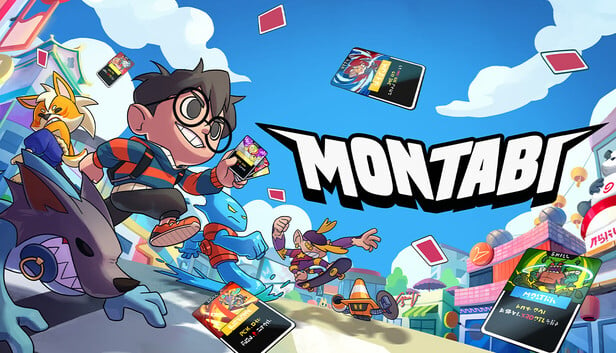
Summary:
Akupara Games and developer Mankibo have confirmed that Montabi will launch for Nintendo Switch and Nintendo Switch 2 on August 6, 2026. The upcoming release blends creature collecting with roguelike deckbuilding and tactical turn-based combat, placing players in charge of a growing team of unusual companions as they fight to save a city under threat. Rather than simply collecting creatures and sending them into straightforward battles, players will build decks around each Montabi’s abilities, evolve their companions and adapt their strategies during unpredictable runs.
Combat unfolds across a compact three-by-three grid where positioning can be just as important as the cards in a player’s hand. Different Montabi offer their own abilities and evolutionary paths, while trainers introduce additional playstyles that can change how a team approaches each encounter. Players will need to protect their chosen trainer as well, since a defeated trainer immediately ends the run. That rule should keep even confident players on their toes.
Montabi will include 22 possible starters and more than 500 cards, giving players plenty of room to experiment with team combinations, equipment, charms and tactical ideas. Cafes found throughout the city can provide a valuable place to recover before the next battle. A newly released trailer accompanies the Nintendo announcement, offering another look at the game’s colourful creatures, grid-based encounters and deckbuilding systems ahead of its August debut.
Montabi Launches on Nintendo Switch and Nintendo Switch 2 on August 6
Akupara Games and Mankibo are bringing Montabi to both Nintendo Switch and Nintendo Switch 2 on August 6, 2026. The Nintendo versions will arrive alongside the game’s other announced editions, allowing players to begin assembling their creature teams whether they prefer Nintendo’s original hybrid system or its newer successor. It is an especially natural home for a game built around repeatable runs, tactical decisions and decks that can be adjusted one card at a time. Those ingredients tend to work rather nicely when you can pick up the system for a quick battle, lose track of time and suddenly realise that your supposed ten-minute session has swallowed an entire evening.
The announcement also confirms that Nintendo players will receive the complete central experience rather than a separate spin-off or reduced adaptation. Players will recruit Montabi, develop their abilities, gather cards and fight across dangerous city streets in turn-based encounters. The goal is easy to understand: build a capable team and save the city. Actually achieving that goal may prove considerably trickier, particularly when a single poor position or badly timed card can turn a promising run into a tactical train wreck.

Creature Collecting Meets Roguelike Deckbuilding
Montabi combines two familiar ideas but connects them in a way that gives each system more weight. Creature collecting provides the personalities, abilities and evolving companions that form the heart of a team, while roguelike deckbuilding determines how those companions perform during a run. Instead of merely adding a creature to a checklist, players gain access to a distinct collection of skills and cards that can influence the direction of an entire strategy. Choosing a Montabi is therefore not just about picking the cutest face in the room, although that will almost certainly remain a deciding factor for plenty of us.
The roguelike structure means players should expect changing circumstances, unexpected combinations and runs that do not unfold in exactly the same way. New cards, equipment and team members can shift priorities as the journey progresses. A plan that initially focuses on direct damage might gradually develop into a defensive setup, a positioning strategy or a carefully constructed chain of supportive abilities. This constant need to reassess the deck should prevent players from relying on one comfortable routine for every encounter.
Taming Montabi Shapes Every Deck
Recruiting Montabi is central to building a successful deck because every creature contributes its own skills and strategic possibilities. A new team member is more than another body on the battlefield. It can introduce fresh attacks, defensive tools, status effects or interactions that make previously ordinary cards far more valuable. Players will need to consider how their creatures complement one another rather than simply filling the team with individually powerful choices. A group of stars does not automatically make a great team, as anyone who has watched a chaotic multiplayer lobby can confirm.
This emphasis on synergy gives players a reason to try unfamiliar combinations. One Montabi might create an opening that another can exploit, while a supporting creature could keep the whole formation standing long enough to complete a risky plan. Equipment and charms further expand these possibilities by adding useful bonuses or strengthening a chosen approach. The strongest route through the city may therefore depend on recognising which tools fit the current team instead of collecting every shiny object and hoping enthusiasm will somehow count as strategy.
Evolution Opens New Tactical Possibilities
Montabi grow stronger as they gain experience, but levelling is not limited to higher numbers. Creatures can learn new moves and evolve into more powerful forms, unlocking additional card abilities that change what they can accomplish in battle. Evolution can therefore reshape a deck midway through a run. A creature that begins as a modest attacker might develop into a central part of a carefully connected strategy, while another could gain the utility needed to rescue a struggling formation.
These evolving abilities should make long-term planning important. Players may need to decide whether to focus resources on a trusted Montabi or spread improvements across the entire team. Investing heavily in one creature could produce a formidable specialist, but it may also leave the rest of the group vulnerable when enemies counter that particular approach. Balanced growth offers greater flexibility, although it might take longer to produce dramatic results. That tension gives each upgrade a sense of consequence instead of turning progression into a routine trip through a menu.
Three-by-Three Battles Reward Careful Positioning
Combat takes place on a three-by-three grid, creating a compact battlefield where every occupied space matters. The limited area should make movement, range and formation essential parts of each encounter. Players cannot simply scatter their team across a huge arena and forget where everyone is standing. A Montabi placed one square too far forward could become an easy target, while a well-protected creature in the right position might control the entire battle through supportive cards or carefully timed attacks.
The grid also gives the deckbuilding system a physical dimension. Cards are not only abstract actions pulled from a hand. Their value can depend on the location of allies, enemies and the trainer. An attack that affects a row, column or nearby target may be devastating in one situation and nearly useless in another. Players must read the board before committing their resources, much like studying a chess position while someone keeps adding adorable monsters and magical snacks to the pieces.
Outsmarting Enemies Requires More Than Strong Cards
Powerful cards will certainly help, but Montabi appears designed to reward players who understand when and where to use them. Enemy behaviour, available spaces and team order can all influence the result of a turn. Spending a valuable attack too early might remove a minor threat but leave the team exposed to something worse. Holding it for too long could be equally dangerous if the enemy disrupts the formation before the perfect opportunity arrives.
This creates a rhythm of risk and restraint. Players must recognise when to press the advantage, when to reposition and when to protect a weakened ally. Because every Montabi has distinctive abilities, familiar encounters may feel different when approached with another team. A formation that works beautifully with close-range fighters could fall apart when filled with creatures that depend on distance or support effects. Learning those differences should be a key part of mastering the game’s tactical combat.
Trainer Survival Adds Another Layer of Pressure
The selected trainer participates in each run and must be protected throughout the journey. Like the king in chess, the trainer represents a critical target: if the trainer is defeated, the game ends. This rule changes the priorities of every encounter because players cannot focus solely on eliminating opponents. Even an aggressive team must keep an eye on incoming threats, open paths and enemy abilities that could reach the trainer before the Montabi have time to respond.
Protecting the trainer may force difficult decisions. Players could sacrifice an advantageous position to block an enemy, spend a valuable card on defence or move a weakened Montabi into danger to prevent an immediate defeat. These moments can create the kind of memorable stories that roguelikes handle so well. One run ends because of a brilliant enemy manoeuvre. Another survives because a seemingly unimportant card becomes the only thing standing between the trainer and a very embarrassing trip back to the beginning.
Trainers Bring Their Own Strategic Playstyles
Players will choose from multiple trainers, each designed around a different playstyle. Some trainers may focus on arranging the team in ideal positions, while others favour close-range pressure or strengthening Montabi through food-based support. This choice should influence more than appearance. A trainer’s abilities can determine which creatures, cards and upgrades become particularly valuable during a run, giving players another foundation on which to build their strategy.
A positioning-focused trainer may suit players who enjoy controlling the grid and creating precise combinations. A more aggressive trainer could reward direct confrontation, while a supportive option might keep the team healthy and improve its performance over longer battles. Trying every trainer should reveal new ways to use familiar Montabi. A creature that feels awkward with one approach might become indispensable with another, encouraging experimentation instead of pushing everyone towards a single supposedly perfect setup.
Choosing a Trainer Can Change the Shape of a Run
The trainer selection effectively acts as an early strategic commitment. Before the first major collection of cards has taken shape, players will already have chosen a character whose abilities encourage particular decisions. That does not mean every run must follow a rigid path, but it gives players a useful starting point. When several rewards look equally appealing, the trainer’s strengths may help determine which option has the greatest potential.
Unexpected discoveries can still pull the deck in another direction. Roguelike games are often at their best when they tempt players away from their original plan with a strange but promising combination. A defensive trainer might suddenly acquire the tools for an aggressive strategy, while a movement specialist could discover equipment that rewards holding position. Adapting to those surprises is part of the fun. The trick is knowing when to embrace a new idea and when the game is simply waving a shiny distraction in your face.
Twenty-Two Starters Encourage Experimentation
Montabi will offer 22 starter choices, giving players an unusually broad selection before a run properly begins. Each evolutionary line comes with a unique deck, so choosing another starter can alter the available cards, preferred tactics and overall pace of play. This approach gives the opening decision real significance. Players are not merely selecting a mascot to accompany them through an otherwise identical adventure. They are choosing the first building block of a strategy that may develop in a completely different direction.
The large starter roster should also support replay value. Some players will immediately settle on a favourite and spend hours refining that creature’s deck, while others will move through all 22 options to discover how each evolutionary line works. Both approaches are valid. Familiarity can help players recognise useful combinations more quickly, but experimentation may uncover tactics they would never encounter while staying with one comfortable choice. Sometimes the creature you ignored because of its odd little face turns out to be a tactical genius.
Unique Evolutionary Lines Support Distinct Decks
Because each evolutionary line has its own deck, progression should feel closely connected to the identity of the chosen Montabi. New forms bring fresh abilities rather than serving as simple visual upgrades. Players can watch their starter develop while the deck grows around its strengths, creating a stronger relationship between creature collection and card selection. That connection helps make individual Montabi feel like genuine team members instead of decorative icons attached to generic actions.
Distinct decks also make comparisons more interesting. One starter may specialise in controlling enemy positions, another might build momentum through repeated attacks and a third could support allies with healing or enhancements. Players will need to learn the language of each deck: which cards create openings, which ones finish combinations and which apparently modest tools become essential under the right conditions. That learning process should give every starter its own curve of discovery.
More Than 500 Cards Keep Each Run Unpredictable
With more than 500 cards available, Montabi has a sizable collection from which to construct its evolving decks. The total includes abilities associated with different creatures and evolutionary lines, creating a wide range of possible interactions. Players are unlikely to see every option during a single run, and that limitation is important. Roguelike deckbuilders thrive when players must make the best of what they find rather than assembling a predetermined list with perfect consistency.
A large card pool can produce surprising combinations, but it also asks players to make careful choices. Adding every available card may sound exciting until the deck becomes so crowded that its best abilities rarely appear together. Sometimes declining a reward is the smarter move, painful as it may feel to leave a colourful new card behind. Building a reliable deck often means knowing what not to take, which is basically the tactical equivalent of walking through a bakery without buying six pastries.
Fresh Card Combinations Give Every Run Its Own Identity
No two runs are expected to play exactly alike because the available cards, recruited Montabi and discovered upgrades can vary. One attempt may produce a tightly focused deck built around a single devastating interaction. The next might become a flexible collection of smaller combinations that can respond to many situations. Neither structure is automatically better. Success depends on how well the deck matches the team’s abilities and the challenges waiting farther into the city.
This variation can make defeat easier to accept because a failed run still teaches the player something useful. Perhaps the deck lacked defence, relied too heavily on one creature or struggled whenever enemies disrupted the formation. The next attempt offers a chance to correct those weaknesses or pursue an entirely different plan. Progress comes not only from unlocked options but also from the player’s growing understanding of positioning, timing and card value.
Equipment, Charms and Cafes Support Every Journey
Cards and creatures form the main strategy, but equipment and charms provide additional ways to strengthen a team. These items can help reinforce an existing plan, cover a weakness or encourage an unexpected new direction. A charm that improves survivability might allow an aggressive Montabi to remain on the front line, while another bonus could make a rarely used ability worth building around. Choosing the right support tools may be just as important as selecting a dramatic attack card.
Cafes offer a different kind of assistance by providing opportunities to recover hit points. Knowing when to rest can become a strategic decision of its own, particularly if the route presents competing rewards or dangers. Continuing while injured might lead to valuable discoveries, but it could also end the run before the team reaches its next major objective. A cafe may not sound as heroic as a battlefield, yet a warm meal and a restored health bar can work wonders when the city is full of enemies.
Recovery Decisions Can Determine How Far the Team Travels
Health management is likely to influence how boldly players approach each part of the city. A team with plenty of remaining hit points can afford to take risks, test an uncertain combination or absorb a small mistake. A weakened group must play with greater caution, especially when the trainer is vulnerable. Cafes can provide relief, but players may still need to decide whether recovery is worth changing their intended route or delaying another opportunity.
These decisions give the journey a sense of momentum. Damage carries consequences beyond the current encounter, so winning carelessly may still create problems later. A narrow victory can feel triumphant for a moment and terrifying immediately afterwards when the team remembers it still has several streets to cross. Managing resources between battles should make the city feel like one connected challenge rather than a sequence of isolated fights.
The New Trailer Introduces Montabi to Nintendo Players
The Nintendo Switch and Nintendo Switch 2 announcement arrived alongside a new trailer highlighting the game’s console debut. The footage presents the colourful visual style, creature designs, card-based abilities and compact tactical battlefields that define the experience. It also gives Nintendo players a clearer impression of how deckbuilding and positioning work together. Rather than treating battles as static exchanges, Montabi asks players to think about the location of every important character before committing to a move.
The trailer also reinforces the contrast at the centre of the game. Montabi may look friendly and playful, but the underlying systems demand careful planning. Cute creatures evolve, trainers face genuine danger and every run can end when a strategy falls apart. That combination could appeal to players who enjoy welcoming presentation without sacrificing tactical depth. Saving the city may involve plenty of charming companions, but charm alone will not protect a badly positioned trainer.
Conclusion
Montabi will bring its mixture of creature collecting, roguelike deckbuilding and grid-based combat to Nintendo Switch and Nintendo Switch 2 on August 6, 2026. With 22 starters, unique evolutionary decks, multiple trainers and more than 500 cards, the game is built around experimentation and repeated runs. Its three-by-three battlefield adds a strong positional element, while trainer survival ensures players must balance aggression with protection. Equipment, charms and cafe visits provide further ways to shape each journey through the city. For Nintendo players who enjoy collecting unusual companions and turning tricky battles into satisfying tactical puzzles, Montabi has plenty of ideas packed into its colourful streets.
FAQs
- When will Montabi launch for Nintendo Switch?
- Montabi will launch for Nintendo Switch and Nintendo Switch 2 on August 6, 2026.
- What type of game is Montabi?
- Montabi is a creature-collector roguelike deckbuilder featuring tactical turn-based battles on a three-by-three grid.
- How many starter Montabi will be available?
- Players will be able to choose from 22 starters. Each evolutionary line has its own deck and strategic possibilities.
- How many cards does Montabi include?
- Montabi features more than 500 cards, allowing players to create different combinations and strategies across repeated runs.
- What happens if the trainer is defeated?
- The run ends when the trainer is defeated, so players must protect the trainer while positioning their Montabi and attacking enemies.
Sources
- Montabi is Coming to Xbox and Nintendo Switch!, Mankibo, July 10, 2026
- Montabi, Nintendo UK, June 8, 2026
- Montabi Adds Switch 2, Switch Versions, Gematsu, July 9, 2026
- Montabi Announced for Nintendo Switch and Switch 2, Nintendo Everything, July 9, 2026
- Montabi Adds Switch, Switch 2 Versions, RPGamer, July 10, 2026