














Summary:
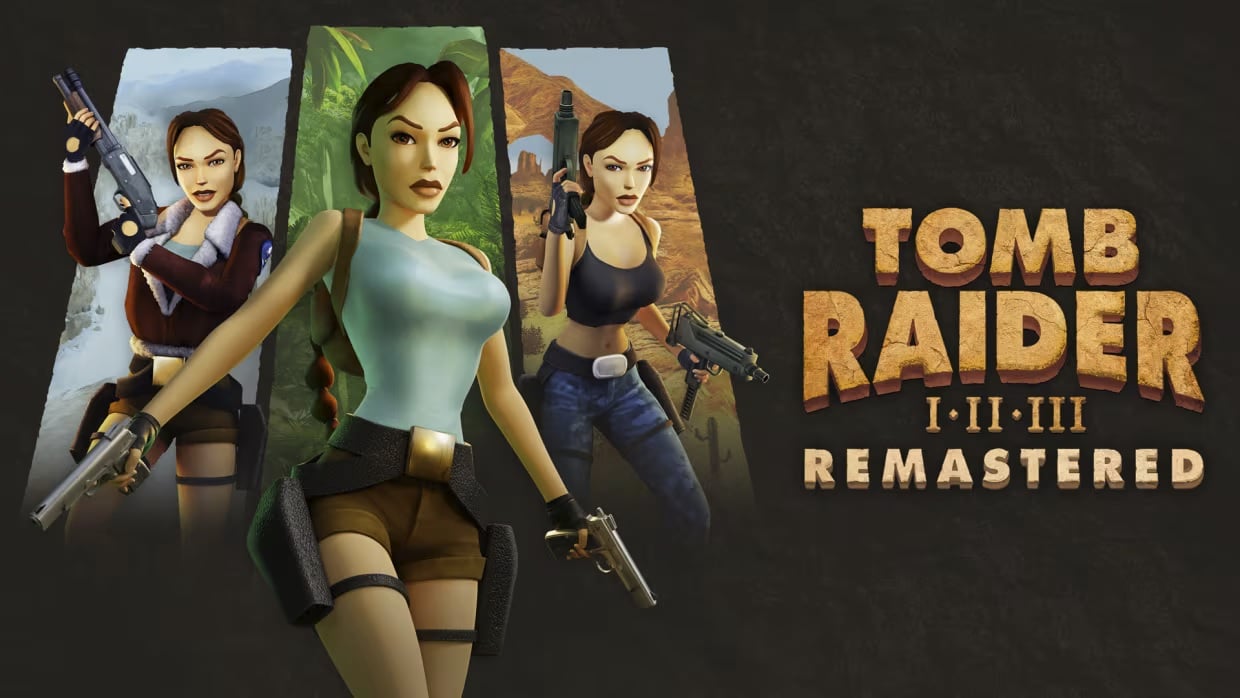
Aspyr has released the Community Update for Tomb Raider I-III Remastered, bringing another substantial round of improvements to Lara Croft’s restored original adventures. Officially identified as Challenge Mode Patch 3: Community Update, the update is available for Nintendo Switch 2, Nintendo Switch, PlayStation, Xbox, PC, iOS and Android. Its headline addition is 60 FPS support for Classic Graphics Mode, allowing players who prefer the games’ original polygonal presentation to enjoy a smoother frame rate without switching to the remastered visuals.
The update also introduces a brightness slider covering levels across all three games and a Pickup Highlight option that makes important collectible items easier to identify when playing with HD Graphics. Those additions are joined by fixes covering movement, collisions, enemy behavior, visual glitches, Challenge Mode, Photo Mode and various level-specific problems. Nintendo Switch 2 receives a particularly lengthy collection of targeted corrections, including fixes for softlocks, missing enemy spawns, flickering textures and environmental collision problems.
Rather than changing what makes the original Tomb Raider trilogy distinctive, the Community Update focuses on removing friction and giving players more options. Classic Graphics fans receive one of the most noticeable upgrades, while HD Graphics players gain useful visibility improvements. Aspyr has also confirmed that Patch 4 is already in progress, meaning development on Tomb Raider I-III Remastered has not stopped with this release.
Tomb Raider I-III Remastered Community Update Brings Requested Improvements
Tomb Raider I-III Remastered has received another sizable update, and this one wears its purpose right in the name. Aspyr’s Community Update focuses on features requested by players alongside a substantial collection of bug fixes and optimizations. Officially called Challenge Mode Patch 3: Community Update, it is available across Nintendo Switch 2, Nintendo Switch, PlayStation, Xbox, PC, iOS and Android. The changes affect everything from how the classic visuals perform to Lara’s interactions with specific pieces of scenery. That makes this more than a routine maintenance patch. Players returning to the trilogy will immediately have several new options to experiment with, while anyone who previously encountered troublesome level-specific bugs may find that familiar rough edges have disappeared. Aspyr has also stated that Patch 4 is in development, so this isn’t necessarily the final round of adjustments for the remastered collection.
Classic Graphics Mode Now Runs at 60 FPS Across Supported Platforms
The standout addition is undoubtedly 60 FPS support for Classic Graphics Mode. Tomb Raider I-III Remastered lets players move between upgraded HD Graphics and the games’ original polygonal presentation, making the classic mode an important part of the package rather than a novelty tucked away in a menu. With the Community Update installed, Classic Graphics Mode can now run at 60 FPS across the supported versions of the game. The result should make movement and camera motion appear noticeably smoother while preserving the angular character models, chunky environments and unmistakable visual identity of the original releases. For players who enjoy switching back to the old graphics for nostalgia, this is a particularly welcome combination. You can retain that wonderfully unmistakable 1990s Tomb Raider look while benefiting from a frame rate more closely associated with modern releases.
New Brightness Slider Gives Players More Control Over Every Level
A brightness slider has also been added, allowing players to adjust the brightness of levels throughout Tomb Raider I, Tomb Raider II and Tomb Raider III. Aspyr notes that the feature is intended to deliver its best results when used with HD Graphics Mode. It might sound like a relatively small addition beside the jump to 60 FPS, but Tomb Raider’s shadowy tombs, caves and enclosed environments make visibility an important part of the experience. Different displays, rooms and HDR configurations can also make the same dark environment look very different from one setup to another. Giving players direct control removes some of that uncertainty. You can increase visibility when a gloomy corridor becomes harder to read than intended or keep things darker if you prefer the atmosphere that comes with carefully exploring a dimly lit tomb. Sometimes a simple slider can save a surprising amount of squinting.
Pickup Highlight Makes Important Items Easier to Spot in HD Graphics
Another new accessibility and visibility improvement is Pickup Highlight, which makes key items Lara can collect appear brighter and easier to identify in HD Graphics Mode. Exploring every corner has always been central to Tomb Raider, but remastered environments can occasionally make smaller objects blend into detailed surroundings. A useful pickup sitting against a similarly colored floor or wall can be remarkably easy to overlook, especially while you’re concentrating on traps, enemies or the next precarious jump. The new highlighting feature reduces that problem without changing the underlying level layouts or simply handing players the solution. Lara still has to reach the item, and you still need to explore. The difference is that important objects should now stand out more clearly once they’re in view. It’s a practical quality-of-life change that respects the trilogy’s exploratory design while making the upgraded presentation easier to read.
Community Update Tackles a Long List of Gameplay and Visual Bugs
Beyond the three new features, much of the Community Update is devoted to corrections spread across the trilogy. Aspyr has fixed a clipping problem in Natla’s Mines that could allow a character to pass through the boat, restored missing harpoon gun ammunition counts in the interface and added descriptions that were absent from several Challenge Mode modifiers. Other corrections target Lara becoming suspended in the air in Living Quarters, flickering boulders in Tomb of Tihocan and unreliable ledge grabbing in The Cistern. The update also improves the reliability of performing a running Swan Dive with touch controls and corrects inverse controller settings that were not always being applied properly. Individually, many of these are highly specific problems. Together, though, they matter because Tomb Raider’s platforming depends heavily on predictable movement, collision detection and clear feedback. Tiny inconsistencies can have very un-tiny consequences when Lara is standing above a long drop.
Nintendo Switch 2 Receives Its Own Collection of Targeted Fixes
Nintendo Switch 2 players have an additional set of platform-specific improvements to benefit from. In St. Francis Folly, an issue that could leave Lara and lions trapped in corners has been corrected, while Highland Fling receives a fix for a softlock caused when Lara became stuck after jumping onto a rock. Aspyr has also addressed environmental clipping involving the T-Rex after its defeat and a collision problem that allowed characters to pass through the Cargo Plane’s cockpit. Another notable correction concerns the Crash Site, where the airplane cargo door could fail to open. There was even a particularly unpleasant T-Rex problem in which a bite could fail to trigger the death screen, leaving the game softlocked instead. These fixes cover very different situations, but they share an important goal: preventing unusual collisions or scripted events from bringing an otherwise successful play session to an abrupt halt.
Classic Mode Texture and Environment Problems Have Been Addressed
Several Nintendo Switch 2 corrections specifically target visual problems encountered while using Classic Mode. Flickering “Goo” textures in Room 3 of the Reunion level have been fixed, alongside flickering textures found within the Shakespeare Cliff secret area. These aren’t the sort of problems that radically alter progression, but visual instability can be especially distracting in a remaster built around letting players freely enjoy both modernized and original-style graphics. Classic Mode is supposed to recreate the distinct appearance of the earlier games, not introduce unintended flickering that wasn’t part of the nostalgia package. The broader update also contains rendering fixes elsewhere, including the previously mentioned boulder problem in Tomb of Tihocan. Taken together, these changes reinforce the idea that the classic presentation remains an actively supported part of Tomb Raider I-III Remastered rather than simply an optional visual filter left untouched after launch.
Challenge Mode and Randomizer Problems Receive Additional Attention
Challenge Mode and its modifiers receive several important corrections as well. Aspyr has added previously missing descriptions for certain modifiers, helping players better understand the rules they’re selecting before jumping into a level. On Nintendo Switch 2, missing enemy spawns in the Caves of Kaliya when using type modifiers have been addressed, while glitched enemy spawns in Lud’s Gate when using the randomizer have also been fixed. These changes are particularly relevant because Challenge Mode is built around deliberately altering familiar Tomb Raider levels. Randomization and modifiers are supposed to create unpredictable situations within a functioning set of rules, not cause enemies to disappear or spawn incorrectly because something has gone wrong behind the scenes. With those problems corrected, players can spend more time dealing with the chaos they intentionally selected and less time wondering whether Lara has discovered a brand-new supernatural phenomenon that definitely wasn’t supposed to be there.
Lara’s Movement, Collision Detection and Controls Get More Reliable
Movement improvements run throughout the patch notes, which is significant for a trilogy where positioning Lara correctly can be the difference between landing safely and hearing a familiar scream on the way down. Ladder mounting in the Opera House has been improved, while The Cistern receives a fix for a ledge-grabbing problem. A sequence-breaking issue in Atlantis has also been corrected after players using Tank Controls could bypass lighting triggers by backflipping. Meanwhile, inverse controller preferences should now apply correctly instead of occasionally ignoring the player’s chosen settings. These adjustments aren’t trying to modernize Tomb Raider’s fundamental movement system into something completely different. Instead, they make the existing controls behave more consistently. Whether you enjoy the precision and deliberate pacing of Tank Controls or use another available control setup, predictability matters. When Lara misses a jump, you’d rather blame your timing than wonder whether the game decided to reinterpret the rules halfway across the gap.
Photo Mode, Outfits and Interface Issues Are Included in the Fixes
The Community Update reaches beyond platforming and level geometry with several fixes affecting secondary features and interface behavior. Photo Mode has been corrected so that it opens properly without requiring additional input, making it easier to stop and capture a scene when you find the right moment. Aspyr has also fixed a problem that caused the last outfit used in Challenge Mode to remain active incorrectly when returning to normal levels or Lara’s Home. A tooltip concerning the completion requirements for the Golden Pistols has been corrected as well. Even the default setting for Retro FPS has changed, with the option now enabled by default across applicable platforms. None of these adjustments dominates the update on its own, but collectively they tidy up areas players interact with between the trilogy’s bigger puzzles and action sequences. A polished menu or reliably opening Photo Mode isn’t glamorous, but you’ll certainly notice when either one refuses to cooperate.
What the Community Update Means for Tomb Raider Players Going Forward
The most interesting thing about the Community Update is how closely its changes fit the unusual identity of Tomb Raider I-III Remastered. This collection has always tried to preserve the original adventures while letting players experience them with modern visual and quality-of-life improvements. Adding 60 FPS to Classic Graphics Mode strengthens that philosophy because players no longer have to treat classic visuals and smoother performance as opposing choices. The brightness slider and Pickup Highlight similarly provide more control without rewriting the levels themselves. Meanwhile, the long list of fixes cleans up specific situations that could interfere with platforming, exploration, Challenge Mode or visual presentation. Tomb Raider I-III Remastered is available on both Nintendo Switch and Nintendo Switch 2, with the Switch 2 edition having launched on March 12, 2026. Aspyr’s confirmation that Patch 4 is in progress also suggests Lara’s first three adventures still have more technical polishing ahead of them.
Conclusion
Tomb Raider I-III Remastered’s Community Update delivers meaningful improvements without losing sight of what players enjoy about the collection in the first place. The arrival of 60 FPS in Classic Graphics Mode is easily the headline attraction, especially for anyone who prefers the trilogy’s original polygonal appearance, but the brightness slider and Pickup Highlight are valuable additions in their own right. A sizable collection of bug fixes makes the update even more useful, with Nintendo Switch 2 receiving targeted corrections for softlocks, collisions, enemy spawning and visual glitches. Aspyr has clearly focused on both community requests and the smaller technical problems that can interrupt Lara’s adventures. With Challenge Mode receiving additional attention and Patch 4 already confirmed to be in development, Tomb Raider I-III Remastered continues to evolve while keeping its feet firmly planted in the traps, tombs and perilous ledges that made the original games memorable.
FAQs
- What does the Tomb Raider I-III Remastered Community Update add?
- The update adds 60 FPS support for Classic Graphics Mode, a brightness slider and Pickup Highlight. It also includes numerous gameplay, visual, collision, interface and Challenge Mode fixes across supported platforms.
- Does Classic Graphics Mode now run at 60 FPS?
- Yes. Aspyr states that Classic Graphics Mode now supports a 60 FPS frame rate, allowing players to use the original-style visuals with smoother performance.
- Does the Community Update include Nintendo Switch 2-specific fixes?
- Yes. Nintendo Switch 2 receives fixes for issues including softlocks, environmental clipping, flickering textures, missing or glitched enemy spawns, collision problems and an airplane cargo door that could fail to open.
- What does Pickup Highlight do in Tomb Raider I-III Remastered?
- Pickup Highlight makes key items that Lara can collect brighter and easier to see while using HD Graphics Mode, helping important objects stand out more clearly from their surroundings.
- Is another Tomb Raider I-III Remastered update planned?
- Yes. Aspyr confirmed alongside the Community Update that Patch 4 is already in progress, although its features and release timing have not yet been detailed.
Sources
- Tomb Raider I-III Remastered: Challenge Mode Patch 3: Community Update, Aspyr Support, August 20, 2026
- Tomb Raider 1-3 Remastered “Community” update out now, patch notes – 60 FPS in Classic Graphics Mode, brightness slider, more, Nintendo Everything, August 20, 2026
- Tomb Raider I-III Remastered Update Adds Three New Features, Includes 60fps In Classic Graphics Mode, Nintendo Life, August 21, 2026
- Discover Lara Croft’s original adventures in Tomb Raider I-III Remastered, Nintendo, February 14, 2024