














Summary:
The Wii U has always been one of Nintendo’s most fascinating misfires. It had clever ideas, memorable games, and a controller concept that clearly pointed toward something bigger, but it never found the broad audience Nintendo needed. Reggie Fils-Aimé, the former president of Nintendo of America, recently spoke about the system’s problems during a Q&A event at the NYU Game Center, offering a rare look at how Nintendo understood the situation from inside the company. His comments paint the Wii U as a machine built around a promising idea that arrived with shaky execution, confusing market positioning, and a software schedule that could not keep pace with what the business needed.
According to Fils-Aimé, Nintendo believed strongly in combining a living room TV experience with a smaller GamePad experience. That concept produced Nintendo Land, a launch title meant to play a similar role to Wii Sports. Yet even within Nintendo, there was a sense that it did not have the same instant magic. As Sony and Microsoft prepared their next consoles, Wii U sales slowed, and Nintendo realized after the second year that the system would not deliver the success the company needed. From there, the company simplified its hardware offering, leaned into digital games and indie support, released the NES Mini and SNES Mini to support holiday sales, and began shaping the future around the Nintendo Switch. The result is a story about pressure, quick thinking, and how one awkward console helped Nintendo build one of its biggest successes.
The Wii U’s bold idea that never fully clicked
The Wii U remains a strange chapter in Nintendo’s history because it was not a simple case of bad ideas. In fact, many of its ideas were pretty sharp. The system imagined a world where the TV and a handheld-style screen could work together, giving players two points of interaction instead of one. On paper, that sounds very Nintendo. It was playful, different, and built around a fresh way to think about the living room. The problem was that the idea never landed cleanly with the public. Many people did not immediately understand whether Wii U was a new console, a tablet controller for the Wii, or some kind of premium upgrade. That confusion mattered. A console can have great games and clever hardware, but if shoppers hesitate in the aisle, momentum can drain away fast. The Wii U had charm, but charm alone could not carry it through a market that was about to become much tougher.
Why Nintendo believed in the GamePad concept
Reggie Fils-Aimé described Nintendo’s thinking around the Wii U as a blend of what he called the 10-foot experience and the 10-inch experience. In plain terms, that meant the TV across the room and the GamePad screen in your hands. Nintendo believed this pairing could unlock new kinds of play, especially in homes where people gathered around a shared screen. One player could have private information, different controls, or a unique role while everyone else watched the television. That is a genuinely exciting design space, especially for a company known for turning unusual hardware into unforgettable play sessions. The Wii Remote had done that beautifully with the Wii. The Game Boy had done it in handheld form. Nintendo’s gamble was that the GamePad could create a similar spark. Yet a spark needs dry wood, and the Wii U launched into a market where the message, software rhythm, and competitive landscape made ignition difficult.
Nintendo Land and the challenge of replacing Wii Sports
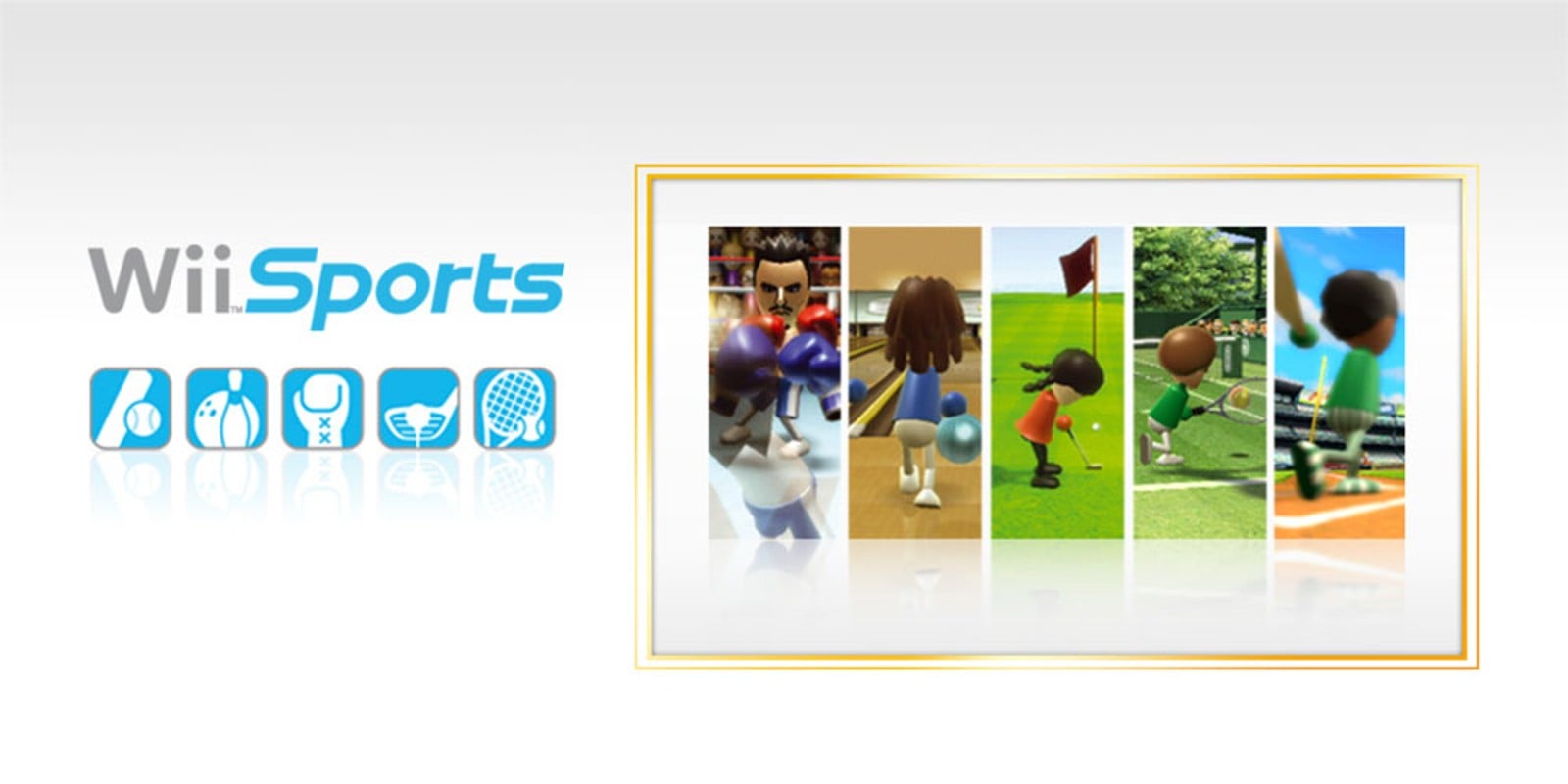
Nintendo Land was designed to showcase the Wii U in the same broad spirit that Wii Sports showcased the Wii. That was a huge task. Wii Sports was not just a launch game, it was the perfect elevator pitch for motion controls. You saw someone swing a controller like a tennis racket, and you understood the system in seconds. Nintendo Land had clever attractions and plenty of Nintendo personality, but it asked more from the player and from the viewer. You had to understand asymmetric gameplay, the GamePad screen, the TV screen, and how those pieces interacted. That made it more like explaining a board game at a party when everyone just wants to start playing. Fils-Aimé said he did not reject it outright while playing, but he felt that little internal hesitation that told him it was not Wii Sports. That hesitation proved important, because launch software often becomes the language people use to explain a console to friends.
Sales momentum faded as rivals moved forward
The Wii U did not collapse immediately. Fils-Aimé noted that the system actually performed well in its first year, which is an important detail because it shows Nintendo still had consumer interest and retailer attention at launch. The trouble came when the broader console market shifted. Sony and Microsoft were preparing the PlayStation 4 and Xbox One, and those platforms gave players a clearer next-generation narrative. They promised power, spectacle, online features, and familiar third-party support. The Wii U, by contrast, felt harder to explain. Was it competing directly with those machines, or was it offering a separate Nintendo-only lane? For some fans, that separate lane was enough. For mainstream shoppers, the answer was less obvious. Once sales began to stall, Nintendo could no longer treat the issue as a slow start. It became a business problem that required quick decisions, because holiday shelves and retailer confidence do not wait politely while a company finds its footing.
Software delays made the problem harder to ignore
One of Fils-Aimé’s clearest points was that key games did not arrive on the timetable Nintendo needed. The company had major projects in motion, including Super Smash Bros., Mario Kart, and Splatoon, but the releases did not come quickly enough to support the hardware at the most critical time. That matters because a console’s early life is like a campfire. You cannot toss one big log on it and walk away. It needs steady fuel. The Wii U eventually built a library with excellent first-party games, but the rhythm was uneven when the system needed certainty. Mario Kart 8 gave the console a powerful boost, Super Smash Bros. brought serious fan energy, and Splatoon became an exciting new franchise, yet those wins arrived after the public story had already soured. When a console becomes known for waiting, the silence between releases starts to feel louder than the games themselves.
The missed rhythm between hardware promise and software proof
Hardware concepts need software proof almost immediately. The Wii U’s promise was that two screens could create new moments, but that promise needed repeated, undeniable examples. Nintendo Land showed the concept, but it did not become the cultural shorthand that Wii Sports had been. Other first-party games were strong, yet many used the GamePad in practical rather than transformative ways. Off-TV play was useful, maps were convenient, and touch controls could be fun, but these features did not always feel like must-own reasons for a new console. That gap between promise and proof hurt. Players may admire experimentation, but they buy systems for experiences they can picture themselves playing every week. If the defining feature feels optional, the whole machine becomes harder to sell. In that sense, Wii U’s challenge was not only that software arrived slowly, but that too few releases made the hardware feel instantly essential.
Retail confusion pushed Nintendo to simplify the offering
Fils-Aimé also spoke about Nintendo’s retail strategy, especially the decision to launch with two Wii U models. One version had less memory and came in white, while the higher-capacity version came in black. Different SKUs are normal in the console business, but they only work well when customers clearly understand the value difference and retailers see enough demand to justify shelf space. In the Wii U’s case, the lower-capacity white model did not have the volume needed to continue. Fils-Aimé said he killed that SKU because Nintendo needed a cleaner offering for retail partners. That move may sound dry, but it reveals a lot about how console struggles play out behind the scenes. A system is not only fighting for fan enthusiasm. It is also fighting for store displays, inventory confidence, sales velocity, and a simple pitch that staff can explain without a small lecture and a nervous smile.
Why a simpler product lineup mattered
When a console is booming, retailers can tolerate complexity because demand does the heavy lifting. When a console is struggling, every extra point of confusion becomes a tax on sales. A shopper choosing between two models might pause, compare memory sizes, wonder whether one version is incomplete, and then decide to wait. That pause is dangerous. Nintendo needed a version of the Wii U that was easier to stock, easier to describe, and easier to position during busy shopping seasons. Removing the weaker SKU did not solve the larger problem, but it reduced friction. It also showed that Nintendo knew the system needed practical commercial support, not just hopeful messaging. The company had to manage relationships with retailers while also reassuring players that the platform still had life left in it. That is a tricky balancing act, like trying to fix a leaky boat while still inviting people aboard.
Digital games and indie support became a survival tool
Another important detail from Fils-Aimé’s comments is that Nintendo put more focus on digital releases and independent developers during the Wii U period. This was not just a small side note. It became part of a larger shift in how Nintendo related to smaller studios. The Wii U needed more games, and indie releases helped fill gaps between larger first-party launches. For players who owned the system, that meant the eShop became a more meaningful place to discover unusual, creative, and affordable experiences. For Nintendo, it opened a relationship that would become far more important on Switch. The Wii U may not have become a commercial powerhouse, but it helped Nintendo learn how valuable a steady flow of digital releases could be. Sometimes the lesson from a struggling platform is not only what to avoid next time. Sometimes it is a seed planted quietly in rough soil, waiting for better weather.
The Wii U eShop helped prepare the ground for Switch
The Nintendo Switch benefited enormously from a stronger indie presence, and the Wii U played a part in that path. During the Wii U years, Nintendo had a clear need to broaden its release calendar, and independent studios could move with a different pace than major internal teams. That helped the platform feel more alive for the players who stayed with it. It also gave Nintendo practical experience with digital storefront curation, developer relations, and audience demand for smaller games on Nintendo hardware. By the time Switch arrived, the company had a better sense of how indie games could sit beside Mario, Zelda, Splatoon, and Mario Kart rather than feeling like filler. That shift mattered because Switch needed momentum from day one and beyond. The Wii U could not fully enjoy the fruits of that work, but its struggles helped Nintendo understand the value of a wider software ecosystem.
NES Mini and SNES Mini helped sustain Nintendo’s holiday business
One of the most striking parts of Fils-Aimé’s comments was his explanation of the NES Mini and SNES Mini. Many fans saw those small retro consoles as pure nostalgia machines, and they certainly worked on that level. They were cute, collectible, easy to understand, and packed with beloved games. Yet Fils-Aimé framed them as a business move during a period when Wii U was on life support. Nintendo needed products that could sell at volume during the holiday season, and the mini legacy devices filled that role. That does not make them cynical. They still gave players a fun and accessible way to revisit classic games. But it does reveal the pressure Nintendo faced. When the main home console is not generating enough energy, a company still needs something attractive for stores, gift buyers, and longtime fans. The NES Mini and SNES Mini did that job with tiny plastic shells and enormous nostalgia.
Why nostalgia worked when the Wii U struggled
The mini consoles succeeded because their pitch was wonderfully simple. Here is a small NES or SNES, here are classic games, plug it in and play. No explanation about second screens. No uncertainty about whether it is an accessory. No waiting for the next wave of software. The value was immediate and emotional. Parents remembered the original systems. Younger players recognized the characters. Collectors wanted the hardware. Gift buyers could understand it in five seconds. That clarity is exactly what the Wii U often lacked. Nostalgia can be powerful, but only when it is packaged in a way that removes friction. The NES Mini and SNES Mini did not need to carry Nintendo forever. They needed to help the company through difficult retail windows while the next major plan took shape. In that role, they were a clever bridge between a struggling present and a stronger future.
Satoru Iwata’s role in the Switch planning meeting
Fils-Aimé also recalled a deeply personal meeting with Satoru Iwata in Kyoto, where Iwata told him that his cancer had returned. It is a sobering detail, especially because the conversation then shifted toward Nintendo’s future. According to Fils-Aimé, the same meeting included planning for the Nintendo Switch, including software, pricing, launch strategy, and how the company would think about the system. That contrast says a great deal about Iwata’s leadership. The moment was human, heavy, and emotional, yet it also carried the practical urgency of a company that needed its next move to work. The Switch was not simply a new box waiting in a product pipeline. It was the answer to a problem Nintendo understood very clearly by then. The Wii U had shown the promise of blended play, but the company needed a cleaner, more compelling execution that players could understand instantly.
The Switch was not a rejection of Wii U’s idea
The Switch did not throw away the Wii U’s core insight. It refined it. The Wii U tried to connect a TV experience with a handheld-style screen, but the GamePad remained tied to the console in a way that made the idea feel halfway portable. The Switch made the screen the console itself. That one change made the entire pitch cleaner. Play on the TV, lift the system from the dock, continue elsewhere. No long explanation needed. No awkward question about whether the controller works without the base unit. The Switch turned the Wii U’s most interesting idea inside out and made it obvious. That is why the Wii U feels less like a dead end and more like a prototype that reached the market too early, with too much friction still attached. Nintendo did not abandon the concept. It found the version people could love immediately.
The difference between invention and execution
The Wii U is a perfect reminder that invention and execution are not the same thing. A company can spot a real opportunity and still build the wrong doorway into it. Nintendo saw that players liked flexibility, shared screens, personal screens, and unusual local multiplayer. The Wii U tried to serve those ideas through the GamePad, but the final product was not clean enough for a mass audience. The Switch took similar instincts and made them feel natural. That is the magic trick. Great hardware often feels obvious after it works, even if it took years of messy experiments to get there. The Wii U was part of that messy path. It was not the triumphant version of the idea, but it helped Nintendo learn where the rough edges were and how to sand them down.
How the Switch refined the Wii U’s original promise
The Nintendo Switch succeeded because it solved several Wii U problems at once. Its identity was clearer, its launch message was sharper, and its hybrid design turned flexibility into the main feature rather than a side benefit. Players understood the concept from the reveal: one system for home and handheld play. That was powerful. The Switch also arrived with stronger software momentum, led by The Legend of Zelda: Breath of the Wild and followed by a steady rhythm of major Nintendo releases, third-party support, and indie games. The system felt alive quickly. For many players, it delivered the kind of everyday convenience the Wii U hinted at but never fully owned. It turned a confusing dual-screen pitch into a lifestyle pitch. Play how you want, where you want, with whoever is nearby. Simple. Friendly. Very Nintendo. It was the Wii U’s dream, finally wearing clothes that fit.
The Wii U’s legacy is bigger than its sales
Wii U hardware sales reached 13.56 million units worldwide, making it one of Nintendo’s weakest-selling platforms. That number is impossible to ignore, but sales are not the only way to measure its place in history. The system gave us standout games, introduced Splatoon, hosted one of the best Mario Kart entries, and helped Nintendo work through ideas that later defined Switch. It also taught painful lessons about branding, release timing, retail simplicity, and the need for software that proves a hardware concept quickly. In a weird way, the Wii U is like the awkward first draft of a brilliant speech. You can see the ideas, but the structure is not quite there. The Switch became the polished version. Without the Wii U, Nintendo may not have reached the same clarity, or at least not in the same way.
What the Wii U means for Nintendo’s modern identity
The Wii U era shows that Nintendo’s greatest strength can also be its greatest risk. The company is willing to be different, and that willingness has produced some of the most beloved devices in gaming. But difference needs clarity. The Wii was different and instantly understandable. The DS was different and easy to demonstrate. The Switch was different and cleanly explained in one visual. The Wii U was different, but it often needed too much explanation. That distinction matters for Nintendo’s modern identity. Innovation cannot just be clever inside the design room. It has to travel easily through trailers, store shelves, family conversations, and a quick chat between friends. The Wii U struggled because its best ideas did not travel well enough. The Switch succeeded because they finally did. That is the lesson Nintendo carried forward, and it remains one of the clearest takeaways from Fils-Aimé’s reflections.
Conclusion
The Wii U was not a meaningless failure. It was a difficult, revealing, and ultimately useful chapter for Nintendo. Reggie Fils-Aimé’s comments show a company that recognized the problem, made practical moves to sustain the business, and looked ahead with urgency. The GamePad concept had promise, but Nintendo Land did not become the next Wii Sports, major software did not arrive quickly enough, and the market moved sharply toward newer Sony and Microsoft hardware. Nintendo responded by simplifying its retail offering, leaning into digital and indie games, and using the NES Mini and SNES Mini to support holiday sales while the next platform took shape. The Switch then took the Wii U’s blended-screen idea and made it clearer, cleaner, and far more appealing. That is why the Wii U still matters. It stumbled, yes, but it also pointed toward the road Nintendo would take next.
FAQs
- Why did the Wii U fail according to Reggie Fils-Aimé?
- Fils-Aimé pointed to several issues, including the slow arrival of key games, fading sales momentum, pressure from Sony and Microsoft’s newer consoles, and the fact that Nintendo Land did not become the same kind of instant system-seller that Wii Sports had been for the Wii.
- What was the Wii U GamePad supposed to achieve?
- The GamePad was built around the idea of combining the TV experience with a smaller screen in the player’s hands. Nintendo believed this could create new types of gameplay, including shared play on the TV and different private interactions on the GamePad.
- Why was Nintendo Land so important to the Wii U launch?
- Nintendo Land was meant to demonstrate the Wii U’s unique features, much like Wii Sports demonstrated motion controls on Wii. It had creative ideas and plenty of charm, but it did not communicate the console’s appeal as instantly or as broadly as Wii Sports did.
- Why did Nintendo release the NES Mini and SNES Mini during that period?
- Fils-Aimé said those mini legacy devices helped sustain Nintendo’s business while the Wii U struggled. They gave the company a product that could sell strongly during the holidays, while Nintendo continued planning the Switch.
- How did the Wii U influence the Nintendo Switch?
- The Switch refined the Wii U’s idea of combining TV play with a smaller-screen experience. Instead of using a separate GamePad tied to a console, the Switch made the screen the console itself, creating a clearer hybrid system that players could understand immediately.
Sources
- Reggie-Fils Aime discusses what went wrong with Wii U, My Nintendo News, May 6, 2026
- Reggie Fils-Aimé reveals what went wrong with Wii U and also shares a secret about NES Mini, Gamereactor, May 7, 2026
- Reggie Fils-Aimé Discusses Turning the Wii U’s Failure Into the Switch’s Success, Expanding the Brand at New York University Lecture, Zelda Dungeon, May 5, 2026
- Dedicated Video Game Sales Units, Nintendo, March 31, 2026
- Super NES Classic Edition announced, launches September 29, Nintendo Everything, June 26, 2017